What a yellow chikankari kurta brings to your look
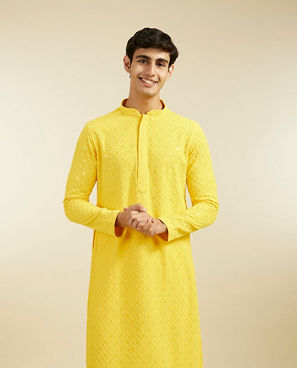
Yellow and chikankari are both naturally joyful: one is associated with light and celebration, the other with delicate, thoughtful craft. Put together, this kurta instantly lifts your mood and your outfit—without needing heavy layers or over‑the‑top embellishments.
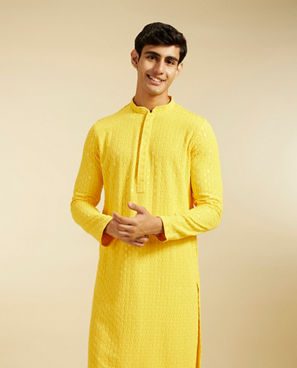
On this page, you’re looking at kurtas that combine sunshine shades of yellow with Lakhnawi‑inspired embroidery and, in some pieces, fine sequin work for a hint of sparkle. The idea is to give you something that feels festive and a little royal, but still easy to move, sit, and enjoy real celebrations in.
Why yellow is such a festival natural
Yellow has always been one of the most auspicious colours in Indian culture—it’s linked to turmeric, marigolds, and the warmth of the sun. That’s why you see it everywhere from haldi bowls and rangoli to temple décor and stage backdrops.
A yellow chikankari kurta taps into that symbolism while adding finesse through embroidery:
-
It feels instantly correct for haldi, mehendi, and daytime wedding functions.
-
It suits Diwali, Ganesh Chaturthi, and other puja days where you want to look bright and welcoming.
-
It works beautifully for Holi, where yellow blends right into the colour and joy of the day.
Because the shade is uplifting but not harsh, it looks good in group photos, outdoor shots, and under warm lights, making it a smart choice for content‑heavy celebrations too.
Craft and fabric: how these kurtas are built
For chikankari to sit well on yellow, the base fabric needs to balance three things: comfort, drape, and how it carries both colour and threadwork. Diwas and partner styles lean into materials that feel airy but still look dressy enough for special days.
Common directions you’ll find in kurtas include:
-
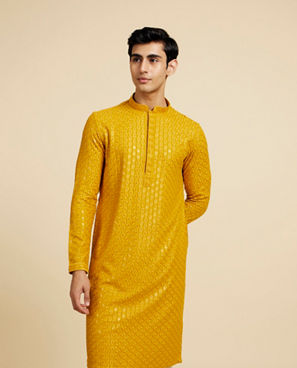
Viscose bases, like the Sunshine Yellow Chikankari Kurta with Sequin, where the fabric drapes smoothly and gives a gentle sheen that works well in wedding and Diwali lighting.
-
Blended cottons and cotton‑silk mixes, especially in mustard and soft yellow tones, chosen for breathable comfort during long daytime events.
-
Art‑silk and silk‑feel fabrics in some richer sets, used when the kurta is meant to be a main‑event piece for weddings and high‑profile festivals.
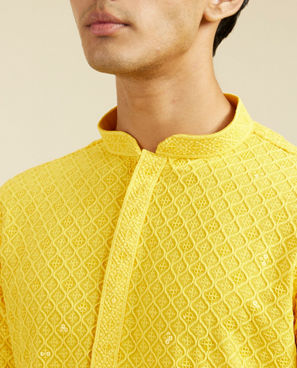
Across these, chikankari stitches create jaals, florals, and texture panels, sometimes accented with sequins so the embroidery glows under diyas, chandeliers, and stage lights.
Yellow chikankari and the occasions it loves
This kurta is one of those pieces that almost writes its own calendar. There are certain events where it simply makes perfect sense.
You’ll find it especially at home in:
-
Haldi ceremonies, where yellow is traditionally the lead colour, and chikankari keeps the look soft and camera‑friendly for the groom’s and friends’ side.
-
Mehendi functions, particularly day‑to‑evening events, where a bright kurta with intricate work stands out in both natural light and warm indoor setups.
-
Diwali poojas and house parties, where yellow kurtas echo the glow of diyas and fairy lights, and chikankari adds just enough refinement.
-
Ganesh Chaturthi and other religious festivals, where yellow symbolises knowledge, happiness, and auspicious beginnings.
-
Daytime weddings and receptions, especially outdoor or garden venues, where sunshine‑leaning colours feel right at home.
Because the colour reads festive but not overpowering, you can reuse the same kurta across multiple ceremonies and still feel perfectly in sync with each setting.
How the embroidery changes the feel
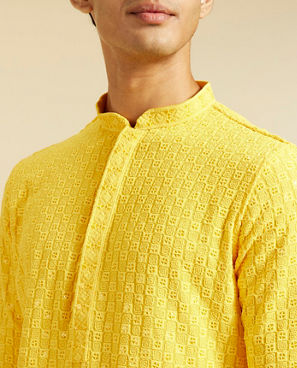
On yellow, chikankari behaves a little differently than it does on white or deep colours. Against this warmer base, the fine stitches and patterns feel almost glowing, and any added sequins behave like tiny points of light.
You’ll typically see:
-
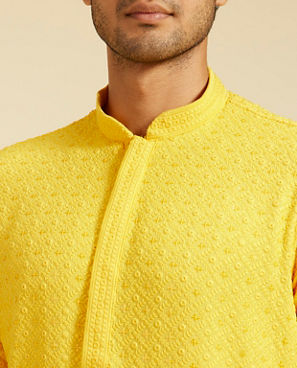
Tone‑on‑tone chikankari, where the thread is close to the kurta colour, giving a subtle, textured look ideal for haldi, pujas, and day events.
-
Slightly contrasting white or cream threadwork, which makes motifs pop a bit more without losing the softness of the overall look.
-
Chikankari with sequin detailing, as in many “sunshine” or mustard yellow pieces, perfect when you want the kurta to feel a little more party‑ready.
The result is a category that always looks handcrafted and special, but never stiff or heavy—exactly what you want when your celebrations stretch from morning rituals to late‑night photos.
Different yellow moods within this category
Not all kurtas look or feel the same; the exact shade gives each one a different personality.
Broadly, you can think in three directions:
-
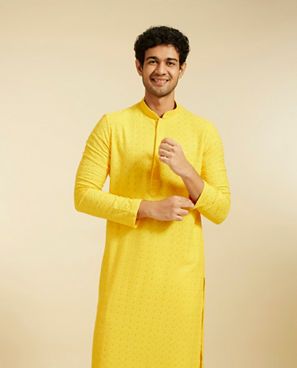
Sunshine and lemon yellows: Bright, cheerful tones that stand out in photos and social feeds, great for Diwali, Holi, and upbeat daytime weddings.
-
Mustard and deeper yellows: Slightly richer shades, like Manyavar and Diwas mustard chikankari sets, which feel a touch more grounded and evening‑friendly.
-
Soft, pastel yellows: Gentler hues that suit smaller pujas, brunch‑style functions, and intimate ceremonies where you want to look put‑together but not loud.
Within each, embroidery density can range from delicate outlines to denser jaals, letting you choose how dressed up your yellow chikankari kurta feels.
Styling a kurta for real plans
Because the kurta itself carries both colour and craft, styling can stay surprisingly simple and still feel complete. A few real‑world combinations:
1. Haldi or daytime mehendi:
-
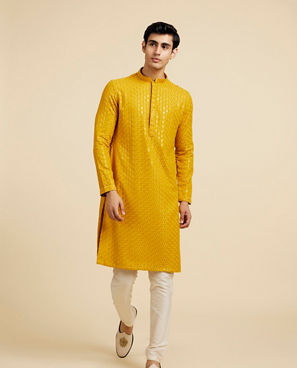
Sunshine or mustard yellow kurta with white or cream pyjamas, mojaris or simple sandals.
-
Add a light stole if you want more structure in photos, but keep jewellery minimal so the haldi and expressions stay the focus.
2. Diwali pooja and card night:
-
A sequin‑touched yellow kurta with churidar and slightly sharper footwear.
-
Small accessories—a classic watch, kada, or ring—are enough; the kurta and the lights handle the rest.
3. Festive office or campus day:
4. Casual family gatherings:
-
Light yellow kurta with cotton pyjamas or dhoti‑style bottoms for temple visits, brunches, or home ceremonies.
-
In all of these, the chikankari does the visual work; you just decide how traditional or contemporary you want the overall outfit to feel.
Yellow chikankari as a repeat‑worthy wardrobe piece
A good kurta doesn’t sit at the back of your cupboard waiting for one perfect event; it quietly shows up across the entire festive calendar.
You might wear the same piece:
-
At a cousin’s haldi this month.
-
For Diwali pooja at home later in the year.
-
To a friend’s mehendi or Holi brunch the next season.
Because the colour is widely accepted as “festive” and the craft feels timeless, it rarely looks out of place, even as the specific occasions change. That repeat‑wear value lines up with how Diwas imagines celebration wear now—pieces that become part of your personal story across many special days, not just one.
How it behaves in photos, reels, and memories
This kurta is naturally camera‑friendly: the colour brightens the frame, and the embroidery gives texture in close‑ups. Under diyas, fairy lights, and afternoon sun, sequins and fine stitches catch light at just the right level—not so much that they distract, but enough to make your outfit feel alive.
For content‑driven celebrations—family portraits, haldi reels, Holi vlogs—yellow chikankari does three big things for you:
-
Keeps you visible even in big, colourful groups.
-
Looks good across phone cameras and event photographers’ lenses.
-
Reads as “festive and thoughtful” without needing a change of clothes across events on the same day.
It’s the kind of kurta that shows up again and again when you scroll back through your favourite celebration moments.
FAQs
1. Is a yellow chikankari kurta only for haldi?
No. While it’s perfect for haldi ceremonies, a yellow chikankari kurta also works for Diwali, Holi, Ganesh Chaturthi, daytime weddings, and family pujas—styling and shade decide how formal it feels.
2. What bottoms pair best with a yellow chikankari kurta?
White, cream, and beige pyjamas or churidars are the easiest; for more contemporary looks, you can also pair some styles with slim neutral trousers or denims.
3. Is it suitable for evening events as well?
Yes. Mustard and deeper yellow chikankari kurtas with sequins or richer fabrics are ideal for evening mehendi, Diwali parties, and wedding celebrations, especially under warm lighting.
4. How is a yellow chikankari kurta different from a plain yellow kurta?
Chikankari adds intricate patterns, texture, and sometimes subtle shimmer, making the kurta feel more crafted and festive while still staying light and breathable.
5. Can I dress a yellow chikankari kurta down for simpler occasions?
Definitely—choose softer shades with lighter embroidery, pair them with cotton pyjamas or denims, and keep accessories minimal for a relaxed, everyday‑festive feel.







_18-04-2025-20-30:297-368)
_18-04-2025-20-30:297-368)

_18-04-2025-20-30:Swatch)