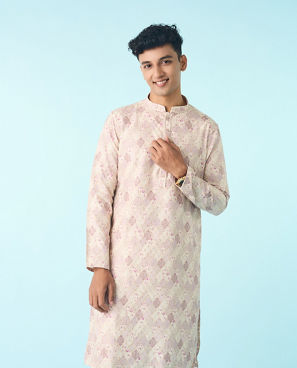
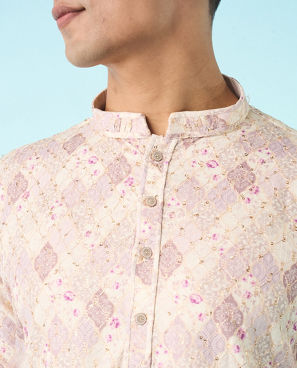
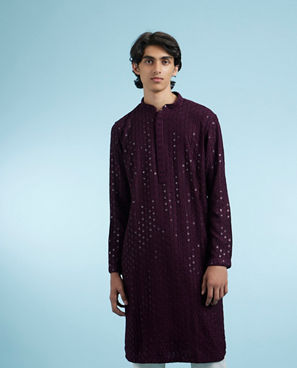
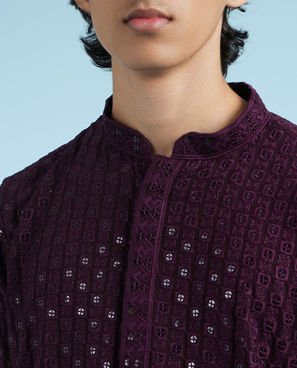
Purple chikankari kurta for men: richness through restraint
Purple is one of the most inherently festive colours in Indian celebration wear—associated with royalty, spirituality, and the kind of confident dressing that stands out without shouting. When you layer chikankari over that base, something interesting happens: the embroidery softens the colour's intensity without diminishing its presence. The result is a kurta that feels simultaneously rich and delicate—bold enough for sangeet and Diwali nights, refined enough for daytime weddings and intimate family functions.
At Diwas, these kurtas bring together Lucknawi craft traditions with a colour that has been gaining significant momentum in men's ethnic wear—creating pieces that feel current in their colour choice and timeless in their embroidery.
What chikankari does to purple
The interaction between purple and chikankari is one of the most rewarding in men's ethnic wear. Understanding it helps you see exactly why this combination keeps appearing at weddings and significant festivals.
-
Chikankari softens purple's intensity: Deep and vibrant purples can feel overwhelming on plain fabric; fine chikankari stitching breaks up the colour surface with texture and pattern, making even rich purples feel approachable and wearable across different formality levels.
-
Purple deepens chikankari's visual impact: White chikankari on a deep or mid-purple base creates significantly more contrast than the same embroidery on white or cream—the stitching pops clearly and reads as genuinely decorative rather than subtly textural.
-
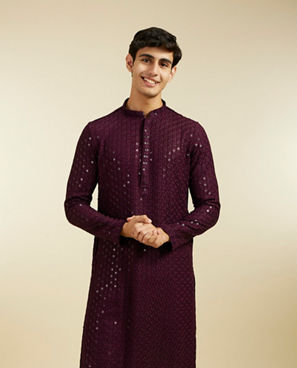
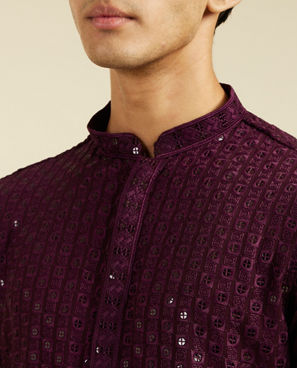
Sequin additions create controlled glamour: Many kurtas feature fine sequin work alongside threadwork; on purple, sequins catch light in a cool, jewel-like way that creates evening presence without the warmth of gold-toned shimmer—perfect for Diwali nights and reception-adjacent functions.
-
The combination photographs with particular richness: Purple is already one of the most photogenic colours in Indian celebration wear; chikankari adds fine surface detail that creates layers of visual interest in close-up portrait photography and video that flat fabrics simply don't offer.
-
Together they feel genuinely occasion-specific: Unlike plain purple kurtas that work across many settings, a purple chikankari kurta creates a sense of occasion—it reads as a piece chosen specifically for a significant celebration rather than a general-purpose festive option.
The purple spectrum in chikankari kurtas
Like most colour families, purple covers a broad range of shades that each carry different moods and work differently with chikankari embroidery. On this page you'll find:
-
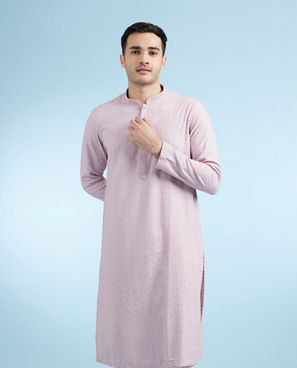
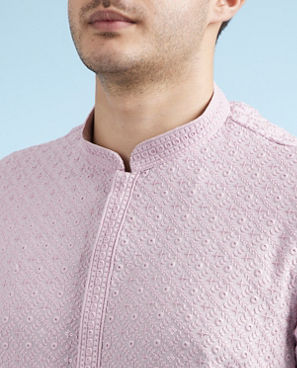
Lavender and lilac on chikankari—the softest, most pastel direction; chikankari here feels very gentle and romantic; the combination is particularly beautiful for daytime weddings, engagement ceremonies, and spring festivals where soft colour and delicate craft create a very harmonious aesthetic.
-
Mid-purple and violet on chikankari—the most versatile direction; chikankari reads clearly and warmly on these balanced shades; works across daytime and evening occasions with minimal styling adjustment and suits the widest range of skin tones.
-
Deep purple and royal purple on chikankari—a richer, more formal direction; chikankari on deep purple creates high contrast and visual drama; ideal for sangeet, Diwali main evenings, and reception-adjacent functions where strong colour presence is appropriate.
-
Magenta-leaning and wine purple on chikankari—a warmer, more energetic direction; chikankari on these warmer purples feels festive and vibrant; works for high-energy celebrations like Navratri and Diwali parties.
-
Indigo and blue-purple on chikankari—a cooler, more composed direction; chikankari on blue-leaning purples creates a very sophisticated, almost formal look that works for evening functions and occasions where composed dressing is valued.
Craft details: how chikankari appears on purple kurtas
Chikankari is defined by its variety—multiple stitch types create different surface effects that range from airy and delicate to dense and richly patterned. On purple, these different approaches read distinctly. You'll typically see across this category:
-
Shadow work chikankari on purple—where stitches are worked on the reverse side, creating a softer, shadowed effect that appears as gentle pattern on the right side; on purple, shadow work creates a very subtle, sophisticated surface that rewards close attention.
-
Murri and phanda stitches—small, tight knot stitches that create texture and pattern concentration at specific points within motifs; on purple, these tight stitches create points of intensity that give the embroidery visual weight and presence.
-
Tepchi and bakhiya—running and shadow stitches that create the flowing lines and filled areas within chikankari motifs; these are what give jaal and floral patterns their continuous, interlaced quality on purple bases.
-
Chikankari with sequin highlights— sequins are placed within or around stitch clusters, catching light in a controlled way that creates evening-appropriate shimmer without disrupting the embroidery's handcrafted quality.
Fabrics that carry it best
For chikankari to sit well on purple and for the colour to look rich rather than flat, the base fabric needs to balance drape, surface quality, and breathability. Diwas and linked styles use:
-
Viscose and viscose-blend bases—used in pieces like the Purple Viscose Chikankari Embroidery Kurta; the fabric's smooth surface and gentle drape allow chikankari to lie flat and read clearly, while its slight sheen gives purple more depth and luminosity under event lighting.
-
Art silk and silk-feel fabrics—in more formal or evening-ready purple chikankari pieces where a stronger sheen amplifies both the colour's richness and the shimmer of sequin highlights; ideal for reception-adjacent and sangeet occasions.
-
Cotton and cotton-rich blends—in more casual or daytime-appropriate purple chikankari pieces where breathability matters; cotton holds chikankari cleanly and stays comfortable through longer outdoor functions and warm celebrations.
-
Georgette and soft blended weaves—lighter, more fluid fabrics used in some pieces where the fabric's natural movement creates a flowing quality that suits outdoor settings and garden venues particularly well.
Where they belong
Purple chikankari kurtas have a strong sense of occasion—certain celebrations seem almost to call for exactly this combination. They're most naturally at home when you're:
-
Attending sangeet and musical evenings—where deep and mid-purple chikankari with sequin highlights catches stage and event lighting beautifully; one of the most photogenic choices for high-energy, musically rich wedding events.
-
Dressing for Diwali main evenings and peak festive nights—where purple's richness and chikankari's craft create a look that feels genuinely special under warm lights, diyas, and the golden palette of Diwali décor.
-
Attending daytime wedding functions—particularly for lavender and mid-purple chikankari which feels fresh and refined in natural light; works beautifully for daytime receptions and late-morning celebrations.
-
Celebrating Navratri—where purple is one of the most auspicious colours of the nine-day festival, and chikankari adds a crafted quality that elevates the look beyond a plain festive kurta.
-
Engagement and roka ceremonies—where mid and lighter purples with chikankari feel celebratory and warm without the intensity of deeper shades; emotionally resonant without being overwhelming.
-
Eid and important religious celebrations—where this kurta feels respectful, considered, and genuinely occasion-appropriate without following the most predictable colour choices.
Styling
Because purple chikankari already brings both colour richness and surface craft, styling is about choosing what completes rather than competes.
Bottom choices:
-
White and off-white pyjamas or churidar—the most natural and widely used pairing; clean white creates clear contrast that lets both the purple colour and the chikankari embroidery read fully and beautifully.
-
Cream and ivory churidar—a softer alternative to white that adds warmth without disrupting the contrast; particularly flattering with lighter lavender and mid-purple shades.
-
Beige or champagne slim pyjamas—a tonal, warm pairing that works particularly well with warmer, magenta-leaning purple shades; creates a very harmonious overall palette.
-
Silver-grey churidar—an unexpected but very sophisticated pairing for deeper and cooler purple shades; grey grounds the richness of purple while adding contemporary relevance.
-
Black churidar—for a dramatic, high-contrast evening look with deep purple; the combination of deep purple chikankari with sequins over black creates a very striking, modern ethnic statement.
Footwear:
-
Embroidered or embellished mojaris in cream, silver, or deep purple feel the most traditional and complete.
-
Silver-tone or dark formal shoes work for contemporary styling directions with deeper shades.
-
Avoid very warm or orange-toned footwear that clashes with purple's inherently cool undertone.
Accessories:
-
Silver and white-gold accessories sit most naturally with purple's cool undertone across most shades.
-
For warmer, magenta-leaning purples, rose gold creates a very flattering bridge between warm and cool.
-
Keep jewellery deliberate and minimal—a watch, subtle kada or bracelet; the chikankari is doing delicate surface work and heavy jewellery risks disrupting the lightness and craft quality that makes this combination special.
-
A light stole in ivory, silver-grey, or soft lilac adds ceremony without disrupting the colour story for the most formal occasions.
In a compact celebration wardrobe
In a small but thoughtfully built ethnic wardrobe, this kurta fills a very specific and valuable slot: the richly festive craft piece that neither plain purple solids nor heavily embroidered darker pieces cover in quite the same way.
Alongside:
-
a neutral plain piece (white, cream, or beige) for rituals and simpler functions, and
-
one deeper, more formal piece (navy or maroon embroidery) for the most formal evening events,
a purple chikankari kurta becomes:
-
your first choice for sangeet, Navratri, and peak Diwali evenings;
-
the piece that brings the most visible craft and colour richness together in a single wearable garment;
-
a repeat-wear favourite that photographs distinctly enough across different occasions that different social circles rarely identify it as the same piece.
In photos, reels, and celebrations
Purple chikankari kurtas photograph with a richness that is genuinely distinctive. Deep and mid-purples carry significant visual weight in photographs—they create strong, defined frames in both indoor and outdoor settings. Chikankari adds fine surface detail that makes portraits and close-up shots look genuinely layered and considered. And sequin highlights—where present—catch event and stage lighting in a controlled, jewel-like way that creates beautiful light variation in video without overwhelming the frame.
For sangeet reels, Diwali evening captures, and Navratri group photographs specifically, a purple chikankari performs exceptionally well—the colour reads strongly across different lighting conditions, and the embroidery ensures the kurta looks deliberate and crafted rather than simply coloured. In group wedding photographs, purple chikankari creates clear visual presence without dominating—you look like you chose the outfit specifically for the occasion, which is exactly what the best festive dressing communicates.
Frequently Asked Questions (FAQs)
1. Is a purple chikankari kurta suitable for daytime and evening occasions?
Yes—lighter lavender and mid-purple shades with finer chikankari work beautifully for daytime weddings and engagements, while deeper purples with sequin-highlighted chikankari on richer fabric bases translate effectively into evening sangeet, Diwali, and reception-adjacent functions.
2. What bottoms pair best with a purple chikankari kurta?
White and off-white for the most natural contrast; cream and ivory for a softer, warmer pairing; beige for harmonious warmth with warmer purple shades; silver-grey for a sophisticated contemporary direction; black for dramatic evening contrast with deeper purples.
3. Which shade of purple chikankari is most versatile?
Mid-purple and violet with balanced chikankari density tend to be the most versatile—they work across daytime and evening occasions, suit the widest range of skin tones, and create the broadest pairing flexibility.
4. How is a purple chikankari kurta different from a purple embroidered kurta?
Chikankari uses fine, delicate threadwork stitches that create a lighter, more delicate surface appropriate for a wider range of occasions; embroidered kurtas use denser, more varied techniques including zari and heavier surface work that reads more formally; chikankari feels more wearable and repeatable while embroidery feels more occasion-specific.
5. Can I wear a purple chikankari kurta to Navratri?
Absolutely—purple is one of the nine auspicious Navratri colours, and a chikankari version adds craft and consideration to a colour that feels completely at home during the festival; the embroidery and any sequin highlights also work well for the energy and movement of garba and dandiya settings.





_08-06-2026-12-06:297-368)
_11-04-2026-06-50:297-368)
_08-06-2026-12-06:Swatch)