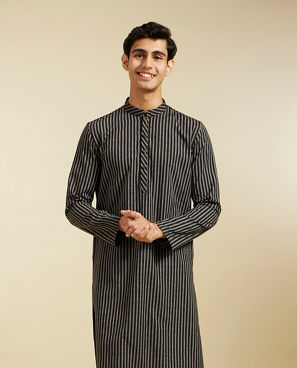
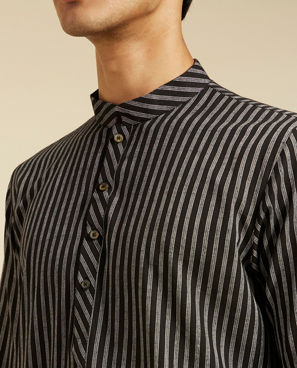
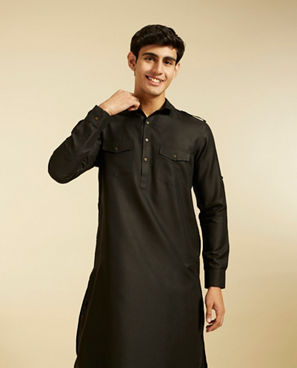
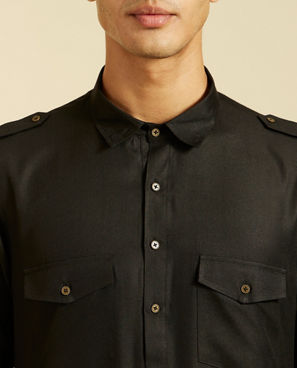
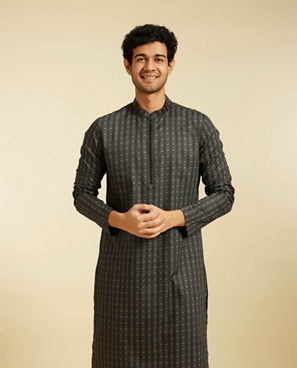
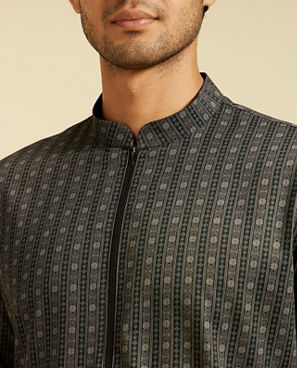
Black Kurtas for Men – The One Colour That Never Has to Explain Itself
Black just works. It always has. In every wardrobe, across every occasion, for every kind of man — black is the colour that never lets you down. It sharpens a silhouette, simplifies styling, and projects a confidence that doesn't need any backup. In a kurta, black does all of this while also being deeply rooted in Indian celebration dressing — worn at Diwali parties, wedding functions, Eid evenings, and everything in between.
Why Black Works Differently in a Kurta Than in Western Wear
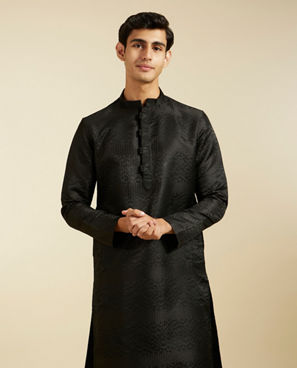
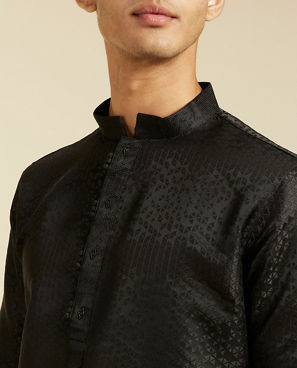
Black shirts and black trousers are common. A black kurta is something else. The silhouette of a kurta — the length, the collar, the fabric drape — gives black a more commanding presence than it has in casual Western clothing. The colour fills the kurta's form with a sharpness and definition that makes even a simple, plain style look intentional and well-considered. Add embroidery, a print, or a quality fabric, and a black becomes genuinely striking — the kind of outfit that doesn't need accessories or layering to make its point.
The Range Within Black
Black kurtas are not all the same — and the variety within this single colour is worth exploring.
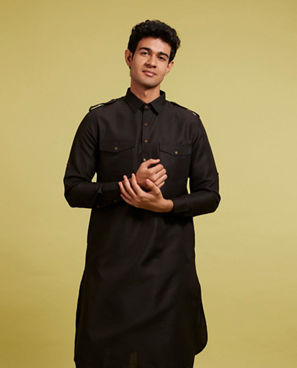
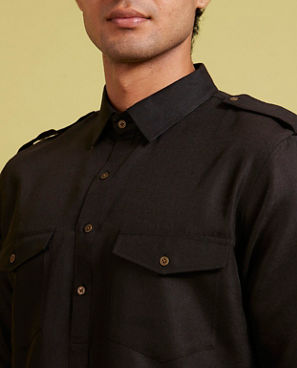
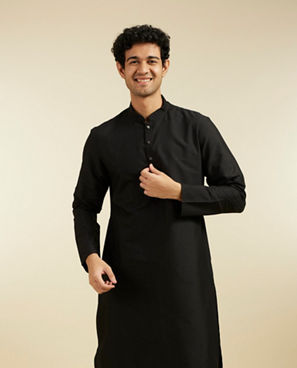
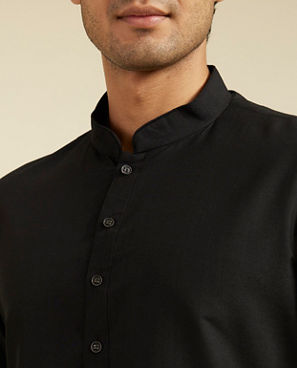
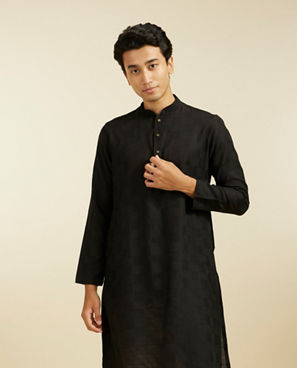
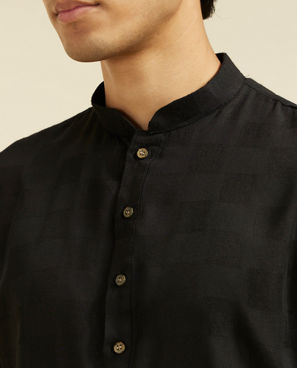
Plain kurtas in cotton or linen are the most practical, everyday option. No embellishment, clean lines, easy to wear. These are the pieces you reach for on days when you want to look put-together without thinking about it.
Kurtas with gold embroidery are the most festive interpretation of the colour — the contrast between gold thread and black fabric is one of the richest combinations in Indian celebration wear. Zari work, gold thread placket detail, or all-over gold embroidery on black are all strong festive choices.
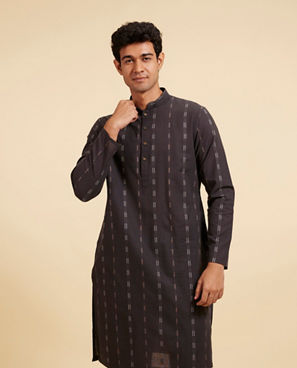
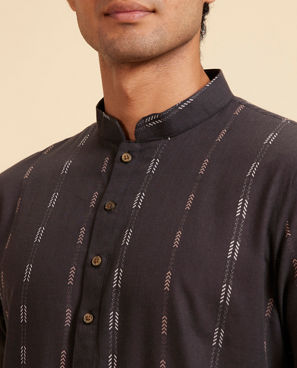
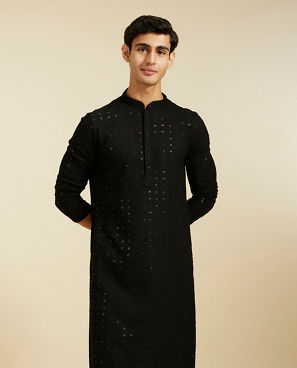
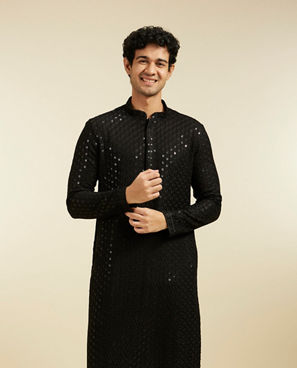
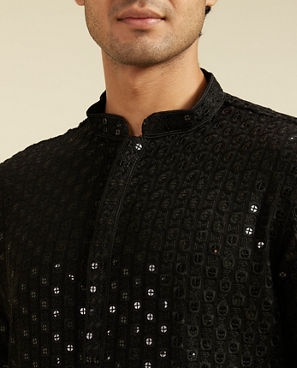
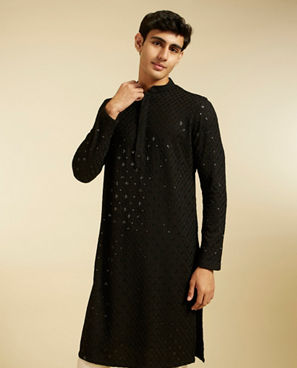
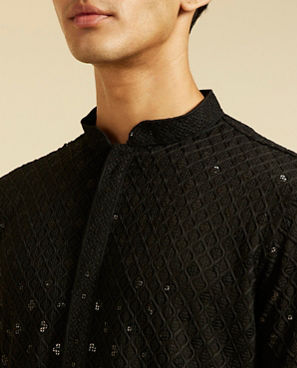
Kurtas with white or silver embroidery create a sharper, more contemporary contrast — graphic and precise, these work well for occasions that call for something modern and distinctive.
Printed kurtas — featuring geometric patterns, abstract designs, or digital prints in contrasting colours — are popular for casual festivals, college events, and younger aesthetics. A printed black base is one of the most visually dynamic options in the range.
Silk kurtas are the most formal and occasion-specific — the lustre of silk on black has a depth and richness that cotton cannot replicate. Reserved for evening wedding functions and significant celebrations.
Black Across Every Occasion
One of black's greatest strengths is its ability to move between different occasions without missing a step.
Diwali parties and festive evenings — black with gold embroidery is practically made for Diwali. The warmth of the gold against the depth of the black picks up the festival's own colour story and translates it into a kurta that feels completely in context.
Wedding functions — reception evenings, sangeet nights, cocktail functions — black holds its own at all of them. A black silk or silk-blend kurta with subtle embellishment is one of the most confident and memorable wedding guest choices you can make.
Eid — a clean, well-cut kurta in a quality fabric works beautifully for Eid evening gatherings. Pair it simply and let the colour carry the look.
Casual everyday occasions — a plain black cotton kurta is one of the most versatile daily wear pieces you can own. It goes with almost every pair of bottoms you already have and requires zero styling effort.
College fests and cultural events — a printed kurta is the go-to for occasions where you want to look festive and individual without going full formal.
Reading the Fabric: What Changes With Each Option
Fabric is what separates a kurta for everyday use from one meant for a celebration — and it's worth understanding the difference.
Cotton is the everyday workhorse — breathable, practical, and easy to maintain. Black cotton kurtas are crisp and clean but don't carry the occasion weight of richer fabrics.
Cotton-linen blends give black a slightly more textured, relaxed quality — good for smart-casual settings and daytime occasions.
Cotton-silk blends are the upgrade that most wardrobe situations call for. A touch of silk's sheen in the fabric gives black more depth and dimension — appropriate for semi-formal and festive occasions while still being comfortable enough to wear all day.
Pure silk is the most formal option — the lustre of silk on black is genuinely impressive, particularly in warm evening lighting. This is the fabric for reception evenings and the most significant celebrations.
Chanderi is a lighter festive option — silk-cotton woven fabric with a gentle sheen that elevates the kurta beyond cotton without the full weight of pure silk.
Styling Black: Where It Gets Interesting
Black pairs with more bottom-wear colors than any other kurta color — which is part of what makes it so useful. Here's what works well:
White or ivory churidars — the classic high-contrast pairing. Clean, sharp, and always appropriate. The starkness of black and white together is particularly effective for evening occasions.
Charcoal or dark grey trousers — a tonal, near-monochromatic look that feels modern and intentional. One of the more fashion-forward pairings.
Beige or camel trousers — an earthy contrast that feels grounded and relaxed. Works well for casual occasions and daytime settings.
Deep navy or forest green — a rich, jewel-toned combination that works for festive evenings. Both colors sit comfortably alongside black without competing with it.
For footwear, black or dark brown mojaris are the most natural fit. Tan leather juttis create a warm contrast. For casual occasions, clean white sneakers with a black printed kurta is a look that works consistently well for younger styling.
Accessories in silver or gunmetal complement black most naturally — gold works well specifically for festive occasions where gold embroidery is already part of the kurta.
One Practical Point About Black Fabric
Black fabric fades over time if not cared for properly — and faded black looks significantly worse than faded versions of most other colours. A few simple habits keep black looking sharp for longer:
Wash in cold water with a detergent formulated for dark fabrics. Turn the kurta inside out before washing — this protects the outer surface from friction that causes fading. Dry in shade, away from direct sunlight — UV exposure is the fastest route to a dull, faded black. Iron on medium heat while slightly damp for the best finish.
With basic care, a kurta stays looking new for significantly longer than one that gets standard treatment.
On Camera
Black is one of the most photogenic colours for kurtas — the sharpness of the silhouette reads clearly in photographs, and embellishment on black has a clarity and contrast that stands out beautifully. In evening wedding photography with warm artificial lighting, black silk or embroidered kurtas create images with a depth and richness that is immediately impressive. For social media content and reels, black kurtas create a strong visual frame that draws focus to the face and makes the overall shot look more composed and intentional. Against lighter backgrounds — white walls, pale stone, outdoor greenery — black reads with an authority that few other colours can match.
Frequently Asked Questions (FAQs)
1. Is black an appropriate colour to wear to a wedding in India?
Yes — and it's increasingly popular as a wedding guest choice, particularly for evening functions like the reception and sangeet. A black kurta in a quality fabric with subtle gold or silver embellishment is a confident, well-dressed choice. The old convention of avoiding black at weddings has largely given way to a more contemporary approach where the fabric, cut, and styling matter more than the colour.
2. What embroidery works best on a black kurta?
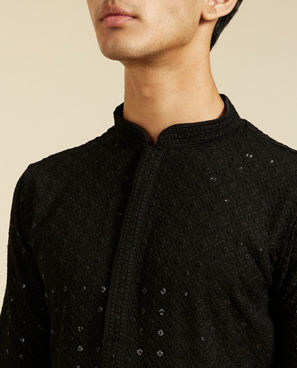
Gold zari embroidery creates the most festive and impactful contrast on black — the warmth of the gold against the depth of the black is one of the richest combinations available. Silver thread work creates a sharper, more modern contrast. White embroidery — particularly Chikankari-style thread work — creates a graphic, striking effect on black that's distinctive and contemporary.
3. Can a black kurta be worn for Eid?
Absolutely. A clean, well-cut black kurta in a quality fabric is entirely appropriate for Eid — particularly for evening gatherings. Keep the styling simple and the fabric quality high. A black kurta with subtle gold detail or a clean plain cut in chanderi or silk-blend works beautifully for Eid.
4. What's the difference between a black cotton kurta and a black silk kurta in terms of where to wear them?
A black cotton kurta works across casual, everyday, and semi-formal occasions — it's practical, comfortable, and versatile. A black silk kurta is specifically a festive and formal piece — its lustre and drape make it appropriate for evening wedding functions, reception events, and significant celebrations. Cotton for the day; silk for the evening.
5. How do I choose the right black kurta for my body type?
The key is fit and length. A well-fitted black kurta — where the shoulder seam sits correctly, the chest has ease without excess, and the length is proportionate to your height — looks sharp and well-considered on every body type. Avoid styles that are too loose or too long, as black's tendency to create a strong silhouette works best when that silhouette is clean and well-defined.

_18-04-2025-21-54:297-368)
_18-04-2025-21-55:297-368)
_18-04-2025-21-54:Swatch)