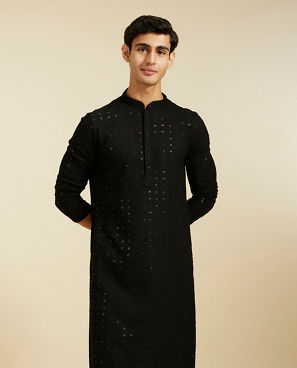
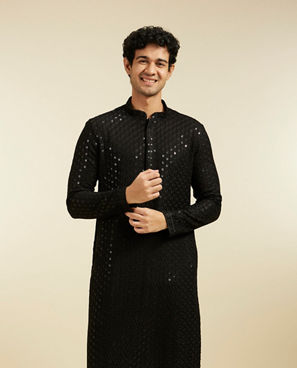
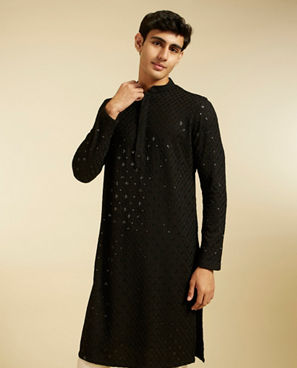
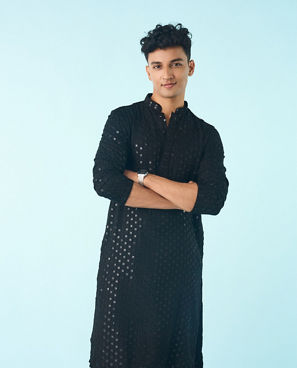
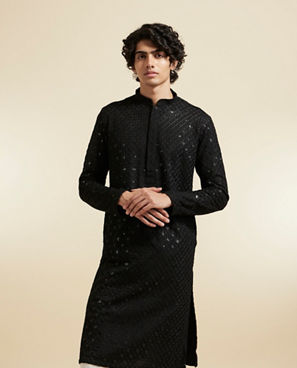
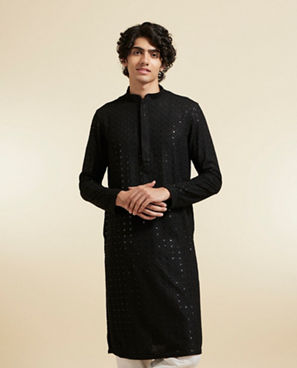
Black Chikankari Kurtas for Men – Two Extremes, One Stunning Kurta
Chikankari began in white. White thread on white fabric — delicate, subtle, almost invisible unless the light hits it exactly right. Black Chikankari takes that same craft and flips the entire equation. If white Chikankari is a whisper, black is a statement. A considered, crafted, deeply impressive one.
When White Thread Meets Black Fabric
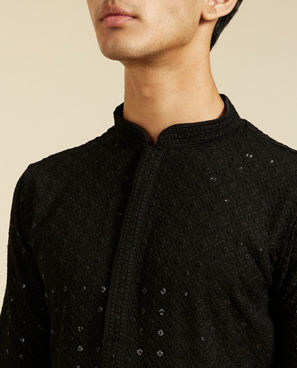
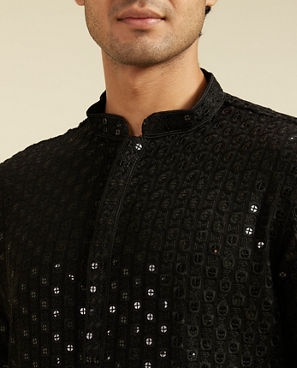
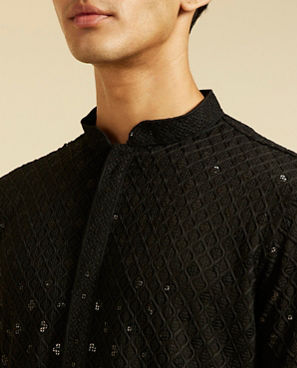
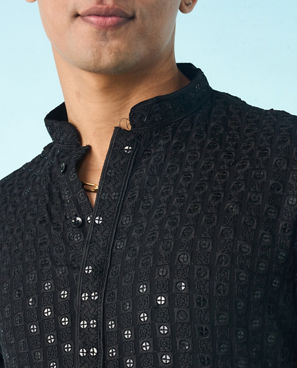
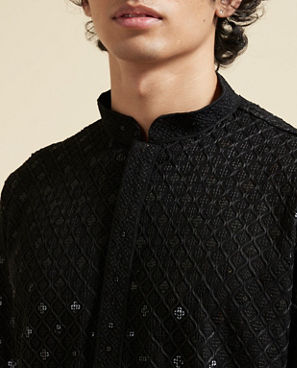
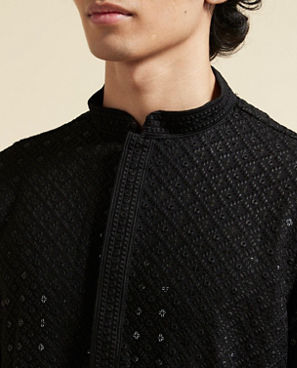
The reason black Chikankari works so well is rooted in how embroidery reads against its base. On white or pale fabric, Chikankari is visible primarily through texture and shadow — you have to look for it. On black, there's no searching required. The white thread sits against the dark base with complete clarity — every phanda knot, every jali mesh, every tepchi running stitch fully legible and fully appreciated from across the room.
This contrast transforms the character of the craft. The same delicate floral motifs and paisley patterns that feel refined and understated on white feel bold and graphic on black. Neither version is better — they are simply different expressions of the same extraordinary embroidery tradition, and black is the more visually immediate.
The Occasions That Deserve This Kurta
Black Chikankari sits firmly in festive and semi-formal territory — it has too much visual presence for everyday casual wear, and the right amount of craft and intention for occasions that matter.
Evening wedding functions — reception, sangeet, cocktail — are where this kurta is genuinely at its best. In warm event lighting, the white threadwork on black fabric creates depth and dimension that photographs spectacularly and looks even better in person. It's a distinctive choice that holds its own in a dressed-up crowd without being overdone.
Eid — This kurta for Eid evening gatherings is a strong, confident choice. The embroidery's craft gives it the festive weight the occasion calls for, while the black base keeps the overall look sharp and composed.
Diwali parties — black and white together at Diwali is a combination that works particularly well in the warm, golden lighting typical of Diwali celebrations. The white Chikankari catches the light in a way that makes the kurta look almost luminous.
Cultural events, award nights, and semi-formal gatherings — anywhere you want to look genuinely well-dressed without going into full wedding-guest mode, this kurta delivers exactly the right register.
How to Wear It Without Overdoing It
Black Chikankari already has a lot going on visually — the styling job is to frame it, not compete with it.
Ivory or white churidars are the natural choice — the light bottom wear balances the dark kurta, creating a clean contrast that feels complete without any additional effort.
Charcoal or dark grey straight-cut trousers for a more tonal, contemporary look — the near-monochromatic palette lets the white embroidery become the sole point of visual interest, which it handles well.
Black churidars for a fully dark ensemble — this is a bolder approach, but when the Chikankari is dense enough, the white thread on both pieces creates a cohesion that works for fashion-forward festive dressing.
Skip the Nehru jacket unless the occasion specifically calls for it — this kurta is complete on its own, and layering risks covering the neckline embroidery, which is often the garment's most detailed section.
For footwear, black or dark brown mojaris are the most natural fit. Silver juttis add a contemporary edge. Keep accessories in silver — a single bracelet or a clean watch. The embroidery is doing enough decorative work that anything heavier would tip the look over.
Fabric Makes the Difference Here
The fabric choice in a kurta affects both how the embroidery sits and how comfortable the garment is to wear — and black fabric in particular shows fabric quality more clearly than most colours.
Georgette drapes softly and allows the Chikankari embroidery to move with the fabric — the result is fluid and elegant. The most festive fabric option in this range.
Cotton gives the kurta a more structured, crisper silhouette. The embroidery sits firmly on the surface and reads with maximum sharpness. Better for semi-formal and smart-casual occasions where a more defined silhouette is appropriate.
Chanderi sits between the two — a gentle drape with a subtle sheen that gives black a slightly luminous quality without losing the crispness of the embroidery. A good all-round festive option.
Black Chikankari vs White Chikankari — Which One Do You Need?
Both. Ideally. But if you're choosing one, here's the honest breakdown.
White Chikankari is the more versatile of the two — it covers a wider range of occasions, works for daytime and evening settings, and has a subtlety that makes it easier to style across different situations. It's the one to own first.
Black Chikankari is the more impactful choice — it makes a stronger visual statement, works best for evening occasions and more formal celebrations, and has a distinctiveness that white Chikankari, for all its beauty, doesn't quite replicate. It's the one to own second — and once you do, you'll reach for it more than you expect.
A Note on Quality: What to Look For
Because black fabric clearly shows quality, it's worth knowing what makes a well-made black Chikankari kurta.
The white thread should be clean and consistent — any variation in thread thickness or tension shows immediately against a dark base. The embroidery density should be appropriate to the garment — concentrated at the neckline, placket, and cuffs, with lighter work across the body. The jali work, if present, should be even and precise — uneven mesh openwork is a sign of rushed or lower-quality execution. And the fabric itself should have a uniform, deep black without any pilling, inconsistency, or lightening at the stress points.
A good kurta rewards close attention. Make sure the craftsmanship is worth it.
FAQs
1. Is black Chikankari appropriate for daytime occasions or only evenings?
It works best for evening occasions and more formal festive settings where the embroidery can be fully appreciated in warm lighting. For daytime events, white or pastel Chikankari is generally more appropriate — black's visual weight can feel heavy in bright natural light, and the contrast of the embroidery is less dramatic outdoors than it is indoors.
2. What makes black Chikankari different from standard black embroidered kurtas?
Chikankari is a specific craft tradition from Lucknow with over thirty distinct stitch types — shadow work, jali openwork, phanda knots, tepchi running stitches — all executed in white thread. A standard embroidered black kurta might use zari, metallic thread, or any embroidery style. It is defined by the use of white thread and the specific Lucknowi stitch vocabulary — it's a craft-specific choice, not just an embellished one.
3. Can a black Chikankari kurta be worn to a wedding as a guest?
Yes — it's a strong choice for wedding guests at evening functions. Pair with ivory churidars and quality footwear. The combination of black's formality and Chikankari's craft creates a look that is festive, considered, and genuinely impressive without being overdone. Avoid wearing it to daytime wedding functions where the overall dress code is lighter and more colorful.
4. How do I care for a black Chikankari kurta?
Hand wash gently in cold water with a mild, dark-fabric detergent — or dry clean for best results. Never wring the fabric. Press out excess water, then dry flat in the shade. Avoid direct sunlight, which can fade black fabric and weaken delicate embroidery threads over time. Iron on reverse with a pressing cloth over the embroidery. Store carefully, away from colored garments that could transfer dye onto the white threadwork.
5. Does the white thread work on black Chikankari fade or discolor over time?
With proper care, the white thread work retains its clarity and brightness well. The main risks are washing the kurta with colored garments that could bleed onto the white thread, and exposing the fabric to harsh detergents or bleach, which could weaken or yellow the thread over time. Cold-water washing with a gentle detergent and shade-drying are the best practices for keeping the white embroidery clean and bright.