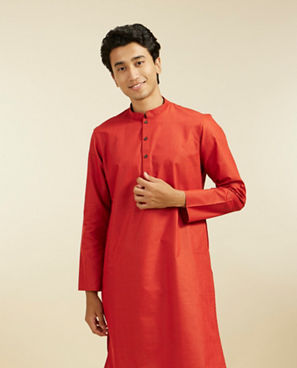
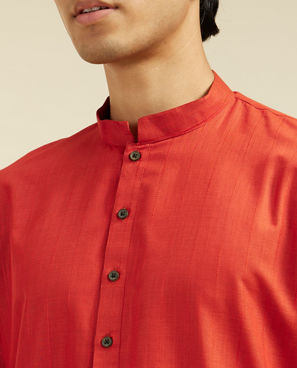
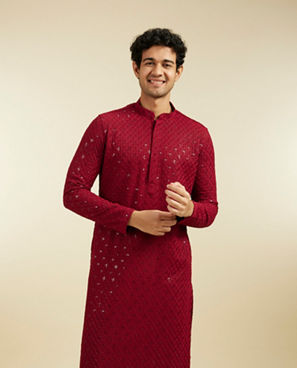
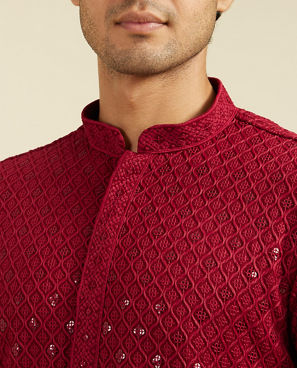
Red Kurtas for Men – The Colour That Means Business at Every Celebration
Red doesn't ask for attention. It commands it. Of all the colors in Indian celebratory dress, red carries the most cultural weight — it's the color of weddings, festivals, auspicious beginnings, and moments that matter. Wearing red to a celebration is not a bold move. It's the most natural one.
Red in India: The Colour That Shows Up for Everything
No other color is as deeply woven into Indian cultural celebrations as red. It's in the sindoor at weddings, the kumkum at puja, the gulal at Holi, the dupatta at every significant rite of passage. Red flowers are offered at temples. Red is the colour of shakti, of auspiciousness, of life itself in Indian cultural imagination.
For men, red kurtas have been part of celebration dressing across regions and communities for generations. The groom's red sherwani is iconic in North Indian weddings. Red kurtas appear at Navratri, Diwali, Eid, and family celebrations across the country. This is a colour with roots — and wearing it connects you to something larger than just an outfit choice.
The Red Spectrum: Which Shade for Which Moment
Red covers a lot of ground — and the shade you choose shapes the entire character of the look.
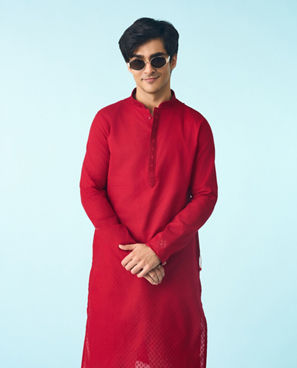
Bright red and cherry red are the most vivid, high-energy options. These are the shades that photograph with maximum impact, look most celebratory in a crowd, and are best suited for Holi, Navratri, and daytime festive occasions where vibrancy is the point.
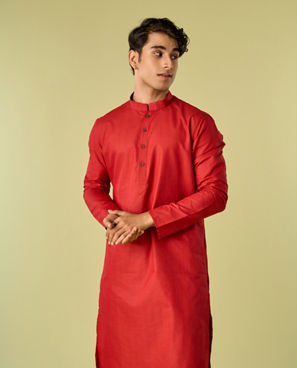
Classic Indian red — a slightly deeper, warmer red with orange undertones — is the most traditional festive shade. This is the red you associate with weddings, puja occasions, and significant celebrations. Universally flattering and deeply culturally resonant.
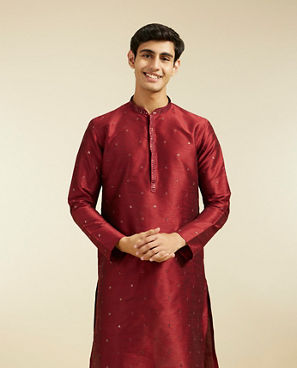
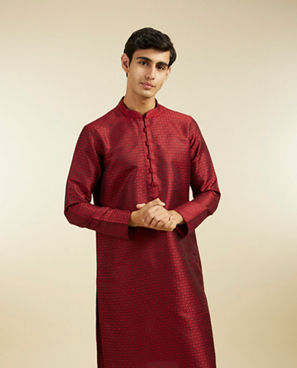
Crimson and deep red are richer and more formal — these shades carry more gravitas than brighter reds and are well-suited for evening functions, reception events, and occasions that call for something more considered than outright vibrancy.
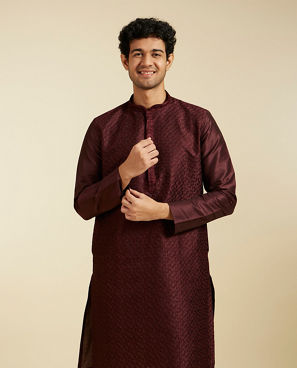
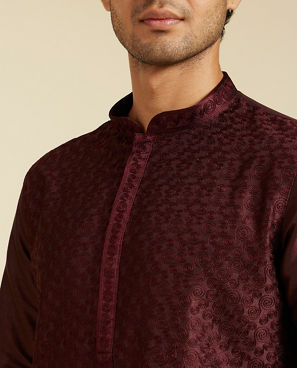
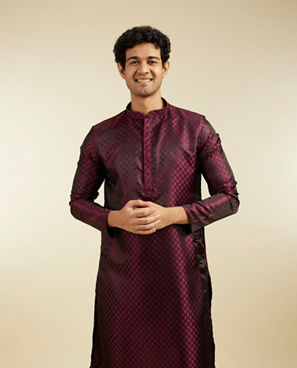
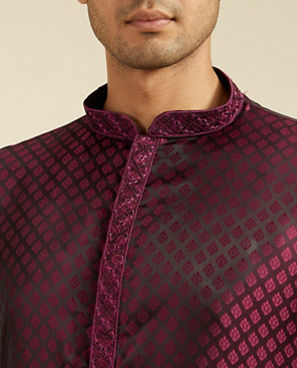
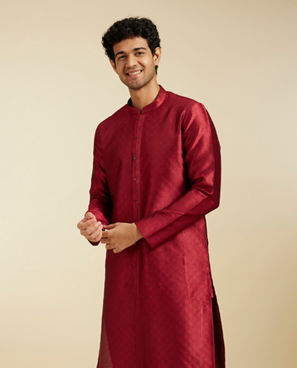
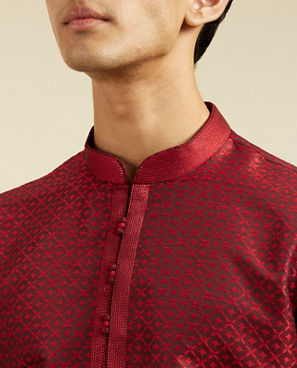
Burgundy and wine sit at the darkest, most sophisticated end of the red family. These are the shades for formal wedding functions, winter celebrations, and men who want the cultural resonance of red with a more restrained, contemporary aesthetic.
What Red Kurtas Are Made For
Navratri is the most natural home — it's one of the festival's most celebrated colours, and a printed or embroidered kurta brings the right energy and cultural connection to the occasion.
Diwali — red and gold together is one of the most celebrated colour combinations in Indian festive dressing. A red with gold embroidery at Diwali is a choice that makes complete cultural sense and looks genuinely spectacular.
Holi — bright red and cherry red are excellent Holi choices. The color is festive and joyful, and, practically speaking, it's one of the easier shades to wash color powder out of post-celebration.
Wedding functions — a red at a baraat, sangeet, or reception is a strong, culturally grounded choice. The groom's close friends and family often coordinate in red — it's a color that signals you're part of the inner circle and dressed for the occasion.
Eid — crimson and deep red are strong Eid choices, particularly for evening gatherings. The richness of these shades suits the festive significance of the occasion without feeling overdressed.
Puja and religious occasions — red has deep auspicious significance in Hindu tradition. A clean, simple red cotton kurta is entirely appropriate for temple visits, puja events, and religious celebrations.
Surface Detail: What Works on Red
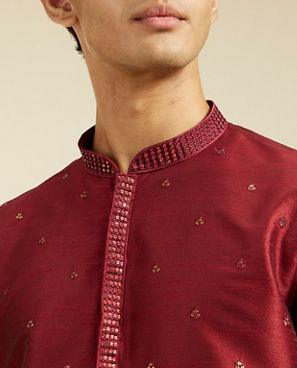
Red is a strong base colour — embellishment needs to be chosen with intention.
Gold zari embroidery on red is the single most celebrated combination in Indian festive wear. The warmth of the gold and the depth of the red create a richness that is immediately associated with celebration, significance, and occasion. This combination has been worn at Indian weddings and festivals for centuries — and it still looks as good as ever.
Silver thread work on red is a cooler, more contemporary alternative. The contrast is sharper and more graphic than gold, and it works particularly well on crimson and deeper red shades.
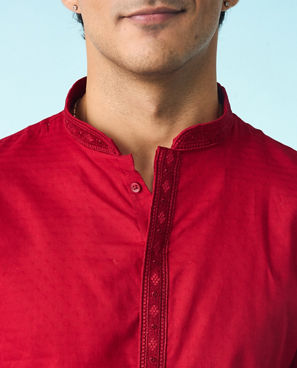
White embroidery on red — particularly Chikankari-style thread work — creates a high-contrast, striking combination that is distinctive and contemporary. More unexpected than gold, and very effective.
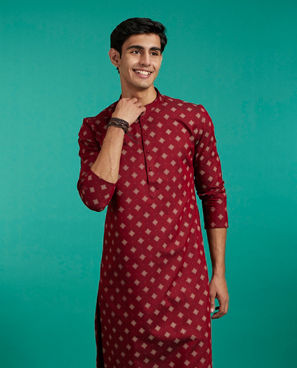
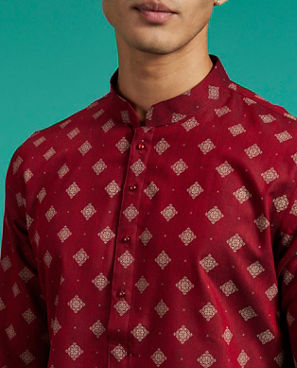
Printed kurtas — geometric patterns, digital prints, and block prints on red — are popular for casual festive occasions, college events, and Navratri. The red base makes printed kurtas particularly vibrant and visually dynamic.
Fabric Guide
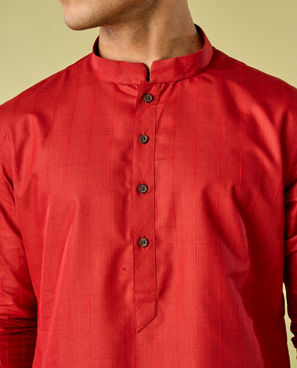
Cotton in red is vivid and practical — the colour appears clean and bold against cotton's matte surface. Best for daytime occasions, Holi, Navratri, and casual celebrations. Easy to maintain and breathable across long active days.
Linen gives red a slightly earthy, textured quality — more relaxed than cotton, good for smart-casual settings and daytime occasions where a relaxed silhouette is appropriate.
Chanderi adds a gentle luminosity to red — the fabric's slight sheen gives the colour more depth and makes it feel genuinely festive. A strong choice for Eid and semi-formal celebrations.
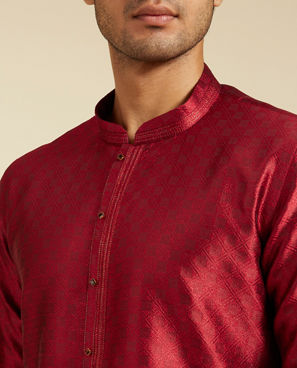
Silk-blend is where red really comes into its own for formal occasions. The lustre of silk amplifies red's natural richness and gives deeper shades — crimson, wine, burgundy — a depth that is visually impressive in any lighting condition.
Pure silk in red is the most luxurious and occasion-specific option — in warm evening lighting at a reception or sangeet, a red pure silk kurta with gold embroidery is one of the most striking looks available in Indian men's celebration dressing.
Styling
Red is a strong colour — the rest of the outfit should complement it rather than compete with it.
Ivory and off-white churidars are the most universally effective pairing — the warmth of ivory against red creates an elegant, classic combination that works for every occasion from casual to formal.
White straight-cut trousers create a crisper, higher-contrast look — clean and well-defined, particularly effective for daytime occasions and outdoor celebrations.
Gold or cream Nehru jacket over the kurta is the most festive layering option — the combination is rich, occasion-appropriate, and deeply connected to Indian celebration culture.
Beige or camel trousers for a more relaxed, earthy pairing — works well for casual occasions and daytime settings where the full formality of churidars isn't needed.
For footwear, embroidered gold or tan juttis are the most natural pairing with red. Dark brown or black mojaris work well for deeper, more formal shades. Keep accessories in gold for maximum cultural resonance — a simple bracelet and a clean watch are all that's needed.
Red Across Skin Tones
Red is one of the most universally flattering colours in Indian celebration dressing — here's how it works across different complexions.
On deeper complexions, bright and classic red creates a powerful, high-contrast look that is immediately striking. These skin tones carry bold red with particular confidence — the colour appears vivid and commanding rather than overwhelming.
On medium and olive skin tones, red sits with a natural warmth — the colour's richness complements the skin's own undertones beautifully. Both bright and deep shades work well here.
On fairer complexions, deeper reds — crimson, burgundy, wine — create a sophisticated, rich contrast that feels formal and considered. Bright red creates a more dramatic, high-energy look that works well for festive occasions.
Frequently Asked Questions (FAQs)
1. Can men wear red to a wedding in India?
Absolutely — red is one of the most appropriate colours for men at Indian weddings, particularly for close family and friends of the groom. A red kurta at the baraat, sangeet, or reception is a culturally grounded and visually strong choice. The convention of avoiding red as a guest applies primarily to not outshining the bride — and a well-chosen kurta as a guest sits well within the spirit of the occasion.
2. What is the best red shade for Navratri?
Bright red and classic Indian red are the most traditional and widely worn Navratri choices. These shades are vibrant, energetic, and culturally connected to the festival's colour celebrations. A printed or embroidered kurta in cotton or chanderi is ideal for Navratri's active, festive setting.
3. What embroidery works best on a red kurta?
Gold zari embroidery is the most traditional and impactful choice — the gold and red combination is one of Indian celebration dressing's most enduring and celebrated pairings. Silver thread work is a contemporary alternative that works particularly well on crimson and deeper red shades.
4. Is red appropriate for Eid?
Yes — crimson, deep red, and wine shades are strong Eid choices, particularly for evening gatherings. In a quality fabric like chanderi or silk-blend, a deep red is festive, well-dressed, and entirely appropriate for the occasion. Bright red also works well for Eid morning celebrations.
5. How do I care for a red kurta to prevent colour fading?
Wash in cold water with a colour-safe detergent formulated for darks and brights. Turn inside out before washing to protect the outer fabric surface from friction-related fading. Always dry in shade — direct sunlight fades red fabrics significantly faster than most other colours. For embroidered or printed kurtas, hand washing is the safest option to preserve both color and surface detail over time.



_18-04-2025-21-41:297-368)
_18-04-2025-21-42:297-368)
_18-04-2025-21-41:Swatch)






_18-04-2025-20-13:297-368)
_18-04-2025-20-14:297-368)
_18-04-2025-20-13:Swatch)