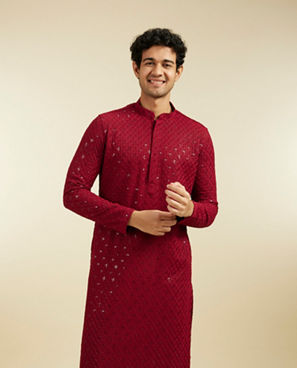
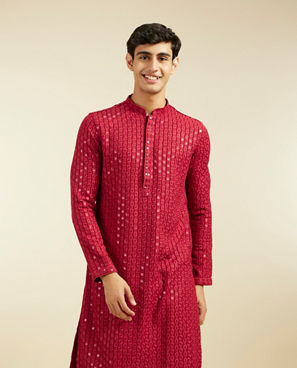
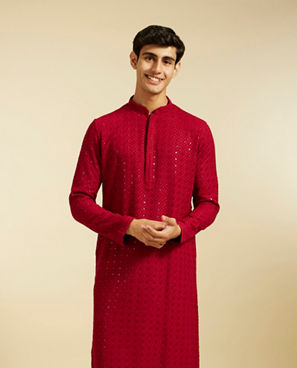
Maroon Chikankari Kurtas for Men – Royal Craft, Modern Confidence
Maroon and Chikankari — two icons of Indian heritage brought together in a single garment. Individually, each carries enormous weight in Indian fashion history. Maroon has long been associated with royalty, celebration, and the kind of deep, commanding richness that turns heads without demanding attention.
Chikankari, the centuries-old embroidery tradition from Lucknow, is one of India's most refined textile arts — a craft of extraordinary delicacy, patience, and skill. When these two come together in a kurta, the result is something that transcends trend: a piece that is simultaneously rooted in tradition and entirely relevant to the modern Indian man's wardrobe.
Chikankari: A Craft Worth Knowing
Before you wear a Chikankari kurta, it helps to understand what makes the craft so extraordinary. Originating in Lucknow during the Mughal era, Chikankari embroidery is defined by its use of white thread on fabric — traditionally white-on-white, though contemporary interpretations explore contrasting thread-and-base-color combinations.
The embroidery itself encompasses over thirty distinct stitch types, each with its own name, technique, and visual character. Some stitches are raised and textured; others are flat and shadow-like, creating subtle patterns visible only in certain light.
The craft requires immense skill and patience — a single kurta can take days or even weeks to complete, depending on the intricacy of the design. Wearing Chikankari is wearing the work of a craftsperson's hands — and that is worth recognizing every time you reach for a Chikankari kurta.
Why Maroon is the Perfect Canvas for Chikankari
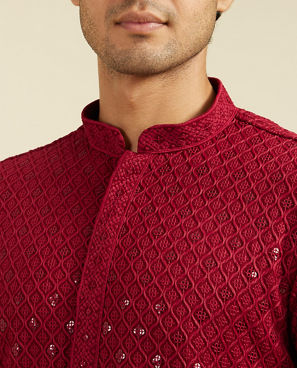
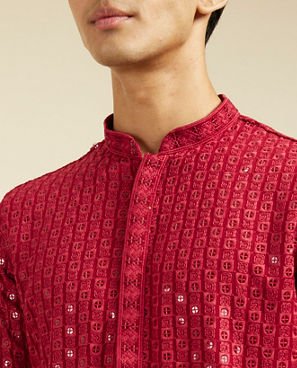
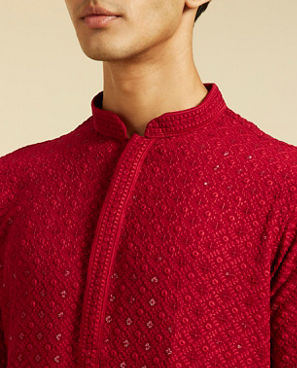
While Chikankari is traditionally executed in white thread on pale or white fabric, the craft takes on an entirely different — and equally compelling — character when placed on a deep, rich base like maroon. The contrast between the delicate white or ivory thread work and the depth of the maroon base creates a visual dynamic that is simultaneously dramatic and refined. The embroidery, which might appear subtle on a lighter base, reads with much greater clarity and impact on maroon — every stitch visible, every motif defined. The richness of maroon also elevates the perceived value of the Chikankari work, making the overall garment feel more festive, more formal, and more deeply luxurious. It is a combination that rewards close attention — the more you look, the more detail you discover.
Reading the Occasion Right
A maroon Chikankari kurta sits firmly in the festive and celebratory segment of the ethnic wardrobe — and it excels there.
-
For Eid, it strikes the ideal balance between elegance and craft, offering something more considered than a plain kurta without the heaviness of full embroidery.
-
For Diwali, the richness of maroon combined with the delicacy of Chikankari creates a look that is festive and refined in equal measure.
-
Wedding functions — particularly the sangeet, cocktail evening, or reception — are natural settings for a maroon Chikankari kurta, where the craft of the embroidery earns genuine admiration in a well-dressed crowd.
-
For engagement ceremonies and anniversary celebrations, the color's romantic depth makes it a particularly resonant choice.
This kurta knows what it's doing at a celebration — and it does it exceptionally well.
Fabric Foundations: What Carries Chikankari Best on Maroon
The choice of fabric in a maroon Chikankari kurta determines both how the embroidery appears and how the garment feels to wear.
-
Georgette is perhaps the most traditional base fabric for Chikankari — its soft drape allows the embroidery to sit beautifully on the surface, and the fabric's fluidity gives the kurta an elegant, relaxed movement.
-
Cotton-based Chikankari kurtas in maroon offer a firmer, more structured silhouette — ideal for daytime functions and warmer climates where breathability matters.
-
Chanderi, with its delicate texture and gentle sheen, is an excellent festive choice — the slight luminosity of the fabric adds to the overall richness of the maroon base.
-
Rayon and viscose blends offer a smooth, comfortable drape at an accessible price point while still doing justice to the Chikankari embroidery placed on them.
The Motifs That Define the Look
Chikankari embroidery on maroon kurtas typically features a range of classic motifs that have been refined over centuries of craft tradition.
Floral patterns — roses, jasmine, and stylised blooms — are among the most common, lending the embroidery a romantic, organic quality.
Paisley motifs bring a classic Indian elegance to the design, appearing along borders, necklines, and hemlines with graceful regularity.
Geometric lattice patterns create a more structured, architectural quality — particularly effective along plackets and cuffs.
Jali work — a fine mesh-like stitch that creates an almost lace-like surface texture — adds extraordinary delicacy to certain areas of the kurta, creating a play of density and openness that is visually captivating.
Each of these motifs, placed thoughtfully on a maroon base, creates a garment of genuine beauty and cultural depth.
Styling: Getting It Right
The visual richness of a maroon Chikankari kurta means that styling should be deliberate and restrained — the garment itself is the centerpiece, and everything else should frame it elegantly.
-
Ivory or off-white churidars are the most natural and complementary pairing — the lightness of the bottom wear creates a beautiful contrast with the deep maroon, while allowing the Chikankari embroidery to remain the focal point.
-
Cream or warm beige trousers work equally well for a slightly softer overall palette.
-
For footwear, embroidered juttis in gold or ivory, or classic dark brown mojaris, complement the festive character of the kurta without competing with it.
-
If you choose to layer — with a Nehru jacket or a structured bandhgala — opt for ivory, gold, or even a deep wine tone that harmonizes with the maroon base.
-
Keep jewellery simple: a single metal bracelet or a classic watch is sufficient.
Maroon Chikankari Across the Wardrobe
A maroon Chikankari kurta is one of those rare wardrobe investments that justifies itself immediately and repeatedly. Because it combines a universally strong festive color with a craft tradition that lends inherent value to the garment, it never feels out of place at any celebration.
It can be worn across multiple seasons — maroon reads warmly in winter festivities and holds its richness through autumn wedding seasons equally well. Unlike trend-driven pieces that cycle in and out of relevance, a well-made Chikankari kurta is perennially appropriate — the craft's heritage ensures it ages gracefully both in terms of fashion and in terms of actual wear. This is a piece you will return to year after year, across different occasions, and it will always deliver.
Craft That the Camera Loves
The combination of maroon and Chikankari embroidery is exceptionally photogenic — and for specific reasons. The depth of the maroon base creates a rich, warm backdrop for the delicate white threadwork, and in photographs, this contrast reads with clarity and elegance that simpler garments cannot replicate.
In natural light, the raised stitches of Chikankari cast subtle shadows that give the garment a three-dimensional quality in photographs — depth that elevates even a simple portrait into something more textured and considered.
For wedding photography or festive event content, a maroon Chikankari kurta creates images with a richness and cultural authenticity that resonates strongly. Shoot in warm, soft lighting to bring out the full depth of the maroon and the delicacy of the embroidery — the results will be worth every effort.
Frequently Asked Questions (FAQs)
1. What makes Chikankari embroidery special compared to other types of embroidery?
Chikankari is distinguished by its extraordinary delicacy, its use of over thirty distinct stitch types, and its centuries-long heritage rooted in Lucknow's craft tradition. Unlike heavier embroidery styles that use metallic threads or embellishments, Chikankari relies on the subtlety and precision of white thread work to create its visual impact — a restraint that makes it one of the most refined embroidery traditions in Indian fashion.
2. Is a maroon Chikankari kurta appropriate for formal occasions?
Yes, absolutely. This kurta in a rich fabric like chanderi or georgette, paired with tailored churidars and a Nehru jacket, creates a look that is entirely appropriate for formal festive occasions — wedding functions, Eid celebrations, Diwali parties, and engagement ceremonies. The combination of color and craft gives the garment a formal gravitas without the heaviness of full embroidery or sherwani styling.
3. How should I care for a Chikankari kurta to preserve the embroidery?
Chikankari kurtas should be hand washed gently in cold water with a mild detergent, or dry cleaned for best results. Never wring the fabric — press out excess water gently and dry in shade. Iron on reverse or with a pressing cloth placed over the embroidery to protect the delicate stitching. Store carefully, folded or on a padded hanger, away from sharp objects that could snag the threads.
4. Can a maroon Chikankari kurta be worn without a jacket or layering piece?
Absolutely. A well-cut kurta stands entirely on its own — the combination of color and craft provides sufficient visual interest without any additional layering. For warmer occasions or daytime events, wearing it without a jacket keeps the look fresh and allows the embroidery to be appreciated fully. A Nehru jacket or bandhgala is an option for cooler evenings or more formal occasions, not a requirement.
5. What distinguishes a maroon Chikankari kurta from a standard maroon embroidered kurta?
The distinction lies in the craft tradition and technique. Chikankari is a specific, centuries-old embroidery style from Lucknow defined by particular stitch types, white thread work, and a characteristic delicacy of execution. A standard embroidered kurta may use any embellishment technique — sequins, zari, mirror work, or mixed embroidery — without the specific craft heritage of Chikankari. Choosing Chikankari is a choice for a specific, identifiable tradition of Indian craft excellence.