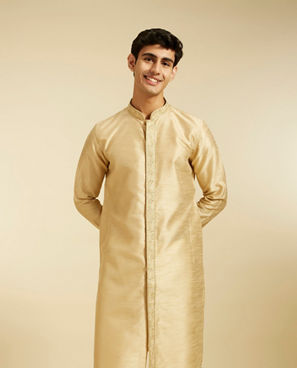
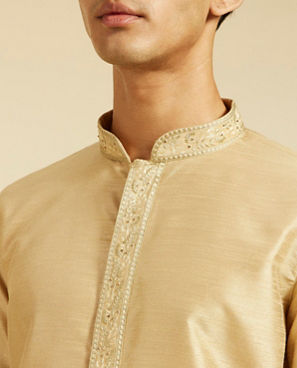
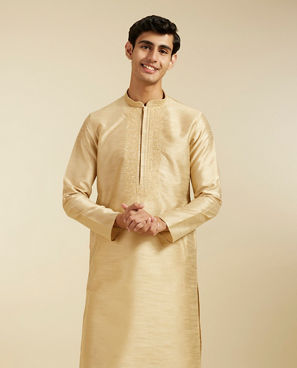
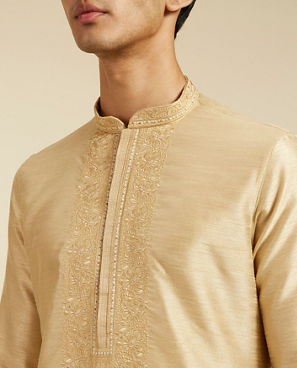
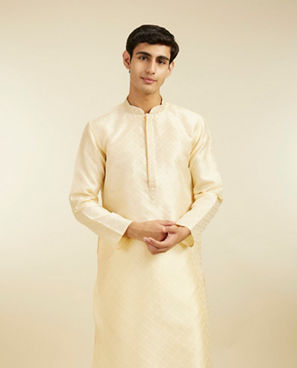
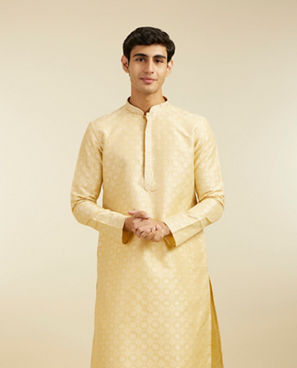
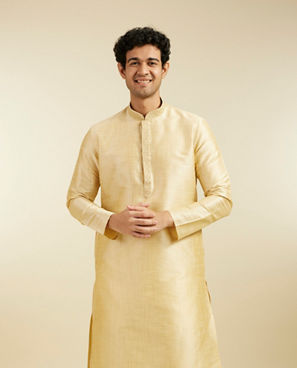
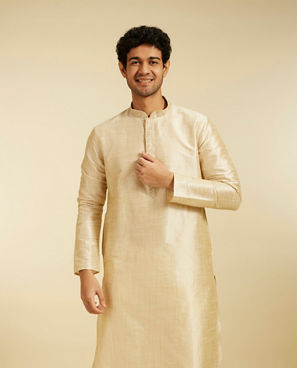
Beige Chikankari Kurtas for Men – Understated Craft, Unmistakable Elegance
Some of the most powerful style statements are made not through volume or color, but through restraint. A beige chikankari kurta is exactly that kind of statement — a piece that reveals its quality gradually, rewards close attention, and carries an elegance that louder garments rarely achieve.
Chikankari on Beige: Why This Combination Works So Beautifully
Chikankari embroidery has its deepest roots in the white-on-white tradition — delicate thread work on pale fabric, visible primarily through texture and shadow rather than color contrast. Beige is perhaps the most natural evolution of this tradition: a shade close enough to white to honour the craft's original aesthetic, but warm enough to add a depth and richness that pure white cannot offer.
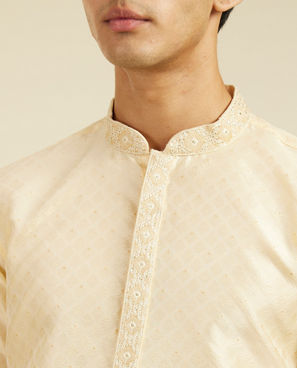
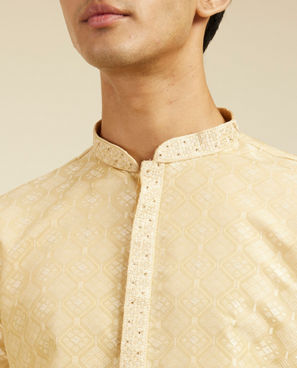
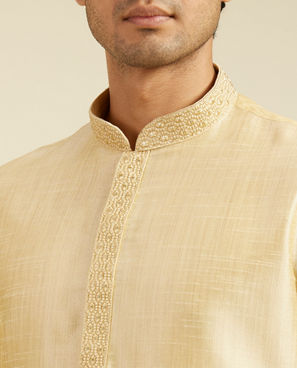
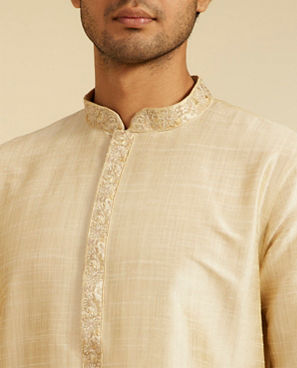
On a beige base, Chikankari embroidery gains a particular kind of quiet visibility — the white or ivory thread work is visible without being stark, present without being loud. The warmth of the beige base gives the embroidery a golden-hour quality — as though the light is always just right. This combination is the definition of understated luxury: a kurta that looks simple from across the room and extraordinary up close.
The Craft in Detail: What Chikankari Brings to This Kurta
Chikankari is not a single stitch — it is a vocabulary of over thirty distinct embroidery techniques, each with its own character, application, and visual effect. On a beige kurta, several of these techniques are particularly compelling. Shadow work — where the thread is worked on the reverse of the fabric to create a soft, diffused pattern visible on the front — creates a dreamlike quality on beige that is deeply elegant.
Phanda stitches create small, raised knots that add texture and dimension to floral motifs. Tepchi, a long running stitch, creates flowing lines that define the outlines of larger patterns with deceptive simplicity.
Jali work — the fine mesh-like open stitch that is among Chikankari's most celebrated techniques — creates areas of extraordinary delicacy that contrast beautifully with the solid warmth of the beige fabric around it.
Together, these techniques create a surface that is endlessly interesting without ever being excessive.
Occasions That Work
The versatility of a beige chikankari kurta is one of its most significant strengths.
-
At the casual end of the spectrum, a lightweight cotton kurta is an excellent choice for family lunches, religious ceremonies, and relaxed gatherings — it reads as effortlessly well-dressed without the formality of heavier embellishment.
-
For semi-formal occasions — office celebrations, engagement parties as a guest, cultural events — the Chikankari detail elevates the beige kurta into something more considered and occasion-appropriate.
-
For festive occasions like Eid, the combination of beige and Chikankari creates a look of quiet elegance that stands distinctly apart from the more saturated color choices around it.
-
Wedding functions — particularly the mehndi, haldi, or intimate pre-wedding gatherings — are natural settings where the warmth of beige and the craft of Chikankari feel simultaneously celebratory and refined. This is a kurta that moves gracefully across the entire occasion spectrum.
Fabric Choices
The fabric on which Chikankari is executed has a significant impact on how both the embroidery and the beige color read on the body.
-
Georgette is the most traditional Chikankari base — its soft, fluid drape allows the embroidery to sit gracefully on the surface, and the fabric's movement gives the kurta an elegant, relaxed quality.
-
Cotton-based kurtas offer a firmer, more structured silhouette that is breathable and practical for daytime occasions and warmer weather.
-
Chanderi, with its delicate texture and subtle sheen, adds a gentle festive luminosity to the beige base — making it an excellent choice for evening functions and celebratory occasions.
-
Muslin, historically one of the most prized bases for Chikankari embroidery, offers an exceptionally fine, lightweight drape that gives the garment an almost antique elegance.
Each fabric brings something distinct to the beige chikankari combination — the choice depends on the occasion, the season, and how formal you want the overall look to feel.
Styling: The Art of Tonal Dressing
Beige Chikankari kurtas lend themselves particularly well to tonal dressing — building an outfit within a single color family for a look that is cohesive, modern, and deeply sophisticated.
-
Pairing it with ivory or cream churidars creates a tonal ensemble that feels intentional and elegant — the slight variation in shade between the kurta and the bottom wear adds visual interest without breaking the palette's unity.
-
Off-white straight-cut trousers extend the same tonal logic in a slightly more contemporary silhouette.
-
For those who want a gentle contrast, warm sand or light camel trousers pair beautifully with beige, staying within the warm neutral family while adding a touch more definition.
-
White is the cleanest contrast option — crisp, clear, and timelessly appropriate.
-
For footwear, tan or caramel leather juttis, natural woven mojaris, or simple brown Kolhapuri sandals all complement the warmth of beige beautifully.
-
Keep accessories in silver or matte gold tones — nothing too heavy or ornate.
Across Seasons and Skin Tones
One of beige's most underappreciated qualities is its seasonless versatility. In lighter cotton or muslin fabrics, it is a natural summer choice — the color reflects rather than absorbs heat, and the pale palette feels instinctively cool and fresh in warm weather. In heavier chanderi or silk-blend fabrics, the same color story works beautifully through the cooler festive months of autumn and winter, carrying a warmth and richness that suits the season.
Across skin tones, beige performs with a quiet generosity. On deeper and darker complexions, beige creates a soft, luminous contrast that is elegant and flattering. On medium and olive skin tones, the warmth of beige harmonises naturally with the skin's undertones, creating an organic, cohesive appearance. On fairer complexions, beige adds a gentle warmth that pure white lacks, making the overall look feel richer and more considered.
A Wardrobe Cornerstone Worth Investing In
It occupies a unique position in the ethnic wardrobe — it is simultaneously a neutral and a statement piece. As a neutral, it pairs easily with a wide range of bottom wear, footwear, and accessories, making outfit construction simple and reliable. As a statement piece, the Chikankari embroidery ensures the kurta carries genuine craft and visual interest that elevates it beyond a basic wardrobe filler. This duality is rare and enormously valuable. A well-made kurta is the kind of piece that gets worn repeatedly, across different occasions and different seasons, always looking appropriate and always earning genuine appreciation from those who look closely enough to notice the craft. In a wardrobe built on quality over quantity, it is an essential.
Soft Light, Rich Detail
These kurtas have a particular magic in photography that is worth understanding. The warmth of the beige base absorbs and reflects light in a way that is deeply flattering — in natural daylight, the color glows softly rather than bleaching out, creating a warmth in the image that is immediately appealing. The Chikankari embroidery, particularly in natural or soft artificial light, creates subtle shadow and texture that gives the garment a three-dimensional quality in photographs. This depth is what makes it so consistently beautiful in both formal portraits and candid shots. For photography, natural or warm diffused light is ideal — it brings out both the warmth of the beige and the delicacy of the embroidery simultaneously. Against a simple, neutral backdrop — a white wall, a wooden surface, a garden setting — a Beige Chikankari kurta photographs with a quiet, composed elegance that is genuinely difficult to replicate with any other garment.
Frequently Asked Question (FAQs)
1. Is a beige chikankari kurta suitable for formal occasions?
Yes, in the right fabric and with appropriate styling. This kurta in chanderi or silk-blend, paired with tailored churidars and a Nehru jacket in ivory or gold, creates a look that is entirely appropriate for formal festive occasions — wedding functions, Eid celebrations, and engagement ceremonies. The Chikankari embroidery provides the craft and visual interest that formal occasions require, while the beige base keeps the overall look refined and sophisticated.
2. How does a beige chikankari kurta differ from a white Chikankari kurta?
The primary difference is in the warmth and depth of the base color. White Chikankari kurtas have a crisper, cooler aesthetic that is classic and clean. These kurtas carry a warmer, more nuanced character — the base color adds depth and a golden quality that white lacks, making the overall garment feel richer and slightly more versatile across different occasions and skin tones.
3. What embroidery thread colors appear on beige chikankari kurtas?
Traditional Chikankari on beige typically uses white or ivory thread — the slight contrast between the thread and the warm base creates a soft, elegant visibility that is characteristic of the style. Contemporary interpretations may use thread in shades very close to the beige base for a more tonal, subtle effect, or occasionally introduce a second thread color — gold or silver — for festive versions of the classic design.
4. Can I wear a beige chikankari kurta to a mehndi or haldi function?
Absolutely. Beige is a warm, celebratory neutral that suits the palette of both mehndi and haldi functions beautifully. The Chikankari embroidery adds craft and occasion-awareness without the color saturation of more traditionally festive choices. It is a sophisticated alternative for men who want to be well-dressed at these functions without defaulting to the standard yellow or green options.
5. How do I style a beige chikankari kurta for maximum impact?
The most effective approach is tonal dressing — pairing the beige kurta with ivory, cream, or off-white churidars or trousers for a cohesive, sophisticated look. Keep footwear in warm natural tones — tan juttis, caramel mojaris, or simple brown sandals. Accessories in matte gold or silver complement the embroidery without competing with it. Let the Chikankari craft be the focal point of the outfit — it needs no competition.

_28-04-2025-06-53:297-368)
_18-04-2025-23-25:297-368)
_28-04-2025-06-53:Swatch)
_28-04-2025-07-17:297-368)
_18-04-2025-23-16:297-368)
_28-04-2025-07-17:Swatch)
_28-04-2025-07-19:297-368)
_18-04-2025-17-31:297-368)
_28-04-2025-07-19:Swatch)
_18-04-2025-22-55:297-368)
_18-04-2025-22-55:297-368)
_18-04-2025-22-55:Swatch)
_18-04-2025-17-18:297-368)
_18-04-2025-17-17:297-368)
_18-04-2025-17-18:Swatch)