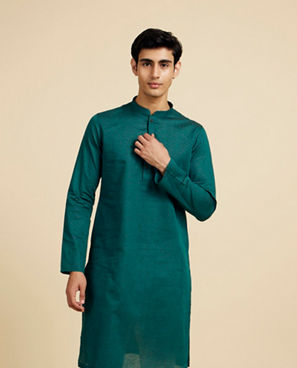
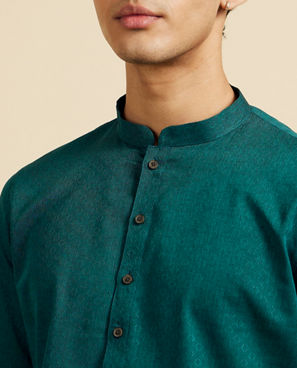
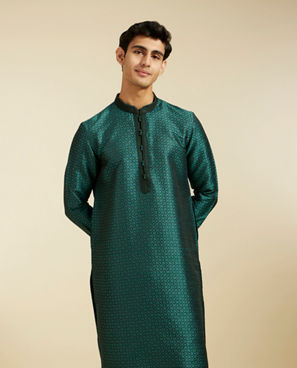
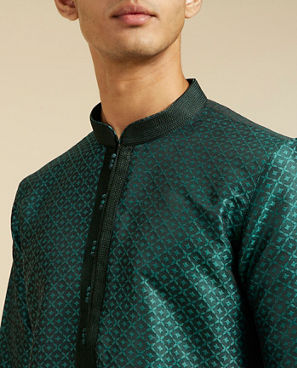
Green Kurtas for Men – Fresh, Grounded and Always in Season
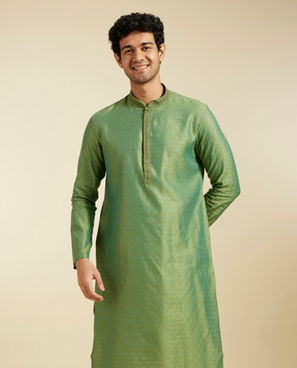
From the deep bottle greens of winter weddings to the bright mint of a summer festival, from the earthy olive of a casual gathering to the rich emerald of a Diwali party — green covers more ground than almost any other color in the kurta spectrum. At Diwas, the green kurta collection is built around exactly this versatility — a range that gives every man a green that works for him, his occasion, and his personal style.
Green Across India: A Color With Real Cultural Roots
Green shows up everywhere in Indian celebration culture. It's the color of mehndi — of the paste itself, of the leaves used to apply it, of the aesthetic that defines the whole ceremony. It's one of the colors celebrated during Navratri. It appears in the flag, in religious symbolism across multiple faiths, and in the natural dye traditions that have coloured Indian fabric for centuries. In South India, fresh green banana leaves are the surface on which celebrations are literally served. In North India, Baisakhi celebrates green fields. Green in an Indian context is not just a color — it's a reference to abundance, freshness, and life. Wearing it at a celebration connects you to something real.
The Green Spectrum: A Shade for Every Personality
Green's range is one of its greatest strengths — and understanding where different shades sit helps you choose with intention.
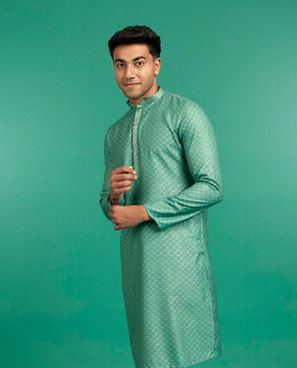
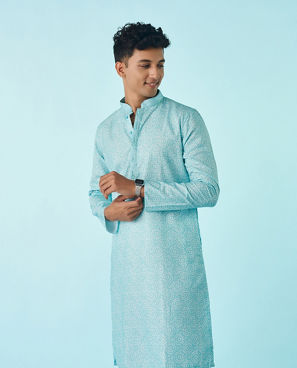
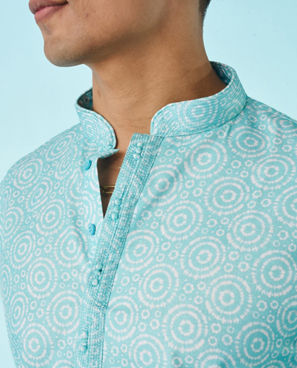
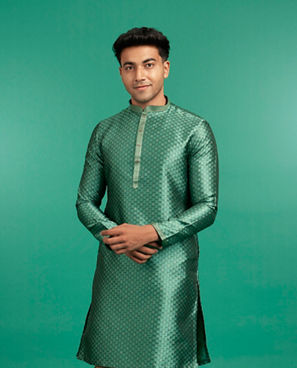
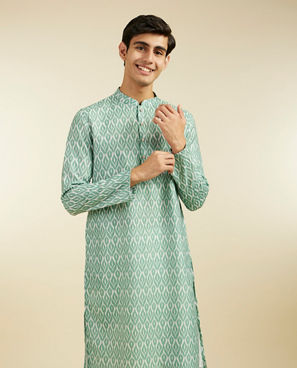
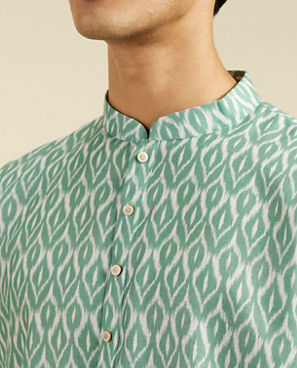
Mint and pastel green are the lightest, freshest options — airy and approachable, these shades work beautifully for spring festivals, daytime occasions, and men who want green without the weight of darker shades. Mint reads as contemporary and clean, particularly in printed styles.
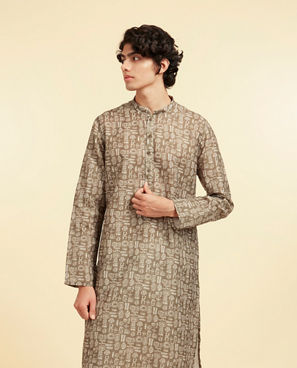
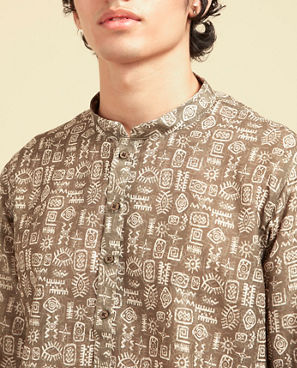
Olive and sage are earthy and grounded — these tones feel relaxed and natural. They're excellent for casual gatherings, smart-casual settings, and men who gravitate towards a more understated aesthetic.
Bright and Kelly green are vibrant and energetic — ideal for Navratri, mehndi functions, and occasions where the dress code rewards color and presence. These shades photograph with real impact.
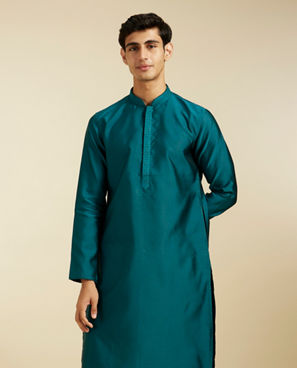
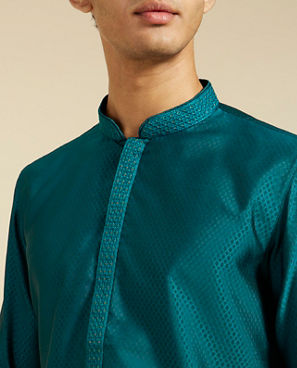
Teal and teal green sit at the intersection of green and blue — sophisticated, distinctive, and well-suited to a wide range of occasions from semi-formal to festive.
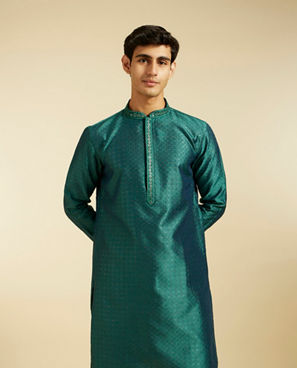
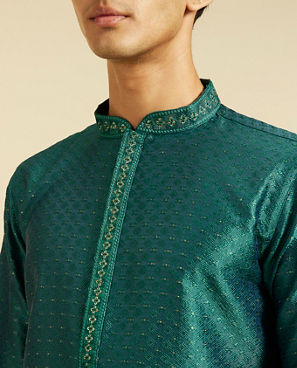
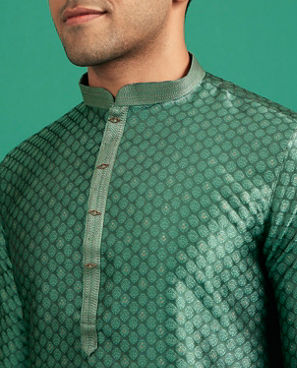
Emerald and forest green are the richest, most formal shades in the green family. In a high-quality fabric with embellishment, these shades carry the weight of a wedding or significant celebration without compromise.
Bottle green and dark green are the most winter-appropriate greens — deep, warm, and well-suited to the festive season between October and February.
Green at Its Best: The Right Occasions
Mehndi functions — green is practically the mehndi color. The connection between green and the mehndi ceremony is cultural, aesthetic, and widely celebrated. A green kurta at a mehndi is the most contextually connected outfit choice you can make.
Navratri — green features across multiple nights of Navratri's color celebrations. A printed or embroidered green kurta is energetic, festive, and entirely in the spirit of the occasion.
Baisakhi — green connects directly to the harvest festival's core imagery. The fields, the season, the abundance — green at Baisakhi is not just appropriate, it's meaningful.
Eid — deep greens hold particular significance for Eid celebrations. Bottle green, forest green, and emerald are strong choices that are both festive and culturally resonant for the occasion.
Wedding functions — emerald or forest green in a silk-blend or embroidered kurta is a distinctive and sophisticated wedding function choice. It stands apart from the standard maroon-and-navy palette while holding its own in terms of festive formality.
Casual everyday occasions — olive, sage, and mint kurtas in cotton are some of the most versatile casual pieces you can own. They go with almost every neutral bottom wear and require zero styling effort to look considered.
What Makes Green a Strong Base for Embellishment
Green works with a surprisingly wide range of embroidery and print options.
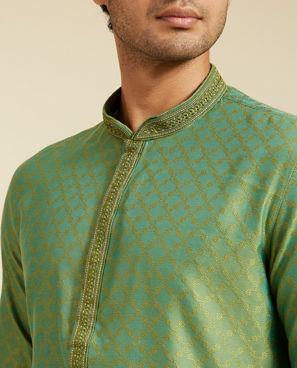
Gold zari on emerald or forest green is one of Indian celebration dressing's most striking combinations — the warmth of the gold against the richness of the deep green creates something that feels both festive and deeply rooted in Indian craft tradition.
White or ivory embroidery on green creates a fresh, clean contrast that works particularly well on brighter and mid-tone greens. Chikankari-style white thread work on a green base is a combination that looks refined without feeling formal.
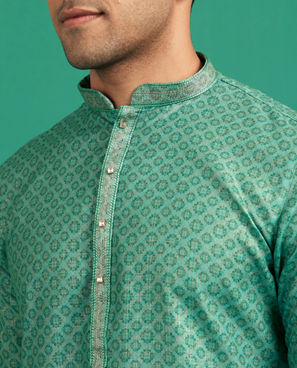
Silver thread work on teal or dark green is a cooler, more contemporary choice — the metallic silver against green has an almost natural quality, like light on leaves.
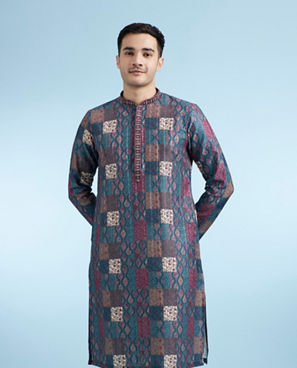
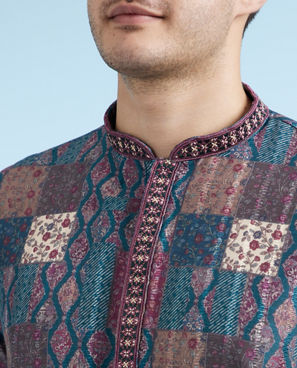
Printed greens — floral prints, geometric patterns, block prints — work across the full green spectrum. Earthy block prints on olive and sage feel artisanal and considered. Floral digitals on bright green feel celebratory and contemporary.
Fabric Choices That Work for Green
Cotton makes green look vivid and clean — the colour reads with maximum clarity on cotton's matte surface. The most practical choice for everyday occasions, summer festivals, and active celebrations like mehndi and Navratri.
Linen suits the earthier shades of green particularly well — olive and sage in linen have a naturally textured quality that feels grounded and well-considered.
Chanderi gives mid and deep greens a gentle sheen — elevating them from casual into festive territory. A good choice for Eid and semi-formal celebrations.
Silk-blend is where emerald and forest green come fully alive — the lustre of silk on these rich shades creates a depth and richness that cotton simply cannot replicate. The right choice for evening wedding functions and significant celebrations.
Styling Green: What Works
White or ivory churidars — the cleanest and most universally effective pairing for any shade of green. The contrast is fresh and natural, and it works from mint to bottle green without missing.
Cream straight-cut trousers — a softer, warmer pairing that suits earthy olive and sage greens particularly well.
Beige or sand trousers — an organic, earthy combination that feels natural and relaxed. Best for casual occasions and smart-casual settings.
Ivory Nehru jacket over a deep green kurta — one of the most complete and occasion-ready combinations for wedding functions and festive evenings.
For footwear, tan and caramel juttis complement green most naturally — the warm leather tones work with both earthy and vibrant greens. Brown mojaris suit deeper, more formal greens. For casual occasions, simple white kolhapuris with a mint or bright green kurta is a clean, contemporary combination.
Accessories in gold work naturally with richer greens — emerald and forest green in particular. Silver suits cooler greens like teal and sage.
Green Across Skin Tones
Green is one of the most generous colors across different complexions.
On deeper complexions, bright and rich greens — emerald, Kelly, bottle — create a vivid, high-contrast look that is immediately striking and confident. These are the shades that look most powerful on deeper skin tones.
On medium and olive skin tones, green sits with a natural warmth — the color's earthy undertones harmonize beautifully with olive complexions across nearly every shade of the green spectrum.
On fairer complexions, deeper and richer greens create a strong, sophisticated contrast. Lighter greens — mint, pastel — create a fresh, tonal look that feels clean and well-considered.
Frequently Asked Questions (FAQs)
1. What shade of green works best for a mehndi function?
Bright green, Kelly green, and mid-tone greens are the most natural and widely worn mehndi choices — the connection between green and the mehndi ceremony is direct and cultural. For a more considered, less expected mehndi look, teal green and emerald are sophisticated alternatives that still carry the color connection without the predictability.
2. Is green appropriate for Eid?
Yes — and particularly for men, deep greens like bottle green, forest green, and emerald hold genuine cultural significance for Eid celebrations. In a quality fabric with gold embellishment, a deep green kurta is one of the most appropriate and well-received color choices for the occasion.
3. Can I wear green to a wedding as a guest?
Absolutely. Emerald or forest green in a silk-blend or embroidered kurta is a sophisticated and memorable wedding guest choice — it's festive without being predictable, and culturally grounded without being overdone. Avoid very bright or neon greens for formal evening functions — stick to richer, deeper shades for the most polished result.
4. What embroidery works best on a green kurta?
Gold zari embroidery on emerald and forest green is the most impactful and festive combination. White or ivory thread work on bright and mid-tone greens creates a fresh, refined contrast. Silver embroidery suits teal and cooler greens most naturally.
5. How do I style an olive green kurta for a casual occasion?
Olive green is one of the easiest shades to style casually. Pair with beige or cream churidars or straight-cut trousers for a clean, earthy combination. Keep footwear simple — tan juttis or brown leather sandals both work well. Skip heavy accessories and let the colour's natural warmth carry the look. A simple cotton or linen olive kurta with minimal styling is consistently one of the most effortlessly well-dressed casual looks available.







_18-04-2025-23-03:Swatch)