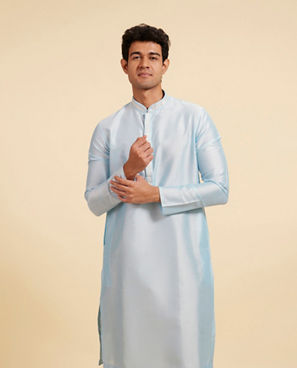
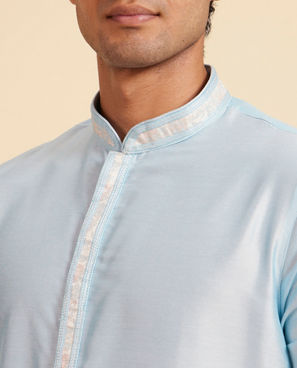
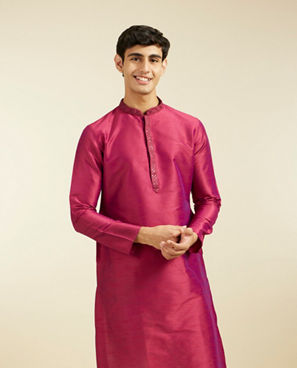
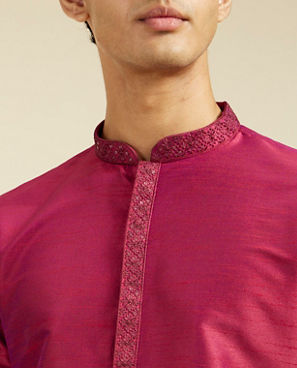
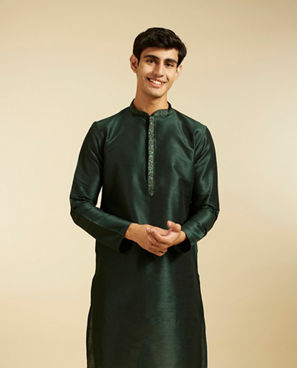
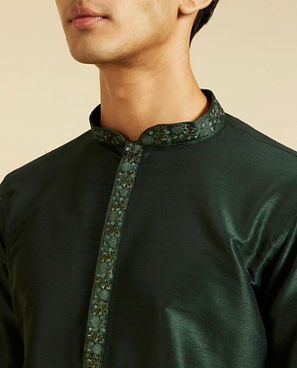
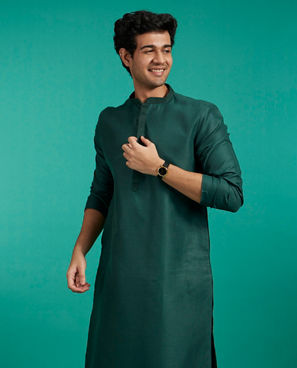
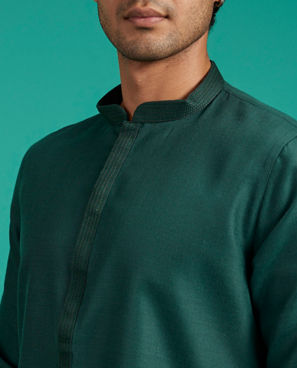
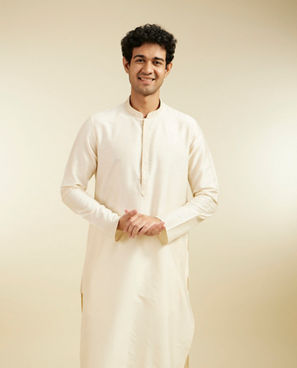
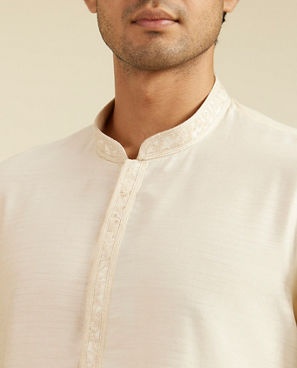
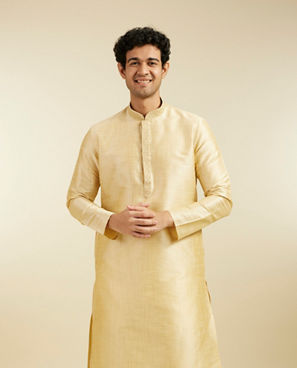
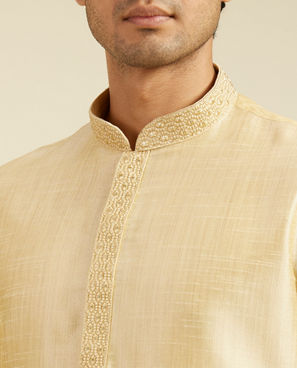
Solid Kurtas for Men – Color, Fabric, Fit. Nothing Else Needed
The solid kurta is the most honest piece in Indian men's celebration dressing. It makes no claims it can't back up. There's no print to create visual interest independently, no embroidery to signal occasion-awareness, no surface detail to draw attention away from how the garment is actually made and how well it actually fits. A solid kurta stands entirely on its own fundamentals — and when those fundamentals are right, the result is one of the sharpest, most consistently impressive looks in the wardrobe. At Diwas, the kurta collection is built on the understanding that a perfectly chosen color in the right fabric with a clean, considered fit never needs anything else to justify itself.
The Case for Solid Over Printed or Embroidered
This is worth making explicitly — because most men default to prints or embellishment when they want to look festive, and in doing so, they miss what solid kurtas do better than either.
A kurta in a deep jewel tone makes the same festive statement as an embroidered one — but it says it through color and fabric rather than decoration. It is immediately readable from across a room without requiring the viewer to get closer to understand what they're looking at. It photographs cleanly, pairs with a wider range of bottom wear and accessories, and adapts to a broader range of occasions without the embellishment becoming contextually inappropriate.
More practically: a solid kurta ages better than a printed one. Prints date. Embroidery styles shift. A well-chosen solid color in a quality fabric remains relevant across multiple seasons and occasions without looking like it belongs to a specific trend moment.
The man who builds his celebration wardrobe around well-chosen kurtas — varied in color, fabric, and occasion-appropriate weight — has a more functional, more adaptable, and ultimately more sophisticated collection than one assembled around trend-driven prints and embellishments.
Color Is Everything
When there is nothing else on the fabric surface to create visual interest, color does all of the work. This makes color selection the single most important decision in the entire kurta purchase — more important than fabric or silhouette.
The neutrals — white, cream, ivory, beige, grey — are the most versatile kurta colors and the most worth investing in. They pair with everything, work across every season, and suit every occasion from casual to formal depending on the fabric. A white kurta in fine cotton covers more ground in the Indian celebration calendar than almost any other single piece.
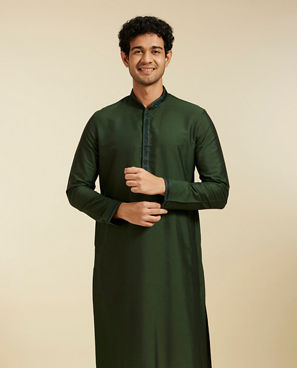
The everyday mid-tones — cobalt blue, teal, forest green, rust, terracotta — are the most personality-driven choices. These colors make a statement without requiring embellishment and work particularly well for men who wear color with natural confidence. They suit casual to semi-formal occasions in cotton and move comfortably into festive territory in chanderi or silk-blend.
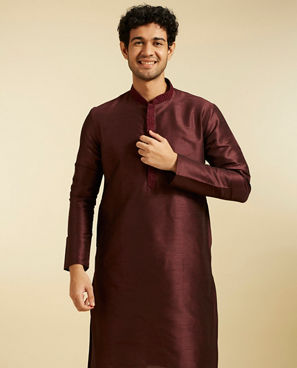
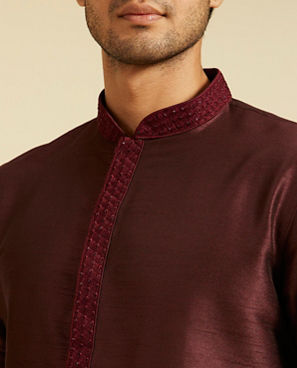
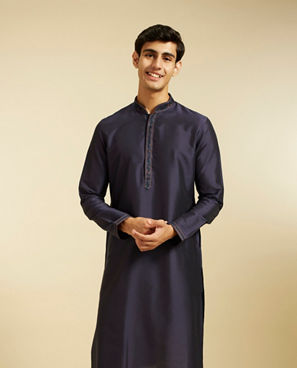
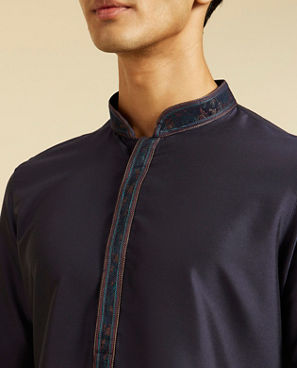
The formal jewel tones — navy, emerald, royal blue, deep teal, maroon — carry the most occasion weight. In a quality fabric, a solid navy or maroon kurta is entirely appropriate for evening wedding functions and significant celebrations. The depth of these colors provides the visual presence that embellishment would otherwise need to supply.
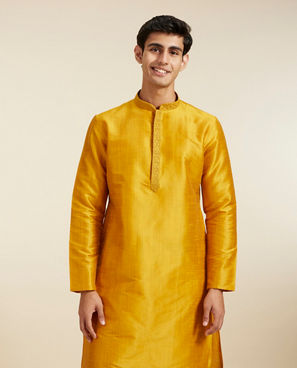
The seasonal colors — yellow and mustard for spring festivals, saffron and orange for Ganesh Chaturthi, deep wine and burgundy for winter celebrations — are the most occasion-specific solid choices. These are the colors you reach for when the calendar has a specific festival coming up and the color connection matters.
How Fabric Changes the Character
The same solid color in two different fabrics creates two genuinely different garments — and understanding this distinction is what separates considered kurta dressing from accidental kurta dressing.
Cotton gives solid colors a clean, honest, matte quality. Navy in cotton is direct and practical. White in cotton is crisp and fresh. Cotton solid kurtas are the everyday workhorses — appropriate for the widest range of occasions and the easiest to maintain. The most democratic fabric choice.
Linen adds texture to solid colors — the fabric's natural grain gives colors an organic, slightly irregular quality that reads as artisanal and considered. Olive, sand, and earthy tones in linen are particularly effective — the texture reinforces the color's natural character.
Dobby weave cotton introduces a subtle woven pattern into a solid color without breaking the single-color aesthetic. The pattern is visible as a texture difference rather than a color difference — adding surface complexity to what appears to be a plain, solid surface. The upgrade that most people don't notice consciously, but that always makes the kurta look more considered.
Chanderi is where solid kurtas enter genuinely festive territory. The fabric's gentle sheen gives solid colors a soft luminosity — navy in chanderi is not the same navy as navy in cotton. This fabric upgrade transforms a kurta from everyday to occasion-ready without any embellishment.
Silk-blend is the most formal kurta option. The fabric's natural luster amplifies solid colors in warm lighting — a solid maroon silk-blend kurta at a wedding reception is a complete and impressive festive look that needs nothing added to it. The color and the fabric together provide everything the occasion requires.
Occasion Mapping
Friday prayers and religious occasions — white, cream, and soft neutral solid kurtas in cotton or mulmul are the most appropriate and most widely worn choices. The simplicity of a kurta for these occasions is not a limitation but a form of respect.
Eid — the complete range of kurta colors and fabrics works for Eid, depending on the time of day and the specific character of the gathering. White mulmul for morning prayers. Pastel chanderi for afternoon family visits. Deep jewel tones in silk-blend for evening celebrations.
Casual family occasions — any solid cotton kurta in a mid-tone or neutral color. These are the most frequently occurring occasions in most men's calendars, and the solid cotton kurta covers them all without overthinking.
Navratri and Holi — vibrant solid colors in cotton suit the active, outdoor character of both festivals. A solid cobalt, bright green, or bold red cotton kurta for these occasions is practical, festive, and entirely right.
Diwali parties — deep jewel tones in chanderi or silk-blend. A solid navy, emerald, or maroon kurta in a rich fabric at a Diwali party is a complete, considered, impressive look.
Wedding functions — kurtas in silk-blend or jacquard in deep colors hold their own at sangeet nights, reception evenings, and cocktail functions. The absence of embellishment on a solid silk-blend kurta is not a gap — when the fabric is this good, it doesn't need filling.
South Indian festivals — Onam, Pongal, Vishu — solid white and cream kurtas in fine cotton or mulmul are the most traditional and most culturally connected choices for these harvest festival occasions across Tamil Nadu and Kerala.
Styling — The Principles That Always Work
Because these kurtas have no competing visual elements on the surface, the styling decisions carry more weight than they do with printed or embroidered pieces.
Contrast creates definition. A deep kurta with light bottom wear — navy with ivory, maroon with cream — creates a clear visual separation between the two pieces that looks sharp and well-considered. A light kurta with slightly darker bottom wear does the same in reverse.
Tonal dressing creates sophistication. A kurta with matching or near-matching churidars — a teal kurta with teal or ivory-teal churidars, a cream kurta with ivory churidars — creates a monochromatic look that feels intentional and modern. This is one of the strongest contemporary approaches to kurta dressing.
A Nehru jacket transforms the occasion register. A plain kurta under a contrasting or complementary Nehru jacket creates a formal, festive look without requiring the kurta itself to be embellished. This is the most efficient upgrade available for a kurta dressing — one additional piece changes the entire occasion-appropriateness of the outfit.
Footwear and accessories earn their visibility. In a kurta outfit, footwear and accessories are more visible than they are alongside embroidered or printed pieces. A quality pair of juttis, a considered watch, or a single clean bracelet adds finishing detail that the outfit genuinely relies on. The lack of embellishment on the kurta means these elements matter more, not less.
Frequently Asked Questions (FAQs)
1. Can a solid kurta look as festive as an embroidered one?
Yes — the fabric and color determine festive-appropriateness more than surface embellishment does. A solid maroon silk-blend kurta or a solid emerald chanderi kurta in a quality fabric looks genuinely festive for wedding functions, Diwali, and Eid without requiring any embroidery. The fabric's own qualities — luster, drape, color depth — provide the visual presence that embellishment would otherwise supply.
2. What is the most versatile solid kurta color to own?
Navy and white cover the most ground between them. White in fine cotton works for Eid, religious occasions, Onam, casual daily wear, and daytime wedding functions. Navy in cotton or chanderi is ideal for festive occasions, semi-formal events, wedding functions, and everyday celebration dressing. Owning one of each gives you a foundation that covers most of the Indian celebration calendar.
3. How do I make a solid kurta look more formal without adding embroidery?
Three approaches work reliably: upgrade the fabric from cotton to chanderi or a silk blend, add a Nehru jacket in a complementary or contrasting color, and choose quality footwear that matches the occasion's formality level. These three changes transform a kurta from casual to genuinely formal without adding a single stitch of embellishment.
4. Are solid kurtas appropriate for wedding functions or do they need embellishment?
Solid kurtas in quality fabrics — silk-blend, jacquard, chanderi — are entirely appropriate for most wedding functions, including sangeet nights, reception evenings, and cocktail functions. The fabric's inherent richness and the color's depth provide sufficient occasion-awareness. For the most formal wedding ceremonies — baraat, pheras — a degree of embellishment is expected, but a solid silk-blend kurta paired with an embellished Nehru jacket effectively covers this occasion.
5. What is the difference between a solid kurta and a simple kurta?
The terms overlap significantly but differ subtly. A kurta refers specifically to a single-color, unprinted kurta — the defining characteristic is the absence of print. A simple kurta refers more broadly to a kurta without embellishment, which may be solid or may have a subtle texture or weave pattern. All simple kurtas tend to be solid, but a solid kurta can have surface texture like dobby weave or jacquard that makes it more than simply plain.

_18-04-2025-22-06:297-368)
_28-04-2025-06-54:297-368)
_18-04-2025-22-06:Swatch)
_18-04-2025-21-41:297-368)
_18-04-2025-21-42:297-368)
_18-04-2025-21-41:Swatch)