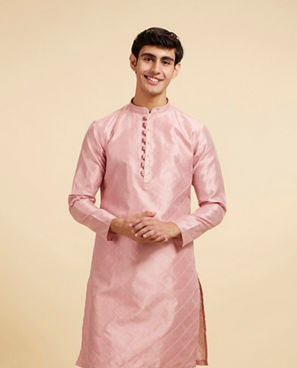
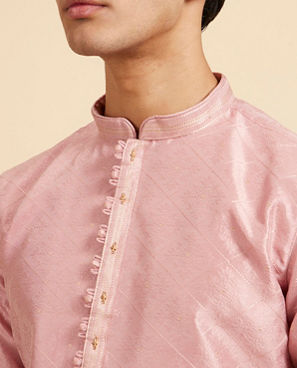
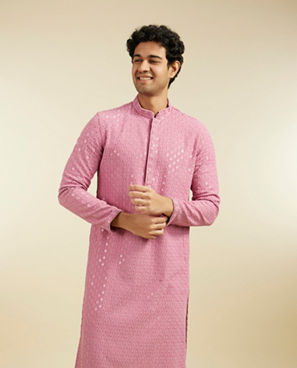
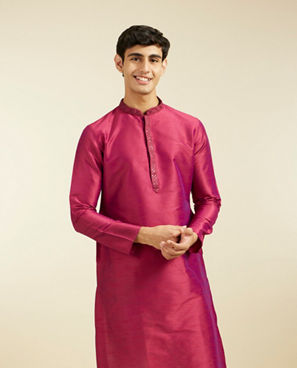
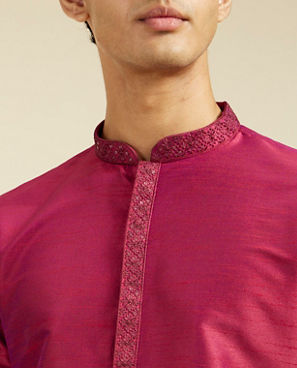
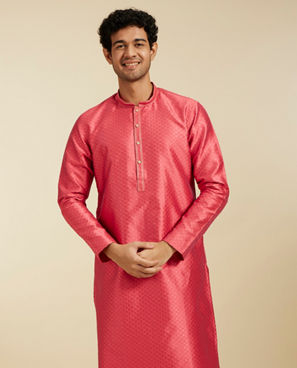
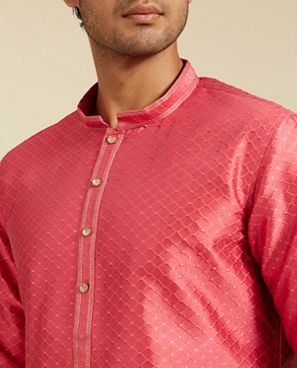
Pink Chikankari Kurtas for Men – The Combination That Keeps Getting Better
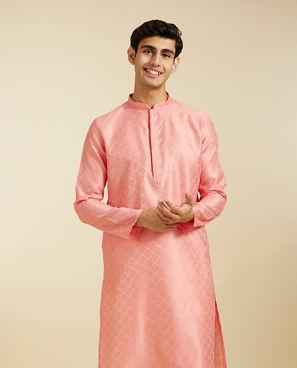
There's a reason pink Chikankari kurtas have become one of the most photographed pieces in Indian men's celebration dressing over the last few years. The combination works on every level — the warmth of pink as a base color amplifies the delicacy of Chikankari embroidery in a way that cooler or more neutral bases don't. The white thread on pink creates a contrast that is soft rather than stark, visible rather than hidden, festive rather than formal. The result is a kurta that photographs beautifully, wears comfortably, and generates the kind of genuine compliments that only come from a truly well-chosen outfit. At Diwas, the pink Chikankari collection is built for the man who wants all of this — and understands exactly why it works.
What Pink Does to Chikankari Embroidery
On white or cream fabric, Chikankari embroidery is visible primarily through texture and shadow. The thread and the base are the same or nearly the same color — the embroidery reveals itself gradually, in good light, to people who are paying attention. That subtlety is part of what makes the traditional white Chikankari extraordinary.
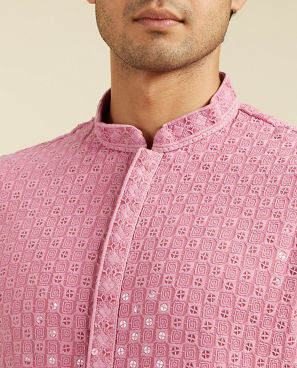
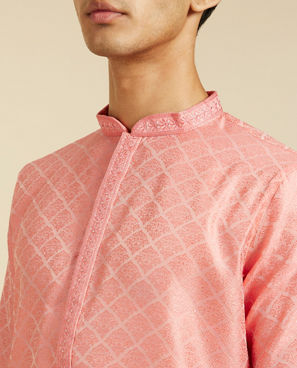
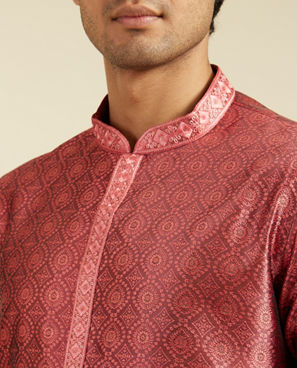
On pink, the equation shifts. White thread on a pink base has genuine contrast — the embroidery is immediately visible, immediately legible, and immediately beautiful. Every stitch — the flowing tepchi outlines, the raised phanda knots, the lace-like jali openwork — reads with a clarity that the white-on-white tradition doesn't allow.
This visibility changes how the craft is experienced. On a pink base, Chikankari announces itself with a confidence that the traditional monochromatic version never does. The embroidery becomes the star rather than the secret. For men who want their kurta's craft to be seen — not just felt — pink is one of the most effective bases available.
Navigating the Pink Spectrum for Chikankari
The shade of pink matters significantly — both for how the embroidery reads and for how the overall kurta suits the occasion and the wearer.
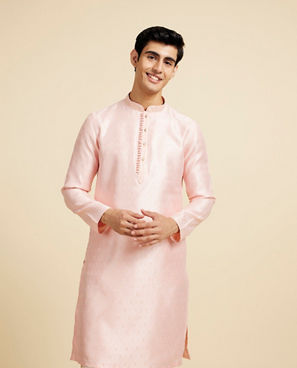
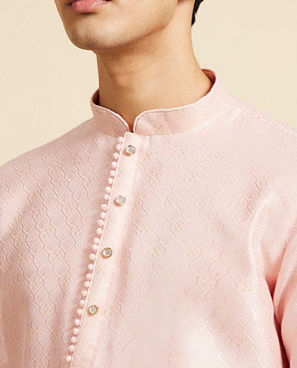
Blush and powder pink are the lightest and most delicate options. The contrast between the white thread and the pale base is soft rather than strong — the embroidery reads with a gentleness that suits refined, daytime settings. Blush Chikankari is the most romantic and the most understated interpretation of this combination. Ideal for Eid morning, spring festivals, and daytime wedding functions.
Dusty rose and muted rose are warmer and more grounded — the pink has an earthy depth that gives the Chikankari a slightly more considered, less overtly festive character. These shades suit semi-formal occasions and men whose aesthetic leans towards the understated.
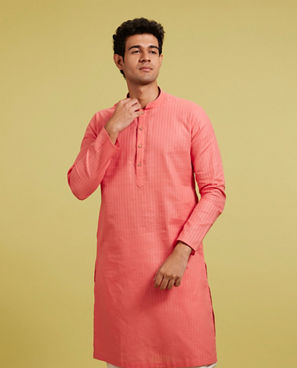
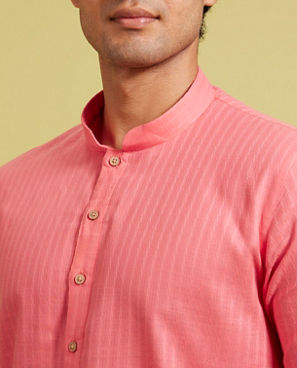
Rose and mid-tone pink sit in the most versatile part of the spectrum — vibrant enough to be clearly festive, soft enough to remain appropriate across a wide range of occasions. The white Chikankari reads with good contrast on these bases. The most widely worn shade range for pink Chikankari kurtas.
Hot pink and bright pink create the most dramatic contrast with white thread work — bold, energetic, and entirely right for Holi, Navratri, mehndi functions, and occasions where maximum color presence is welcome. These shades are for men who wear color with full commitment.
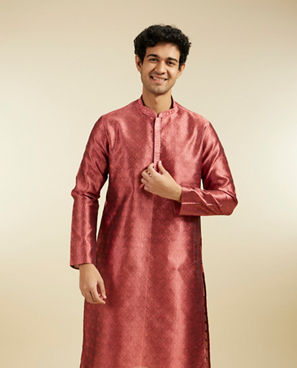
Deep berry and magenta are the richest end of the pink family — closer to the maroon-burgundy spectrum than to blush. Chikankari on these deeper bases has a festive depth that suits evening celebrations and more formal occasions.
The Occasions That Call for This Combination
Mehndi functions are the most natural home for pink Chikankari. The warm, golden palette of the mehndi ceremony — yellows, greens, oranges — creates a backdrop against which pink sits beautifully. The Chikankari embroidery adds the craft dimension that makes the outfit feel genuinely considered rather than simply colorful. A rose or mid-tone pink kurta at a mehndi is one of the most contextually accurate choices a man can make.
Eid— blush and powder pink for the morning, richer rose or berry tones for evening gatherings. The combination of festive color and refined embroidery suits Eid's balance of celebration and consideration. A pink Chikankari kurta is distinctive enough to be remembered and appropriate enough to be right.
Holi— bright and hot pink suits the festival's color philosophy with complete commitment. Cotton fabric, vibrant base, bold white embroidery. The practical advantage: cotton Chikankari washes well, and bright pink handles color powder more gracefully than most people expect.
Navaratri— pink appears across several nights of the festival's color-coded celebrations. A printed or embroidered pink kurta at Navratri brings both cultural connection and genuine personal style to the occasion.
Sangeet nights — rose and mid-tone pink in georgette or chanderi suits the energy and aesthetic of a sangeet beautifully. The fabric moves gracefully, the color photographs spectacularly in warm event lighting, and the Chikankari adds the craft dimension that distinguishes the outfit from a plain colored kurta.
Spring festivals — Baisakhi, Vishu, Gudi Padwa — pink's botanical warmth suits the season's own color story naturally. A pink Chikankari kurta at a spring festival is simultaneously festive, seasonal, and genuinely well-chosen.
Fabric Choices That Shape the Experience
Georgette is particularly effective for pink Chikankari — the fabric's fluid drape allows the embroidery to move gracefully with the garment, and georgette in pink has a softness that amplifies the color's warmth beautifully. The most festive fabric option, and the one that photographs most impressively.
Cotton gives pink Chikankari a more structured, everyday quality. The color appears vivid and clean on cotton's matte surface, and the embroidery sits with precision. The best choice for Holi, casual celebrations, and daytime occasions where comfort and practicality matter alongside appearance.
Mulmul in pink is extraordinarily soft and lightweight — in natural light, the fine muslin has a warmth and translucency that makes the color appear luminous. The most beautiful fabric for blush and powder pink Chikankari in summer and spring settings.
Chanderi adds a gentle sheen to pink — the fabric's subtle luminosity gives the color more festive presence and makes the Chikankari embroidery appear slightly richer and more dimensional. A good choice for semi-formal celebrations and evening occasions.
Styling the Kurta Without Overthinking It
The embroidery is already providing the visual detail. The color is already providing the festive presence. The styling job is simply to support both without introducing competition.
White or ivory churidars are the most universally effective pairing — clean, neutral, and always appropriate. On blush and powder pink, ivory creates a warm tonal pairing. On brighter or deeper pinks, white creates a clean, fresh contrast.
Cream or off-white straight-cut trousers for a more relaxed, contemporary silhouette — works well for casual and semi-formal occasions.
Matching or tonal pink churidars — a pink kurta with ivory-pink or slightly lighter pink churidars — creates a monochromatic ensemble that feels modern and deliberate. Particularly effective with rose and mid-tone pink shades.
Avoid dark or strongly saturated bottom wear — navy, maroon, or forest green beneath a pink Chikankari kurta creates a contrast that disrupts the combination's natural warmth and softness.
For footwear, white or ivory kolhapuris are the most natural pairing with blush and light pinks. Tan juttis add warmth. Silver embroidered footwear suits rose and deeper pink shades for festive occasions. Accessories in silver — a simple bracelet and a watch — complement pink's undertones most naturally.
Pink Chikankari on Camera — Why It Photographs the Way It Does
Pink Chikankari kurtas are among the most photographed pieces in Indian men's celebration dressing — and the reasons are specific.
Pink reflects warm light with a luminosity that makes the wearer appear genuinely radiant in photographs, particularly in natural light settings. The white Chikankari embroidery on the pink base creates a surface texture that the camera reads with depth and clarity — each raised stitch catching light, each jali opening creating shadow. The combination of the color's warmth and the embroidery's texture produces photographs with a visual complexity that solid color kurtas cannot match.
For mehndi photography particularly, the kurta creates images of extraordinary warmth and joy — the combination of the color's festive energy, the craft's delicacy, and the natural light typical of mehndi settings produces photographs that consistently stand out. For reels and social media content, the contrast between the pink base and the white thread work creates a visual interest that performs well on screen across all formats and aspect ratios.
Frequently Asked Question (FAQs)
1. Is pink an appropriate color for men in Indian celebration dressing?
Completely — and this question is asked far less often than it used to be. Pink has been part of Indian men's celebration dressing for centuries, from the courts of Rajasthan to contemporary weddings across the country. Pink Chikankari kurtas are widely worn and enthusiastically appreciated at mehndi functions, Eid celebrations, sangeet nights, and spring festivals. The color has shed any hesitation around it entirely.
2. What shade of pink Chikankari works best for a mehndi function?
Rose and mid-tone pink are the most widely worn and most appreciated mehndi choices — warm, clearly festive, and complementary to the golden palette of the ceremony. Blush and powder pink are more refined alternatives for men who want something lighter. Bright and hot pink suit more energetic, party-style mehndi celebrations. All are appropriate — the shade depends on the specific character of the event and the wearer's personal confidence with color.
3. Does Chikankari embroidery on pink look different from Chikankari on white?
Significantly. On white, Chikankari is visible primarily through texture and shadow — the embroidery reveals itself gradually. On pink, the white thread has genuine contrast with the base — every stitch is immediately visible and the craft is immediately legible. Pink Chikankari is the more immediately impressive of the two; white Chikankari is the more subtly beautiful. Both are extraordinary — they are simply different expressions of the same craft.
4. What fabric pink Chikankari kurta works best for summer occasions?
Mulmul and fine cotton are the most practical summer choices — both are lightweight, breathable, and comfortable in warm weather. Mulmul in blush or powder pink is particularly beautiful in summer natural light. Avoid heavy georgette or chanderi for outdoor summer occasions — the fabric weight becomes uncomfortable in intense heat.
5. How do I care for a pink Chikankari kurta?
Hand wash gently in cold water with a mild detergent formulated for colors. Turn inside out before washing to protect the embroidered surface. Never wring — press out water gently and dry flat in shade. Direct sunlight can fade pink fabric and weaken Chikankari thread over time. Iron on the reverse side with a pressing cloth over the embroidery to protect the raised stitches. For georgette and chanderi pieces, dry cleaning is the safest long-term care option.

_18-04-2025-19-59:297-368)
_18-04-2025-20-00:297-368)
_18-04-2025-19-59:Swatch)
_18-04-2025-22-15:297-368)
_18-04-2025-22-16:297-368)
_18-04-2025-22-15:Swatch)
_28-04-2025-07-19:297-368)
_18-04-2025-17-57:297-368)
_28-04-2025-07-19:Swatch)
_28-04-2025-06-46:297-368)
_18-04-2025-21-09:297-368)
_28-04-2025-06-46:Swatch)