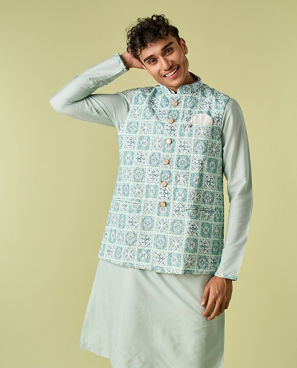
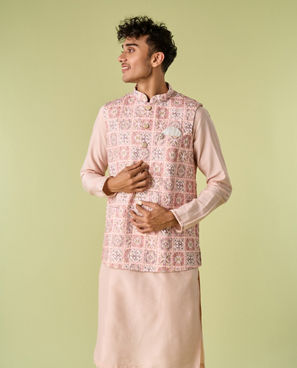
Kurta Jacket Sets for Men – Two Pieces, One Complete Look
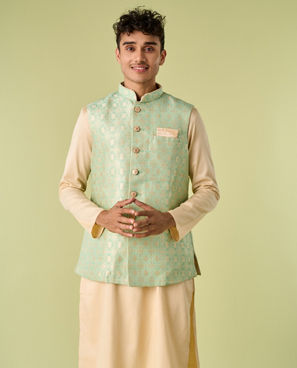
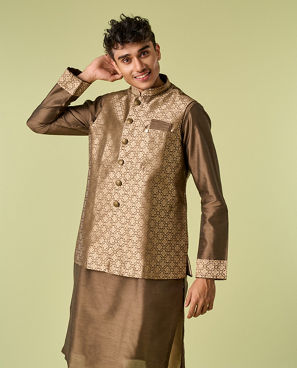
There is a specific moment in getting dressed for a celebration when you realise the outfit is finished — not just assembled, but actually complete. A kurta jacket set creates that moment with very little effort, because the design work has already been done. The colors coordinate. The fabrics match. The silhouette is considered as a whole rather than as two separate decisions. At Diwas, the kurta jacket set collection is built on exactly this understanding — every set designed so the kurta and the jacket work together as a single, intentional outfit that is immediately ready to wear.
What the Jacket Actually Does to the Kurta
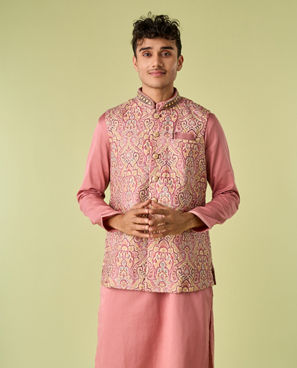
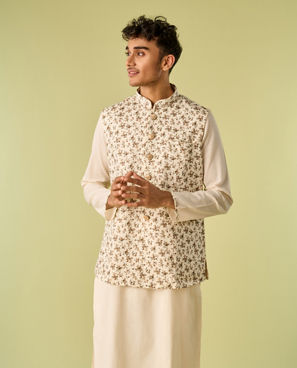
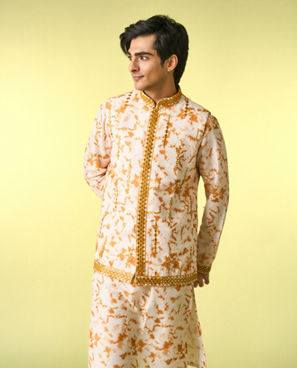
A Nehru jacket or bandhgala placed over a kurta does not simply add warmth or coverage. It changes the entire occasion register of the outfit. A kurta that works for casual or semi-formal occasions becomes genuinely formal the moment a well-fitted jacket is added. The layering creates a visual structure — a defined upper silhouette, a clear collar line, a finished, composed appearance — that a kurta alone cannot achieve without the most elaborate embellishment.
This means a kurta jacket set covers a wider range of occasions than either piece alone. The kurta can be worn without the jacket for casual and semi-formal settings. With the jacket, the same piece becomes appropriate for wedding receptions, formal Diwali evenings, and the most dressed-up occasions in the celebration calendar. Two pieces, three or four distinct occasion registers — the efficiency of a well-designed set is significant.
The Jacket Styles Worth Knowing
Not all jackets serve the same function — and the style of the jacket shapes both the look's formality and its cultural character.
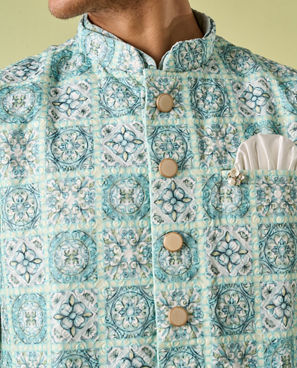
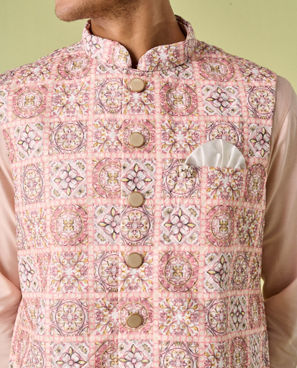
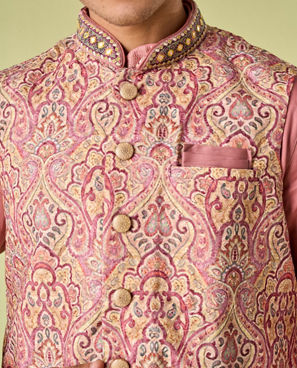
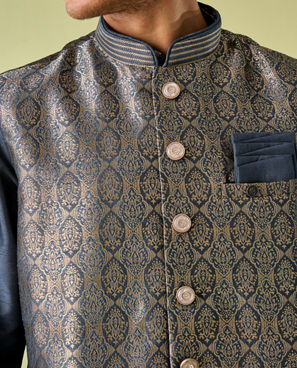
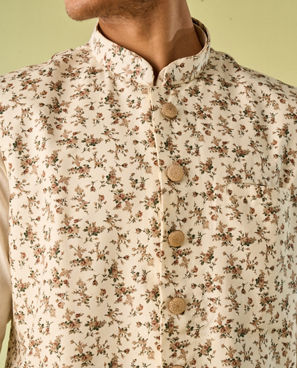
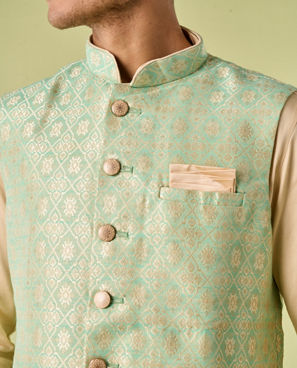
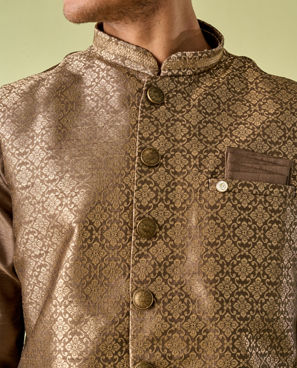
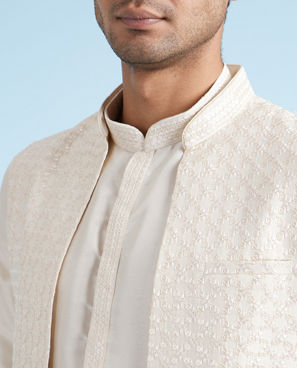
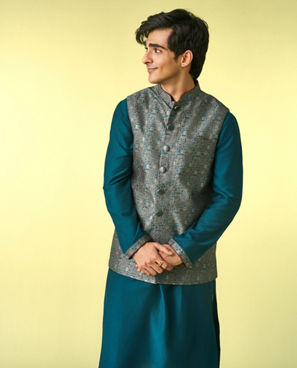
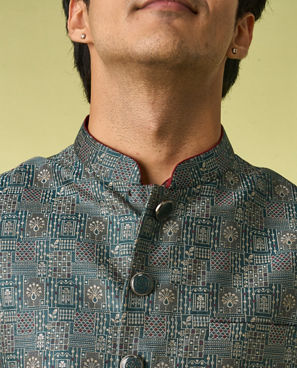
The Nehru jacket is the most widely worn and most versatile jacket style in the category. Named for Jawaharlal Nehru, who wore this style as part of his distinctive public identity, the Nehru jacket is characterised by a mandarin collar that sits close to the neck and a front fastening that typically buttons through the chest. It creates a clean, structured silhouette that works across a remarkable range of occasions — from semi-formal gatherings to formal wedding functions. The Nehru jacket is the entry point for this category and the most broadly useful piece in it.
The bandhgala jacket is the more formal alternative — a fully buttoned, close-fitting jacket that creates a more defined, more ceremonial silhouette. The bandhgala's higher collar and tighter fit give it a formality that the Nehru jacket approaches but doesn't quite match. This is the jacket for the most significant occasions — wedding receptions, formal Diwali dinners, and events where the dress code sits closest to black-tie in the Indian context.
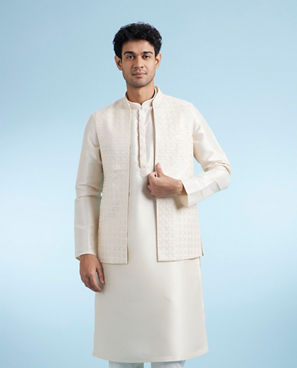
The open-front or sherwani-style jacket creates a looser, more contemporary layering effect — the jacket is worn open rather than buttoned, framing the kurta beneath rather than replacing its visual identity. This style is the most fashion-forward interpretation and works well for younger aesthetics and semi-formal occasions.
The short Nehru jacket or waistcoat — falling at hip rather than mid-thigh — creates a more relaxed, everyday-adjacent interpretation of the set. Less formal than the full-length jacket, but still significantly more considered than a kurta worn alone.
Color Coordination Within the Set — The Three Approaches
How the jacket's color relates to the kurta's defines the outfit's overall character — and there are three distinct approaches, each creating a different effect.
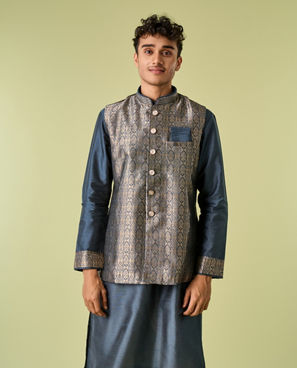
Matching sets — where the kurta and jacket are in the same color and fabric — create the most unified and traditionally formal look. An ivory-on-ivory set, a navy-on-navy set, a maroon-on-maroon set. These are the combinations that read most immediately as a complete, considered outfit. The monochromatic approach removes any question about whether the pieces work together — they are the same piece, functionally.
Tonal contrast sets — where the jacket is in a closely related but distinct color or shade — create a more contemporary, layered effect. A deep teal kurta with a slightly lighter teal jacket, or a maroon kurta with a deep wine jacket. The relationship between the two pieces is visible and deliberate — the set looks designed rather than simply matched.
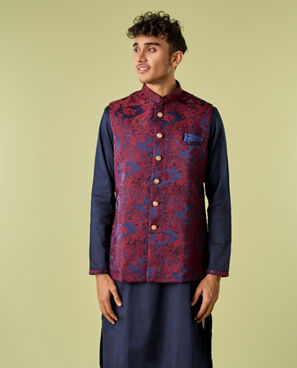
Complementary contrast sets — where the jacket introduces a distinctly different color that complements the kurta — are the most visually dynamic and the most fashion-forward approach. An ivory jacket over a deep navy kurta, a gold jacket over a deep green kurta, a champagne jacket over a maroon kurta. These combinations have a richness and visual complexity that single-color sets don't achieve — and when executed well, they are among the most impressive looks in the entire category.
Occasions Across the Full Set Range
Wedding functions — the kurta jacket set's most significant and most frequently occurring occasion context. The jacket elevates the kurta to a reception- and sangeet-appropriate level of formality. A deep jewel-tone kurta with a complementary jacket in silk-blend is a complete wedding function look that requires nothing additional.
Diwali parties and festive evenings — a sequin or embellished kurta under a contrasting Nehru jacket, or a rich, solid kurta with a gold or ivory jacket. The set provides the layered, dressed-up character that Diwali evening celebrations reward.
Eid — a matching or tonal set in chanderi or cotton-silk blend for afternoon and evening Eid gatherings. The jacket adds formality appropriate for more significant family and community Eid occasions.
Sangeet nights — the combination of an embellished or richly colored kurta with a coordinating jacket suits the high-energy, dressed-up character of sangeet celebrations. The set photograph well — the two-piece silhouette creates a more composed, more impressive image than a kurta alone.
Semi-formal occasions — cultural events, milestone family celebrations, formal community gatherings — where a plain kurta feels underdressed but a full formal set feels excessive. The kurta jacket set hits the right register for this broad middle category more effectively than any single piece.
Office Diwali celebrations and festive professional settings — a simple kurta paired with a clean, well-fitting Nehru jacket in a conservative color creates an appropriate, genuinely well-dressed festive professional look. The jacket signals the outfit's occasion-awareness without the embellishment that would make it feel out of place in a work setting.
Fabric Coordination Between Kurta and Jacket
For a kurta jacket set to look cohesive rather than assembled, the fabric of both pieces should be in the same family — not necessarily identical, but compatible in weight, texture, and occasion register.
Cotton kurta with cotton Nehru jacket — the most casual and everyday-appropriate combination. Clean, practical, and suitable for semi-formal occasions and festive professional settings.
Chanderi kurta with chanderi jacket — the most cohesive festive combination. The fabric's characteristic sheen and drape run consistently through both pieces, creating a set that looks genuinely designed. Appropriate for Eid, semi-formal functions, and daytime wedding occasions.
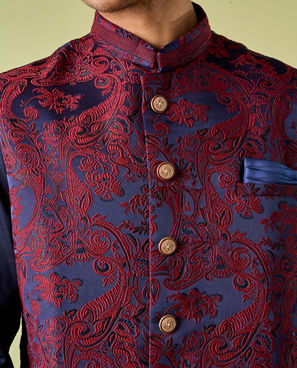
Silk-blend kurta with silk-blend jacket — the most formal option in the range. The fabric's luster creates a richness that is immediately appropriate for evening wedding functions and significant celebrations. In deep jewel tones or with embellishment, this combination is among the most impressive in the entire kurta jacket set category.
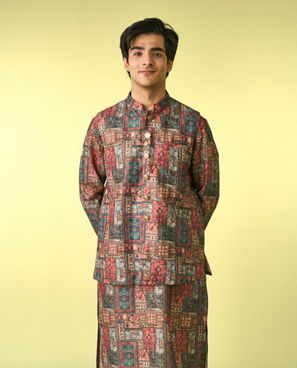
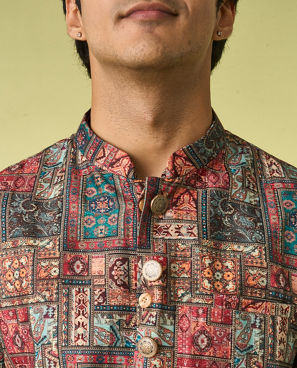
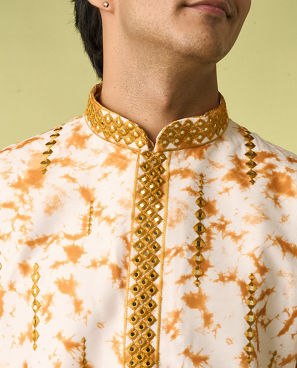
Embellished kurta with plain jacket — a deliberate contrast approach where the kurta carries the embellishment and the jacket provides clean structure. The jacket frames the embroidered or printed kurta without competing with its surface detail. This is the approach for sets where the kurta is the star and the jacket is the supporting structure.
Getting the Fit of the Jacket Right
The jacket's fit is the most critical element of the complete set's success — and it is worth understanding specifically what a good jacket fit looks like before buying.
The shoulder seam of the jacket should sit exactly at the edge of the shoulder — not drop below it, which creates a shapeless appearance, and not pull across the back, which indicates the jacket is too small. The chest should button cleanly without pulling — there should be no horizontal stress lines across the front when the jacket is fastened. The jacket length should fall below the kurta's hip line — a jacket that is too short creates a proportion problem that undermines the complete look. The sleeves should extend to the wrist when the arms are at the sides, finishing just above the kurta sleeve's cuff.
A Nehru jacket in a poor fit is significantly less impressive than a kurta worn on its own. A Nehru jacket in a precise fit transforms the entire outfit. The fit difference is the entire difference between the two outcomes.
Frequently Asked Question (FAQs)
1. Is a kurta jacket set more formal than a plain embroidered kurta?
Generally, yes — the layering of a jacket over a kurta creates a more structured, more composed silhouette that reads as more formally dressed than even a heavily embroidered kurta worn alone. The jacket adds a layer of intentionality to the outfit that embellishment alone doesn't always achieve. For the most formal occasions — wedding receptions, formal Diwali evenings — a kurta jacket set in quality fabric is the stronger choice.
2. Can the jacket from a kurta jacket set be worn with other kurtas?
Yes — one of the practical advantages of a well-chosen kurta jacket set is that the jacket, once owned, can be paired with other kurtas from your existing collection. An ivory Nehru jacket works with almost any colored kurta. A deep jewel-tone jacket adds formality to simpler kurtas. The set purchase therefore provides both an immediately complete outfit and a versatile separates addition to the wardrobe.
3. What is the difference between a Nehru jacket and a bandhgala?
Both feature a mandarin-style collar without lapels, but the bandhgala is more formal — it typically fits more closely to the body, buttons fully through the chest to the collar, and creates a more defined, ceremonial silhouette. The Nehru jacket is more relaxed in fit and more versatile across occasion types. For most men's wardrobes, the Nehru jacket covers more situations; the bandhgala is specifically for the most formal occasions.
4. Should the jacket always be worn closed, or can it be worn open?
For Nehru and bandhgala jackets, wearing closed is the most formal and most polished approach — particularly for wedding functions and significant celebrations. Wearing the jacket open creates a more relaxed, contemporary look that works well for semi-formal and casual festive occasions. The open-front approach is essentially a different styling mode of the same garment rather than an error.
5. What bottom wear works best with a kurta jacket set?
Churidars in a matching or complementary color are the most appropriate and cohesive bottom-wear choice for a formal kurta-jacket set. The fitted silhouette of churidars creates a clean line from the jacket's hem to the ankle that suits the set's structured, composed character. Straight-cut pajamas work for more casual set combinations. Avoid very wide-cut or casual pajamas with formal jacket sets — the contrast in proportions between a structured jacket and very loose bottom wear undermines the look's overall coherence.