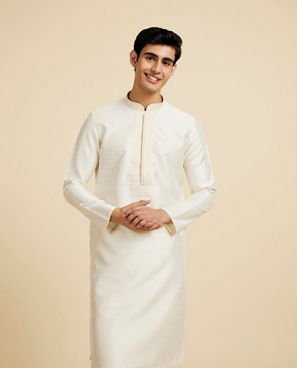
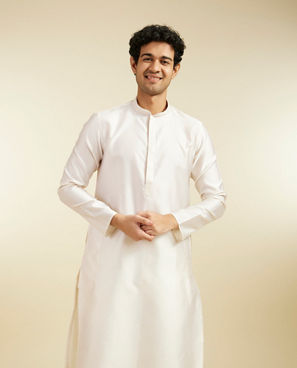
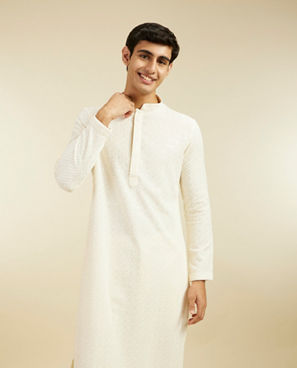
Cream Chikankari Kurtas for Men – Warm, Refined and Worth a Closer Look
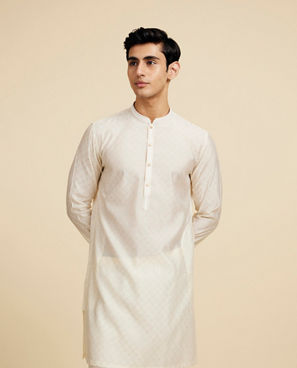
White Chikankari gets most of the attention. Cream deserves more of it. The difference between white and cream in a Chikankari kurta is not just tonal — it changes the entire character of the garment. White is crisp and clean. Cream is warm and considered. White announces itself. Cream invites you closer. A well-made cream Chikankari kurta is one of the most quietly impressive pieces in Indian men's celebration dressing — the kind of outfit that generates genuine compliments from people who know what they're looking at. At Diwas, the collection is built for men who dress with that level of intention.
Why Cream Changes the Chikankari Equation
Chikankari was born in the white-on-white tradition — delicate thread work on pale fabric, visible through texture and shadow rather than color contrast. Cream doesn't break this tradition. It deepens it.
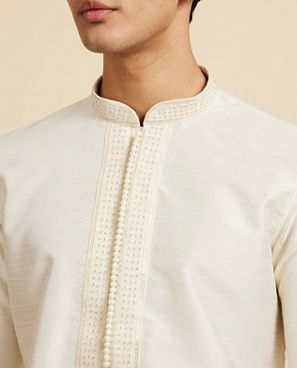
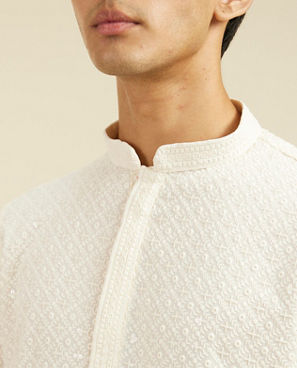
The warmth of a cream base does something specific to white thread embroidery — it softens the contrast just enough to make the relationship between thread and fabric feel organic rather than stark. Where white Chikankari can sometimes feel almost clinical in its precision, cream Chikankari feels alive. The embroidery sits in the fabric rather than on top of it. The overall effect is a garment that looks like it has always existed — completely natural, completely right.
Cream also responds to light differently from white. In natural daylight, cream Chikankari has a warm, golden quality that white cannot replicate. In the soft indoor lighting of an Eid gathering or a wedding function, it deepens into something richer — the kind of depth that makes people look twice and look longer.
The Stitch Vocabulary on a Cream Base
Understanding what Chikankari embroidery actually contains is part of what makes wearing a well-made piece feel meaningful. On a cream base, each technique produces a distinct visual effect.
Shadow work — stitched on the reverse of the fabric, creating a soft, diffused pattern visible from the front — is particularly beautiful on cream. The warmth of the base gives the shadow a golden quality that white fabric doesn't produce. It's the most dreamlike of Chikankari's techniques, and cream is its best canvas.
Jali work — the fine mesh-like openwork stitch that creates a lace-like surface — stands out with particular elegance on cream. The openwork allows the base fabric's warmth to show through the pattern, creating a genuinely extraordinary layered effect in good light.
Phanda and murri — the small raised knots used to fill floral centers and add dimension — catch light on a cream base with a softness that suits the warmth of the color. These stitches add texture without sharpness — exactly the right quality for cream's character.
Tepchi running stitches — the long outlines that define the pattern's forms — read with a clean, flowing quality on cream that feels simultaneously traditional and contemporary.
A cream Chikankari kurta that combines several of these techniques is a garment of real artistic depth. The craft is layered — each stitch type adding something different, the whole greater than the sum of its parts.
The Occasions
Eid is the most natural occasion — and cream rather than white makes a specific kind of statement here. White Chikankari says fresh and clean. Cream Chikankari says warm and considered. Both are right for Eid, but cream has a depth that white sometimes lacks, particularly for men who want their Eid outfit to feel genuinely distinctive rather than simply appropriate.
Nikah ceremonies welcome this one with particular grace. The color's warmth and the embroidery's refinement create a look that is dignified and beautiful — respectful of the ceremony's significance without the starkness of pure white.
Daytime wedding functions — engagement ceremonies, morning rituals, intimate pre-wedding gatherings — are natural settings for this kurta. The color works beautifully in natural light, and the embroidery's delicacy suits the lighter, warmer atmosphere of daytime celebrations.
Onam and Pongal — South Indian harvest festivals that welcome cream and off-white as culturally connected color choices. This kurta at Onam is an elevated interpretation of the festival's traditional white palette — connected to the occasion's aesthetic while being genuinely distinctive within it.
Casual semi-formal occasions — cultural events, family functions, relaxed gatherings where you want to look well-dressed without the weight of a fully festive kurta. A lightweight cotton is one of the most effortlessly appropriate choices for this category.
Fabric Choices That Shape the Garment's Character
The fabric beneath the Chikankari embroidery determines how the cream reads, how the stitching sits, and how the garment performs across different settings.
Georgette is the most traditional Chikankari base — its fluid drape allows the embroidery to sit gracefully on the surface and the fabric's movement gives the kurta an elegant, relaxed quality. In cream, georgette has a warmth and softness that is particularly beautiful. The most festive fabric choice in this range.
Mulmul and fine muslin are the most comfortable — extraordinarily soft, lightweight, and breathable. In cream, mulmul has an almost antique warmth that suits the Chikankari tradition perfectly. The ideal choice for summer celebrations and Eid morning wear.
Cotton provides a more structured, firmer base. The embroidery sits with greater precision on cotton's stable surface, and the cream color appears clean and warm against the matte weave. Practical and versatile across casual and semi-formal occasions.
Chanderi sits between georgette and cotton — a silk-cotton blend with a gentle sheen that gives cream a subtle luminosity. The slight glow of chanderi under warm lighting amplifies the Chikankari embroidery's depth and gives the overall kurta a festive quality that cotton alone cannot achieve.
Styling — The Tonal Approach Works Best
Cream Chikankari kurtas reward a styling approach that stays within the warm, light end of the color spectrum. The palette should feel cohesive — not contrasted.
Ivory churidars are the most natural pairing. The slight variation between cream and ivory adds tonal depth without breaking the overall warmth of the palette. The two shades together create a monochromatic ensemble that looks intentional and refined.
White churidars for a slightly crisper contrast — the difference between the cream kurta and the white bottom wear is visible and deliberate, creating a clean definition between the two pieces.
Off-white or warm sand trousers extend the tonal logic into a more contemporary silhouette — a good choice for semi-formal occasions and smart-casual settings where the full formality of churidars isn't required.
Avoid pairing it with dark or strongly saturated bottom wear — the contrast disrupts the kurta's warmth and works against everything that makes it beautiful.
For footwear, tan or caramel leather juttis are the most organic pairing — the warm brown tones sit naturally within the cream palette. White or ivory mojaris keep the look entirely tonal. Silver accessories work well — a simple bracelet and a clean watch are enough. The embroidery provides all the detail the outfit needs.
Cream vs White Chikankari — The Practical Question
If you own a white Chikankari kurta and are considering cream, the question isn't which one is better — it's what each one does differently.
White Chikankari is the more occasion-versatile of the two. It covers a slightly wider range of settings — particularly occasions where a crisp, fresh appearance is specifically required, like certain religious ceremonies and formal daytime events.
Cream Chikankari is the warmer, more characterful choice. It photographs with more depth than white, flatters a broader range of skin tones, and has a visual richness in indoor lighting that white occasionally lacks. For occasions where looking genuinely well-dressed matters more than simply looking appropriate — a significant Eid, a close friend's wedding function, a meaningful family celebration — cream is often the stronger choice.
Own both if you can. If you're choosing one first, and you attend more festive occasions than formal religious ones — choose cream.
Frequently Asked Questions (FAQs)
1. What is the difference between a cream Chikankari and a white Chikankari kurta beyond the color?
The color difference creates a genuine character difference. White Chikankari is crisp, clean, and fresh — it has a brightness that suits outdoor daytime settings and occasions where a sharp appearance is specifically valued. Cream Chikankari is warmer, deeper, and more nuanced — it responds to light with more complexity and flatters a broader range of skin tones. The embroidery reads slightly differently on each — more architectural on white, more organic on cream.
2. Is a cream Chikankari kurta appropriate for a wedding as a guest?
Yes — particularly for daytime functions like mehndi, engagement ceremonies, and morning wedding rituals. In chanderi or georgette with quality embroidery, this kurta is a sophisticated and genuinely elegant wedding guest choice. Pair with ivory churidars, a tonal Nehru jacket for evening functions, and keep accessories minimal and in silver or warm gold.
3. Which skin tones does the cream work best with in a Chikankari kurta?
Cream is one of the most universally flattering kurta colors — more so than pure white, which can occasionally wash out fairer complexions or create an overly stark contrast on very deep skin tones. The warmth of cream adds a golden quality that works harmoniously across medium and olive complexions, adds luminosity to deeper skin tones, and provides warmth to fairer ones. Most men find cream more flattering than white when they try both.
4. How do I care for a cream Chikankari kurta to prevent yellowing?
Wash in cold water with a gentle detergent formulated for delicates — avoid anything with bleach or optical brighteners, which can alter the cream tone. Always dry in shade away from direct sunlight — UV exposure is the primary cause of yellowing in cream and off-white fabrics. Store away from colored garments that could transfer dye onto the light base. For georgette and chanderi pieces, dry cleaning is the safest long-term care option.
5. What makes a well made cream Chikankari kurta worth investing in?
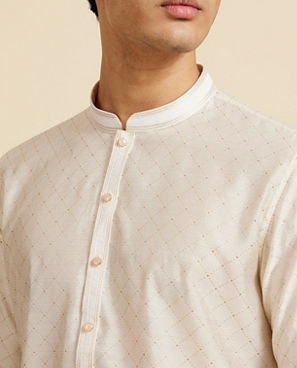
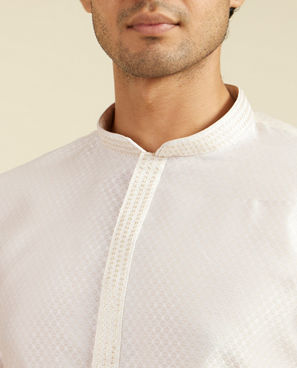
A well made cream Chikankari kurta combines multiple stitch techniques — shadow work, jali, phanda, tepchi — in a design that is dense enough at the neckline and placket to feel genuinely embellished without being uniform or machine-like across the full surface. The cream base should be consistent in tone without pilling or variation. The thread should be smooth and tightly executed. These qualities make the difference between a Chikankari kurta that looks impressive from across a room and one that looks extraordinary up close.

_18-04-2025-22-49:297-368)
_18-04-2025-22-49:297-368)
_18-04-2025-22-49:Swatch)
_18-04-2025-22-57:297-368)
_18-04-2025-22-57:297-368)
_18-04-2025-22-57:Swatch)

_18-04-2025-22-45:297-368)
_18-04-2025-22-45:297-368)
_18-04-2025-22-45:Swatch)
_18-04-2025-21-29:297-368)
_18-04-2025-21-30:297-368)
_18-04-2025-21-29:Swatch)
_18-04-2025-23-06:297-368)
_18-04-2025-23-06:297-368)
_18-04-2025-23-06:Swatch)
_18-04-2025-23-19:297-368)
_18-04-2025-23-19:297-368)
_18-04-2025-23-19:Swatch)
_28-04-2025-06-47:297-368)
_18-04-2025-20-34:297-368)
_28-04-2025-06-47:Swatch)