Party Wear Kurtas for Men – Dress for the Night, Not Just the Occasion
A party is a different brief from a wedding function or a religious occasion. The rules are looser, the energy is higher, and the room rewards men who've actually thought about what they're wearing rather than just showing up in something appropriate.
What Actually Makes a Kurta Party-Appropriate
It's not just about embellishment — though that plays a role. A party wear kurta is defined by a combination of factors that together create a look with the right level of impact for an evening celebration.
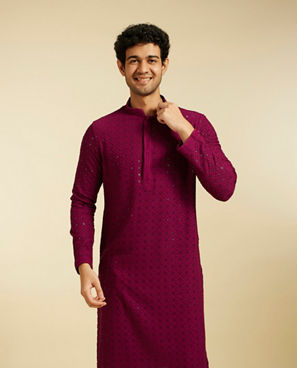
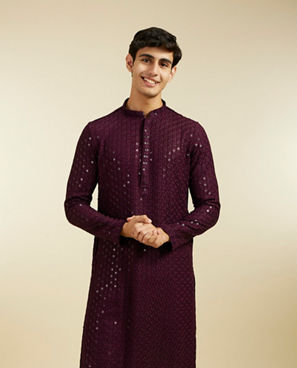
Color matters more at a party than at most other occasions — darker, richer, or more vibrant shades carry the energy of the room in a way that muted, everyday colors don't. Navy, emerald, wine, black, deep purple, and bold printed bases all work well in party settings.
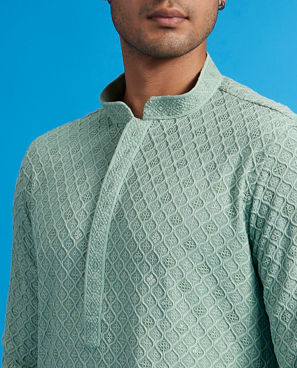
Fabric determines how the kurta reads in artificial light — and party venues almost always involve artificial lighting. Silk-blend, chanderi, and jacquard fabrics catch and reflect light in ways that cotton doesn't, giving the kurta a presence that suits the occasion's atmosphere.
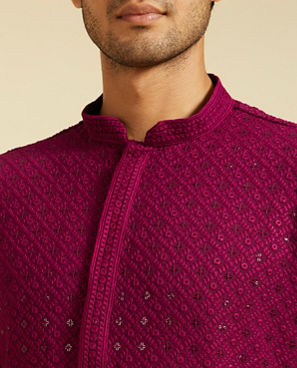
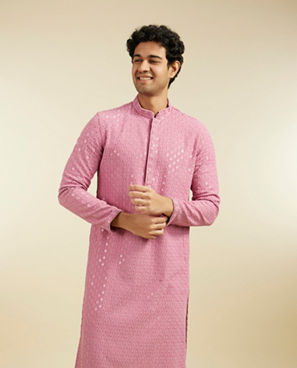
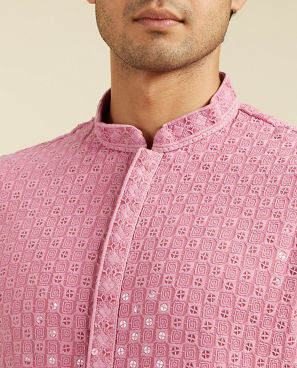
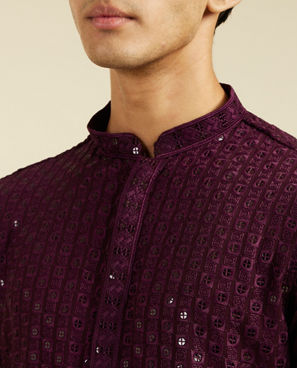
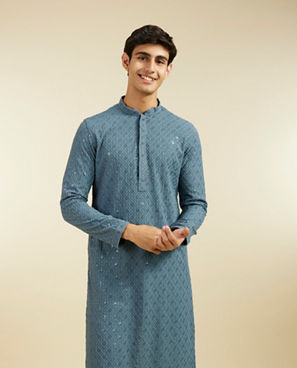
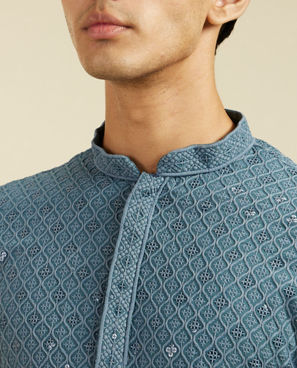
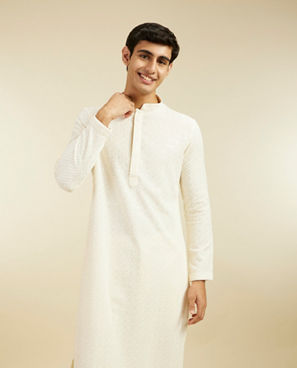
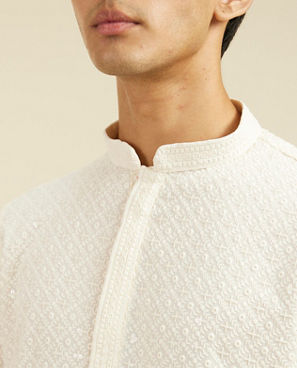
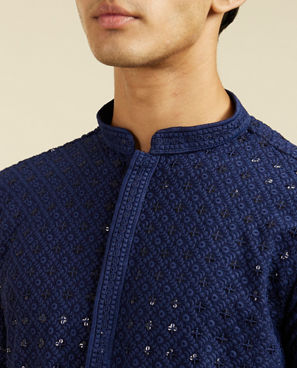
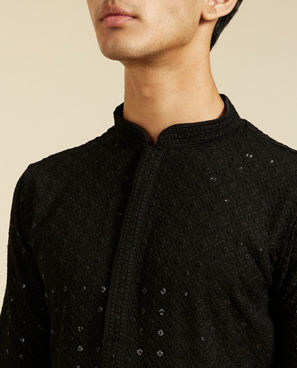
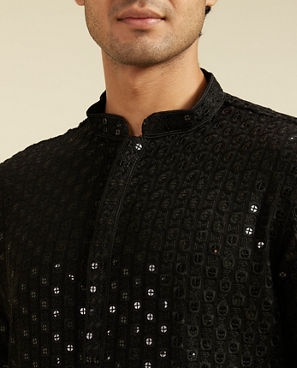
Embellishment signals that this is a dressed-up occasion — but it should be targeted rather than excessive. Thread work along the neckline and placket, a woven jacquard pattern, or subtle zari detailing is enough. A party is not a wedding; the kurta shouldn't dress like it's trying to be one.
Silhouette and fit — a kurta should fit cleanly. Well-fitted through the shoulders and chest, the right length, clean at the hemline. In good artificial lighting, a well-cut kurta in a quality fabric looks significantly more expensive than its actual investment.
The Color Stories That Work After Dark
Artificial lighting changes how colors read — and choosing a color that performs well in party venue lighting is a practical decision, not just an aesthetic one.
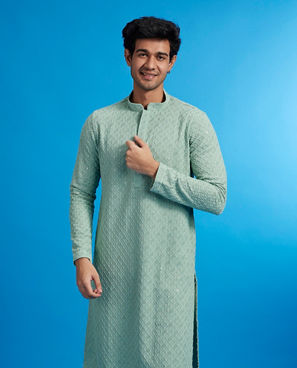
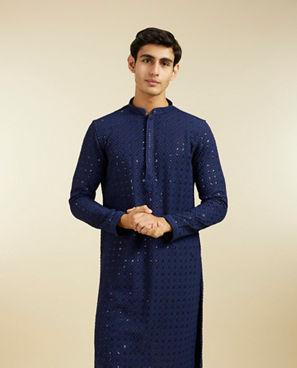
Deep jewel tones — navy, emerald, teal, royal blue, deep purple — absorb warm light and glow with a richness in indoor settings that they don't always achieve in natural daylight. These are the colors that look most impressive at evening parties.
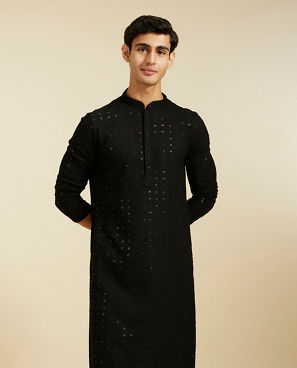
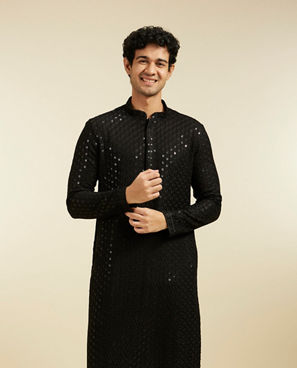
Black in a quality fabric is the most versatile party-wear choice — it works in every venue, under every lighting condition, and with every type of embellishment. Black with gold or silver detail at a party is consistently one of the strongest looks in the room.
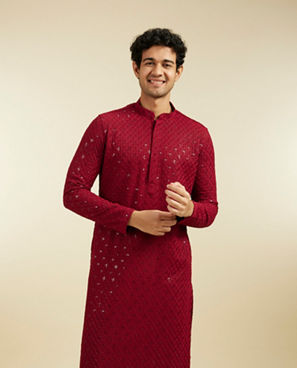
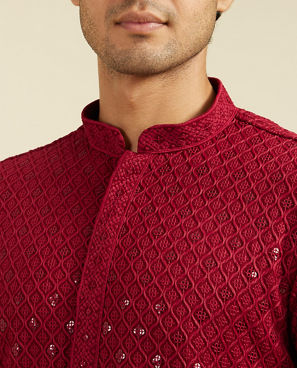
Wine and burgundy have a warmth and luminosity in artificial light that makes them particularly effective at indoor celebrations. The color deepens and glows under warm event lighting, photographing spectacularly.
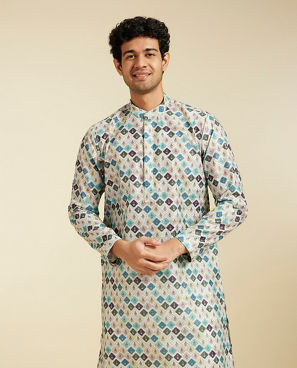
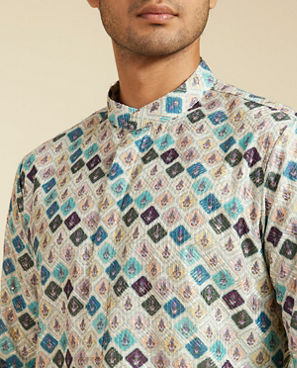
Bold prints — particularly digital prints with a strong contrast between base color and pattern — carry visual energy that suits the high-stimulus environment of a party. A well-chosen printed kurta at a party looks intentional and personality-driven.
Deep maroon and crimson have the cultural resonance and visual weight to hold their own at any celebration — and in a quality fabric with embellishment, they belong at the most dressed-up parties on the calendar.
The Occasions in This Category — And They're Not All the Same
Party wear kurtas cover a range of occasions, each with its own specific dress code logic.
Diwali parties — this is the most natural home for this kurta. The occasion rewards color, embellishment, and genuine festive dressing. Black with gold embroidery, deep jewel tones with zari detail, bold printed kurtas in rich color combinations — all of these belong at a Diwali party. The more considered the outfit, the better it fits the occasion.
Sangeet nights — high energy, dancing, warm lighting, no formal dress code. A kurta in a vibrant or deep color with enough embellishment to read as festive is the right call. Comfort matters here, too — the fit should allow movement.
Cocktail functions — these sit at the more formal end of party dressing. A silk-blend or jacquard kurta in a deep color with targeted embellishment is the appropriate register. This is where black and wine shine particularly.
New Year celebrations — the one occasion where you have full permission to go as dressed up as you want. A kurta with more embellishment than you'd normally choose, a bolder color than you'd normally wear — New Year's is the right context for it.
Birthday parties, anniversary dinners, house parties with a festive dress code — a mid-range kurta in a quality fabric and a rich color covers these without over- or underdressing. The occasion is less formal than Diwali but more than casual — and the right kurta finds that balance naturally.
Embellishment: How Much Is the Right Amount
This is where party wear kurta choices most commonly go wrong in both directions — either too little embellishment that the kurta reads as underdressed, or too much that it looks like a wedding outfit at an occasion that didn't ask for one.
The right approach depends on the specific occasion within the party category.
For Diwali parties and sangeet nights — a moderate level of embellishment is appropriate. Gold or silver thread work along the neckline and placket, a woven self-pattern, or a printed base with metallic elements. The kurta should clearly signal celebration without the full formality of a wedding.
For cocktail functions, this is where more elaborate embellishment works. A jacquard fabric with woven motifs, zari embroidery across the front panel, or a richly embellished neckline are all appropriate. These are the occasions where the kurta comes closest to wedding function dressing.
For casual parties and house celebrations, minimal embellishment is the right call. A quality fabric in a rich color with subtle surface detail is entirely sufficient. The fabric and color carry the occasion-awareness; the embellishment is just the finishing detail.
Getting the Styling Right for an Evening Out
Party wear kurtas are styled slightly differently from daytime or formal-occasion kurtas — the overall look should feel a little sharper and more intentional.
Slim-fit churidars in ivory or cream create the cleanest and most appropriate silhouette for party settings — fitted through the leg, they create a lean, contemporary profile that suits the energy of a celebration.
Straight-cut trousers in dark tones — charcoal, deep navy — work for a more contemporary, fashion-forward party look. Particularly effective with a printed or minimal-embellishment kurta.
Nehru jacket in a complementary or tonal shade for occasions that call for a more layered, formal-adjacent look — particularly cocktail functions and more significant Diwali events.
For footwear, embroidered or metallic juttis in gold or silver are the most effective party-wear choice — they add a finishing touch that elevates the overall look without requiring any additional styling. Clean, well-polished mojaris work equally well for a more classic approach.
Keep accessories intentional — a quality watch, a single bracelet in gold or silver matching the kurta's embellishment tone, and nothing more. Party settings can tempt over-accessorizing; resist it.
FAQs
1. What is the difference between a party wear kurta and a wedding function kurta?
The main difference is in the level of formality and embellishment. Wedding function kurtas — particularly for reception and baraat occasions — tend to use heavier fabrics, more elaborate embroidery, and more formal silhouettes. Party wear kurtas are slightly more relaxed in embellishment and silhouette, designed for the higher-energy, less ceremonial atmosphere of evening parties. A good party-wear kurta is dressed up, not for a wedding.
2. Can a party wear a kurta be worn to a Diwali celebration?
Yes — Diwali parties are the most natural occasion. The festival rewards color, embellishment, and genuine festive dressing, and a well-chosen party wear kurta in a rich color with targeted embellishment is exactly right for the occasion. Black with gold detail, deep jewel tones in silk-blend, and bold printed kurtas in festive color combinations are all strong Diwali party choices.
3. What fabric works best for a party-wear kurta?
Silk-blend, chanderi, and jacquard fabrics work best — they catch and reflect artificial light in ways that cotton cannot, giving the kurta a visual presence that suits indoor party settings. Cotton-silk blends offer a practical middle ground — enough silk for the light-reflective quality, enough cotton for comfort across a long evening of celebration.
4. How much embellishment is appropriate for a party wear kurta?
The right level depends on the specific occasion. For casual parties and house celebrations, subtle surface details — a self-print or minimal threadwork — are sufficient. For Diwali parties and sangeet nights, moderate embellishment along the neckline and placket is appropriate. For cocktail functions and formal evening parties, more elaborate embellishment in gold or silver is entirely suitable. The rule of thumb: the more formal the party, the more embellishment is warranted.
5. What bottom wear works best with a party wear kurta for an evening event?
Slim-fit churidars in ivory or cream are the most effective pairing for most kurtas — they create a clean, contemporary silhouette that suits the energy of an evening celebration. Dark straight-cut trousers work for a more fashion-forward look, particularly with minimal or printed kurtas. Avoid very casual or wide-cut bottom wear — the party wear kurta deserves a bottom half that matches its level of intention.

_18-04-2025-22-57:297-368)
_18-04-2025-22-57:297-368)
_18-04-2025-22-57:Swatch)