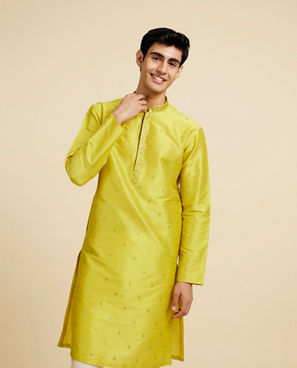
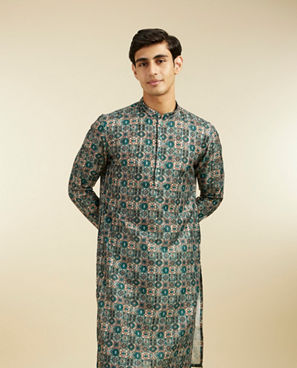
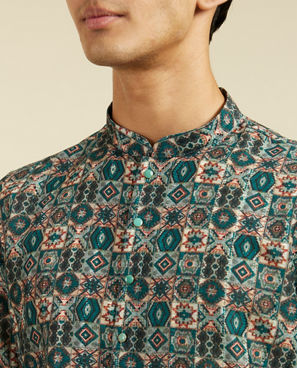
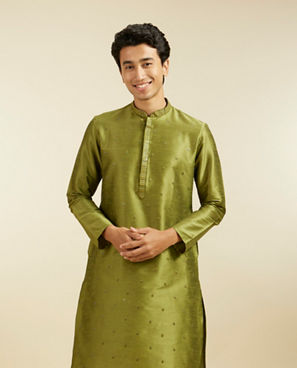
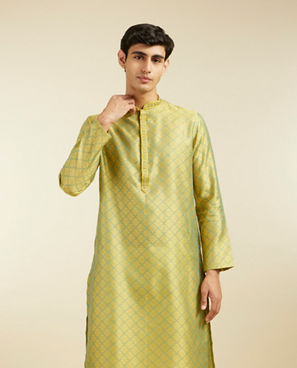
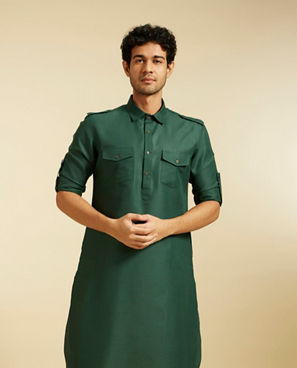
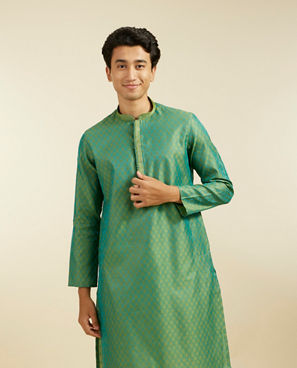
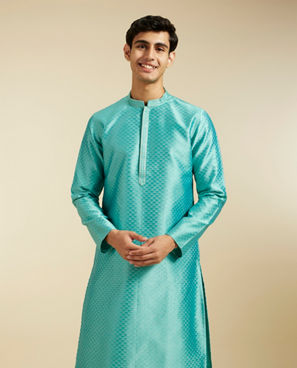
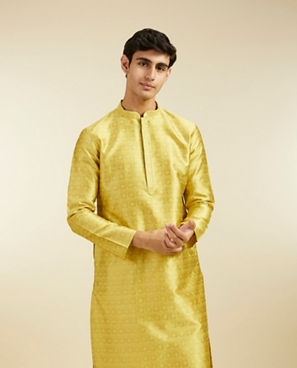
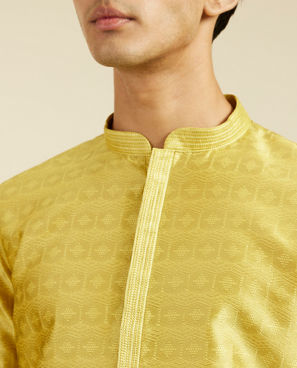
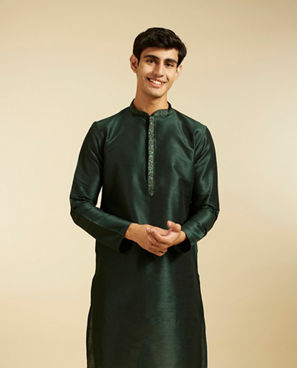
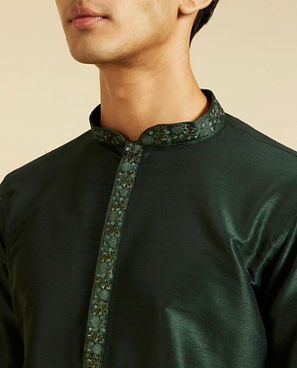
Green silk kurta for men: when colour and fabric both do the work
Green already carries significant cultural weight in Indian celebrations—linked to nature, fertility, Eid, mehendi, and harvest festivals across regions. When you put that colour on silk, the combination becomes something more than just festive dressing. The fabric deepens the green, gives it dimension and luminosity, and signals that the occasion being dressed for deserves more than a casual reach into the wardrobe.
At Diwas, these kurtas are built for those moments in your celebration calendar where both the colour and the fabric need to match the weight of the occasion—significant wedding functions, peak Diwali evenings, important Eid gatherings, and formal family milestones where the quality of what you wear is part of how you show up.
What silk does to green
The relationship between green and silk is particularly rewarding, and understanding it helps you see why this combination keeps appearing in the most important moments of Indian celebration culture.
-
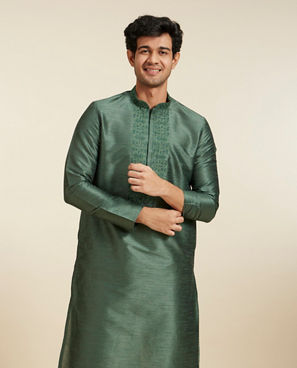
Silk deepens green's natural richness: Bottle green on silk looks genuinely regal—darker, more saturated, and more complex than the same shade on cotton or viscose. Even softer greens take on a new quality on silk: mint becomes luminous, emerald becomes jewel-like.
-
The sheen amplifies green's festive quality: Silk fibres reflect light differently from woven cotton, giving green an iridescent quality under warm indoor lighting, diyas, and chandeliers that is completely distinct from how the colour behaves on other fabrics.
-
The drape adds ceremony: Silk falls in controlled, elegant folds rather than the relaxed drape of viscose or the casual fall of cotton; a green silk kurta looks structured and intentional from every angle.
-
Green's cultural significance is elevated: In Indian celebrations, green already carries auspiciousness and meaning; on silk, that meaning is amplified into something that reads as deliberately ceremonial rather than simply colour-appropriate.
Together, green and silk create a combination that feels completely natural for the most significant and emotionally charged moments in a festive and wedding calendar.
Shades of green in silk kurtas
Because silk interacts with colour differently from other fabrics, the specific shade of green becomes especially important in this category. On this page you'll encounter:
-
Bottle and forest green on silk—the deepest and most luxurious direction; silk gives these shades a velvety, jewel-like quality that feels genuinely regal; ideal for receptions, formal evenings, and high-dress-code wedding functions.
-
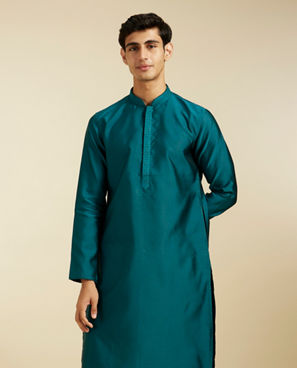
Emerald and jewel green on silk—vibrant and striking; silk's sheen makes emerald look almost illuminated under event lighting; strong for sangeet, Diwali main evenings, and important Eid gatherings.
-
Mid and hunter green on silk—a balanced, versatile shade that sits between the intensity of emerald and the depth of bottle; works across a wide range of formal and semi-formal occasions.
-
Sage and soft green on silk—a more restrained, sophisticated direction; silk lifts these quieter greens from flat to luminous, creating a very considered, understated luxury aesthetic for daytime weddings and formal family events.
-
Mint and lighter greens on silk—the freshest direction; silk on lighter greens creates a very delicate, almost ethereal quality that works for daytime receptions and morning wedding functions.
Each shade carries a different formality level and mood—deeper shades for the grandest evenings, lighter shades for more intimate or daytime occasions—but all of them benefit from silk's ability to make green look richer and more intentional than any other fabric allows.
Design directions
Because silk already communicates luxury and ceremony, design tends to be deliberate and restrained—letting the fabric and colour carry the primary weight of the look. On this page you'll typically find:
-
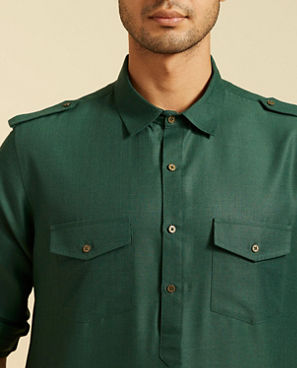
Plain green —the most versatile and quietly powerful; the fabric's sheen, the colour's depth, and a clean silhouette are the entire statement; pairs with almost any bottom and works across multiple festive and formal occasions.
-
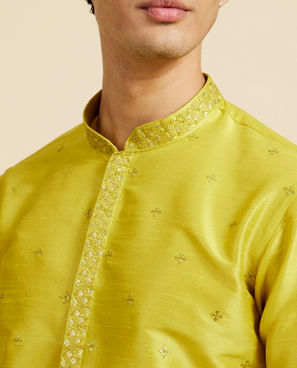
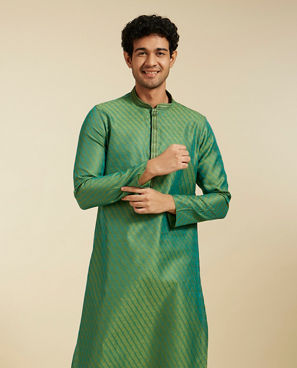
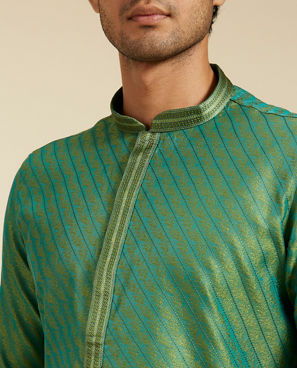
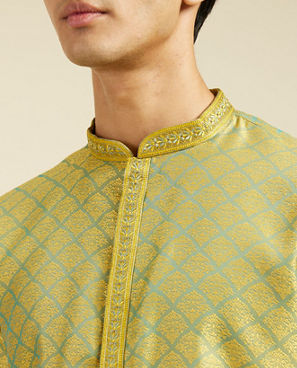
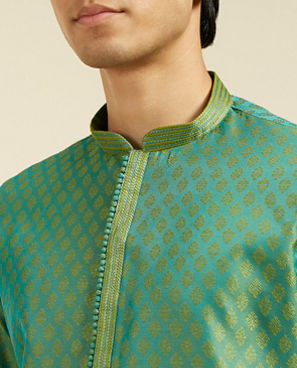
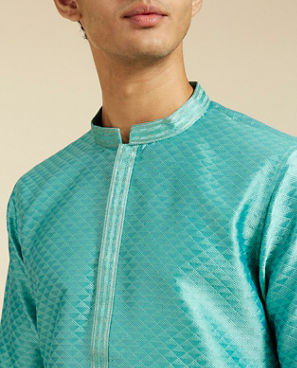
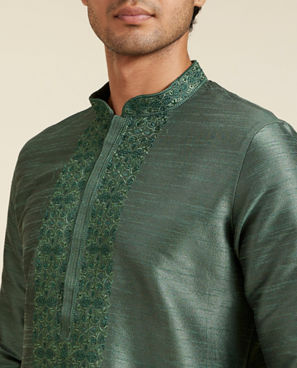
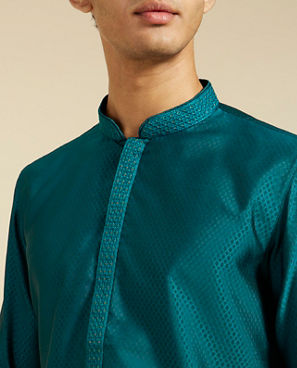
Self-design and jacquard green silk—tonal patterns woven into the silk itself; visible as subtle texture and motif up close, reads as a clean, unified green from a distance; creates a surface that rewards close attention without being obvious about its complexity.
-
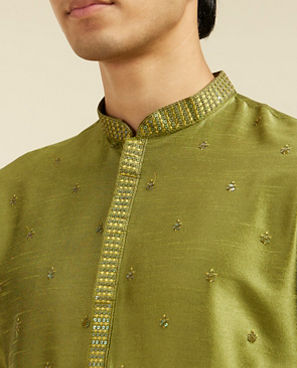
Lightly embroidered —focused threadwork, zari touches, or sequin highlights along the neckline, placket, or cuffs; the embroidery catches light against silk's sheen and creates a very refined combination of craft and luxury.
-
Chikankari on green silk—fine Lucknawi-style stitching over a silk or silk-feel base; the delicate embroidery and silk's natural luminosity work together to create a piece that feels genuinely handcrafted and special for daytime weddings and mehendi functions.
-
Brocade-weave green silk—where the weave itself creates complex patterns using metallic or contrasting threads; the combination of brocade's structural pattern and silk's sheen creates a very grand, almost sherwani-adjacent look for the most formal occasions.
Fabric constructions
Like other silk categories, these kurtas span a range of fabric types that balance richness, wearability, and practical considerations. On this page:
-
Art silk and art-silk blends—the most widely used; captures silk's sheen and drape in green at accessible price points while still looking and feeling genuinely elevated for most festive and wedding occasions.
-
Pure silk and mulberry silk—the most luxurious end of the spectrum; deeper sheen, more complex drape, and an unmistakably premium quality; green on pure silk has a richness and depth that no blended fabric replicates.
-
Viscose-silk blends—lighter and more fluid than pure silk; the viscose adds softness and reduces weight while the silk component contributes luminosity and quality; practical for longer functions and warmer venues.
-
Silk-cotton blends—breathable enough for daytime weddings and longer outdoor functions while carrying enough sheen to read clearly as a silk-family fabric; works for kurtas designed for mehendi and daytime receptions.
-
Jacquard silk in green—where the weave creates self-design patterns in the same or complementary tones; adds quiet complexity and dimension without requiring embroidery.
Occasions to wear
A green silk kurta earns its place in the wardrobe by serving specific occasions better than most other pieces. It fits most powerfully at:
-
Mehendi and pre-wedding ceremonies—green is traditionally the lead colour of mehendi, and silk elevates the look from participant to polished; for groom's side, close family, and groomsmen, this kurta is often the most appropriate and photogenic choice.
-
Eid gatherings and important religious celebrations—green's deep symbolic connection to Eid, combined with silk's ceremony and richness, creates a look that feels both culturally appropriate and genuinely luxurious.
-
Sangeet and evening wedding functions—emerald and bottle green under warm event lighting look extraordinary; the colour's depth and silk's sheen create a presence that reads beautifully in both photography and video.
-
Main Diwali evenings and peak festive nights—green silk under diyas, fairy lights, and warm banquet setups glows with a richness that cotton and printed alternatives simply don't achieve.
-
Reception and high-formality functions—particularly for close family and groomsmen where this kurta with churidar and polished footwear creates a look that sits just below sherwani formality while feeling completely considered.
-
Formal family milestones—significant anniversaries and important housewarmings in hotel or banquet settings where fabric quality signals the importance of the moment.
How to style
Because green is already expressively festive and silk adds inherent formality, the styling is largely about choosing what frames the combination without competing with it.
Bottom choices:
-
Cream or ivory churidar—the most universally flattering pairing; cream against green creates a warm, harmonious contrast that feels both traditional and very polished.
-
White churidar or slim pyjamas—a cleaner, more striking contrast; white sharpens against deep greens and creates a very defined, occasion-ready silhouette.
-
Beige or champagne churidar—a slightly warmer alternative that keeps the palette harmonious; works particularly well with softer and lighter green silk shades.
-
Gold-tone churidar—a rich, regal pairing for the most formal occasions; green over gold feels deeply ceremonial and appropriate for reception-level dressing.
-
Black churidar—for a contemporary, high-contrast look; bottle or emerald green silk over black creates a very modern ethnic statement that works for city celebrations and younger, fashion-forward settings.
Footwear:
-
Embroidered or embellished mojaris in cream, gold, or tan feel the most traditional and complete.
-
Polished formal shoes in dark brown or tan work for a contemporary read.
-
Avoid very casual footwear that undercuts the inherent formality of silk.
Accessories:
-
Gold-tone accessories sit most naturally with most shades of green—a warm-toned watch, antique-finish kada, or simple ring.
-
Silver and white-gold accessories work better with cooler or lighter green shades.
-
A stole or dupatta in ivory, cream, or soft gold adds ceremony for the most formal moments without disrupting the colour story.
-
Keep jewellery controlled—green silk's visual presence means accessories should frame rather than compete.
Green silk versus green cotton, printed, and embroidered
Understanding where each green kurta type sits in the occasion spectrum ensures you build a wardrobe that serves different moments without overlap or gaps.
-
Green cotton kurta: Relaxed, breathable, and practical; best for daytime rituals, outdoor festivals, and casual festive wear where comfort is the priority.
-
Green printed kurta: Expressive and versatile; sits in casual-to-mid-festive register; best for everyday celebrations, mehendi as a relaxed guest, and occasions where expression and comfort matter alongside colour.
-
Green chikankari kurta: Craft-forward and delicate; suited to daytime mehendi, Eid, and occasions where visible handcraft adds to the look without heavy formality.
-
Green embroidered kurta: More formal and occasion-specific; best for evening wedding functions and events where the outfit needs to feel deliberately crafted and special.
-
Green silk kurta: Fabric-forward and ceremonially luxurious; the richness comes from the material itself; suited to the most significant occasions where fabric quality is as important as colour—where you want green but at its most powerful and considered.
Green silk in a curated celebration wardrobe
In a thoughtfully built ethnic wardrobe, this kurta fills the ceremonially luxurious green slot—the version of the colour you reserve for the occasions that feel most significant in your festive calendar.
Alongside:
-
everyday green pieces (cotton, printed) for casual festive occasions, and
-
craft-forward green options (chikankari, embroidered) for mid-level wedding functions,
a green silk kurta becomes:
-
your choice for the most polished and composed version of green dressing;
-
the piece that photographs most richly under formal function lighting;
-
a long-term wardrobe investment that rewards careful selection—one well-chosen kurta can carry the colour through your wardrobe for multiple years and significant celebrations.
In photos, reels, and milestone memories
Green silk photographs with a particular richness that no other green combination achieves. Under professional lighting, chandeliers, and warm banquet settings, silk-finish green kurtas appear to have depth and dimension—the colour looks saturated and complex rather than flat, and the fabric's sheen creates subtle light variation that makes the piece look genuinely luxurious in both still images and video.
In formal wedding photography, green silk holds its structure and drape cleanly in every frame—no casual bunching or movement that can undercut a formal portrait. In candid shots, the fabric's natural movement creates gentle light play across the green surface. In group wedding photographs, green silk stands out from cotton greens and lighter fabrics in a way that is immediately apparent—the difference between looking appropriately dressed and looking genuinely invested in the occasion.
For mehendi portraits, reception entrance videos, and formal family photographs that become long-term keepsakes, a green silk kurta ensures the fabric and colour both match the significance of the memory being created.
Frequently Asked Question (FAQs)
1. Is a green silk kurta only for mehendi?
No—while it is a natural and powerful choice for mehendi, this kurta also works for Eid, sangeet, Diwali main evenings, reception-side functions, and formal family milestones where fabric richness and colour depth both matter.
2. What shade of green silk is most versatile?
Mid-green and emerald tend to be the most occasion-flexible—vibrant enough for evening events, rich enough to carry heavier embroidery or self-design, and widely accepted across different celebration types and regions.
3. What bottoms pair best with a green silk kurta?
Cream or ivory churidar for a classic, warm contrast; white churidar for a sharper pairing; gold-tone churidar for reception-level formality; black churidar for a contemporary high-contrast evening look.
4. Can a plain green silk kurta work without embroidery?
Absolutely—plain or self-design green silk relies entirely on the fabric's depth, sheen, and drape for its richness; this restraint often reads as more sophisticated than heavy embellishment, letting the colour and fabric make the entire statement.
5. How do I care for a green silk kurta to maintain its colour and sheen?
Dry clean where possible, especially for embroidered or embellished versions; hand-wash simpler silk-feel pieces in cold water with gentle detergent; dry flat in shade away from direct sunlight to prevent colour fading; store in breathable fabric bags rather than plastic to maintain the fabric's quality over time.