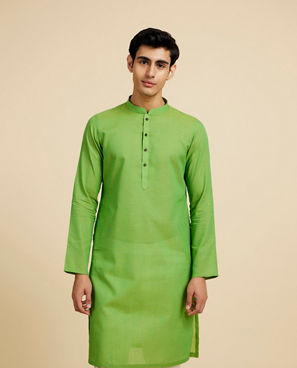
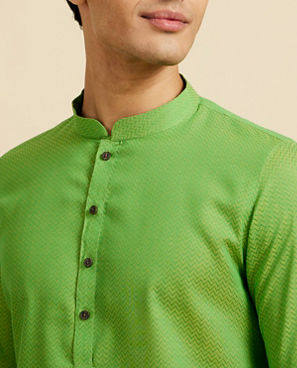
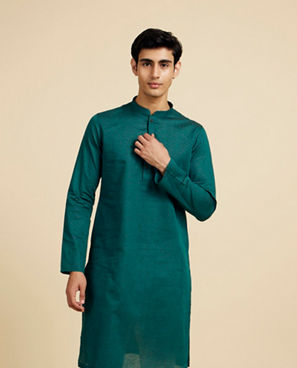
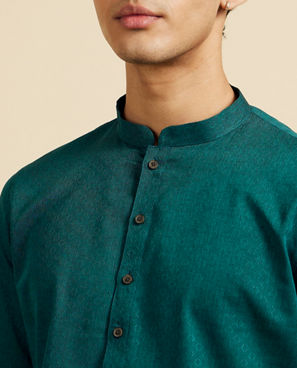
Green Pathani Suits for Men – Rooted in Tradition, Built for Today
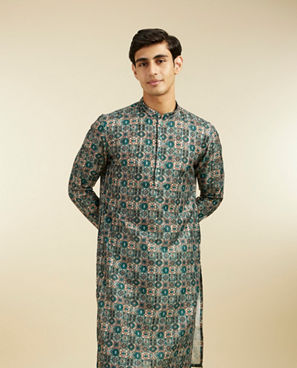
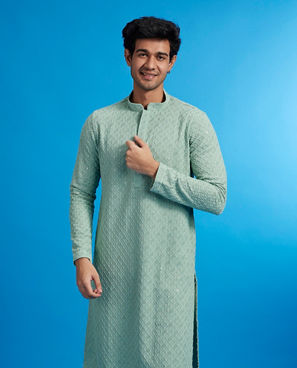
The Pathani suit is one of the most distinctive silhouettes in South Asian men's dressing — and green is one of its most natural colors. The combination has been worn across generations, across regions, and across every kind of celebration that calls for something dignified, comfortable, and genuinely well-considered. A green Pathani suit doesn't need embellishment to make its presence felt. The silhouette does the work. The color reinforces it. At Diwas, the Pathani collection brings this combination into contemporary cuts and fabrics that wear as well today as the tradition behind them always has.
Green and the Pathani: Why This Color Belongs Here
Green has particular cultural resonance within the Pathani suit tradition. Across the communities and regions where the Pathani silhouette has its deepest roots — from the North-West frontier to the broader South Asian Muslim cultural landscape — green carries significance that goes beyond aesthetics. It's the color most closely associated with Eid celebrations, with the spirit of spring festivals, and with a broader cultural identity that the Pathani suit has always expressed with quiet confidence.
Beyond the cultural connection, green and the Pathani silhouette have a practical visual compatibility. The Pathani's long, generous kameez benefits from colors that ground the silhouette — and green, particularly in its deeper and more earthy shades, does exactly this. The color gives the Pathani's flowing lines a sense of weight and intention that lighter or more vibrant colors don't always provide.
Reading the Green Spectrum in a Pathani Context
Green's range is wide — and different shades serve the Pathani silhouette differently.
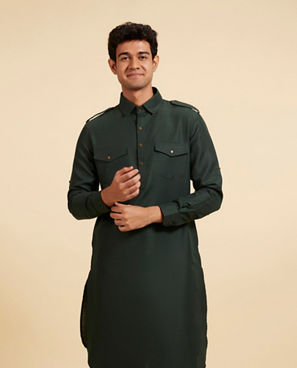
Bottle Green and dark green are the most formal and occasion-ready shades in the range. Deep, rich, and commanding, these shades give the Pathani suit the weight of a genuinely dressed-up garment. In a cotton-silk blend, bottle green is among the most impressive color choices available for Eid and winter celebrations.
Forest green sits slightly lighter than bottle green — still rich, still deep, but with a freshness that makes it appropriate for a wider range of occasions. The most versatile shade in the range.
Olive green brings an earthy, grounded quality to the Pathani silhouette. Less formal than bottle or forest green, olive suits everyday casual wear and relaxed cultural occasions. The most practical shade for regular use.
Teal green sits at the intersection of green and blue — distinctive, contemporary, and particularly effective for men who want a green Pathani that feels modern without abandoning the silhouette's traditional character.
Bright and Kelly green are the most festive shades — vibrant, energetic, and best suited for Navratri, outdoor celebrations, and occasions where the dress code rewards color and presence over restraint.
The Pathani Silhouette — What Makes It Distinct
Understanding what makes the Pathani suit different from a standard Kurta Pajama is part of wearing one well.
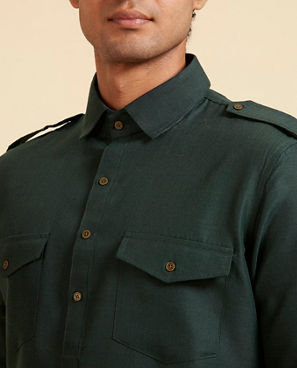
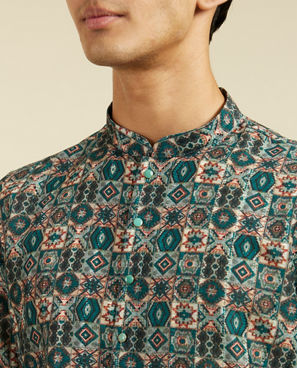
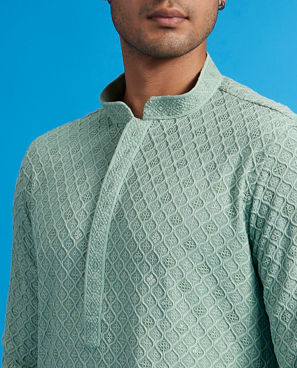
The kameez falls below the knee — significantly longer than most kurta styles — creating a generous, flowing line that is both dignified and practically comfortable. The collar construction is distinctive: a close-fitting band or mandarin collar that frames the neck with clean authority. Front pockets are a defining practical feature — the Pathani was designed for men who move through the world with ease, and the pockets reflect that. Side slits allow full freedom of movement without disrupting the garment's overall line.
The shalwar — loose and comfortable through the leg — completes a silhouette that prioritizes the wearer's freedom above everything else. In green, every one of these construction details reads with a clarity and intention that makes the complete outfit immediately recognizable and impressive.
Fabric Choices
Cotton is the most practical and widely worn fabric for green Pathani suits. Breathable, comfortable, and well-suited to India's warm climate — cotton is the ideal choice for everyday wear, Friday prayers, and casual social occasions. In bottle green, cotton has a clean, matte quality that suits the garment's utilitarian character perfectly.
Linen adds a textured, artisanal quality to the Pathani — the fabric's natural grain complements green's earthy character, creating a combination that feels grounded and considered. Particularly effective for olive and forest green shades.
Cotton-silk blend is the upgrade for festive occasions — enough silk to lend the fabric depth and a subtle sheen, and enough cotton for comfort throughout a long celebration. In bottle green or forest green, a cotton-silk blend Pathani has a richness that cotton alone cannot achieve. The right choice for Eid and more significant gatherings.
Polyester-cotton blends offer practical advantages — wrinkle resistance, easy maintenance, and a structured drape that keeps the kameez looking pressed across extended wear. A good travel and extended-occasion option.
The Occasions a Green Pathani Suits Best
Eid is the most celebrated occasion — the cultural connection between green and Eid is deep and widely observed. A bottle green or forest green Pathani in cotton-silk blend for Eid morning is a complete, culturally grounded, and genuinely impressive choice. Nothing needs to be added to it.
Friday prayers — a clean, well-pressed green Pathani is one of the most respectful and culturally appropriate choices for Jumu'ah prayers. The color's significance and the silhouette's dignified modesty make this combination entirely right for the occasion.
Nikah ceremonies — forest green or bottle green in a quality fabric suits the dignity and significance of a nikah. The Pathani's modest, structured silhouette is particularly well-suited to religious ceremony contexts.
Navratri and outdoor festivals — brighter greens and Kelly green Pathani suits bring the right festive energy to color-forward celebrations. The Pathani's comfortable silhouette suits the active, outdoor character of these occasions well.
Casual community gatherings and family occasions — an olive or forest green cotton Pathani is one of the most relaxed and effortlessly well-dressed options for everyday celebration dressing. Comfortable enough to wear all day, considered enough to look genuinely put-together.
Winter celebrations — Lohri, winter weddings as a guest — deeper green shades in heavier cotton or cotton-silk blend are seasonally appropriate and visually rich for the cooler months of the Indian festive calendar.
Wearing it Right
The Pathani suit is most powerful when worn as a complete, unified set — the long green kameez with the matching green shalwar. Additional layering typically works against the silhouette's characteristic ease and flow rather than enhancing it.
Footwear anchors the look — classic leather chappals or sandals in dark brown or black are the most traditional and authentic pairing. For festive occasions, embroidered or embellished juttis in dark green, black, or bronze add a celebration-appropriate detail. Simple leather mojaris work equally well across most occasions.
Accessories should be intentional and restrained — a tasbih, a clean watch, or a simple metal bracelet. The Pathani suit's strength lies in its silhouette and color. Accessories should acknowledge this rather than compete with it.
The collar and neckline construction of the Pathani are central to the garment's identity — keep them clean and unobscured. A well-pressed Pathani collar is one of the most distinctive details in men's celebration dressing, and it deserves to be seen.
Across the Seasons
Green's range across shades makes the Pathani suit a genuine year-round option — not a single-season choice.
In summer and warm weather, lightweight cotton and linen Pathanis in lighter shades — olive, teal, forest green — are breathable and appropriate for the season. The silhouette's generous cut allows airflow, making it one of the more comfortable celebration garments for warm days.
Through the autumn and winter festive season — October through February — deeper green shades in heavier cotton or cotton-silk blend carry the warmth and visual richness appropriate for the season. Bottle green and dark green in this period have a seasonal rightness that lighter shades can't quite replicate.
Frequently Asked Question (FAQs)
1. What shade of green Pathani suit is most appropriate for Eid?
Bottle green and forest green are the most culturally resonant and widely appreciated Eid choices — their depth and richness suit the significance of the occasion, and in cotton-silk blend fabric, they create a look of genuine festive elegance. Teal green is a strong contemporary alternative for men who want something distinctive while remaining culturally connected.
2. Can a green Pathani suit be worn to a wedding as a guest?
Yes — particularly for nikah ceremonies and daytime wedding functions. A bottle green or forest green Pathani in a quality cotton-silk blend is dignified, culturally appropriate, and genuinely impressive as a wedding guest choice. For evening reception functions, the same suit in a richer fabric with quality footwear holds its own comfortably.
3. Is the green Pathani suit appropriate for everyday wear or only special occasions?
Both — the shade and fabric determine the occasion-appropriateness. An olive or mid-tone green cotton Pathani is an excellent everyday wear option — comfortable, practical, and appropriate for Friday prayers, family occasions, and relaxed social gatherings. Deeper greens in richer fabrics are better reserved for significant celebrations and festive occasions.
4. How is a Pathani suit sized differently from a regular kurta?
Pathani suits are typically sized through the chest and shoulders, with the kameez length and shalwar width cut generously by design. The silhouette is intentionally relaxed — the chest should have ease for comfort, not be fitted. The kameez length falls below the knee. When choosing a size, prioritise shoulder fit first — adjustments to length and width are easier to make than shoulder corrections.
5. How do I care for a cotton-silk blend green Pathani suit?
Hand wash in cold water with a gentle detergent, or dry clean for best results. Turn inside out before washing to protect the outer fabric surface. Avoid direct sunlight when drying — it fades green fabrics and can alter the silk component's character over time. Iron on medium heat while slightly damp for the cleanest pressed finish. Store on a hanger to maintain the kameez's shape and prevent heavy creasing across the long hemline.
Black Pathani Kurta | Blue Pathani Kurta

_18-04-2025-18-28:297-368)
_18-04-2025-18-29:297-368)
_18-04-2025-18-28:Swatch)
_18-04-2025-20-02:297-368)
_18-04-2025-20-03:297-368)
_18-04-2025-20-02:Swatch)
_18-04-2025-19-50:297-368)
_18-04-2025-19-51:297-368)
_18-04-2025-19-50:Swatch)
_28-04-2025-07-17:297-368)
_18-04-2025-21-44:297-368)
_28-04-2025-07-17:Swatch)