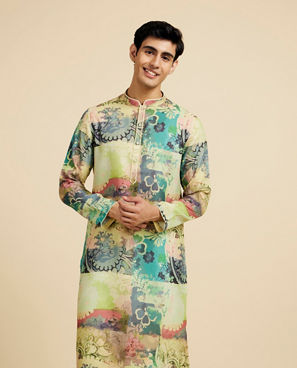
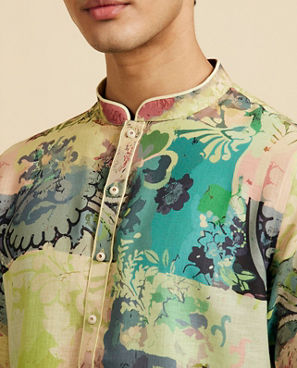
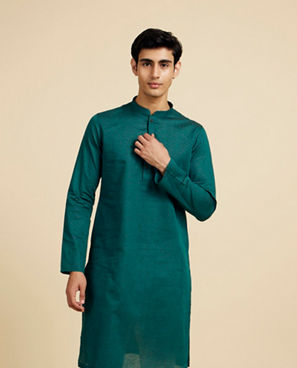
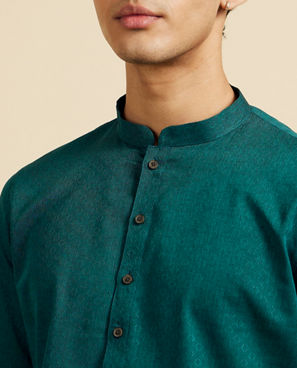
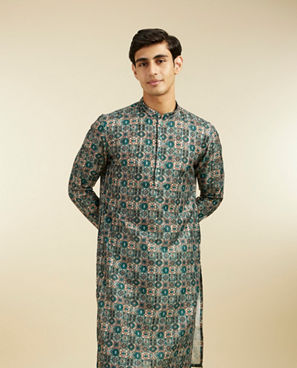
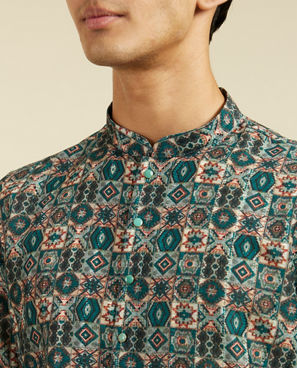
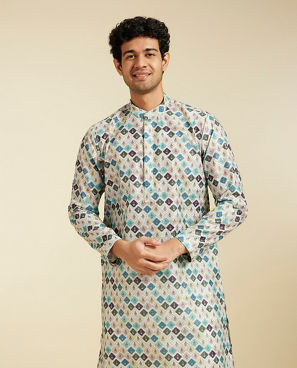
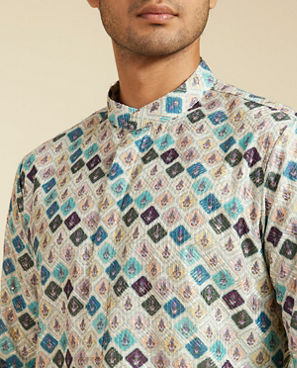
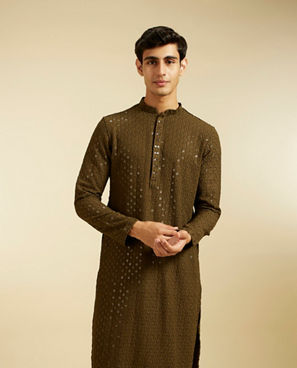
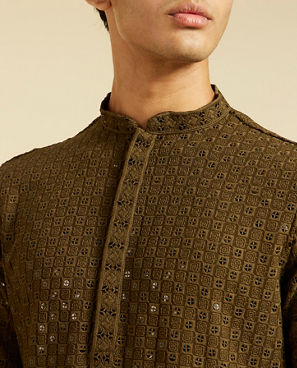
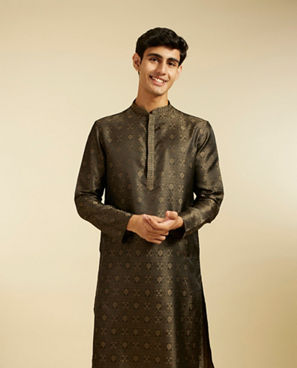
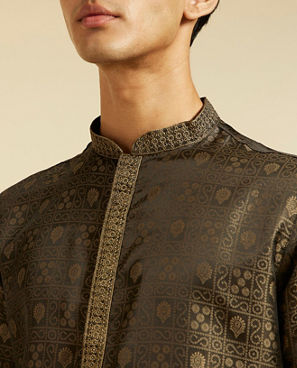
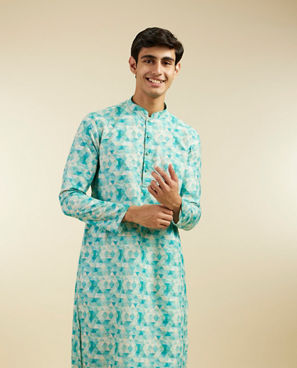
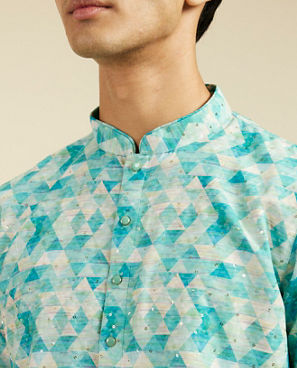
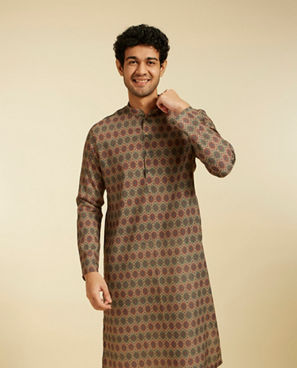
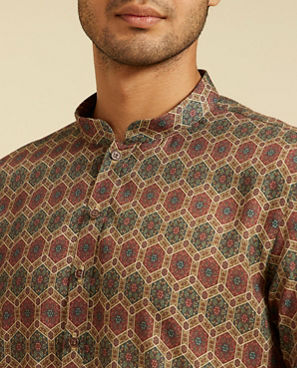
Green printed kurta for men
This page brings together one of the most naturally festive colours in Indian menswear, with prints ranging from delicate florals and heritage-inspired motifs to bold geometric patterns and contemporary abstract designs. You'll find shades spanning mint and sage to emerald and bottle green—each carrying a different mood—all paired with surface work that makes the kurta feel considered and expressive rather than simply coloured.
At Diwas, green printed kurtas sit in a very specific and useful space in the celebration wardrobe: more expressive than plain green solids, more relaxed than embroidered or chikankari pieces, and versatile enough to move between casual festive occasions and mid-level celebrations without ever feeling out of place.
Why green printed kurtas deserve more attention
Green is one of the most culturally embedded colours in Indian celebratory wear—linked to nature, fertility, new beginnings, and specific festivals such as Eid, Ganesh Chaturthi, and harvest celebrations. But despite its cultural significance, green is often underrepresented in men's festive wardrobes. A printed version changes that conversation.
A green printed kurta:
-
Gives the colour a story beyond flat festive green—prints add narrative, whether that's traditional block-work motifs, romantic florals, or modern geometric patterns.
-
Photographs, more dynamically than plain green—prints, create surface texture and movement in photos that flat solids simply don't offer.
-
Feels more versatile than embroidered green pieces—lighter fabrics and surface prints make it appropriate for a wider range of occasions without the formality that embroidery signals.
-
Creates visual interest without intensity—green's natural groundedness keeps even bold prints from feeling overwhelming, making the kurta easy to wear confidently.
-
Works across age groups and social circles—from younger men who want fashion-forward festive dressing to older family members who appreciate traditional motifs on a culturally rooted base colour.
The green spectrum: shades and print interactions
Green is one of the broadest colour families in men's ethnic wear, and prints behave very differently depending on the shade they fall into. On this page you'll broadly encounter:
-
Mint and light green with prints—the freshest, most contemporary end of the spectrum; delicate floral or tone-on-tone prints on mint feel very youthful and modern; great for spring festivals, outdoor weddings, and Eid celebrations.
-
Sage and olive with prints—a more earthy, muted direction where heritage block-prints and botanical patterns feel artisanal and considered; suits smaller gatherings, office cultural days, and casual festive occasions.
-
Mid and emerald green with prints—vibrant and clearly festive; geometric and abstract prints on emerald feel bold and fashion-forward; strong for Navratri, Diwali, and energetic celebration settings.
-
Bottle and forest green with prints—the deepest, most evening-ready end; heritage and placement prints on bottle green feel rich and regal; works for evening wedding functions and more formal festive occasions.
Choosing your shade is really about matching the mood of the occasion—lighter greens for day and casual plans, deeper greens for evening and more significant events.
Print directions you'll find on green kurtas
Print choice gives each green kurta a distinct character and distinguishes it from a kurta that feels traditional from one that feels contemporary. On this page:
-
Floral and botanical prints on green—a very natural pairing; flowers, leaves, and vine motifs on green feel organic and celebration-ready without being loud; works for mehendi, daytime weddings, and outdoor festivals.
-
Block-print and kalamkari-inspired patterns—traditional Indian printing techniques on green create a rooted, handcrafted aesthetic; feels artisanal and considered, particularly on sage and olive bases.
-
Geometric and abstract prints—structured, graphic patterns that give green a more contemporary, design-aware quality; shift the kurta's mood from traditionally festive to modern and fashion-forward.
-
Heritage and ethnic motifs—butis, jaals, and classic Indian pattern elements in complementary or contrasting tones over green; feels classically Indian and sits naturally at festivals, pujas, and community celebrations.
-
Digital placement prints—modern printing techniques where motifs are placed deliberately rather than repeated as all-over patterns; create a curated, editorial aesthetic for men who want their festive dressing to feel current.
Each print direction takes green in a different direction—traditional, contemporary, romantic, or graphic—while keeping the colour's inherent connection to Indian celebration culture intact.
Fabrics that carry green prints best
For prints to look sharp and the colour to stay rich across wear and washing, fabric quality matters.
-
Cotton and cotton-rich blends—the most practical and breathable base; holds prints cleanly and stays comfortable for outdoor events, long festival days, and high-movement celebrations like garba and Holi.
-
Viscose and blended viscose—a smoother, slightly more polished surface where prints appear crisper and the kurta drapes more elegantly; suits indoor functions and mid-level occasions where a more refined finish is needed.
-
Linen and linen-cotton blends—a naturally textured base that complements block-print and heritage-inspired patterns on green particularly well; creates a deliberate, handcrafted quality for casual and semi-formal settings.
-
Rayon and soft blended weaves—lightweight and fluid; prints sit flat and the kurta falls naturally; used in more relaxed casual green printed styles that pair easily with denims and trousers.
Because green can sometimes look washed out on very thin or low-quality fabric, choosing a well-constructed base—particularly for deeper shades like bottle and forest green—ensures the colour reads rich and intentional rather than flat.
Where they naturally fit in your calendar
Green printed kurtas are built for celebrations where colour, cultural roots, and expressive dressing are all part of the mood. They fit especially well when you're:
-
Attending Eid gatherings and community celebrations—where green carries deep symbolic meaning and a printed version adds character and occasion-readiness beyond a plain solid.
-
Dressing for mehendi and pre-wedding functions—where green is traditionally associated with the ceremony and a printed kurta feels fresh, photogenic, and considered, without the formality of embroidery.
-
Celebrating Ganesh Chaturthi and other outdoor festivals—where green feels auspicious and a printed version is practical enough for long, high-energy days of celebration.
-
Attending daytime weddings and outdoor functions—where lighter printed greens feel fresh and camera-friendly in natural light; particularly strong for garden and resort venue weddings.
-
Navratri and garba nights—where mid and emerald greens with bold geometric or abstract prints feel energetic and visually strong on dance floors and in group photos.
-
Office cultural days and campus events—where a sage or olive green kurta reads ethnic and is considered without being too bold for professional or academic settings.
The common thread: they work wherever the occasion calls for colour that feels naturally rooted and culturally significant, expressed through a print that makes the choice feel deliberate.
Three complete looks
-
Eid and daytime festive: A mint or soft green floral printed cotton kurta with white or off-white pyjamas and traditional sandals or mojaris. A simple watch; the colour and print feel fresh and culturally appropriate for Eid visits and community celebrations.
-
Mehendi and pre-wedding function: A mid-green or emerald heritage or block-print kurta with cream or beige churidar and tan mojaris. A subtle pocket square or watch; the green print sits naturally in the colour story of a mehendi while feeling more considered than a plain solid.
-
Contemporary casual and campus-ready: A sage or olive geometric or abstract print kurta with slim dark denims and clean sneakers. Sleeves slightly rolled; works for campus fests, casual Navratri plans, and friend-group outings where Indo-fusion feels more natural than fully traditional ethnic dressing.
Across all three, the green base remains the culturally rooted anchor—while the print, shade, and styling shift to match each occasion's specific energy and dress code.
Green printed kurta versus green embroidered and green chikankari
Understanding where each green kurta category sits in the occasion spectrum helps you build a wardrobe that serves different moments efficiently.
-
Green printed kurta: Surface pattern through printing; relaxed and breathable; casual-to-mid-festive in register; most versatile for everyday celebrations, outdoor events, and occasions where comfort and expression matter alongside colour.
-
Green chikankari kurta: Fine embroidery stitched over green; more handcrafted and occasion-specific; suited to evening mehendi, Diwali gatherings, and wedding functions where visible craft adds to the look.
-
Green embroidered kurta: Threadwork, zari, or sequin embroidery; the most formal of the three; best for sangeet, receptions, and significant evening events where the outfit needs to feel deliberately special and occasion-ready.
A printed kurta covers the widest range of your celebration calendar—it's the version you wear most often and reach for most naturally, leaving chikankari and embroidered pieces for the occasions that specifically call for their higher formality.
In a small, curated wardrobe
In a compact yet well-considered ethnic wardrobe, this kurta fills the culturally rooted, expressive, everyday-festive slot that neither plain solids nor heavily embroidered pieces quite cover.
Alongside:
-
a neutral or plain kurta (white, beige, or cream) for simple rituals and smaller functions, and
-
one richer, more formal green piece (embroidered or chikankari) for important evening events,
a green printed kurta becomes:
-
your first choice for Eid, mehendi, Ganesh Chaturthi, and casual outdoor weddings;
-
the piece that gives your festive wardrobe its most naturally rooted colour story;
-
a repeat-wear staple that works across different social circles because the print shifts how the green reads across different contexts.
In photos, reels, and celebrations
Green is one of the most photogenic colours in men's ethnic wear—it sits naturally in outdoor settings, complements the typical colour palette of Indian wedding and festival décor, and photographs consistently well across different lighting conditions. A print adds surface texture and visual movement that makes the kurta look more dimensional and considered in both candid shots and posed portraits.
For Eid captures, mehendi reels, and outdoor wedding photography specifically, a green printed kurta performs exceptionally well—the colour belongs in the visual language of each celebration, and the print ensures the kurta reads as a chosen, deliberate piece rather than a generic festive option. Under natural light, the combination of green and print creates warm, natural frames that look genuinely beautiful rather than simply colour-accurate.
Frequently Asked Questions (FAQs)
1. Is a green printed kurta only for Eid and mehendi?
No—while it's a natural choice for both, this kurta also works for Ganesh Chaturthi, Navratri, daytime weddings, campus events, office cultural days, and casual festive gatherings; print style and shade determine how formal it feels.
2. What bottoms pair best with a green printed kurta?
White and cream pyjamas are the most classic; beige or stone churidar for a slightly more formal look; dark denims for casual Indo-fusion styling; neutral chinos for smart-casual and office-appropriate combinations.
3. Which shade of green works best for a printed kurta?
It depends on the occasion—mint and sage for daytime and casual events; emerald and mid-green for vibrant festive nights; bottle and forest green for more formal evening functions; all shades benefit from prints that complement rather than clash with the base tone.
4. How is a green printed kurta different from a plain green kurta?
The print adds personality, surface texture, and visual interest without embroidery; it makes the kurta feel more deliberate and expressive while retaining the comfort and versatility of a lighter fabric construction.
5. Can I wear a green printed kurta to a wedding function?
Yes—for daytime wedding functions, mehendi ceremonies, and casual wedding-week events; for formal evening receptions and sangeet, a green embroidered or chikankari kurta would be more appropriate in terms of occasion register.

_18-04-2025-18-28:297-368)
_18-04-2025-18-29:297-368)
_18-04-2025-18-28:Swatch)
_18-04-2025-20-02:297-368)
_18-04-2025-20-03:297-368)
_18-04-2025-20-02:Swatch)
_18-04-2025-19-50:297-368)
_18-04-2025-19-51:297-368)
_18-04-2025-19-50:Swatch)
_28-04-2025-07-17:297-368)
_18-04-2025-21-44:297-368)
_28-04-2025-07-17:Swatch)