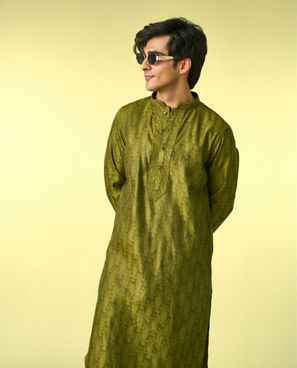
Olive Green Kurtas for Men – The Color That Does More Than You'd Expect
Olive green doesn't announce itself. It settles in, looks effortlessly right, and makes everything around it look more considered. It's one of those colors that men who dress well tend to keep coming back to — not because it's the most vibrant option on the rack, but because it consistently delivers in a way that louder colors sometimes don't.
What Makes Olive Different From Other Greens
The green kurta family is wide — emerald, bottle green, mint, teal, forest green — and olive sits apart from them all. Where most greens lean either warm or cool, olive leans earthy. It has a muted, almost dusty quality that comes from its yellow-brown undertone — the same undertone that makes it feel grounded, relaxed, and naturally flattering across a wide range of skin tones.
Bright greens demand attention. Olive invites it. The difference matters when you're building an outfit for an occasion that doesn't call for maximum color energy but still expects you to look dressed.
The Occasions Olive Green Actually Suits
Olive is not a festival-first color — and that's not a weakness, it's a strength. It covers the occasions that most other kurta colors handle less gracefully.
Casual family gatherings and get-togethers — an olive cotton kurta with simple trousers is one of the most effortlessly well-dressed casual looks available. No overthinking required.
Outdoor celebrations — Baisakhi, picnics, garden functions, daytime cultural events — olive works particularly well outdoors. The color's earthy quality sits naturally in open, green settings in a way that brighter colors don't.
Dussehra and Navratri — olive appears across the festival's color celebrations and suits the cooler, post-monsoon weather of the October festive season well.
Eid — a well-cut olive kurta in a quality fabric with subtle embellishment is a distinguished Eid choice. It stands apart from the expected palette without being an unexpected color — it simply looks more considered than most.
Semi-formal occasions — cultural events, office celebrations, award functions — olive green reads as smart and intentional without the full formality of deeper, darker shades.
Wedding functions as a guest — for daytime wedding functions and pre-wedding gatherings, an olive green kurta in chanderi or a silk-blend is a sophisticated, low-key, and impressive choice. It photographs well in natural light and never clashes with the wedding's own color palette.
Olive Across Different Fabrics — What Changes
The fabric you choose shifts how olive reads significantly — more than it does for most other colors.
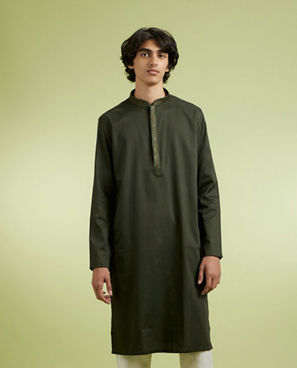
In cotton, olive looks fresh and relaxed — the matte surface gives the color an honest, casual quality that suits everyday and smart-casual occasions. Cotton olive kurtas are the most versatile in the range.
In linen, the color deepens slightly and takes on a more artisanal, handcrafted quality. Linen's texture reinforces olive's earthy character in a way that feels coherent and considered. A particularly good combination for block-printed or minimal olive kurtas.
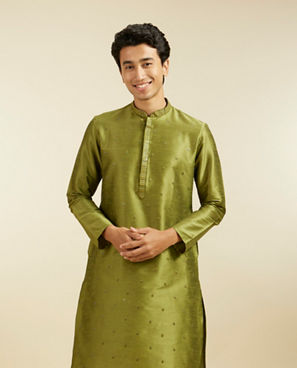
In Chanderi, olive takes on a gentle luminosity — the fabric's slight sheen gives the muted color more visual presence without altering its fundamental character. The right step up for semi-formal and festive occasions.
In silk-blend, olive deepens further and becomes genuinely rich — appropriate for evening occasions and more formal celebrations. In warm lighting, a silk-blend olive kurta has a depth and warmth that is quietly impressive.
Surface Detail: What Works on Olive
Olive is a restrained color — embellishment needs to be chosen with the same restraint.
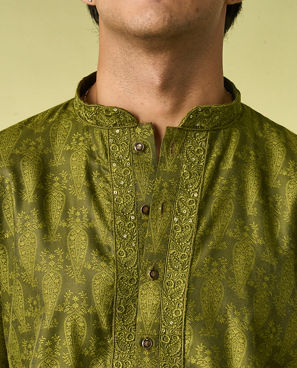
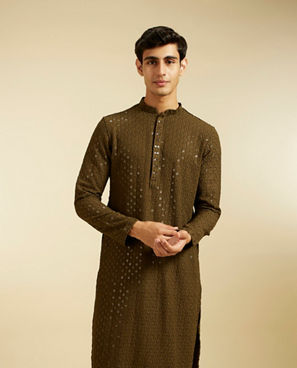
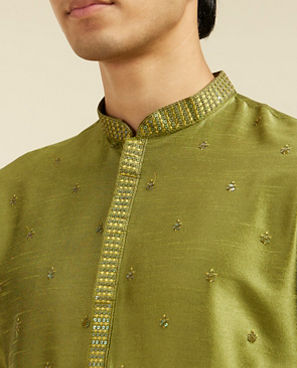
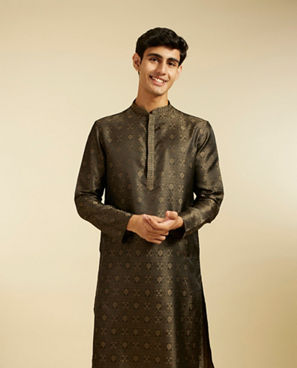
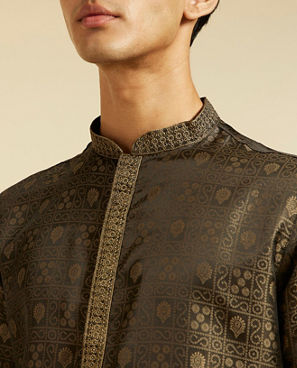
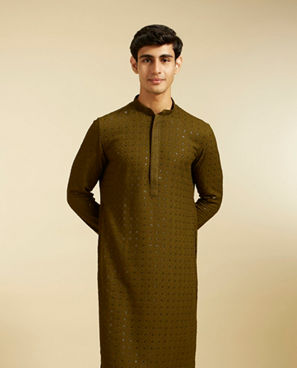
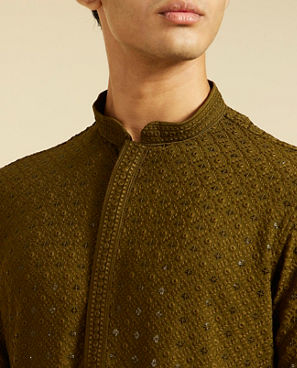
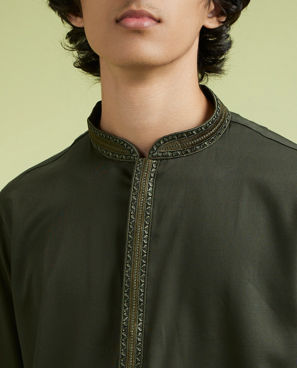
Gold threadwork on olive creates a warm, earthy combination that feels cohesive rather than contrasting — the gold's warmth and olive's yellow undertone sit naturally together. Works particularly well on deeper olive shades in chanderi or silk-blend.
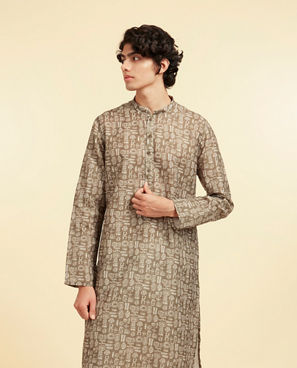
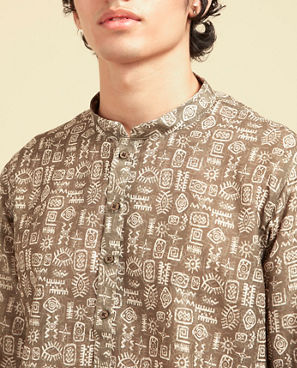
Cream or ivory embroidery on olive creates a softer, more relaxed contrast than white would — the combination feels organic and artisanal, particularly on cotton and linen bases.
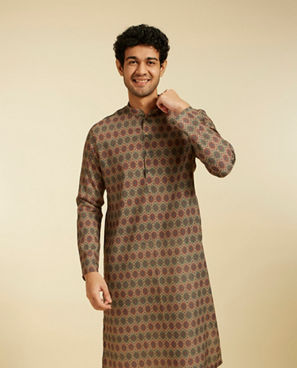
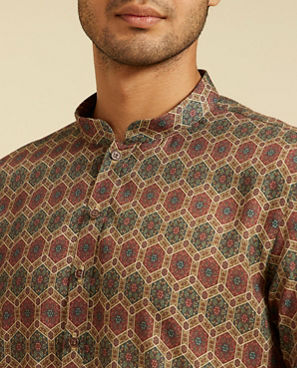
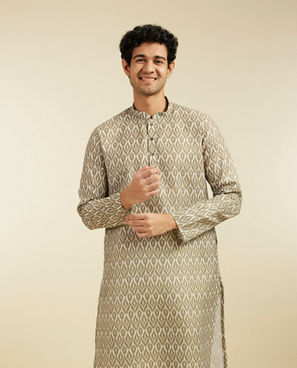
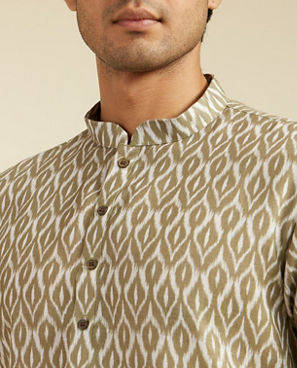
Block prints in contrasting tones — rust, terracotta, ochre, or white on olive — are among the most effective surface treatments for this color. The earthy print palette and the earthy base color reinforce each other, creating a garment that feels genuinely cohesive.
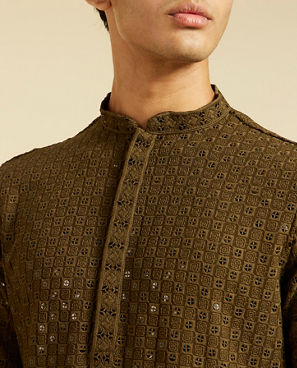
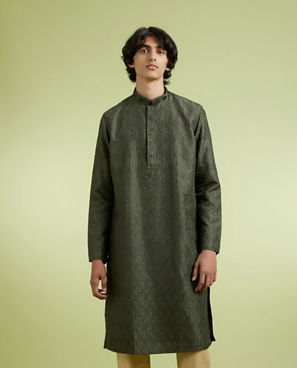
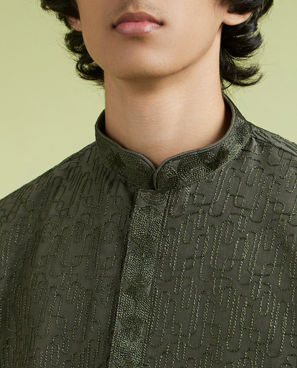
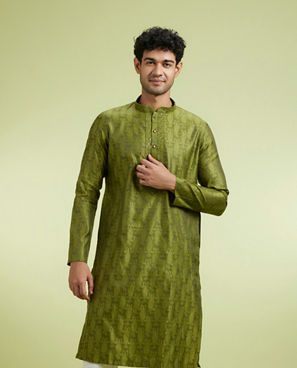
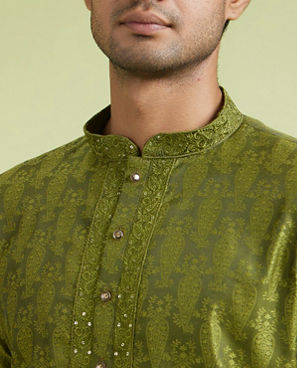
Subtle self-prints and tonal textures suit olive particularly well — the color's understated character is enhanced rather than disrupted by surface detail that adds depth without introducing contrast.
Avoid heavy gold zari embroidery or very dense embellishment on olive — the color's restrained character doesn't support maximum embellishment. Less is always more here.
The Styling Case
Olive is one of the easiest kurta colors to build an outfit around — here's why and how.
Beige and sand churidars are the most natural pairing — the warm neutrals sit cohesively with olive's earthy tone, creating a relaxed, organic palette that looks intentional without effort.
Ivory or off-white trousers give you a cleaner contrast — a bit more definition than beige, and work across casual and semi-formal occasions equally well.
White churidars for a crisper, more contemporary pairing — the contrast is sharper than beige but still entirely appropriate. Works particularly well for daytime occasions in natural light.
Deep brown or tan trousers for a fully earthy, tonal ensemble — modern, considered, and especially effective for smart-casual settings.
For footwear, tan and caramel leather juttis are the most cohesive pairing with olive. Brown mojaris suit more formal occasions. Avoid black footwear — it breaks the earthy warmth of the olive palette without adding anything.
Accessories in matte gold or warm bronze work naturally with olive's undertones. Keep them minimal — a watch and a single bracelet are enough.
Why Olive Photographs the Way It Does
Olive green has a specific relationship with natural light, making it one of the more photogenic kurta colors — particularly for outdoor and daytime shoots.
The color's muted, earthy quality means it absorbs and reflects warm light in a way that doesn't bleach out or oversaturate. In green outdoor settings — gardens, fields, tree-lined spaces — olive blends into the environment in a way that creates photographs with a natural, cohesive warmth. On neutral backgrounds — stone, concrete, sand — it provides a calm, well-defined presence that makes the subject look genuinely stylish without drawing attention to the outfit itself.
For reels and social media content in natural settings, olive is a consistently strong performer — not the most attention-grabbing color on its own, but one that always makes the overall image look more composed and deliberate.
Frequently Asked Questions
1. Is olive green a good choice for a wedding function?
Yes — for daytime functions and pre-wedding gatherings, the color in chanderi or silk-blend is a sophisticated and memorable guest choice. It's distinctive without being conspicuous, and it photographs well in natural light. For evening functions, a deeper olive in a richer fabric with subtle gold embellishment is an appropriate and well-considered option.
2. What skin tones does olive green suit best?
Olive green is one of the most universally flattering kurta colors. On medium and olive skin tones, it sits with a natural harmony — the color's own yellow-brown undertone complements warm complexions beautifully. On deeper skin tones, the earthy contrast is striking and confident. On fairer complexions, olive adds warmth and depth that prevents the overall look from feeling washed out.
3. How is olive green different from other shades of green in terms of styling?
Olive is earthier and more muted than most greens — it pairs more naturally with warm neutrals like beige, sand, and tan than emerald or bottle green, which typically call for white or ivory pairings. The styling logic for olive is warmer and more tonal; for brighter greens, it's crisper and more contrasting.
4. Can olive green work for Eid?
Yes — particularly in a quality fabric with subtle embellishment. An olive kurta in chanderi or a silk-blend with cream or gold threadwork is a distinguished and culturally appropriate Eid choice. It's different from the standard Eid palette in a way that reads as considered rather than unexpected.
5. What print styles work best on an olive green kurta?
Block prints in earthy contrasting tones — rust, terracotta, cream, and ochre — work best on olive. The artisanal quality of block printing and the earthy character of olive reinforce each other cohesively. Subtle geometric self-prints and tonal textures also suit Olive well. Avoid very bold or high-contrast digital prints, which can disrupt olive's naturally understated character.













_09-02-2026-19-29:297-368)
_09-02-2026-19-29:297-368)
_09-02-2026-19-29:Swatch)





_20-06-2026-19-02:Swatch)