STORIES BY DIWAS

Lifestyle
Festival Kurta Guide: Diwali, Eid, Navratri, Pongal Outfit Ideas
Date 27 May 2026 Reading time: 7-10 mins
Festivals in India aren’t just dates on a calendar — they’re entire moods. Each one has its own colours, its own rhythm, its own way of dressing. A kurta that feels perfect for Diwali in Delhi might feel completely off for Pongal in Chennai or Navratri in Ahmedabad.
This guide walks through four big festivals — Diwali, Eid, Navratri and Pongal — and how to choose kurta looks that match both the occasion and the region, without feeling stuck in “only one way to dress”.
Diwali: Lights, Colour & Evening Glam
Diwali is celebrated across India and the diaspora, but the way people dress does shift by region. North and West India lean more embellished and bright; South India leans slightly softer and silk-heavy — especially for pujas and family gatherings.
Colours & Their Meaning
- Yellow / gold — light, wealth, prosperity
- Red — energy, auspicious beginnings
- Green — growth, renewal
- Deep jewel tones (emerald, navy, maroon) — richness and evening sophistication
North & West India (Delhi, UP, Rajasthan, Gujarat, Maharashtra)
- Daytime puja:
- Light or mid-tone kurtas in yellow, off-white, or pastel, in cotton or silk-cotton.
- Evening Diwali parties / card nights:
- Silk or art-silk kurtas in jewel tones (emerald, navy, maroon) with subtle embroidery.
- Paired with churidar or straight-cut pajama; Nehru jackets for added polish.
Example looks (Diwali):
- Off-white cotton-silk kurta, mustard churidar, brown mojris — for Lakshmi puja at home.
- Deep emerald silk kurta, tonal churidar, embroidered Nehru jacket — for an evening Diwali party in a metro city.
- Short mustard kurta, dark jeans, white sneakers — for a relaxed friends’ card party.
South India (Tamil Nadu, Karnataka, Andhra, Kerala)
- Strong presence of white/off-white base looks — echoing veshti–shirt combinations.
- Kurta fabrics skew lighter because of the weather: cotton, silk-cotton, and light art silk.
Example looks:
- Off-white cotton kurta, cream trousers, minimal embroidery — for a temple visit or family Diwali puja.
- Soft gold or light yellow silk-cotton kurta, beige churidar — for an evening gathering indoors.
Diwas Tip: Think of Diwali as having two phases — daylight puja (lighter fabrics, softer colours) and evening gatherings (deeper colours, subtle sheen). One kurta in a jewel tone can work for both by changing bottoms and layering.
Eid: Grace, Softness & Subtle Detail
Eid outfits tend to lean refined rather than loud. Whites, pastels and light tones are especially popular for prayers, with richer colours appearing later in the day for visits and evening gatherings.
Colours & Their Meaning
- White / cream — purity, peace
- Pastels like mint, sky blue, blush beige — calm and uplifting
- Jewel tones (navy, emerald, maroon) — elegant for evening invites and family dinners
North India Focus (Lucknow, Delhi, Hyderabad influence)
- Strong chikankari and fine threadwork traditions — light, breathable fabrics with detailed embroidery.
- Long hemlines, modest fits suitable for mosque and family settings.
Example looks (Eid):
- White chikankari-style kurta, white pajama, simple sandals — for Eid prayer in the morning.
- Mint green kurta with subtle threadwork, beige churidar, light shawl — for visiting relatives.
- Navy silk-blend kurta, slim-fit trousers, loafers — for an evening Eid get-together or formal dinner.
South & Coastal Regions
- Lightweight cotton kurtas are popular because of heat — even on Eid, comfort matters.
- Colours lean fresh and soft: sky blue, light green, soft greys.
Diwas Tip: For Eid, think soft base, sharp details — lighter colours with refined embroidery or texture. Save very shiny fabrics and loud colours for other festivals.

Navratri: Garba, Dandiya & Max Energy
Navratri is most intensely celebrated in Gujarat and parts of Maharashtra, with garba and dandiya at the centre. It’s nine nights of dancing, colour, and coordinated outfits — which means your kurta has to look festive and be movement-friendly.
Colours & Their Meaning
Different communities follow different colour sequences for each night, but broadly:
- Red, yellow, orange, bright green — associated with different forms of the goddess
- Silver and mirror details — catch the light during garba/dandiya
West India (Gujarat, Maharashtra)
- Mirror work, bandhani, block prints, bright multi-colour palettes dominate.
- Kurtas need to allow free arm movement and airflow — lighter fabrics, side slits, not too long.
Example looks (Navratri):
- Bright red or yellow cotton kurta, white churidar, lightweight dupatta (optional) — classic night-one energy.
- Bandhani-print kurta in orange or green, slim white pajama, kolhapuris — for an authentic yet comfortable garba look.
- Short mirror-work inspired kurta, dark jeans, sneakers — for a fusion-friendly dandiya night, especially for younger crowds.
Other Regions (Metro Cities, Smaller Pujas)
Even if garba nights aren’t as big, many housing societies and temples host smaller Navratri events.
- Slightly toned-down prints or solid kurtas in the colour-of-the-day.
- Less mirror work, more about colour and comfort.
Diwas Tip: For Navratri, plan around movement first, aesthetics second. If you can’t comfortably lift your arms or do a twirl in your kurta without it pulling or riding up, swap it for something lighter and better-fitted.
Pongal: Harvest, Simplicity & Fresh Starts
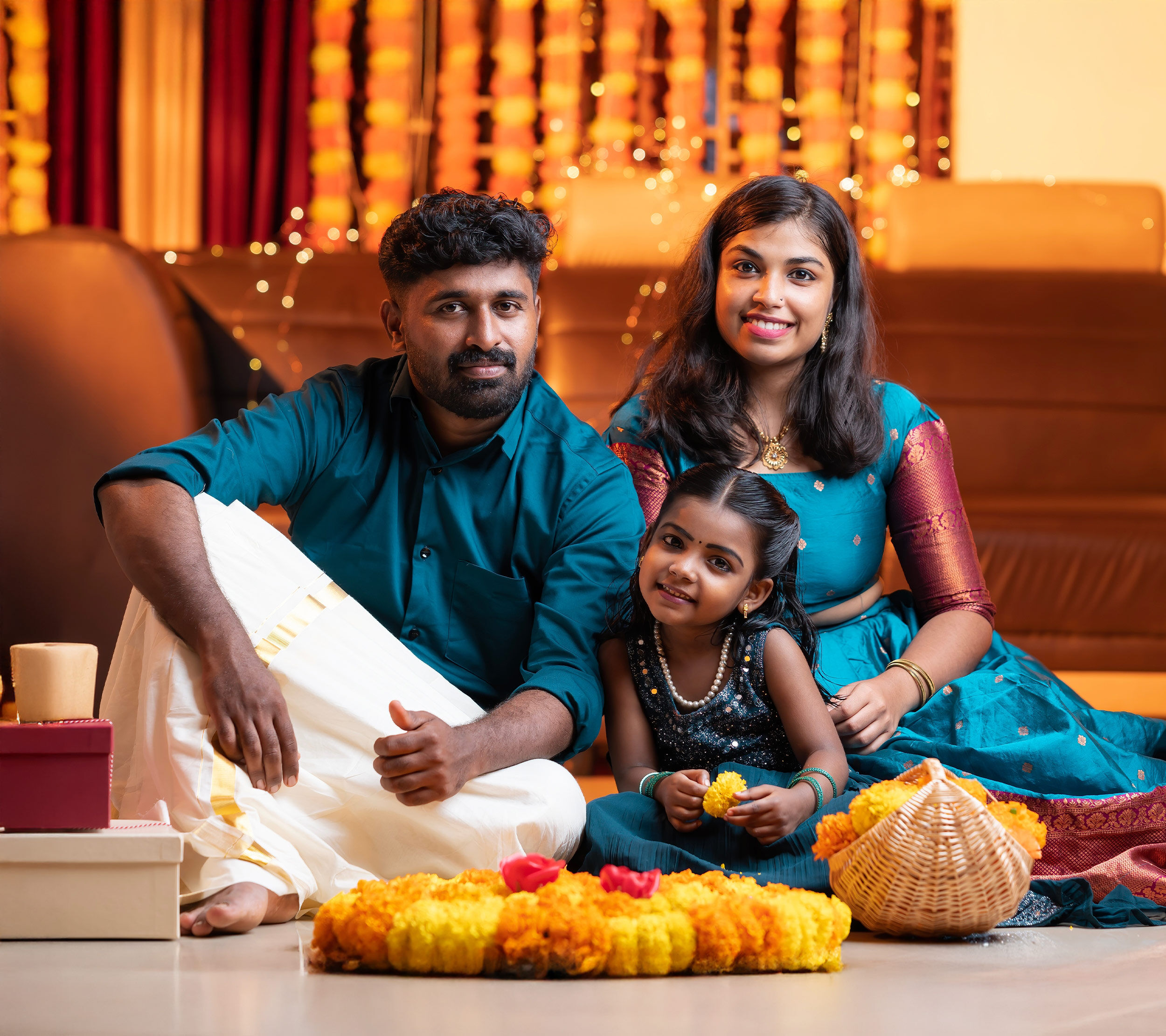
Pongal (and related harvest festivals like Thai Pongal / Sankranti in the South) is strongly linked to Tamil Nadu and surrounding regions. The vibe is very different from Diwali or Navratri — calmer, rooted in harvest rituals, with lots of white, yellow and green around.
Colours & Their Meaning
- White/off-white — simplicity, purity
- Yellow — sunshine, prosperity, harvest
- Green — crops, new beginnings
- Red accents — auspicious touches
South India (Tamil Nadu, plus parts of Karnataka, AP, Telangana)
Traditionally, men wear veshti (dhoti) and shirt or angavastram—but kurtas are increasingly part of the mix, especially in urban and younger communities.
Example looks (Pongal):
- White cotton kurta, cream veshti, bare or sandals — for a classic home Pongal puja look.
- Light yellow cotton kurta, beige trousers, simple sandals — for those who prefer trousers over veshti but still want the Pongal colour story.
- Off-white kurta with subtle green border or piping, cream pajama — for a slightly modern take that still fits temple and family settings.
Climate note: Pongal is usually warm — breathable cotton or cotton-silk, minimal embellishment, and relaxed fits keep you happy through early-morning cookouts and mid-day visits.
Quick Festival Kurta Cheat Sheet (By Region & Mood)
| Festival | Region Focus | Colours | Fabrics | Styling Notes |
|---|---|---|---|---|
| Diwali | North/West + Pan-India | Yellow, gold, red, jewel tones | Silk, art silk, cotton-silk, good cotton | Softer for day, richer for evening; jackets for extra polish |
| Eid | Strong North + coastal/South | White, pastels, jewel tones | Cotton, chikankari-style, silk blends | Refined, modest, long hemlines; minimal yet detailed |
| Navratri | West (Gujarat, Maharashtra) | Bright reds, yellows, greens, mirrors | Cotton, light blends | Dance-friendly, mirror/bandhani, colour-of-the-day where followed |
| Pongal | South (esp. Tamil Nadu) | White, yellow, green, red accents | Cotton, silk-cotton | Simple, clean, veshti or light trousers, minimal embellishment |
One Kurta, Multiple Festivals?
If you don’t want a separate kurta for every festival, you can still play smart:
- A deep emerald or navy silk-blend kurta can work for:
- Diwali evening (with churidar + jacket)
- Eid evening (with trousers + shawl)
- A white or off-white cotton kurta can work for:
- Eid morning prayers
- Pongal puja
- A softer Diwali morning puja
- A bright but not neon cotton kurta (like mustard or bottle green) can be:
- Navratri-ready with jeans and sneakers
- Diwali-day appropriate with pajama
- Office-festive friendly with chinos
The trick is to let colour and styling do the festival-specific work — not buy a new kurta for every single date in the calendar.
Festivals are about joy, not stress. When your kurta choices respect the festival’s mood, the region’s vibe, and your own comfort, getting dressed genuinely becomes part of the celebration — not a last-minute scramble.
Diwas by Manyavar — A Joy to Wear, whichever festival you’re lighting up next.

Made In India

Assured Quality

Secure Payments