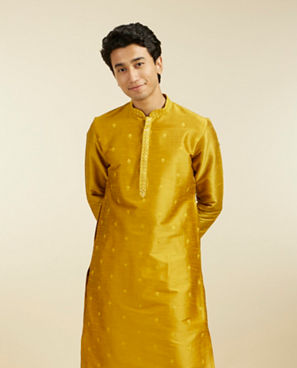
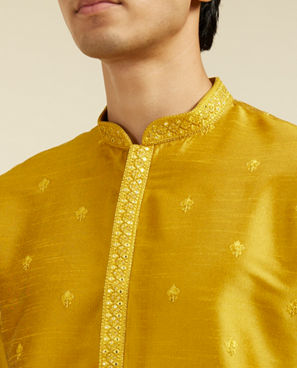
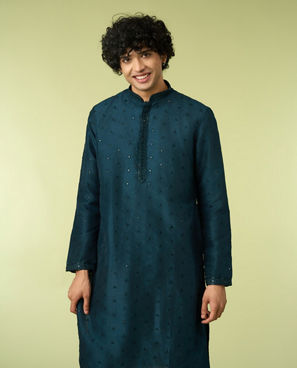
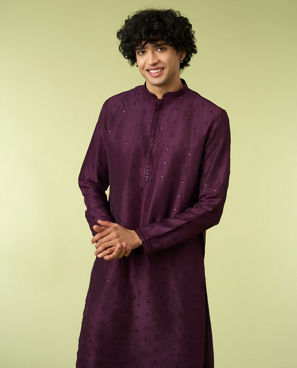
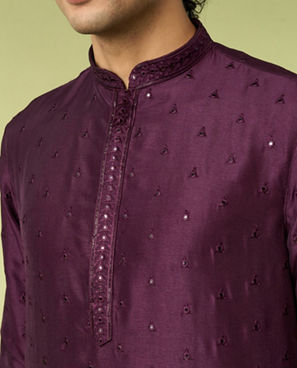
Mirror work kurta for men
This page brings together designs where reflective detailing and embroidery do the talking. Tiny mirrors sit within ethnic motifs, printed layouts, or embroidered patterns so the kurta glows under lights but still feels wearable and modern.
Under the Manyavar–Diwas umbrella, mirror work kurtas are imagined as true party pieces—clean silhouettes, contemporary colours, and embellishments that feel celebration‑ready without turning into costume. They are ideal when you know the evening will involve music, dancing, photos, and a lot of social energy.
Why choose a mirror work kurta
Mirror work has always been associated with festive dressing, but newer versions are lighter, sharper, and easier to repeat. A mirror work kurta instantly reads as “ready for a big night” even if the rest of your styling stays simple.
You’ll love this category if you:
-
Want an outfit that stands out in photos and reels without heavy layering.
-
Prefer contemporary shapes with traditional craft elements like mirror and thread work.
-
Are building a small party‑wear wardrobe and need one or two “statement” kurtas you can reach for every festive season.
It is the kind of kurta you automatically think of for the biggest events in your social calendar—perfect for when plain fabrics feel too safe.
Fabrics and mirror detailing
For mirror work kurtas, the base fabric and the placement of mirrors decide how comfortable and versatile the piece feels. Most modern designs use light, fluid materials that balance structure with ease.
Typical features include:
-
Soft, flowy bases like poly blends, viscose, or georgette‑style weaves that drape well and carry embellishment without feeling stiff.
-
Mirror and thread embroidery worked into motifs on the yoke, collar, placket, or sleeves, instead of covering the whole kurta.
-
Carefully cut and set mirrors that catch diya‑light, fairy lights, and flash in a controlled way, creating sparkle without bulk.
This makes the kurta move comfortably with you while still looking properly “dressed up” for big celebrations.
Colours and moods in mirror work
Mirror works are no longer limited to one or two traditional colours. You’ll see a spread from soft, minimal tones to vivid statement shades, each creating a different vibe.
Popular directions include:
-
Classic light shades like white or off‑white with mirror work for a softer, slightly regal mood.
-
Bright, festive colours—reds, blues, greens, pinks—that feel right at home at weddings, garba nights, and Navratri events.
-
Deeper tones and blacks with mirror and thread work for a high‑impact evening look.
Whatever the base, the mirrors turn even simple silhouettes into statement pieces as soon as the lights come on.
Occasions
A mirror work kurta is practically built for high‑energy celebrations. It belongs at events where music, dancing, and photos are part of the plan.
You’re most likely to wear it for:
-
Weddings and sangeet nights, where the shimmer plays beautifully with stage lights and décor.
-
Garba and Navratri evenings, where mirror work is a natural fit with the festive, rhythmic atmosphere.
-
Diwali parties and big festive gatherings, especially when you want something more striking than everyday celebration wear.
-
Grand family functions or milestone celebrations, where your outfit needs to feel a little extra special.
This is not the kurta you keep hidden—it’s meant to show up when the mood is loud, happy, and collective.
Styling
Because mirror work already brings a lot of visual interest, styling is about balancing shine with clean lines. Simple, well‑chosen pairings make the kurta look intentional rather than overloaded.
Some easy ways to wear it:
-
Wedding and sangeet look: Pair your kurta with churidar or slim pyjamas in beige, white, or a coordinated tone, and add mojaris or ethnic sandals.
-
Diwali and festive parties: Style it with tapered trousers or dhoti‑style bottoms for a contemporary twist that still feels traditional at heart.
-
Casual‑festive mix: For more relaxed events, wear your mirror embroidered kurta with denims and kolhapuris for a dressed‑up‑but‑easy look.
-
Layering up: Add a contrasting or tonal stole only if the mirror work is focused on the yoke or placket; this frames the detail without hiding it.
Accessories can stay minimal—a watch, ring, or kada is usually enough because the mirrors themselves work like built‑in jewellery.
Mirror work kurta as a statement staple
In a compact celebration wardrobe, this kurta is your clear statement piece. While solids and subtle textures cover everyday functions, this one comes out for the biggest, brightest nights of the year.
You can repeat the same kurta across different celebrations by:
-
Changing bottoms (pyjamas, trousers, denims) depending on how formal the event is.
-
Switching footwear from mojaris to loafers or kolhapuris for a new mood.
-
Adjusting accessories—keeping them almost bare for some events and slightly richer for others.
That way, a single mirror work kurta gives you several high‑impact looks across weddings, festivals, and party seasons, while staying rooted in the Diwas idea of modern, wearable celebration wear.
FAQs
1. Is a mirror work kurta comfortable for long events?
Yes, most modern mirror works use lightweight, breathable bases with focused embellishment, so they feel comfortable through ceremonies, dinners, and dancing.
2. Which occasions are best for wearing mirror work kurtas?
They are perfect for weddings, garba and Navratri nights, Diwali parties, and other high‑energy festive events where a bit of sparkle feels natural.
3. How can I style a mirror work kurta for a more casual look?
Pair it with denims and kolhapuris or simple sandals to balance the shine with laid‑back bottoms and footwear.
4. Do mirror work kurtas only come in bright colours?
No, you’ll find mirror work on whites, pastels, brights, and deeper shades; you can choose based on how minimal or statement‑making you want your look to be.
5. How should I care for a mirror work kurta?
Follow the care label, avoid harsh scrubbing on embellished areas, and store it carefully so the mirrors and threadwork stay secure and intact over time.