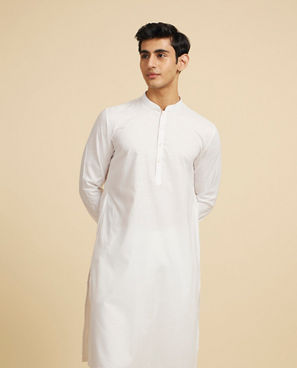
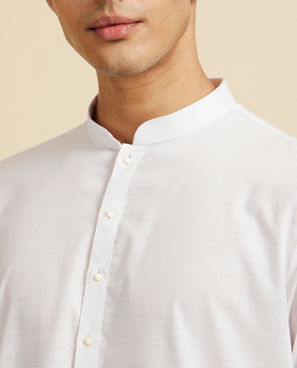
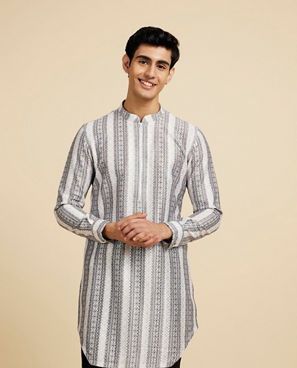
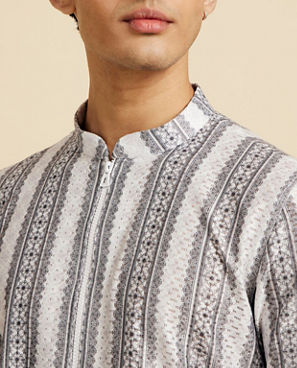
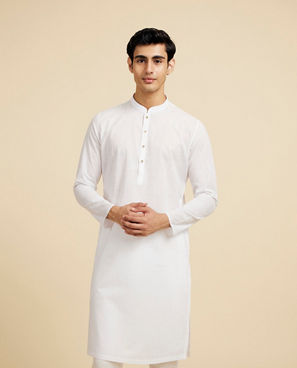
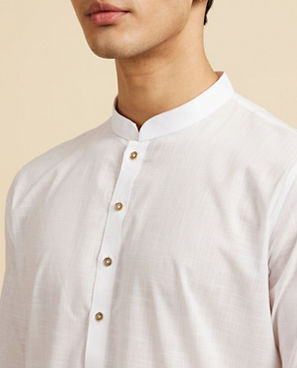
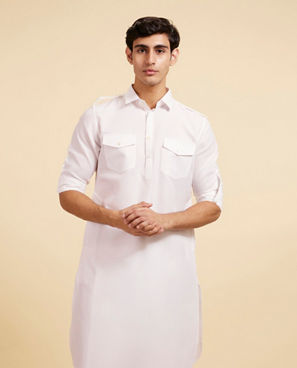
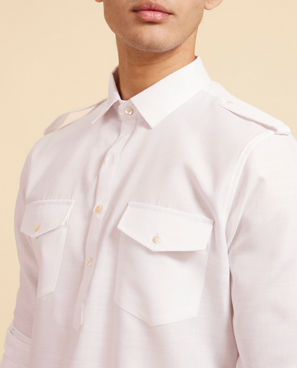
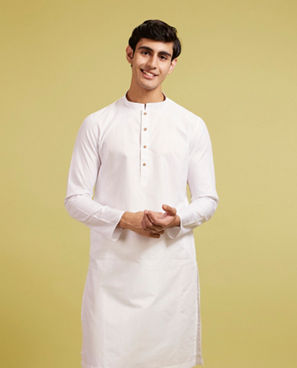
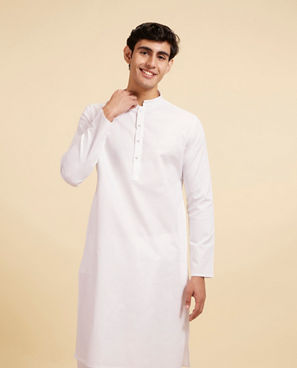
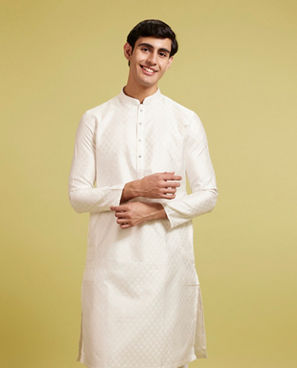
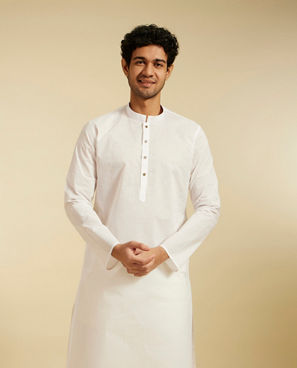
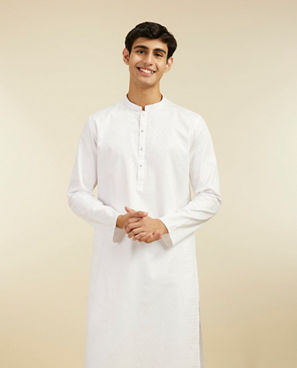
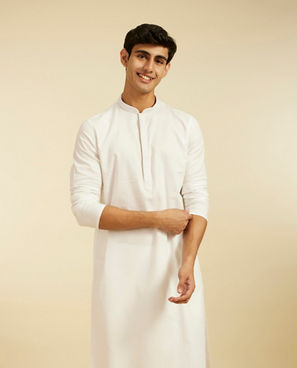
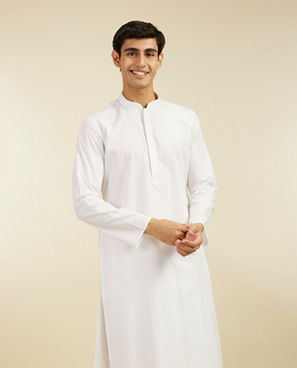
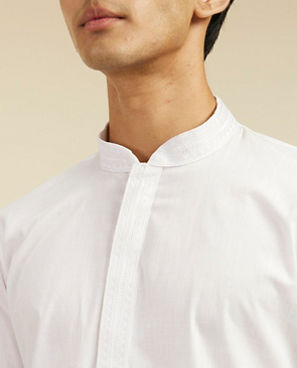
White cotton kurta for men: the original everyday essential
There are very few pieces in Indian menswear that are as universally worn, universally accepted, and universally flattering as a white cotton kurta. It shows up at temples, family functions, office days, college fests, and casual get-togethers with the same ease—never demanding attention but always looking right.
At Diwas, these kurtas are approached as foundation pieces: the kind you build outfits around rather than outfits themselves. Clean lines, breathable fabric, and a silhouette that works for almost every setting make them one of the most practical purchases in a celebration-leaning wardrobe.
Why cotton makes all the difference on white
White kurtas exist in silk, viscose, art-silk, and blended fabrics—but cotton white kurtas occupy a completely different space. The fabric changes everything about how the piece feels and where it fits.
A cotton kurta is:
-
Breathable and light, making it the obvious choice for India's warm and humid climate, long puja days, summer festivals, and outdoor events.
-
Low-maintenance and wash-friendly—you can wear it, wash it, and reach for it again without the delicate handling that silk or viscose requires.
-
Naturally relaxed in its feel, giving white a soft, approachable quality that feels honest and grounded rather than formal or performative.
-
Comfortable enough for extended wear—from early morning aarti to late afternoon family lunch—without feeling restrictive or heavy.
For men who want something they can actually live in while still looking considered and put-together, white cotton is the answer that never disappoints.
The many versions of a white cotton kurta
These aren't all the same piece in different sizes. Within this category at Diwas you'll find real design variation:
-
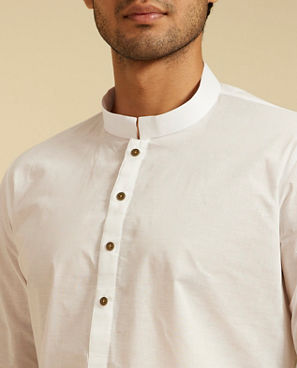
Plain cotton kurtas—the purest, most minimal version; just clean white fabric in a neat, straight silhouette with a simple collar and placket. This is the one you reach for when the occasion calls for calm and respect.
-
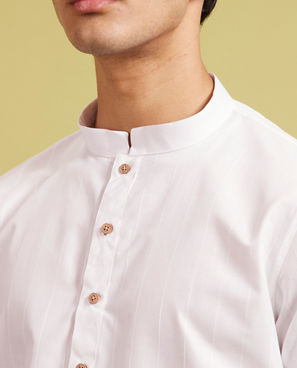
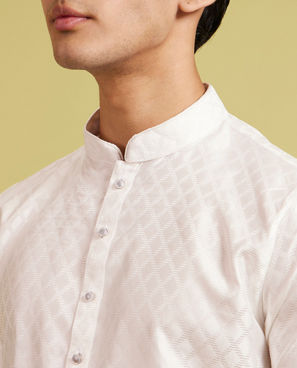
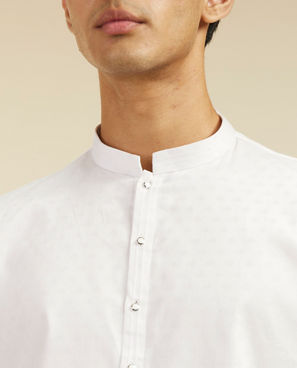
Self-texture and jacquard kurtas—where a woven pattern in the cotton itself adds subtle dimension; looks plain from a distance but reveals quiet detail up close.
-
Printed kurtas—soft prints in complementary or tonal colours over a white base; keeps the look light and youthful for casual festivals and daytime plans.
-
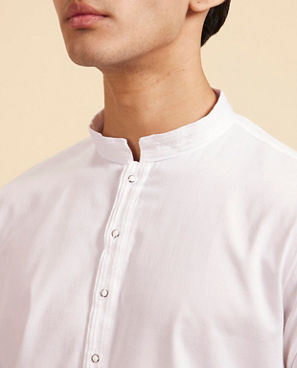
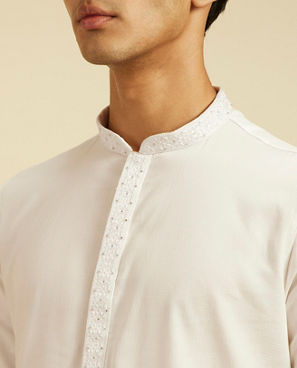
Lightly embroidered kurtas—fine threadwork along the neckline or placket that adds a festive quality without making the piece feel heavy or over-dressed.
-
Short and casual-length kurtas—slightly shorter hemlines that pair naturally with denims and sneakers for college, travel, and everyday Indo-fusion dressing.
This range means a white cotton kurta can shift from your most casual everyday piece to something genuinely occasion-appropriate, simply by choosing the right version.
Cotton quality: what to look for
Because kurtas are worn close to the skin and washed frequently, fabric quality matters more here than in most other categories. A few markers of a good cotton kurta:
-
Fabric weight: A medium-weight cotton holds its shape and looks neat after washing, while very thin cotton can become transparent or lose structure quickly.
-
Weave quality: Tighter weaves stay whiter for longer, resist pilling, and feel smoother against the skin.
-
Finish: A good cotton kurta should feel soft rather than stiff out of the box and improve in softness with each wash.
-
Colour consistency: True white—rather than slightly off-white or cream-leaning—holds its freshness better across wears.
Diwas and Manyavar-linked cotton kurtas typically sit in a quality range where these markers are met, making them dependable pieces that maintain their look across a full festive season.
Occasions where a white cotton kurta is simply the right choice
This kurta has an almost unmatched range of occasions where it fits naturally. It's especially at home when you're:
-
Attending morning pujas and temple visits—where white is auspicious and cotton feels appropriately calm and respectful for a religious setting.
-
Participating in haldi and daytime wedding functions—where a white base is both traditionally appropriate and surprisingly photogenic against turmeric and marigold colours.
-
Celebrating Eid, Ganesh Chaturthi, and other major festivals—where a clean kurta reads as respectful, considered, and festive without being over-dressed.
-
Heading to office cultural days or festive Fridays—where a plain or self-texture kurta with chinos looks polished and ethnic without being out of place in a professional setting.
-
Managing back-to-back events during wedding week—where the ease of wearing and washing a kurta means you're never stuck choosing between comfort and looking neat.
-
Everyday campus and college wear—where a casual kurta with denims is a simple, clean alternative to regular shirts and tees.
The common thread: white cotton feels right whenever you need to look good without trying too hard.
What you can pair it with
One of the most practical things about a kurta is how many different bottoms, footwear, and layers work with it. A few reliable directions:
-
White pyjamas—the classic all-white pairing that looks clean, calm, and completely appropriate for pujas, temples, and morning rituals.
-
Beige or cream churidar—a slightly softer, warmer contrast that works well for daytime weddings and family functions without the starkness of all-white.
-
Dark denims—strong contrast that gives the kurta a more contemporary, campus-friendly feel; works especially well with shorter or casual-length kurtas.
-
Olive, navy, or stone chinos—a smart-casual combination for office festive days and semi-formal events where you want ethnic influence without full traditional dress.
-
Patterned or coloured bottoms—when you want the bottom to do more of the talking, a plain kurta acts as the perfect neutral upper that doesn't compete.
Footwear can range from open sandals and mojaris for traditional occasions to loafers and sneakers for more contemporary or casual plans—white cotton accommodates all of them easily.
Styling: three ways
All three look completely different from each other, but all three start from the same place.
White cotton kurta across seasons
Unlike many festive pieces that feel right only in specific weather or seasons, a white cotton kurta works year-round. Its versatility across seasons is one of its most underrated qualities.
-
Summer: Cotton's breathability makes it the obvious choice for hot, humid festival days, outdoor haldi ceremonies, and daytime weddings in April through June.
-
Monsoon: A well-chosen kurta in a slightly denser weave handles the humidity well and dries faster than heavier fabrics.
-
Autumn: White cotton is a reliable choice for Dussehra, Navratri, and pre-Diwali events when the weather is cooling but not yet cold.
-
Winter: Layer a kurta under a warm jacket, Nehru coat, or structured overshirt for indoor functions and celebrations in cooler months.
This year-round wearability, combined with its ease of washing and maintenance, makes this kurta one of the highest-value pieces in any ethnic wardrobe.
White cotton in a small, curated wardrobe
In a tight celebration wardrobe, this kurta covers the clean, minimal, universally appropriate slot that no other piece can quite replicate.
Alongside:
-
one or two festive-colour kurtas (yellow, bottle green, maroon) for celebrations and weddings, and
-
one richer, embroidered or embellished piece for important evenings,
a white kurta becomes:
-
the piece you reach for on ritual mornings and quiet festive days;
-
your most-washed and most-reached-for kurta by the end of any busy season;
-
the bottom-layer option when you want to add a jacket or stole and create a slightly more layered, smart look.
If you own only one white kurta, make sure it's cotton—it will work harder for you than almost any other single piece in your wardrobe.
In photos and everyday content
White is one of the most reliable colours to photograph in—it doesn't shift under different lighting conditions the way warmer or cooler tones sometimes do. In outdoor settings, a white kurta creates a clean, bright frame. Indoors, it reflects light in a way that makes portraits look open and considered.
For everyday content—campus photos, outfit-of-the-day posts, or simple festival captures—a white kurta gives you a consistent, clean base that works regardless of background, lighting, or camera quality.
It's also the kind of piece that looks genuinely better as a memory than as a concept: when you scroll back through your gallery, the white kurta moments often turn out to be the ones that feel the most authentic.
Frequently Asked Questions (FAQs)
1. Is a white cotton kurta only for religious and ritual occasions?
No. While it's a natural choice for temples and pujas, this kurta also works for daytime weddings, office events, college wear, casual festivals, and everyday Indo-fusion dressing—it's one of the most versatile pieces in men's wear.
2. How do I keep a white cotton kurta looking bright after repeated washes?
Wash in cold water with a gentle detergent, avoid mixing with darker garments, and dry in shade rather than direct sunlight; a mild fabric brightener used occasionally can help maintain true white over time.
3. Can a white cotton kurta work for evening functions?
Yes, though it feels most at home in the daytime—for evening functions, choose a self-texture or lightly embroidered version in a slightly denser or crisper cotton, pair with churidar and polished footwear, and add a layer or accessory to shift it into a more formal register.
4. What's the difference between a plain white cotton kurta and a self-texture one?
A plain kurta is a flat, single-colour weave throughout; a self-texture version has a woven jacquard or dobby pattern in the same colour that adds dimension and visual interest up close—both look minimal from a distance, but the self-texture version feels slightly more considered and occasion-ready.
5. How many white cotton kurtas should I own?
Even two well-chosen kurtas—one very plain for rituals and one with subtle texture or embroidery for slightly dressier plans—can cover a significant portion of your ethnic dressing needs across the year.

_18-04-2025-21-15:297-368)
_28-04-2025-06-54:297-368)
_18-04-2025-21-15:Swatch)