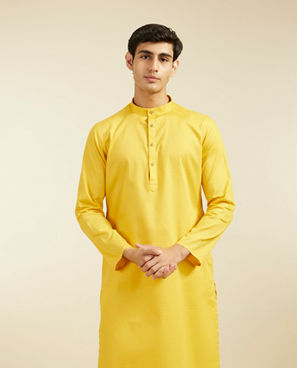
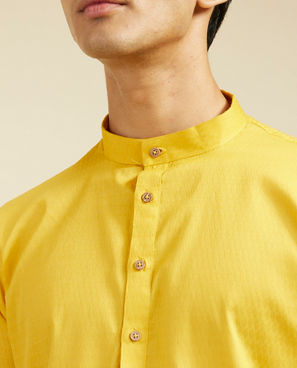
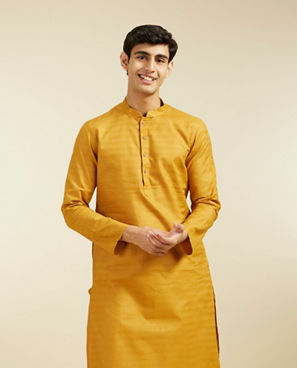
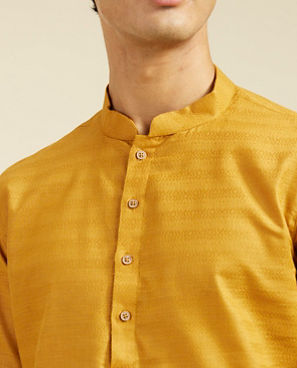
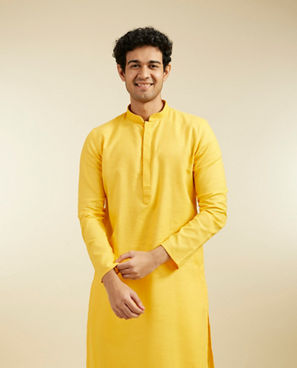
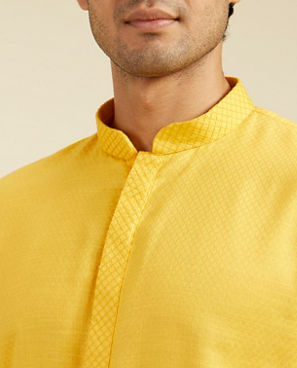
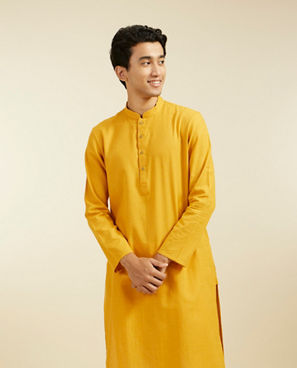
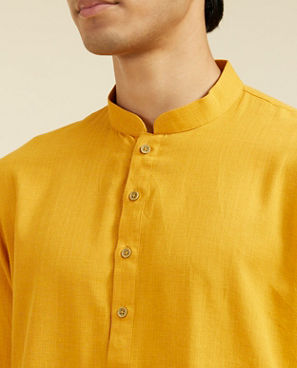
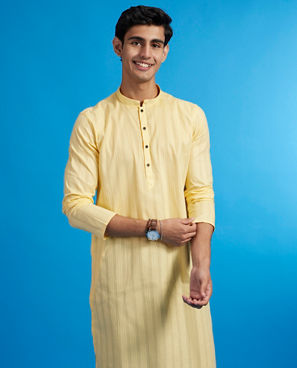
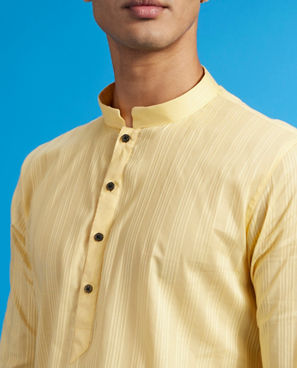
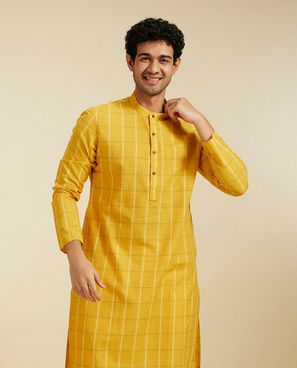
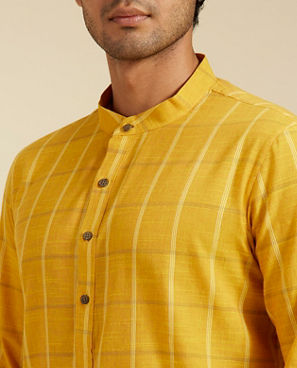
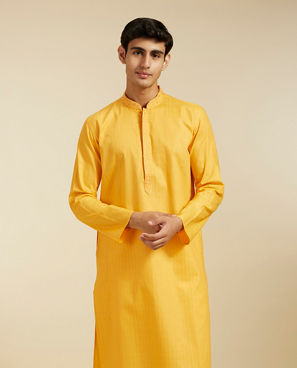
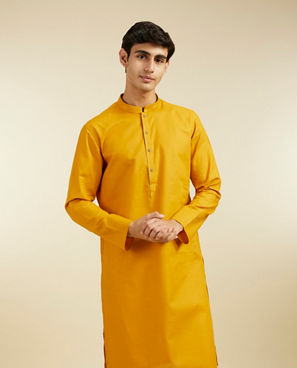
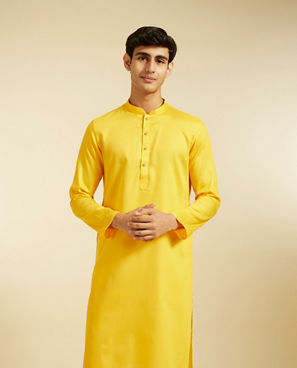
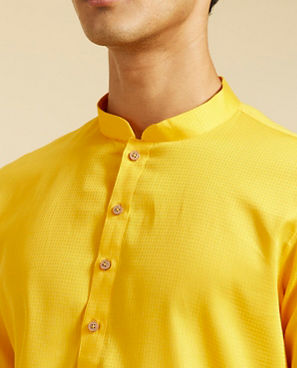
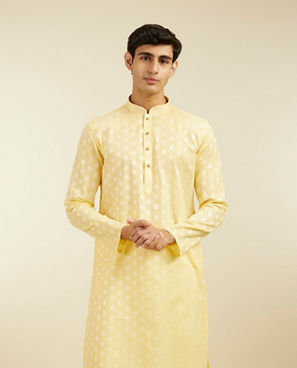
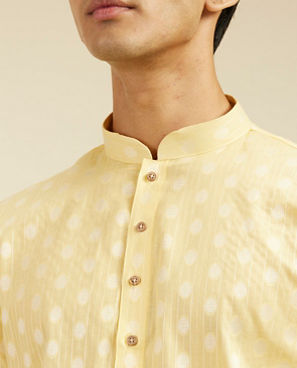
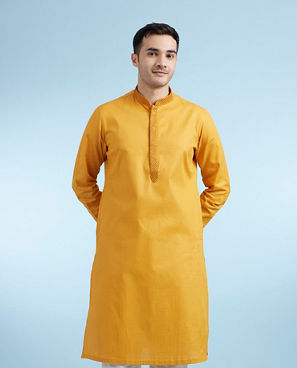
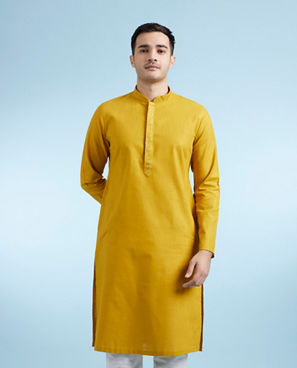
Yellow cotton kurta for men: where comfort meets celebration
This page brings together yellow kurtas built specifically on cotton and cotton-rich bases—pieces where the fabric does as much work as the colour. You'll find everything from plain sunshine yellows to printed and lightly embroidered cotton kurtas, all cut to move easily through your day whether that means sitting cross-legged for a pooja, dancing at a haldi, or simply spending a full afternoon at a family gathering.
At Diwas, these kurtas sit at the intersection of everyday-festive and occasion-ready—casual enough to feel natural, considered enough to feel special.
Why cotton changes the yellow kurta conversation
Yellow kurtas exist across many fabric types—viscose, art silk, blended weaves. But cotton yellow kurtas have a very specific value that other fabrics don't offer.
Cotton makes a yellow kurta:
-
Genuinely breathable for India's warm and humid climate, especially during summer festivals, haldi ceremonies, and Ganesh Chaturthi.
-
Easy to wear all day—from early morning rituals straight through to evening celebrations—without the stiffness or heat that heavier fabrics can bring.
-
Wash-friendly and low-maintenance, which matters when you're wearing it across multiple events in a busy festive season.
-
Naturally relaxed in feel, giving yellow a more grounded, approachable mood compared to the same shade on silk or art-silk bases.
For men who want their festive outfits to feel real rather than performative, this one is often the most practical and most-reached-for piece in the wardrobe.
The fabric story behind
Not all cotton yellow kurtas are built the same. Within this category, you'll typically find:
-
Pure cotton yellow kurtas—the lightest, most breathable option, ideal for outdoor summer celebrations, morning pujas, and high-heat festival days like Holi and haldi.
-
Cotton-viscose blends—slightly smoother and more drapey than pure cotton, giving yellow a bit more polish while retaining the breathable quality; works well for indoor functions and slightly dressier daytime events.
-
Cotton-silk and cotton-linen blends—richer in texture and slightly more formal in feel, suited to yellow kurtas that need to look deliberate and occasion-ready without sacrificing comfort.
-
Printed cotton bases—where the fabric carries digital or block prints in complementary tones over a yellow ground, keeping the texture lightweight while adding surface interest.
This range means a yellow cotton kurta can shift from your most casual festive piece to something genuinely occasion-appropriate, just by choosing the right blend.
Design directions
Yellow cotton kurtas on this page aren't all plain solids. The category stretches across multiple design directions so you can choose how much personality you want the kurta to carry.
You'll find:
-
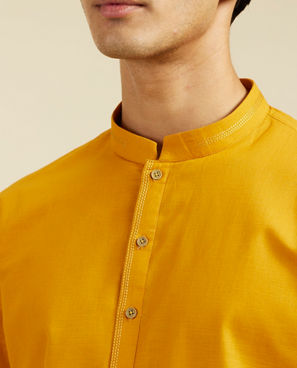
Plain and self-texture kurtas—clean, minimal pieces where the colour and fit do all the talking; ideal for men who like stripped-back dressing.
-
Block and digital printed kurtas—featuring florals, geometrics, abstracts, or heritage-inspired motifs that give the kurta a distinct character while keeping it casual.
-
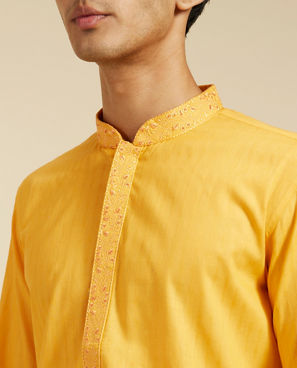
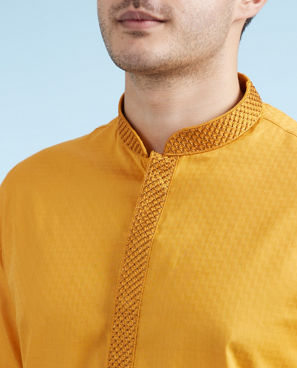
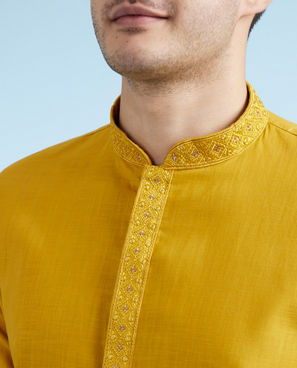
Lightly embroidered kurtas—threadwork along the neckline or placket that adds a festive touch without taking the piece out of the comfortable, easy-to-wear zone.
-
Striped or textured weave kurtas—where the fabric pattern itself creates visual interest without needing printed or embroidered surface work.
Because cotton naturally lends itself to a more relaxed aesthetic, even the more embellished versions on this page feel approachable and wearable rather than heavy or formal.
When a yellow kurta belongs in your calendar
They are built for celebrations that happen in daylight, in warmth, and in movement. They show up reliably at:
-
Haldi ceremonies—the single most natural setting for this kurta, where the breathable fabric handles turmeric, water, and energy with ease.
-
Ganesh Chaturthi and other outdoor festivals—where heat, crowds, and long hours demand something that stays comfortable from morning prayers to evening aarti.
-
Holi—where a cotton kurta in yellow blends into the spirit of the day and handles colour, water, and general chaos better than most fabrics.
-
Daytime mehendi functions—especially outdoor or garden-side ceremonies where you want colour but need to stay cool through a full afternoon.
-
Home pujas and temple visits—where yellow is auspicious and cotton feels appropriately calm and respectful.
-
Casual Diwali gatherings and morning celebrations—when the plan is low-key and you want something festive but not overdressed.
What unites all of these: they're occasions where you need your outfit to move with you, not against you.
Styling for different plans
Because yellow kurtas lean casual-to-festive rather than full occasion-wear, they're very easy to style and very forgiving of simple pairings.
For haldi and outdoor ceremonies:
For daytime family functions and pujas:
-
Plain or self-texture kurta with cream or beige pyjamas and traditional mojaris.
-
A watch or simple kada is enough; the clean, auspicious colour combination carries the look.
For casual festive outings and college events:
-
Printed kurta with slim denims and white sneakers.
-
Roll the sleeves slightly for a more relaxed, urban feel.
For smart-casual office and cultural days:
Across all of these, yellow cotton needs very little—its warmth and energy do the heavy lifting, and simple, clean pairings always work better than over-accessorised ones.
How yellow cotton sits differently from yellow silk or viscose
This distinction is worth making clearly, because it shapes how and when you reach for each type.
A yellow cotton feel:
-
Relaxed, grounded, and unpretentious.
-
Natural for daytime and outdoor settings.
-
Appropriate for rituals and family-centric occasions where comfort and respect matter equally.
-
Easy to repeat and wash across a busy festive season.
A yellow silk or viscose kurta feels:
-
More polished, slightly formal, and evening-ready.
-
Better suited to sangeet, reception-side events, and high-profile celebrations.
-
More about looking dressed up than feeling comfortable for extended periods.
Both have their place, but a cotton kurta fills the everyday-festive role that silk simply can't—making it the version you'll reach for more often across the year.
Yellow cotton in a small, practical wardrobe
For men who approach their wardrobe practically rather than collecting pieces, a this kurta covers a specific and valuable slot: the bright, auspicious, daytime festive piece that no neutral or dark-toned kurta can replicate.
Alongside:
-
a white or beige cotton kurta for simple pujas and rituals, and
-
one dressier festive piece (embroidered or richer fabric) for bigger evenings,
a yellow cotton kurta becomes:
-
your go-to for haldi, Holi, and Ganesh Chaturthi without question;
-
the piece you pack for destination weddings when you know there'll be outdoor daytime functions;
-
a reliable year-round option that feels as right in February as it does in October.
Yellow cotton in photos and real memories
Cotton's natural texture photographs beautifully—it doesn't create the harsh reflections that silk or art-silk sometimes do under direct light. On yellow, that means the colour looks warm and true rather than washed out or over-saturated in photos.
For haldi reels and Holi videos specifically, a yellow cotton kurta sits perfectly in the visual chaos—it's present and visible but doesn't look jarring against turmeric, marigolds, or splashes of colour. In more composed family portraits and outdoor shots, the naturalness of cotton gives yellow a relaxed, genuine quality that feels fitting for the happy, lighter moments in your celebration calendar.
It's the kind of kurta you see in your gallery and instantly remember the warmth of the day it was worn—not just the outfit, but everything around it.
FAQs
1. Is a yellow cotton kurta only for haldi?
No. While it's the ideal choice for haldi, this kurta also works for Holi, Ganesh Chaturthi, home pujas, daytime weddings, casual Diwali gatherings, and office cultural days.
2. How does a yellow cotton kurta differ from a yellow embroidered or chikankari kurta?
A cotton yellow kurta prioritises comfort and breathability, making it better for daytime, outdoor, and high-movement celebrations; embroidered and chikankari versions lean more occasion-specific and are better suited to seated or evening functions.
3. What bottoms pair best with a yellow cotton kurta?
White and cream cotton pyjamas are the easiest and most natural pairing; for casual plans, slim denims also work well; chinos or churidars in beige or stone give a slightly smarter finish for semi-formal events.
4. Can I wear a yellow cotton kurta to evening functions?
It's best suited to daytime, but a cotton-silk blend or lightly embroidered cotton yellow kurta can work for early evening gatherings if paired with churidar and polished footwear rather than sandals or pyjamas.
5. How do I keep a yellow cotton kurta looking bright after multiple washes?
Wash in cold water with a gentle detergent, avoid prolonged soaking, and dry in shade rather than direct sunlight to prevent the yellow from fading or shifting to a duller tone over time.