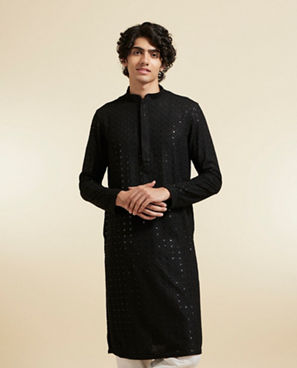
Black Pathani Suits for Men – Bold, Rooted and Unapologetically Strong
There are garments that carry an identity so distinct, so deeply rooted in cultural history, that wearing one feels like a statement beyond fashion. The Pathani suit is one of them. With its origins in the rugged, proud traditions of the Pashtun people of the Afghan-Pakistan frontier, the Pathani suit arrived in the Indian subcontinent carrying centuries of cultural weight — and it has never lost that character.
The Pathani Suit: A Silhouette With Character
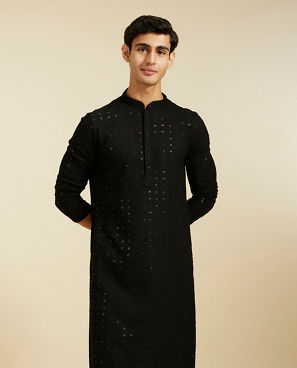
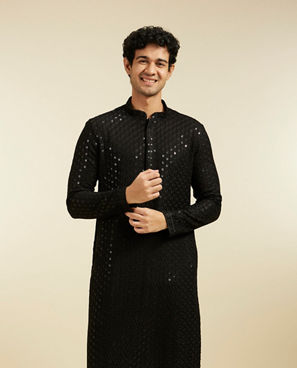
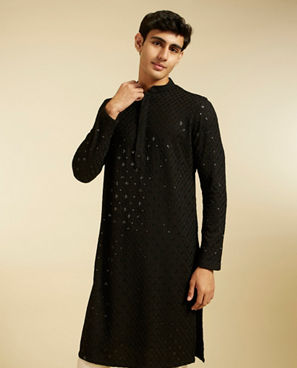
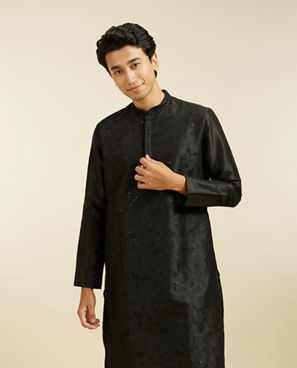
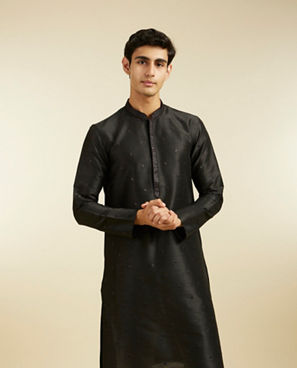
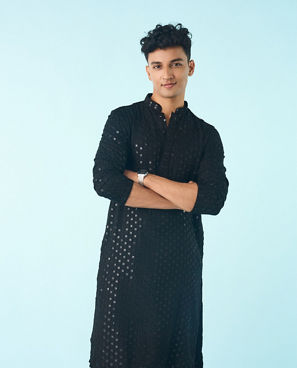
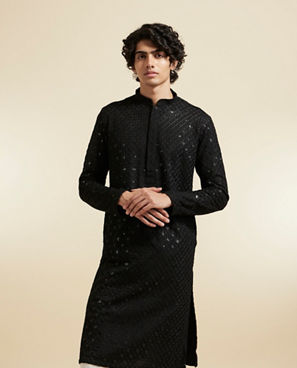
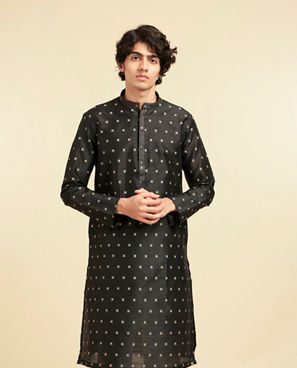
Before exploring what black does to a Pathani suit, it is worth understanding what makes the silhouette itself so distinctive. The Pathani suit — also known as the Shalwar Kameez in its traditional form — is characterised by a long, straight-cut kurta that typically falls below the knee, a distinctive collar construction that sets it apart from standard kurta necklines, and a loose, comfortable lower garment that allows complete freedom of movement.
The overall silhouette is generous, fluid, and uncompromising — a garment designed for men who move through the world with ease and confidence. Side slits, front pockets, and a relaxed chest construction give the Pathani suit a practicality that more ornate ethnic silhouettes lack. It is a garment that has always prioritised the wearer's freedom — physical and expressive — above all else.
What Black Brings to the Pathani Silhouette
Black and the Pathani suit share a common character — both are bold, both are uncompromising, and both make their presence felt without requiring embellishment or explanation.
On a Pathani suit, black does several things simultaneously. It sharpens the silhouette, making the clean lines of the long kameez and the relaxed lower garment read with exceptional definition. It projects an authority and gravitas that lighter colours in the same silhouette cannot replicate. It transforms the Pathani from a casual, everyday garment into something that works across a much broader range of occasions — from relaxed Friday prayers to festive Eid gatherings to smart-casual social events.
Black also makes the Pathani suit exceptionally easy to style — it pairs with almost every accessory colour and footwear choice, simplifying outfit construction considerably. A black Pathani suit requires no complex coordination — it simply looks right, in almost every context it is placed in.
Fabric Choices
The fabric of a black Pathani suit has a direct impact on how the silhouette looks, how comfortable it is to wear, and how appropriate it is for different occasions.
-
Cotton is the most widely worn fabric for Pathani suits — breathable, comfortable, and well-suited to India's warm climate. In black, cotton has a clean, matte appearance that suits the garment's relaxed, utilitarian character perfectly. A cotton Pathani is the ideal everyday option — appropriate for casual wear, Friday prayers, and relaxed social occasions without any effort.
-
Linen adds a slightly textured, artisanal quality to the Pathani — the fabric's natural grain gives the silhouette a more considered, fashion-forward aesthetic.
-
Polyester-cotton blends offer a more structured drape and are easier to maintain — resistant to heavy wrinkling and practical for travel and extended wear.
-
For more formal or festive occasions, a cotton-silk blend in black adds a subtle sheen that elevates the Pathani's formality without sacrificing the silhouette's characteristic ease and comfort.
Occasions That Welcome the Black Pathani
The suit is one of those rare ethnic garments with genuine occasion versatility — and understanding where it works best helps you get the most out of it.
For Eid celebrations, a black Pathani suit is a confident, culturally grounded choice that is increasingly popular among men who want to dress with identity and intention.
For Friday prayers and religious occasions, the Pathani's modest, dignified silhouette in black is entirely appropriate and deeply respectful.
For casual social gatherings and family events, a black cotton Pathani is relaxed and effortless.
For semi-formal occasions — cultural events, community gatherings, and informal celebrations — a black Pathani in a slightly richer fabric reads sophisticated and well-dressed.
Even at certain wedding functions as a guest, particularly those with a more relaxed dress code, a black Pathani styled with good footwear and simple accessories makes a distinctive, memorable impression.
The Collar and Construction: What Sets the Pathani Apart
One of the defining features of the Pathani suit is its collar construction — and it is worth understanding because it significantly influences how the garment is perceived and styled.
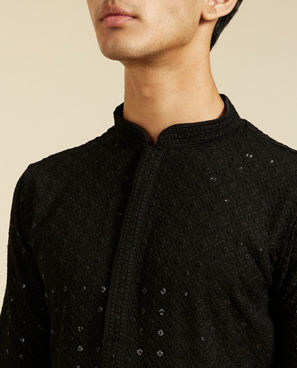
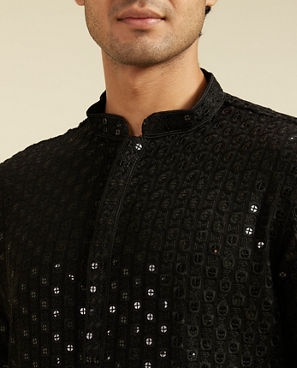
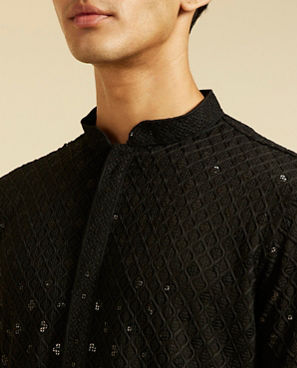
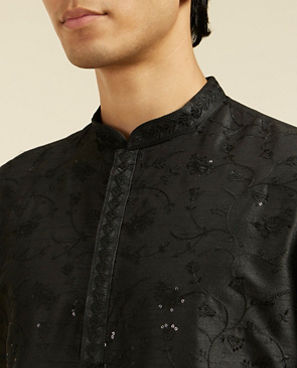
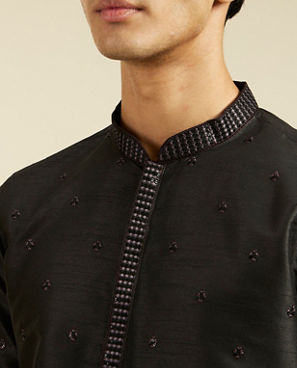
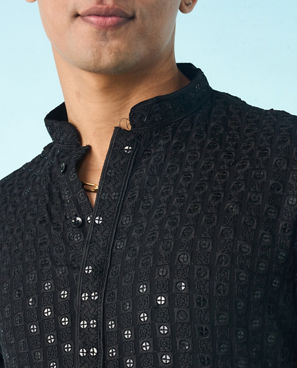
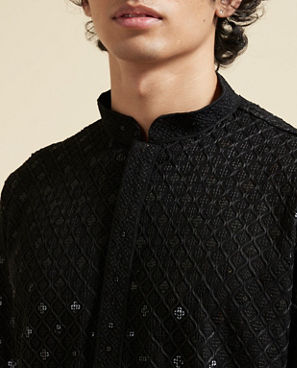
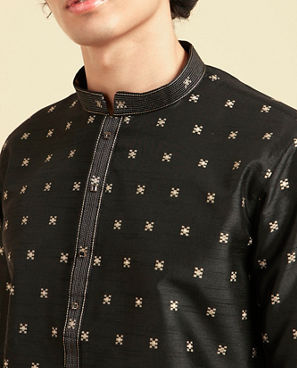
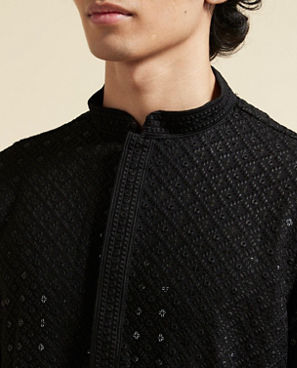
The traditional Pathani collar is a band or mandarin-style collar that sits close to the neck, giving the neckline a clean, structured appearance without the openness of a standard kurta collar.
Some Pathani suits feature a more pronounced V-notch or lapel-style collar that creates a slightly more formal, structured look. The front placket of a Pathani suit typically features a button fastening that runs partway down the chest, creating a distinctive visual line that draws the eye downward and emphasises the garment's generous, flowing silhouette.
These construction details, combined with the characteristic side pockets and relaxed chest, give the Pathani suit a visual vocabulary entirely its own — one that is immediately recognisable and deeply culturally resonant.
Styling: Keeping It Sharp
This is one of the easiest ethnic garments to style because its colour and silhouette do most of the work independently. The most natural and authentic styling approach is to wear the suit as a complete set — the long black kameez with the matching black shalwar — for a cohesive, unified look that is both traditional and visually striking.
For footwear, classic black or dark brown leather chappals or sandals are the most traditional pairing, grounding the look in its cultural roots.
Embroidered or embellished juttis in black, dark brown, or silver add a touch of festive personality for special occasions. For accessories, keep it minimal and intentional — a simple tasbih, a clean watch, or a classic metal bracelet all complement it without distracting from its inherent strength. Avoid layering with jackets or additional pieces — the Pathani suit is complete as it stands, and additional layers can disrupt the silhouette's characteristic flow and freedom.
Across Seasons and Skin Tones
It works across the full range of Indian skin tones with a consistency that few other colour choices can match.
On deeper complexions, the contrast between the black fabric and the skin creates a look of striking, powerful elegance.
On medium and olive skin tones, black sits with a clean authority that is immediately well-dressed and confident.
On fairer complexions, black creates a high-contrast appearance that is sharp and dramatic.
Seasonally, the fabric choice determines the Pathani's wearability across different times of year. Lightweight cotton or linen Pathanis are ideal for summer and warm weather occasions — the fabric's breathability compensates for black's heat-absorbing tendency. Heavier cotton or cotton-blend variants work well through the cooler months of the festive and wedding season, providing both the warmth and the visual richness appropriate for the occasion.
The Camera Angle
Few ethnic silhouettes photograph as powerfully as the Pathani suit — and in black, this photographic quality is amplified significantly. The clean, strong lines of the long kameez read with exceptional clarity against both light and dark backgrounds, creating a well-defined, commanding presence in every frame. The silhouette's generous proportions look particularly impressive in full-length shots, where the flow of the fabric and the confidence of the stance combine to create images of genuine visual authority. For Eid photography, community event documentation, or social media content, a black Pathani suit creates photographs that are immediately striking — bold, culturally grounded, and deeply photogenic. Shoot in natural or bright light to preserve the depth of the black fabric, and choose a clean backdrop that allows the silhouette to read without distraction.
FAQs
1. What is the difference between a Pathani suit and a regular kurta pyjama?
The Pathani suit has a distinct silhouette and cultural identity that sets it apart from a standard kurta pyjama. The kameez is typically longer — falling below the knee — with a distinctive collar construction, front pockets, and side slits that give it a more utilitarian, relaxed character. The lower garment is a loose shalwar rather than a fitted churidar or straight-cut pyjama. The overall silhouette is more generous and flowing than most kurta styles, reflecting its origins in the Pashtun cultural tradition.
2. Is a black Pathani suit appropriate for Eid?
Absolutely. A black Pathani suit is an increasingly popular choice for Eid celebrations — it is culturally grounded, dignified, and visually striking. Paired with classic footwear and minimal accessories, it creates a look of confident, intentional dressing that is entirely appropriate for the occasion and deeply respectful of the tradition it represents.
3. Can a black Pathani suit be worn for everyday casual occasions?
Yes. In lightweight cotton, a black Pathani suit is an excellent everyday ethnic wear option — comfortable, easy to maintain, and appropriate for a wide range of casual settings including Friday prayers, family gatherings, and relaxed social occasions. Its practicality and ease of wear make it one of the most functional ethnic silhouettes in a man's wardrobe.
4. How do I style a black Pathani suit for a more festive occasion?
For a festive occasion, choose a Pathani in a slightly richer fabric — a cotton-silk blend or a structured polyester-cotton with a subtle sheen. Pair with embroidered juttis in black or silver, add a simple but quality watch or bracelet, and ensure the suit is well-pressed and fits cleanly across the shoulders and chest. The Pathani's strength lies in its silhouette — a well-fitted, clean suit in good fabric needs very little else to look festive and occasion-appropriate.
5. How should I care for a black Pathani suit to maintain its colour and shape?
Wash in cold water with a dark-fabric detergent to preserve the depth of the black colour. Turn the suit inside out before washing to protect the outer surface. Avoid direct sunlight when drying to prevent UV-related colour fading. Iron on medium heat while slightly damp, or use a steamer for a cleaner finish. Store on a hanger rather than folded to maintain the garment's shape and prevent heavy crease marks across the kameez.