Blue Pathani Suits for Men – Cultural Strength, Worn in the World's Favourite Colour
If the Pathani suit is one of South Asian menswear's most distinctive and culturally rooted silhouettes, then blue is the colour that makes it speak to the widest possible audience. Blue carries a universality that no other colour in the spectrum possesses — it is simultaneously the world's most beloved colour and one of India's most historically significant textile hues. On a Pathani suit, blue transforms the silhouette from a garment of specific cultural identity into something with a broader, more accessible appeal — without diminishing the Pathani's inherent character or its proud roots for even a moment.
The Pathani Silhouette: What Makes It Distinctive
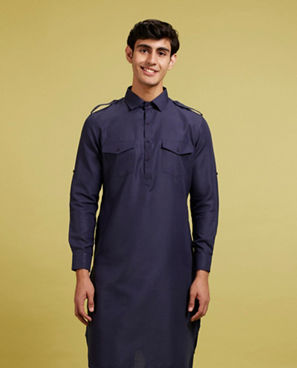
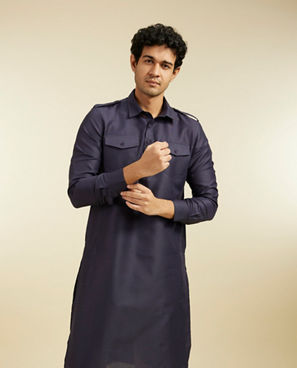
The Pathani suit's character is inseparable from its construction — and understanding what makes the silhouette unique is key to wearing it well. The long kameez, typically falling below the knee, creates a generous, flowing line that is both dignified and practically comfortable.
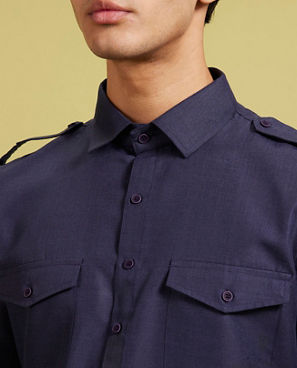
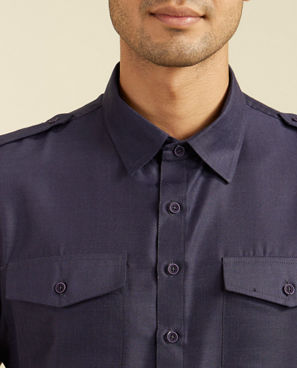
The characteristic collar — whether a close-fitting band collar or a slightly more open mandarin construction — frames the face and neck with a clean authority that distinguishes the Pathani immediately from standard kurta silhouettes.
Side slits allow freedom of movement without disrupting the garment's overall line. Front pockets — a defining practical feature of the Pathani — give the suit a utilitarian honesty that more ornate ethnic silhouettes lack. The shalwar, loose and comfortable through the leg, completes a silhouette designed above all else for the ease, dignity, and freedom of its wearer.
In blue, every one of these construction details reads with a clarity and confidence that makes the blue Pathani one of the most visually coherent and compelling ethnic silhouettes available.
Fabric Choices That Shape the Blue Pathani Experience
The fabric of a blue Pathani suit determines its comfort, its drape, and its occasion-appropriateness — and getting this right is as important as choosing the right shade.
Cotton is the most widely worn and most practically appropriate fabric for Pathani suits — breathable, comfortable, and entirely suited to India's warm climate. In blue, cotton's matte surface gives the colour a clean, honest quality that suits the Pathani's utilitarian character perfectly. A cotton blue Pathani is the ideal choice for everyday wear, Friday prayers, and casual social occasions where comfort and ease are the priority.
Linen adds a slightly textured, artisanal quality to the blue Pathani — the fabric's natural grain gives the colour a more organic, considered aesthetic that suits contemporary smart-casual dressing particularly well. Polyester-cotton blends offer greater structure and wrinkle resistance — practical for travel and extended wear while maintaining a clean, well-pressed appearance.
For more formal or festive occasions, a cotton-silk blend in blue adds a subtle sheen that elevates the Pathani's formality, giving the deep blue shades in particular a richness and depth that suits significant celebrations.
Occasions That Welcome the Blue Pathani
The blue Pathani suit's occasion versatility is one of its defining qualities — and it is a versatility that spans the full range of South Asian men's social and cultural life. Eid celebrations are the Pathani's most celebrated occasion — the suit's cultural authenticity and the blue's festive vibrancy together create a look that is simultaneously traditional and distinctive.
In deeper navy or royal blue with a cotton-silk blend fabric, the Pathani at Eid communicates both cultural pride and genuine style awareness. For Friday prayers and religious occasions, the Pathani's dignified, modest silhouette in a calm mid-tone or deep blue is entirely appropriate and deeply respectful of the occasion's spirit.
For casual family gatherings, weekend outings, and community events, a light or mid-tone cotton Pathani is relaxed, comfortable, and effortlessly well-dressed. As a guest at certain wedding functions — particularly nikah ceremonies and post-wedding celebrations — a deep blue Pathani in a rich fabric makes a quietly powerful and culturally resonant impression.
The Cultural Resonance of Blue in the Pathani Context
The combination of blue and the Pathani suit carries a cultural resonance that goes beyond simple aesthetic choice. Blue has been central to the textile traditions of the regions where the Pathani originated — the indigo-dyed fabrics of the Afghan and Pakistani craft tradition, the resist-dyed textiles of Sindh and Baluchistan, the block-printed blues of the broader South Asian region all speak to a deep, historically grounded relationship between blue and the cultures from which the Pathani suit emerged. Wearing a blue Pathani is therefore not simply a colour preference — it is a choice that connects the garment to its own roots in a way that feels authentic and considered.
Honouring the Silhouette
The blue Pathani suit is most powerfully worn as a complete ensemble — the long blue kameez with the matching blue shalwar — because the silhouette's coherence and cultural integrity depend on this unity. The most traditional and authentic approach to styling is to keep everything else deliberately simple: classic leather chappals or sandals in black, dark brown, or tan ground the look in its cultural roots without distraction. For festive occasions, embroidered or embellished juttis in navy, black, or silver add a touch of celebration-appropriate personality. Accessories should be minimal and intentional — a tasbih, a clean watch, or a simple metal bracelet all complement without disrupting its inherent strength and dignity. Avoid layering with additional jackets or structured pieces that cover the Pathani's collar and upper construction — these details are central to the silhouette's identity and should be visible and unobscured.
Blue Pathani Across Seasons
Seasonally, lightweight cotton blue Pathanis are ideal for summer and warm weather occasions. Through the cooler festive and wedding season, heavier cotton or cotton-blend blue Pathanis provide the warmth and structure appropriate for the occasion while retaining the colour's visual depth.
Presence, Depth and Cultural Authenticity
The blue Pathani suit is a garment that photographs with considerable authority — the combination of a strong colour, a distinctive silhouette, and a cultural identity that is immediately legible in a single frame creates images of genuine visual and narrative depth. In natural daylight, lighter blue Pathanis photograph with a freshness and clarity that is immediately appealing. Deeper navy and royal blue Pathanis read with a richness and authority in both natural and artificial light that makes them among the most impressive ethnic garments on camera. The Pathani's long, clean lines and generous silhouette photograph particularly well in full-length shots — the flow of the kameez and the confident stance of the wearer combine to create images of cultural pride and personal confidence.
FAQs
1. What is the key difference between a blue Pathani suit and a blue kurta pyjama?
The Pathani suit has a distinct silhouette defined by a longer kameez falling below the knee, a characteristic band or mandarin collar, front pockets, side slits, and a loose shalwar. A kurta pyjama typically features a shorter kameez, a wider variety of collar and neckline constructions, and fitted or tailored bottom wear like churidars or straight-cut pyjamas. The Pathani suit's silhouette is more generous, more utilitarian, and more specifically rooted in Pashtun and broader South Asian cultural tradition.
2. Which shade of blue Pathani suit is most appropriate for Eid?
Royal blue and navy are the most appropriate shades for Eid — their depth and richness suit the occasion's significance, and the cotton-silk blend fabric in these deeper shades creates a look of festive elegance that is culturally grounded and visually impressive. Mid-tone cobalt blue is an excellent alternative for those who prefer a slightly more vibrant, less formal Eid look while still maintaining the occasion's celebratory spirit.
3. Can a blue Pathani suit be worn for everyday casual occasions?
Absolutely. In lightweight cotton, a light or mid-tone suit is one of the most comfortable and practically excellent everyday ethnic wear options available — breathable, easy to maintain, appropriate for a wide range of casual settings, and effortlessly well-dressed without requiring any additional styling effort. It is a natural choice for Friday prayers, family gatherings, and relaxed social occasions.
4. How should I care for a cotton blue Pathani suit to prevent colour fading?
Wash in cold water using a colour-safe detergent to preserve the vibrancy of the blue. Turn the suit inside out before washing to protect the outer fabric surface from friction. Avoid prolonged exposure to direct sunlight when drying — UV exposure is the primary cause of colour fading in cotton fabrics. Iron on medium heat while slightly damp for the cleanest finish, or use a steam iron. Store on a hanger to maintain the kameez's shape and prevent heavy creasing.
5. Is a blue Pathani suit appropriate for a nikah or wedding ceremony?
Yes, particularly in deeper shades and richer fabric constructions. A navy or royal blue cotton-silk blend Pathani suit, well-pressed and paired with quality footwear and minimal accessories, creates a look that is culturally appropriate, dignified, and genuinely impressive for nikah ceremonies and wedding functions. The Pathani's modest, dignified silhouette is particularly well-suited to religious ceremony contexts where the dress code calls for respectful, considered dressing.