Raksha Bandhan Kurtas for Men – Dress for the Bond, Not Just the Day
Raksha Bandhan is a personal occasion — more intimate than a festival, more significant than a casual family gathering. It's the one day in the year that belongs entirely to the relationship between a brother and a sister, and the rituals around it — the thali, the rakhi, the mithai, the photographs that get saved forever — all carry an emotional weight that most celebrations don't. Dressing well for Raksha Bandhan is not about impressing anyone outside the room. It's about communicating to the people inside it that the day mattered to you. At Diwas by Manyavar, the Raksha Bandhan collection is built for exactly this — kurtas that are festive enough for the occasion, personal enough for the moment, and genuinely well-made enough to look as good in the photographs as they do in the memory.
What Raksha Bandhan Dressing Actually Calls For
Raksha Bandhan occupies a specific place on the occasion spectrum — and understanding where it falls helps you dress for it correctly.
It is more dressed up than a casual family Sunday, but less formal than a wedding function. The setting is almost always at home or at a family gathering — rarely at a venue, rarely at a formal event space. The atmosphere is warm, personal, and intimate. The photographs are close and candid rather than posed and professional.
This means the Raksha Bandhan kurta needs to do several things simultaneously: look festive enough to honor the day's significance, feel comfortable enough for a relaxed home setting, photograph well in natural and indoor home lighting, and suit the overall color palette of what the family is wearing — particularly coordinating loosely with what your sister has chosen for the day.
A heavily embroidered sherwani-adjacent piece is too much. A plain everyday Cotton kurta is not quite enough. The sweet spot — a well-cut kurta in a quality fabric with appropriate color and subtle surface detail — is exactly where the Diwas Raksha Bandhan collection lives.
The Color Conversation — Including the One With Your Sister
Raksha Bandhan is one of the few occasions in the Indian celebration calendar where coordinating color choices with a family member — specifically your sister — is both common and genuinely appreciated. The photographs from the day tell a story, and a considered color coordination between siblings makes that story look significantly more beautiful.
This doesn't mean matching outfits. It means a thoughtful conversation about the overall palette — if she is wearing a pink or coral lehenga, a deep navy or teal kurta creates a sophisticated complementary contrast. If she is wearing yellow or mustard, a deep green or ivory kurta sits beautifully alongside it. If she is in red, both maroon and ivory work well as brother-sister color combinations.
Beyond coordination, some colors are independently strong Raksha Bandhan choices:
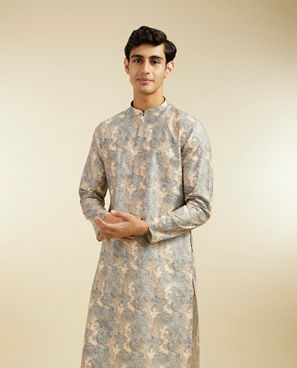
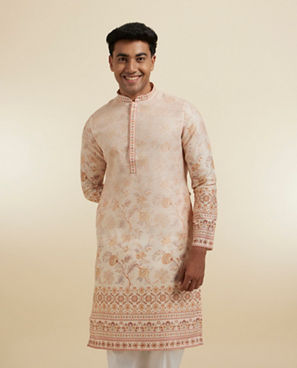
Ivory and cream — warm, festive, and genuinely appropriate for the occasion's intimate, home-setting character. In fine cotton or chanderi, ivory reads as dressed without being overdressed.
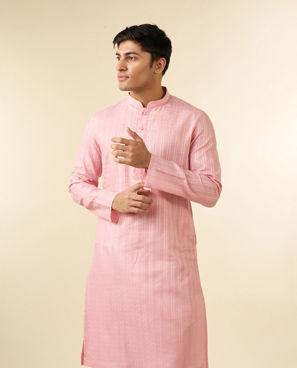
Pastels — blush, powder blue, mint — fresh, warm-weather appropriate, and particularly effective in the natural light settings typical of Raksha Bandhan morning and afternoon celebrations.
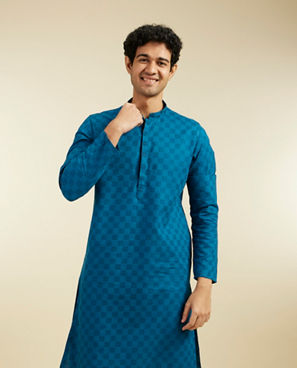
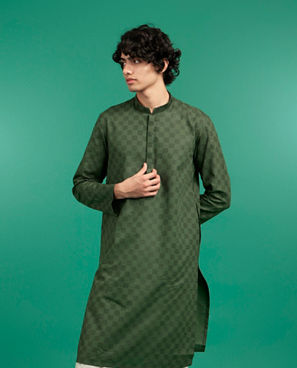
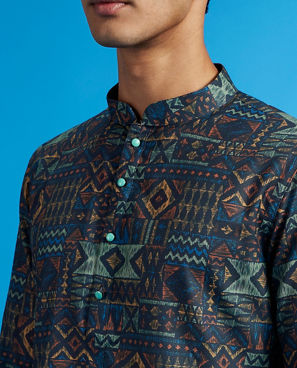
Deep jewel tones — navy, teal, royal blue, emerald — for men who want a more formally festive look. These colors photograph well in home settings and create a strong presence in candid photographs.
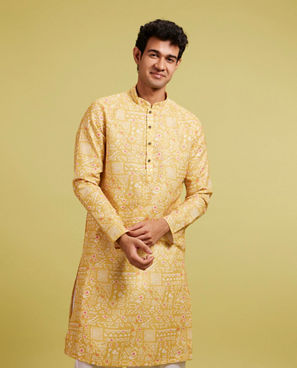
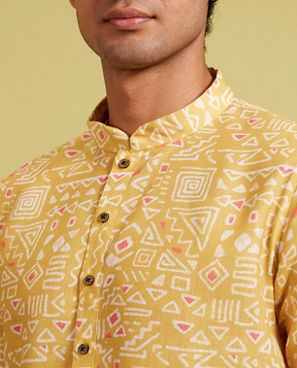
Mustard and golden yellow — warm, festive, and particularly flattering for the occasion's generally sunny, warm-weather setting. August in India is hot and occasionally rainy — lighter, warmer colors suit the season.
Fabric for August — Getting the Practical Decision Right
Raksha Bandhan falls in August — which is the middle of the Indian monsoon season. Warm, humid, occasionally wet. This makes fabric choice a genuinely practical decision rather than purely an aesthetic one.
Cotton and fine cotton are the most sensible choices for Raksha Bandhan. Breathable, comfortable across a full day of family occasion, and available in every color and style appropriate for the celebration. If the day involves going out — visiting a sister's home, family lunch at a restaurant — cotton handles the heat and humidity gracefully.
Mulmul is the most comfortable option for the warmest Raksha Bandhan days — the fine muslin is extraordinarily light and breathable, and in ivory or pastel colors, it looks beautiful in natural light.
Cotton-silk blend is the upgrade for men who want the occasion to feel slightly more elevated without the impracticality of full silk in August heat. The slight sheen of the fabric gives the kurta more festive presence than plain cotton without the discomfort of a heavier fabric in warm weather.
Chanderi works for cooler, air-conditioned settings — if the celebration is entirely indoors, chanderi's gentle sheen and drape suit the occasion's warm, intimate character beautifully.
Avoid heavy silk, velvet, or dense embroidered pieces for Raksha Bandhan — the weather, the home setting, and the occasion's personal rather than formal character make these choices impractical and disproportionate.
Prints and Surface Detail That Work for This Occasion
Raksha Bandhan is not an occasion for maximum embellishment — but it is not an occasion for a plain, workday kurta either. The right level of surface detail sits between the two.
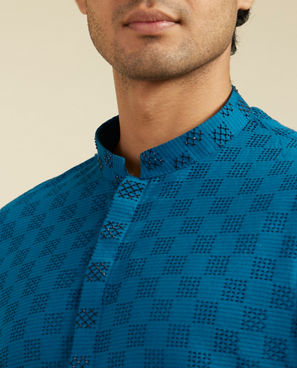
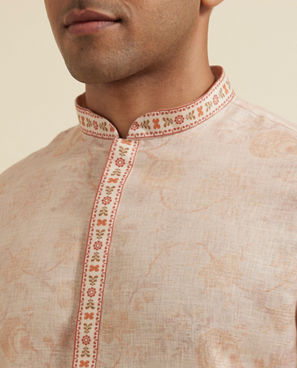
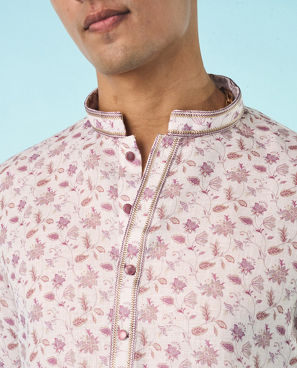
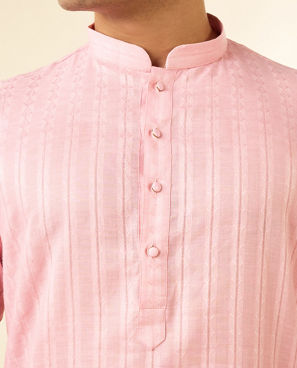
Subtle thread work along the neckline and placket — in ivory, gold, or a color that complements the base — adds festive detail without formality. This level of embellishment is precisely right for a home-setting occasion that is significant but not ceremonial.
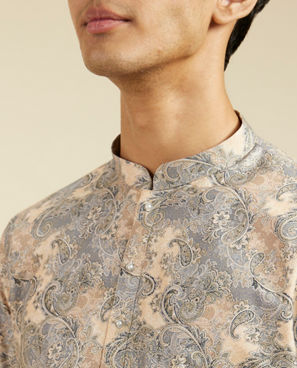
Self-prints and tonal textures — dobby weave and jacquard patterns in the same color as the base — add visual depth to solid color kurta without introducing embellishments that might feel excessive for the occasion's intimate character.
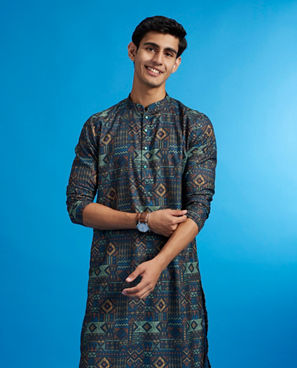
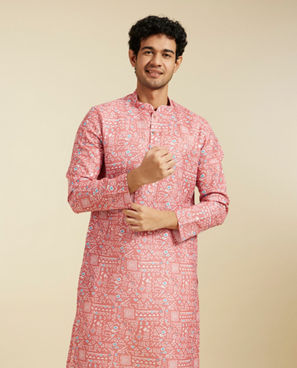
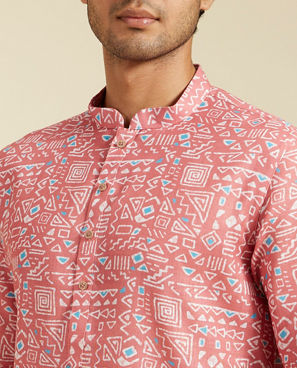
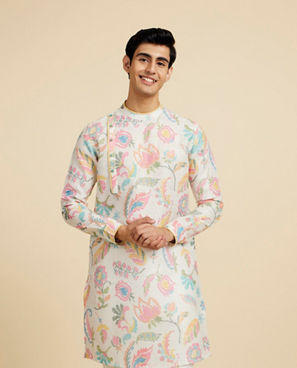
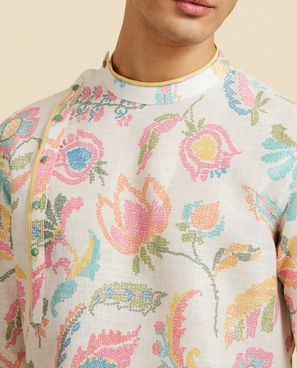
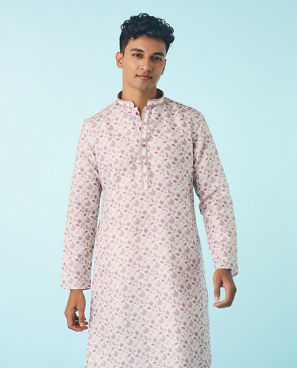
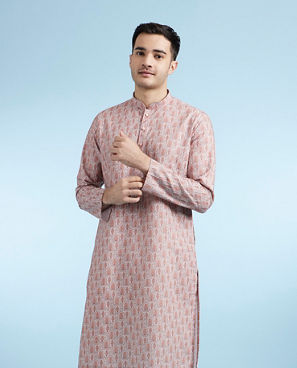
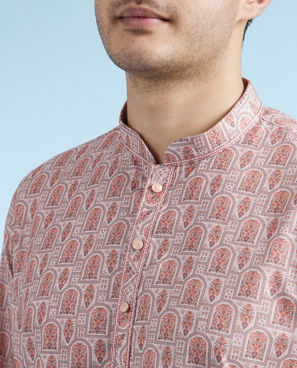
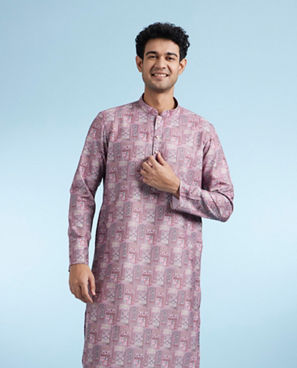
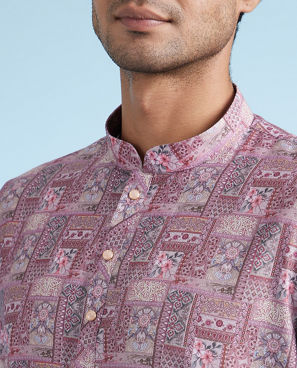
Light floral or geometric prints in cotton suit the warm, relaxed character of Raksha Bandhan beautifully — particularly for daytime home celebrations where the atmosphere is more personal than festive.
Block prints in warm, earthy tones — particularly on ivory or cream bases — have a handcrafted quality that suits the occasion's personal, home-setting character.
Heavily embroidered zari kurtas, sequin pieces, and full formal embellishment are better reserved for wedding functions and evening celebrations — Raksha Bandhan's intimate, afternoon character doesn't call for them.
The Complete Raksha Bandhan Look
The styling for Raksha Bandhan is warm, personal, and relaxed-festive — which translates into specific, practical choices.
White or ivory churidars are the most universally appropriate bottom-wear pairing for Raksha Bandhan — clean, festive, and suitable for a home setting with every kurta color.
Straight-cut pajamas in cotton for a more relaxed silhouette — comfortable across a full day of family occasion without sacrificing the dressed-up quality the day deserves.
For footwear, clean leather juttis or simple mojaris in tan or caramel suit the occasion's warm, personal character. Avoid very formal embroidered footwear — it tips the look towards wedding function territory that Raksha Bandhan doesn't call for.
Accessories should be simple and warm — a classic watch and a clean bracelet. The rakhi your sister ties is the accessory that matters most today. Everything else should frame it rather than compete with it.
The Photographs — Why the Outfit Matters Beyond the Day
Raksha Bandhan photographs are the ones that get saved, framed, and returned to for years. They are candid, close, and emotionally significant in a way that most celebration photographs aren't — and the quality of the outfit in them is visible in exactly the same way.
The kurta you wear for Raksha Bandhan will be in photographs that matter. Choosing it with care — the right color for the setting, the right fabric for the day's warmth, the right level of detail for the occasion's intimacy — is a decision that pays forward into every time those photographs are looked at again.
A well-chosen Diwas kurta in the right color for your sister's outfit, in a fabric that photographs well in natural home lighting, with the right level of surface detail for the occasion's character — this is what those photographs deserve.
Frequently Asked Questions (FAQs)
1. Should I coordinate my kurta color with my sister's outfit for Raksha Bandhan?
Coordinating loosely is a widely appreciated approach — the photographs look significantly more considered when the brother and sister's outfits are in a complementary rather than clashing color relationship. This doesn't mean matching exactly — it means being aware of what she's wearing and choosing a color that sits well alongside it. A quick conversation before the day makes this easy.
2. What fabric works best for a Raksha Bandhan kurta given the August timing?
Cotton and fine cotton are the most practical choices — breathable, comfortable, and appropriate for August's warm, humid conditions. Mulmul is the lightest and most comfortable option for the warmest days. Cotton-silk blend is a good upgrade for men who want more festive presence without the discomfort of heavier fabrics in monsoon-season heat.
3. How dressed up should a Raksha Bandhan kurta be?
More than a casual everyday kurta, less than a wedding function piece. The occasion is intimate and home-setting — a well-cut kurta in a quality fabric with subtle surface detail hits the right register. Heavy embroidery, sequins, and full formal embellishment are disproportionate for the occasion's personal character.
4. Can the same kurta be worn for both Raksha Bandhan and other occasions?
Yes — and choosing with this in mind is the smarter approach. A well-chosen ivory or pastel kurta in chanderi or cotton-silk blend suits Raksha Bandhan and also works for Eid, casual wedding functions, and semi-formal family occasions. A deep jewel-tone cotton kurta works for Raksha Bandhan and Navratri, Dussehra, and regular festive occasions. Buying for versatility across multiple occasions maximizes the value of the investment.
5. What should I avoid wearing for Raksha Bandhan?
Avoid very casual, plain everyday cotton kurtas that don't signal any awareness of the occasion's significance — the day deserves more than a workday outfit. Also avoid heavily embellished, overly formal pieces that feel disproportionate for a home family occasion. The right kurta sits between these two extremes — festive enough to honor the day, relaxed enough to suit the setting.