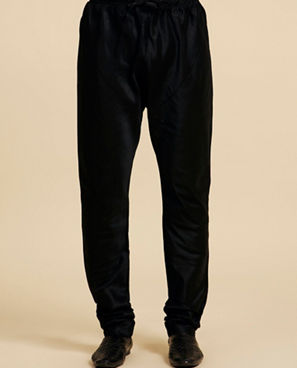
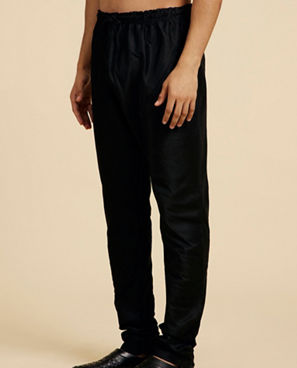
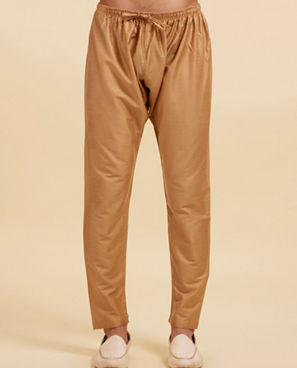
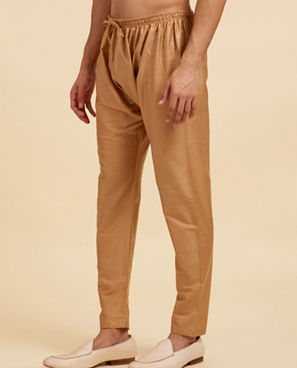
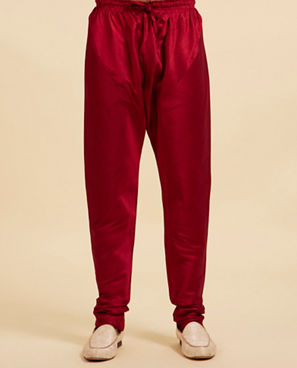
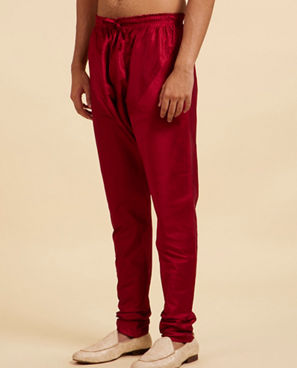
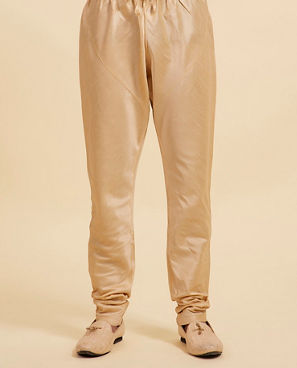
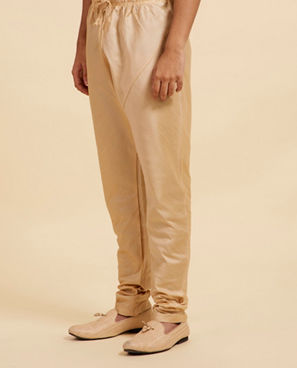
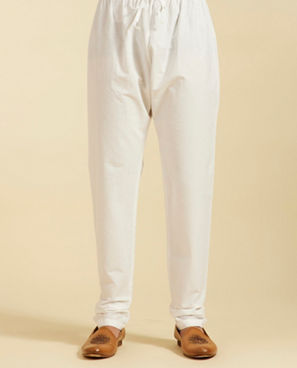
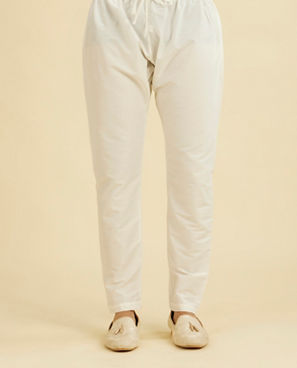
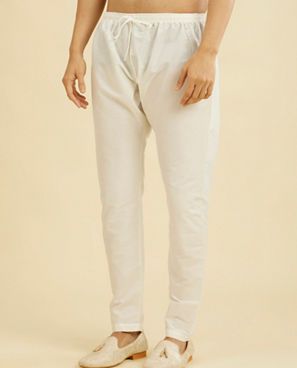
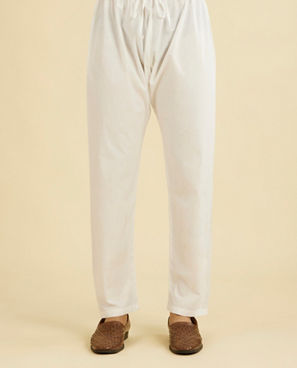
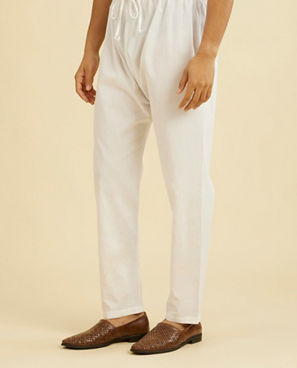
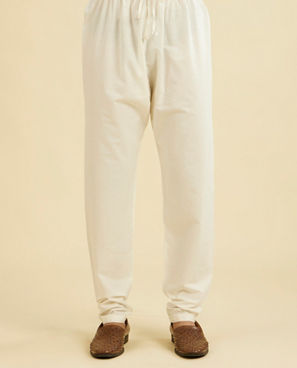
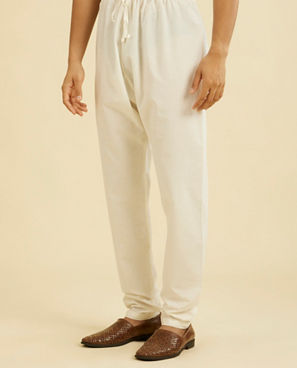
Straight fit lowers for men: the bottom that works without thinking
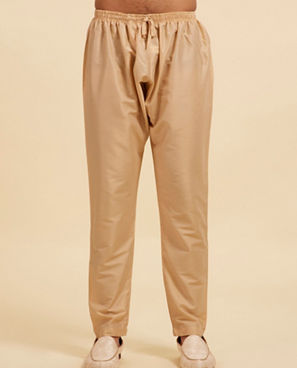
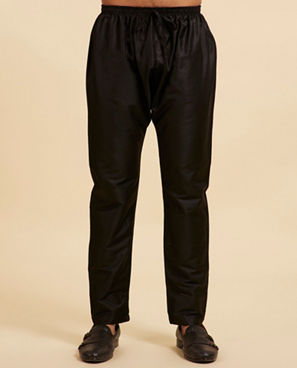
This page brings together one of the most practical and universally wearable silhouettes in men's wear with Diwas' celebration-first approach to everyday dressing. You'll find them in a range of colours—black, beige, cream, and more—across different fabric weights and constructions, ranging from casual home celebrations to more dressed-up festive occasions.
At Diwas, straight fit lowers are imagined as a wardrobe anchor: the bottom you reach for most often, pair most instinctively, and feel most at ease in across the widest variety of plans.
What makes a straight fit lower different
Among the different ethnic lower silhouettes available in men's festive wear—churidars, Patialas, slim-fit pyjamas—the straight fit occupies a very specific and very useful position.
-
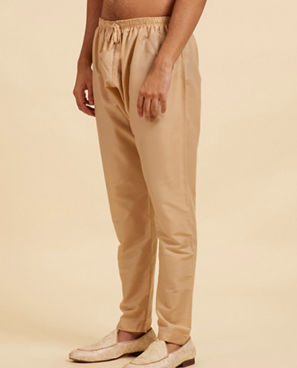
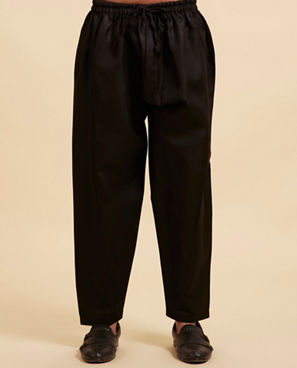
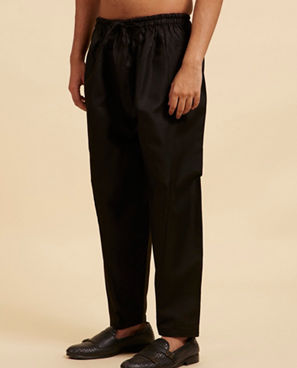
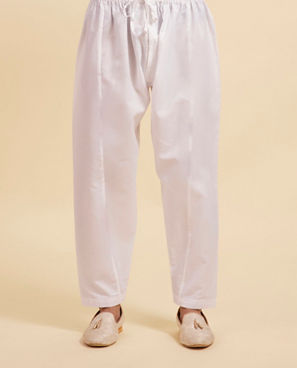
Straight fit through the leg from hip to hem: Unlike churidars that taper and gather at the ankle, or Patialas that flare and pleat dramatically, it follows a consistent, clean line from waist to ankle without narrowing or widening significantly.
-
Relaxed enough for comfort, structured enough for occasions: The silhouette is not loose like a palazzo or baggy like a wide-leg; it has enough room for easy movement but stays neat and considered in its overall profile.
-
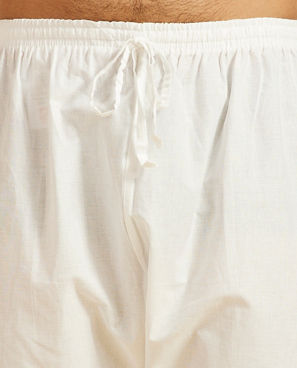
Elastic or drawstring waist for genuine all-day ease: Most straight fit lowers use a comfortable waistband construction that stays in place through sitting, standing, and moving between different settings across a long celebration day.
-
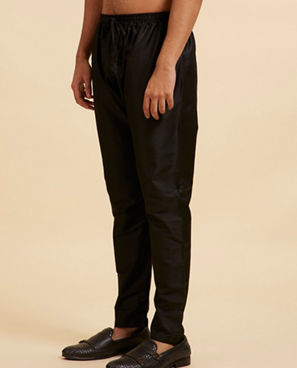
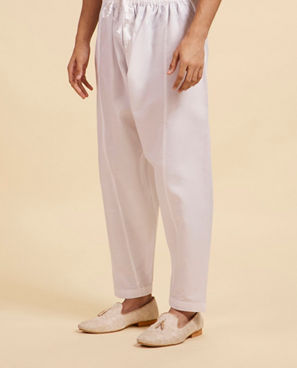
Ankle that lies cleanly: Unlike churidars with their gathered ankle folds, they end cleanly at the ankle—creating a neat, uncluttered hem that works with both ethnic footwear and more contemporary options.
This combination of comfort, cleanliness, and versatility is what makes it the most practical ethnic bottom for men who are building a real, functional celebration wardrobe.
Fabrics
Because they are designed for all-day wear across multiple celebration types, fabric choice directly shapes how comfortable and how appropriate each pair feels. Diwas offers:
-
Cotton and cotton-rich blends—the most breathable option; ideal for daytime poojas, outdoor celebrations, warm-weather festivals, and casual everyday ethnic dressing where comfort across long hours is the primary consideration.
-
Viscose and viscose-blend fabrics—a slightly more polished surface with a smooth drape; these pants look neat and are considered alongside embroidered or more formal kurtas without the stiffness of heavier fabrics.
-
Silk-feel and art-silk constructions—used in more dressed-up lowers where a subtle surface sheen adds occasion-readiness; works well for evening functions when paired with embroidered or chikankari kurtas.
-
Linen and linen-blend fabrics—a textured, relaxed construction that suits casual Indo-fusion dressing and office cultural days; the natural texture gives straight fit lowers a slightly artisanal quality that works with printed and casual kurtas.
Colours
Straight fit lowers work hardest in colours that pair naturally with the widest range of kurtas. On this page you'll find:
-
Black —the sharpest and most contemporary; black creates strong contrast with lighter kurtas and a rich tonal look with deeper jewel-toned uppers; particularly strong for evening events.
-
Beige and camel —warm, versatile, and flattering; beige works harmoniously with almost every kurta colour and reads as both traditionally appropriate and quietly modern.
-
Cream and off-white—the most classic; cream is softer and warmer than pure white, making it slightly more sophisticated and easier to maintain across a long celebration day.
-
White —the most traditional; clean, auspicious, and universally appropriate for pujas, Eid, and morning rituals.
-
Navy and deep blue—a slightly more coloured option that sits naturally with certain kurta palettes; works well for men who want a departure from standard neutrals while retaining pairing flexibility.
-
Grey—a sophisticated neutral that works particularly well with white, navy, and printed kurtas for a contemporary, fashion-aware ethnic look.
Having two or three of these colours gives you effectively unlimited bottom options for your entire kurta collection.
Occasions where it feel exactly right
Because the straight fit silhouette is so versatile, these lowers work across more occasions than most other ethnic bottom styles.
They're particularly at home when you're:
-
Attending morning poojas and home rituals—where a plain white or cream pants with a simple kurta feels respectful, calm, and completely appropriate for the setting and mood.
-
Dressing for casual and mid-level festivals—Diwali visits, Eid gatherings, community celebrations, and family functions where you want to look festive and considered without overthinking the pairing.
-
Attending daytime wedding functions—haldi, mehendi, and casual wedding-week events where pants in cotton or viscose sit comfortably through long days of rituals, photography, and movement.
-
Office cultural days and festive Fridays—where a clean pants with a simple or self-texture kurta looks polished and ethnic without being too formally dressed for a professional environment.
-
Evening wedding functions—with the right fabric (art silk, viscose) and colour (cream, black), work for sangeet and reception-adjacent functions where you want the bottom to feel occasion-appropriate without the structure of churidar.
-
Travel days during wedding or festival season—where a well-chosen pant in wrinkle-resistant fabric maintains its appearance through flights and car journeys, arriving at the destination looking neat and deliberate.
How these pants pair with different kurta styles
One of the most practical qualities is how it pairs across the full range of kurta types. A few natural combinations:
-
Plain and solid kurtas: The clean bottom lets the kurta's colour and silhouette take full credit; minimal accessories complete the look without any element competing for attention.
-
Printed and patterned kurtas: solid neutral pants ground the print and prevent the overall look from feeling busy; the bottom creates visual stability that lets the print breathe.
-
Embroidered and chikankari kurtas: A clean pant in cream or white allows the embroidery's surface work to remain the focal point; the bottom supports rather than competes.
-
Brocade and satin kurtas: The structured, smooth surface of formal fabrics pairs naturally with the clean line in a complementary fabric.
-
Short and casual kurtas: A straight fit pant extends the ethnic look naturally below a shorter hemline, creating a complete silhouette that doesn't need a specific bottom length to look balanced.
Straight fit lower versus other ethnic bottom styles
Understanding how straight fit lowers relate to other bottom options helps you build a wardrobe where each piece serves a specific and clearly defined role.
-
vs churidar: Churidars are more fitted and more formal—their progressive narrowing and ankle gathers create a sharper, more structured silhouette suited to higher-formality occasions; Straight fit pants are more relaxed, more universally flattering, and more versatile across occasion types.
-
vs Patiala: Patialas are fuller, more traditional, and more high-energy in their visual character—suited to sangeet, garba, and occasions where the bottom is part of the festive expression; Straight pants are cleaner and more everyday-appropriate.
-
vs dhoti: Dhotis are more ceremonial and occasion-specific—strongly associated with religious ceremonies and very traditional settings; straight pants carry similar cultural roots with significantly more versatility across modern celebration contexts.
-
r vs jogger-style ethnic lowers: Jogger-style ethnic lowers have a more relaxed, contemporary aesthetic suited to casual and Indo-fusion dressing; straight pants retain a more traditionally ethnic character while remaining comfortable and easy to wear.
Building a practical wardrobe
In a well-considered ethnic wardrobe, having multiple straight fit pants in different colours and fabrics is one of the highest-value investments you can make. A practical approach:
-
White cotton or viscose: Your most-reached-for lower—works with virtually every kurta for virtually every occasion; own two pairs so you always have a fresh option.
-
Cream or beige: A slightly warmer alternative for occasions where white feels too stark; pairs particularly well with embroidered and printed uppers.
-
Black viscose or art silk: Your contemporary evening option—creates instant sharpness and formality with any kurta for evening functions and receptions.
-
A textured or linen-blend option: For casual and semi-formal occasions where texture adds character; works particularly well with printed and casual kurtas.
With just these four options, straight fit lowers can support your entire kurta collection across every occasion in your festive calendar without a single gap.
Across seasons
Unlike many ethnic pieces that feel seasonally specific, they work year-round—adjusting naturally to different temperatures simply by choosing the right fabric weight.
-
Summer: Cotton and linen-blend lowers stay breathable and comfortable through warm festive days, outdoor functions, and long poojas.
-
Monsoon: Good-quality cotton or polyester-viscose blends handle humidity well and dry faster than heavier fabrics without losing their clean line.
-
Autumn and winter: Viscose, art silk, and slightly heavier blends feel warm enough for cooler evenings while maintaining the clean fall that defines the straight fit silhouette.
This year-round versatility, combined with their inherent pairing flexibility, makes them the single most efficient ethnic bottom investment available.
In photos and everyday content
Because they are clean, minimal, and consistent in their silhouette, they photograph reliably across different settings and lighting conditions. In full-length portraits and outfit reels, the clean fall of a straight fit lower from hip to hem creates a neat, defined lower half that makes the overall look feel polished and complete.
For content-driven celebration dressing—outfit-of-the-day posts, festive captures, and wedding-week reels—they provide a consistent, unfussy foundation that allows the kurta, footwear, and accessories to take all the creative credit. The bottom never distracts, never looks accidental, and never makes the overall frame feel unbalanced.
It's the kind of piece that makes every kurta in your wardrobe look slightly better by giving it a reliable, clean foundation to stand on—which is exactly the role a great ethnic lower should play.
FAQs
1. How is a straight fit lower different from a churidar?
They maintain consistent width from hip to hem, creating a clean, even fall; churidars narrow progressively through the leg and gather at the ankle, creating a more fitted, structured silhouette that reads as more formal—they are more versatile and universally flattering while churidars are more occasion-specific.
2. What kurta lengths work best with straight fit lowers?
All kurta lengths work naturally with these lowers—short, mid-length, and longer styles all benefit from the clean, consistent fall of the straight fit silhouette, making this bottom one of the most genuinely versatile options across different kurta styles.
3. Are straight fit lowers appropriate for formal evening functions?
Yes—in the right fabric (viscose, art silk) and colour (cream, black, or ivory), it work well for evening functions including sangeet and reception-adjacent events; for very formal receptions, churidar may be more appropriate, but it covers most evening function types comfortably.
4. How many straight fit lowers should I own?
Ideally two to four in different colours—white and cream for everyday and daytime functions, black for evening occasions, and one in a textured or linen fabric for casual and semi-formal settings; this range covers your entire ethnic occasion spectrum without gaps.
5. How do I maintain the clean fall of straight fit lowers across multiple wears?
Store hanging rather than folded where possible; steam or lightly press before wearing to restore the clean line; wash in cold water on a gentle cycle and reshape while damp; choose slightly heavier fabric weights for lowers that need to maintain their structure across long functions and travel.