STORIES BY DIWAS

Lifestyle
Onam for the Next Generation: How Young Indians Are Reimagining the Festival and Its Fashion
Date 07 August 2026 Reading time: 7-10 mins
Onam has always been a festival of homecoming, harvest, and togetherness. For older generations, it often means family Sadhyas, temple visits, traditional drapes, and a familiar rhythm of rituals. But for young Indians — Gen Z and younger millennials — the festival is taking on a new shape, experienced, celebrated, and dressed for in ways that reflect a different lifestyle.
This shift is not about rejecting tradition. It is about making it fit modern life. Younger wearers want pieces that feel meaningful, stylish, and repeatable, while honoring the festival and expressing their own identity. That tension — between heritage and individuality — is where the most interesting Onam fashion is happening.
How young Indians experience Onam differently
For many young people, Onam is no longer only a family-centric, Kerala-based celebration. It is experienced in hostels, colleges, friend groups, metropolitan apartments, and social media feeds. Some may be away from home for the first time, others part of mixed cultural circles, and many may not be Malayali at all but still want to participate respectfully.
This changes the emotional texture of the festival. Onam becomes less about strict ritual and more about shared mood: togetherness, gratitude, and festive joy. The Sadhya may be replaced by a potluck with friends. The Pookalam may be made in a college corridor or housing society. The dressing may be lighter, more experimental, and more personal.
That does not make the celebration less meaningful. It makes it more inclusive. Young Indians are not trying to recreate an exact traditional experience. They are building their own version of Onam that fits their reality.
Fashion as a form of participation
For this generation, clothing is one of the most direct ways to participate in the festival. Dressing up for Onam is not just about looking good. It is about signaling belonging, respect, and excitement. It is a way to say, “I am part of this moment,” even if the celebration looks different from what their parents or grandparents experienced.
Younger wearers care deeply about:
- Comfort. They want to move easily through long days — from college events to friend gatherings to late-night plans.
- Repeatability. They prefer outfits they can wear again, mix and match, and style in different ways.
- Visual appeal. In an age of photos and reels, the outfit should look good on camera and in person.
- Individuality. They want to honor the festival without losing their personal style.
Reimagining the Onam palette
The Onam palette — white, cream, off-white, and gold — remains central, but is being used in new ways. Instead of strict kasavu sarees and mundu-kurta combinations, young wearers experiment with how these colors and textures appear in modern outfits.
For men, options could include:
- A kurta set in cream or beige with minimal detailing.
- A shirt-and-trouser combination in white or light gold tones.
- A modern interpretation of the mundu-kurta, adapted into a more casual silhouette.
- A festive jacket or layer over a simple kurta for a more styled look.
The common thread is that the Onam aesthetic is treated as a design language rather than a fixed dress code. The palette stays recognizable, but the forms change.
Fusion as a bridge between old and new
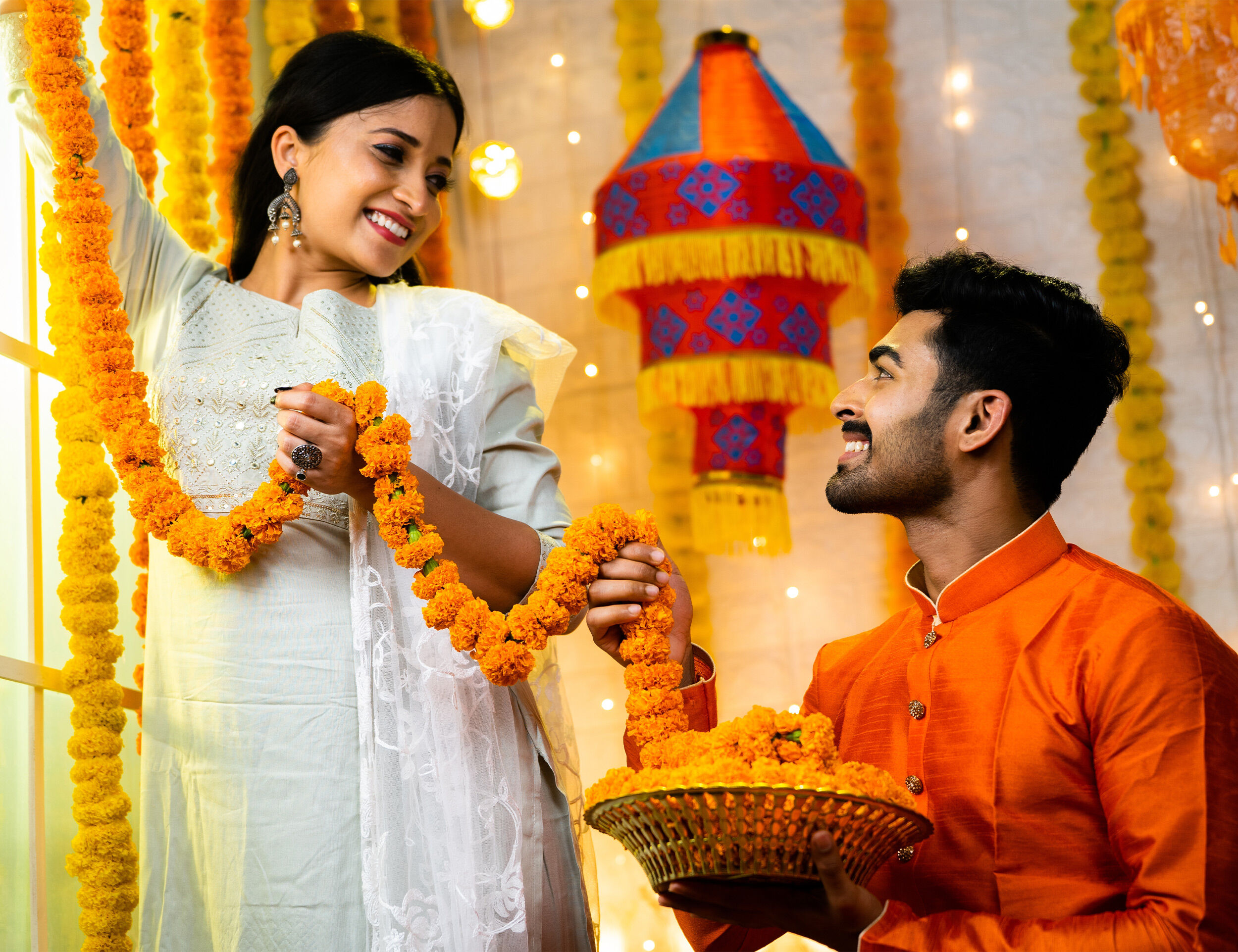
Fusion wear has become a key space where young Indians negotiate tradition and modernity. A kasavu border on a contemporary kurta, a gold accent on a modern shirt, or a traditional motif on a minimalist silhouette can all feel like a nod to the festival.
This approach works especially well for friend-group celebrations, college events, and apartment parties where the dress code is festive but relaxed. It allows everyone to participate without feeling like they are wearing a costume. The outfit feels like an extension of their personal wardrobe, not a separate ceremonial piece.
Fusion also supports repeatability. A cream kurta set can be styled in different ways for multiple events. That makes the purchase feel more intentional and less wasteful — a value that matters to many younger consumers.
Comfort and confidence as priorities
Comfort is non-negotiable for this generation. They are not willing to sacrifice ease for the sake of tradition. An outfit that feels restrictive, heavy, or difficult to manage is unlikely to be chosen, no matter how beautiful it looks. This is why lightweight fabrics, relaxed fits, and breathable materials are so important.
Cotton blends, mulmul, light silks, and soft synthetics are popular because they allow movement and do not feel oppressive through long celebrations. Ready-to-wear kurta sets and structured silhouettes are favored for reducing the effort required to look polished.
Comfort also supports confidence. When an outfit feels easy to wear, the person wearing it appears more relaxed and self-assured. That matters in social settings where the goal is to enjoy the moment, not constantly adjusting clothing.
Social media and the visual language of Onam
Social media has changed how festivals are seen and shared. For many young Indians, Onam is experienced through photos, reels, and stories as well as in person. The outfit needs to work in real life and on screen.
Colors that photograph well — off-white, ivory, soft gold — are often preferred over very stark white, which can look flat under certain lighting. Textures that catch light, like kasavu borders, metallic threads, or subtle embroidery, add visual interest in photos and videos.
Styling also matters. Neat hair, minimal grooming, and clean shaving or trimming help the overall look feel intentional. The aim is to appear festive and put-together without looking overdone.
This visual dimension does not make the celebration shallow. It makes it more shareable. Young people are documenting their Onam experiences and inviting others into their version of the festival. That is a form of participation in itself.
Respect without rigidity
One of the most important aspects is that young Indians want to be respectful without being rigid. They understand the festival has deep cultural roots and do not want to trivialize it, but do not feel bound to follow every traditional rule.
This shows up in how they style their outfits. A man may wear a cream kurta that echoes the mundu-kurta aesthetic without adopting the full traditional drape. Accessories may be minimal, but meaningful. Colors may be playful, but still tied to the Onam palette.
The goal is to participate in a way that feels authentic, not performative. That is a mature approach, and it reflects a generation that values both heritage and individuality.
Where Diwas fits into this story
The brand stands for festive wear that blends traditional craftsmanship with contemporary style, making it relevant to a festival evolving in this direction. Diwas by Manyavar positions itself as clothing that travels across life’s moments — home, campus, office, and beyond. Young celebrants live exactly in those spaces.
A Diwas collection for the next generation can offer:
- Ready-to-wear kurta sets in cream and gold tones.
- Contemporary silhouettes that carry the Onam palette.
- Kurta sets with subtle kasavu-inspired detailing for men.
- Pieces that are camera-friendly, comfortable, and repeatable.
The strength of this approach is that it treats young celebrants as serious participants, not as a niche market. It acknowledges that their way of dressing is not a dilution of tradition, but an evolution of it.
Onam for the next generation is not a departure from the festival’s roots. It is an extension of them. Young Indians are reimagining Onam in ways that fit their lives: more inclusive, more flexible, and more personal. They are not abandoning tradition. They are translating it.
Fashion plays a key role in that translation. Through fusion silhouettes, contemporary interpretations of the Onam palette, and a focus on comfort and repeatability, younger wearers are creating a new visual language for the festival. That language is respectful, stylish, and distinctly modern.
And that is where brands like Diwas can contribute meaningfully. By offering festive wear that honors the Onam spirit while fitting the realities of young life, the brand can be part of this larger story: a festival that continues to evolve, yet remains deeply connected to its core values.

Made In India

Assured Quality

Secure Payments