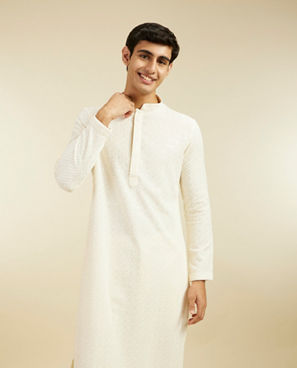
Cream Kurtas for Men – The Warmest Thing a Neutral Can Do
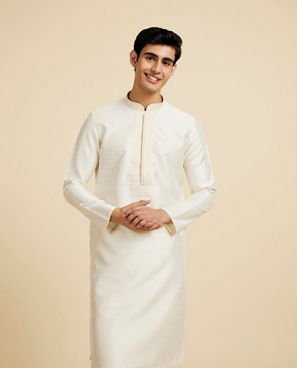
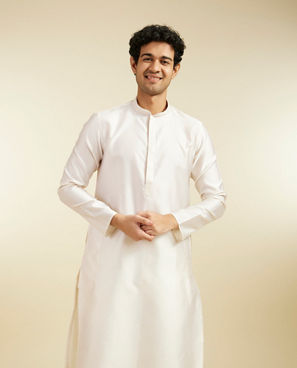
Cream doesn't get the credit it deserves. Most men reach for white when they want a light kurta — and white is a fine choice. But cream does something white cannot. It adds warmth. It flatters more skin tones. It photographs with more depth. It works in more lighting conditions. And it carries a quiet refinement that pure white, for all its crispness, occasionally lacks. A well-chosen cream kurta is one of the most consistently useful pieces in a celebration wardrobe — not because it's the most exciting color, but because it is reliably, unfailingly right.
Cream vs White vs Ivory vs Off-White — Getting the Distinctions Right
These four shades are often used interchangeably but they are distinct — and the differences matter when you're choosing a kurta.
Pure white is the coolest and brightest of the four. It has a sharpness and clarity that suits outdoor daylight settings and occasions where a very clean appearance is specifically required. It can occasionally feel stark in warm indoor lighting or against certain skin tones.
Ivory sits between white and cream — slightly warmer than white, slightly lighter than cream. It has a softness that white lacks without the golden depth of true cream. The most universally flattering of the four in most lighting conditions.
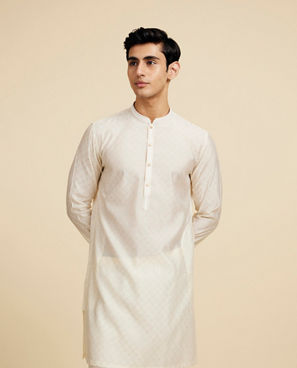
Cream is warmer and richer than ivory — it has a visible golden or yellow undertone that gives it depth. In warm lighting, cream deepens beautifully. On most skin tones, it sits more harmoniously than white. It is the color that looks most natural in the warm, indoor settings where most Indian celebrations take place.
Off-white is the most neutral of the four — closer to an unbleached natural tone, with a warmth that is earthy rather than golden. Less luminous than cream but more grounded.
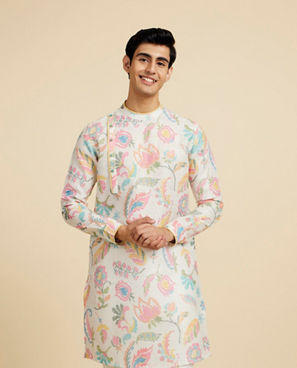
Within the Diwas cream kurta collection, these tonal variations exist across different pieces — and understanding them helps you choose the right shade for the occasion and the setting you're dressing for.
What Cream Does in Different Fabrics
The character of a cream kurta changes significantly depending on the fabric — more so than most other colors, because cream's warmth is amplified or softened by the fabric's own properties.
Cotton in cream is clean and practical. The matte surface of cotton gives the color an honest, everyday quality — appropriate for casual and semi-formal occasions without feeling underdressed. Cotton kurtas are among the most versatile daily celebration wear pieces available.
Mulmul takes cream to its most delicate expression — the fine muslin's translucency gives cream a luminous, almost glowing quality in natural light. In the warm morning light of an Eid or a spring festival, a mulmul kurta looks genuinely beautiful. The most appropriate fabric for occasions where the dress code calls for something clean and celebratory without being heavy.
Linen gives cream a more textured, grounded character — the fabric's natural grain adds an organic quality that suits smart-casual and outdoor settings particularly well. Cream linen kurtas feel relaxed and considered simultaneously.
Chanderi is where cream becomes genuinely festive. The fabric's gentle sheen gives cream a soft luminosity — in warm lighting, chanderi kurtas have a warmth and glow that cotton cannot achieve. The right step up for Eid, daytime wedding functions, and semi-formal celebrations.
Silk-blend is the most elevated cream option. Silk on cream creates a surface of real warmth and depth — the color appears richer, the drape is more fluid, and the overall garment carries a formality appropriate for the most significant festive occasions. In warm event lighting, silk-blend cream has a quality that is immediately impressive.
The Occasions Cream Covers — and Some Might Surprise You
Eid— cream is one of the most widely worn and most appreciated Eid color choices. It sits just apart from the standard white — slightly warmer, slightly more considered — and in a quality fabric, it signals that the outfit has been thought about rather than defaulted to.
Onam — Kerala's harvest festival is built around white and cream. A cream cotton or mulmul kurta, optionally with a kasavu gold border, is both traditionally connected and genuinely elegant for this occasion.
Pongal and Vishu — South Indian harvest festivals that welcome light, warm colors as symbols of renewal and abundance. Cream in a clean, simple cut suits both occasions naturally.
Nikah ceremonies and Friday prayers — cream's warmth and dignity make it one of the most appropriate choices for religious occasions where the dress code calls for something clean, respectful, and genuinely considered.
Daytime wedding functions — engagement ceremonies, morning rituals, intimate pre-wedding gatherings. Cream in chanderi or mulmul works beautifully in natural daylight settings — it doesn't compete with the wedding's own color palette and consistently looks elegant in photographs.
Durga puja and Navami — the final days of Durga Puja in Bengal traditionally welcome white and red. A cream kurta with red border detail or subtle red embroidery is a culturally connected and visually beautiful interpretation of this color tradition.
Casual everyday occasions — a plain cotton kurta for family gatherings, temple visits, and regular daily wear is one of the most low-effort, high-result outfit choices available. It looks dressed without being dressed up, which is exactly what most daily occasions require.
Surface Detail on Cream: The Options That Work
Cream is a warm neutral — embellishment needs to work with that warmth, not against it.
Gold thread work and zari on cream creates a cohesive, warm combination — both tones share golden undertones that make the pairing feel natural and harmonious. This is the most festive embellishment choice.
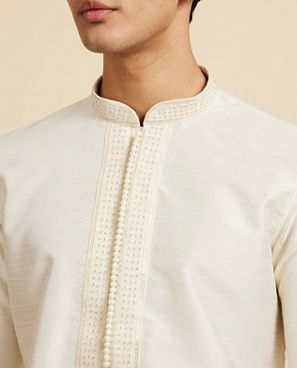
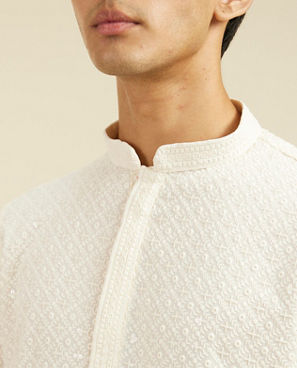
Ivory or white embroidery — including Chikankari-style thread work — creates a tonal, near-monochromatic effect on cream. The embroidery is visible primarily through texture and shadow, adding craft without contrast. Among the most refined embellishment approaches for cream.
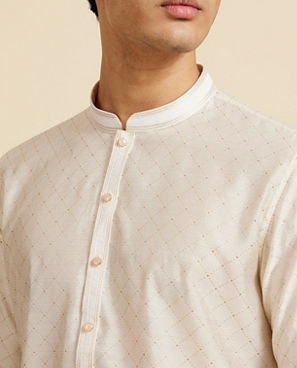
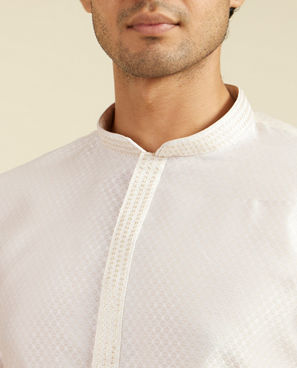
Subtle self-prints and tonal textures — dobby weave, self-jacquard, woven geometric patterns in the same cream tone — add visual depth to the kurta without introducing another color. These give the fabric surface interest that rewards attention without being immediately obvious.
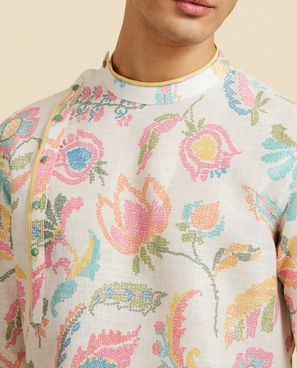
Block prints in earthy tones — rust, terracotta, deep brown — on cream create a warm, artisanal combination that suits casual and smart-casual occasions. The earthy contrast colors sit naturally against cream's warmth without disrupting the palette's overall gentleness.
Avoid cool-toned embellishment — silver embroidery and blue or grey prints — on cream. The contrast between the warm base and cool detail creates an inconsistency that works against the color's fundamental character.
Building an Outfit
Cream's warmth makes it most at home in pairings that stay within the warm spectrum.
Ivory churidars are the most natural bottom wear pairing — the slight tonal difference between cream and ivory adds dimension to the look without breaking the warm palette. This combination reads as cohesive and considered without being matchy.
White straight-cut trousers for a cleaner, slightly crisper contrast — works well for daytime occasions and semi-formal settings where a defined separation between kurta and bottom wear is appropriate.
Warm sand or camel trousers extend the tonal logic into a deeper, earthier palette — a fully warm monochromatic look that feels modern and deliberate. Particularly effective with plain or textured kurtas.
Deep contrast pairings — navy, forest green, or maroon churidars — create a bolder combination where the kurta acts as a light top against a rich, dark bottom. This works for men who want a more fashion-forward approach and is particularly effective with embroidered or textured cream pieces, where the kurta has enough visual interest to hold its own against a strong contrast.
For footwear, tan and caramel juttis are the most harmonious choice across all kurta styles — the warm leather tones sit naturally within the color's palette. Embroidered gold footwear suits festive occasions. Avoid black footwear with cream — the stark contrast breaks the warmth that cream's entire appeal depends on.
Cream in Photographs — Why It Consistently Performs
Cream is one of the most reliably photogenic kurta colors — and the reasons are straightforward.
Unlike pure white, which can occasionally overexpose or look flat in certain lighting conditions, cream holds its warmth and depth across a wide range of photographic situations. In natural daylight, cream kurtas glow with a warmth that is immediately flattering. In the warm artificial lighting of indoor celebrations — the standard for wedding functions, Diwali parties, and Eid gatherings — cream deepens and becomes richer, creating images that feel warm and considered rather than bright and clinical.
Cream is also a generous backdrop for the human face in portrait photography — the warmth of the color complements skin tones across the spectrum in a way that white's coolness sometimes doesn't. For wedding photography, Eid portraits, and social media content, a cream kurta consistently creates images that look more considered and more beautiful than the effort required to produce them.
Frequently Asked Questions (FAQs)
1. When should I choose cream over white for a kurta?
Choose cream when the occasion involves warm indoor lighting — Eid gatherings, wedding functions, Diwali parties — where cream's warmth performs better than white's coolness. Choose cream when you want the outfit to look considered rather than simply appropriate. Choose cream if you find that pure white feels too stark against your skin tone. White is the crisper, more formal choice; cream is the warmer, more characterful one.
2. Is a cream kurta appropriate for a wedding as a guest?
Yes — particularly for daytime functions and occasions with natural light. In chanderi or silk-blend with subtle embellishment, a cream kurta is an elegant and occasion-appropriate wedding guest choice. Avoid very plain cream cotton for formal evening wedding functions — the occasion warrants a richer fabric and some surface detail to signal that the outfit is dressed up.
3. What embroidery works best on a cream kurta?
Gold thread work and zari create the most harmonious and festive result — both tones share a warmth that makes the pairing feel cohesive. Ivory or white Chikankari-style embroidery creates a refined, tonal effect where the craft is visible through texture rather than color contrast. Self-embroidery in a matched cream thread is the most understated option — subtle, sophisticated, and worth the attention it rewards.
4. Does cream work for South Indian festivals like Onam and Pongal?
Yes — cream is deeply appropriate for South Indian harvest festivals. Onam and Pongal both welcome white and cream as culturally connected color choices. A cream cotton or mulmul kurta, optionally with a gold or kasavu border detail, is both traditional in spirit and genuinely elegant in execution for these occasions.
5. How do I care for a cream kurta to keep the color looking its best?
Wash in cold water with a gentle detergent — avoid anything with bleach or optical brighteners, which can alter the cream tone towards an uneven yellow. Always dry in shade away from direct sunlight — UV exposure causes cream to yellow unevenly over time. Store away from colored garments to prevent dye transfer onto the light base. For chanderi and silk-blend cream kurtas, dry cleaning is the safest long-term option for preserving both the fabric and the color's warmth.

_18-04-2025-22-49:297-368)
_18-04-2025-22-49:297-368)
_18-04-2025-22-49:Swatch)
_18-04-2025-22-57:297-368)
_18-04-2025-22-57:297-368)
_18-04-2025-22-57:Swatch)

_18-04-2025-22-45:297-368)
_18-04-2025-22-45:297-368)
_18-04-2025-22-45:Swatch)
_18-04-2025-21-29:297-368)
_18-04-2025-21-30:297-368)
_18-04-2025-21-29:Swatch)
_18-04-2025-23-06:297-368)
_18-04-2025-23-06:297-368)
_18-04-2025-23-06:Swatch)
_18-04-2025-23-19:297-368)
_18-04-2025-23-19:297-368)
_18-04-2025-23-19:Swatch)
_28-04-2025-06-47:297-368)
_18-04-2025-20-34:297-368)
_28-04-2025-06-47:Swatch)