Simple Kurtas for Men – Less Detail, More Impact
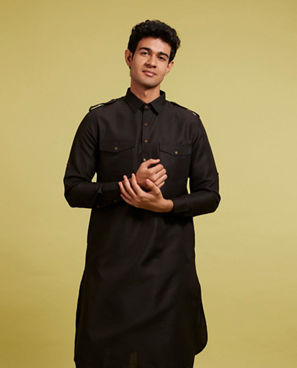
There's a particular kind of confidence in wearing a simple kurta well. No embroidery to rely on. No print to carry the interest. Just a clean cut, a good fabric, and a color chosen with intention. These kurtas strip the garment back to its essentials — and in doing so, they reveal something that heavily embellished pieces often obscure: that a well-made kurta doesn't need decoration to look extraordinary. At Diwas, the simple kurta collection is built on exactly this understanding. Every piece in the range earns its place through quality, fit, and the kind of understated confidence that only comes from getting the fundamentals exactly right.
What Makes a Simple Kurta Work — and What Makes It Fall Flat
A simple kurta has nowhere to hide. Without embroidery or print to draw attention, the quality of every other element is immediately visible — and immediately judged.
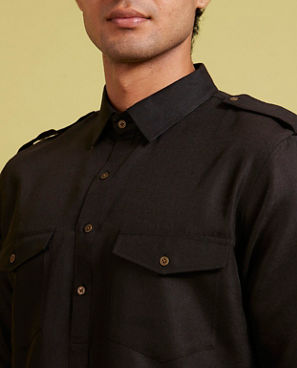
Fit is the most critical factor by a significant margin. A kurta in a poor fit looks underdressed at best and careless at worst. The shoulder seam must sit at the edge of the shoulder — not drop below it. The chest should have ease without excess — the fabric should move with the body, not billow away from it. The length should be proportionate to the wearer's height — too long, and the silhouette looks heavy; too short, and the garment loses its balance. The sleeves should end at the wrist with a clean finish.
In a kurta, fit is everything. Every other quality — fabric, color, construction — serves fit. Get this right first.
Fabric quality is the second factor. On a plain surface with no embellishment to distract from the material, the fabric speaks for itself. A kurta in a quality cotton with a good weave looks significantly better than the same silhouette in a cheap, inconsistent fabric. The drape, the hand, the way it holds a press — all of these are visible in a kurta in ways they aren't in an embellished piece.
Color selection is the third. The kurta lives or dies by its color choice — there's no print or embroidery to create visual interest independently. The color must carry the outfit. The right color for the right occasion makes a kurta look genuinely considered. The wrong one makes it look like an afterthought.
The color Decisions That Matter Most
Because simple kurtas rely entirely on color for their visual character, the color decision deserves more thought than it typically gets.
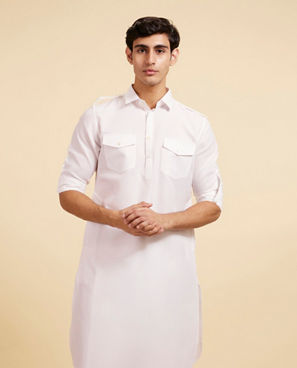
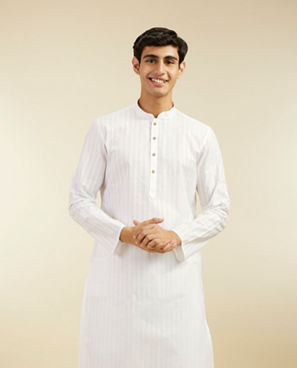
Solid neutrals — white, cream, ivory, beige, grey — are the most versatile kurta choices. They pair with virtually everything, work across the full range of occasions, and look clean and considered in any setting. A white kurta for Eid, a cream one for a daytime wedding function, a grey one for a semi-formal event — these choices work without requiring any additional reasoning.
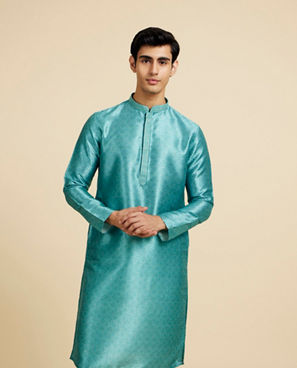
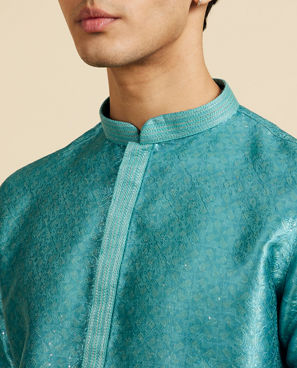
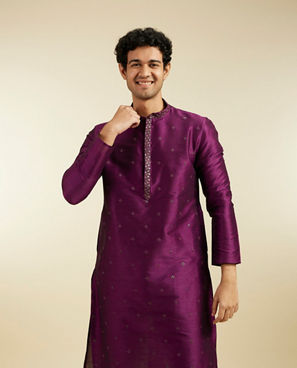
Deep jewel tones — navy, teal, emerald, maroon, wine — give a kurta a genuine festive presence without embellishment. The color alone carries the occasion-awareness. A simple navy silk-blend kurta for a sangeet night looks more impressive than a heavily embroidered one that's poorly fitted.
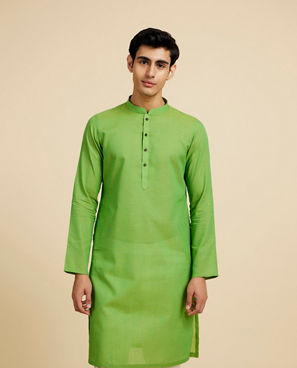
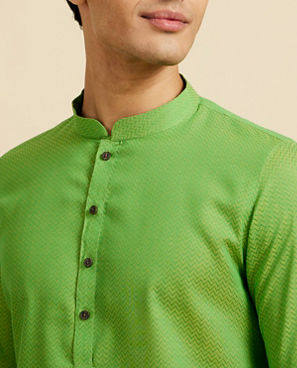
Mid-tone solids — cobalt blue, forest green, rust, and terracotta — are the most personality-driven kurta choices. These colors make a statement without requiring embellishment to back it up. They work best on men who wear color with natural confidence.
Earthy neutrals — olive, sand, warm brown, dusty sage — give kurtas a contemporary, thoughtful character that suits smart-casual occasions and men whose style leans towards understated rather than festive.
What to avoid: very pale, washed-out colors in thin fabrics — these make kurtas look genuinely underdressed. A kurta in a color that has no presence is just a plain shirt.
Occasions Where Its Exactly Right
Friday prayers and religious occasions — a clean, simple cotton kurta in white, cream, or a muted color is the most respectful and appropriate choice. The simplicity of the garment suits the simplicity of the occasion's dress code. No embellishment required or expected.
Everyday casual occasions — family gatherings, relaxed get-togethers, weekend outings. A kurta in a mid-tone cotton is one of the most effortless everyday celebration looks available. It looks like you made an effort without looking like you tried too hard.
Office and professional settings during festive periods — a kurta in a professional color — navy, teal, grey, or deep green — worn with straight-cut trousers is a smart, culturally appropriate office look for Navaratri, Diwali week, or any festive period where Indian wear is welcome in the workplace.
Daytime wedding functions and casual pre-wedding gatherings — a kurta in a quality fabric for daytime occasions photographs well in natural light and reads as genuinely well-dressed without the formality of embellished pieces.
Eid morning — a simple white or cream mulmul kurta for Eid morning is one of the most culturally and aesthetically correct choices available. Clean, fresh, appropriate. The simplicity is not a compromise — it's the point.
Travel and extended-wear occasions — Kurtas are the most practical choice for travel, extended sitting, or unpredictable conditions. Without embroidery to snag or prints to fade, they wear better over time and look as good at the end of a long day as they did at the beginning.
Where the Fabric Earns Its Keep
In a simple kurta, fabric investment pays back more directly than in any other kurta type — because there's nothing else to evaluate.
Mulmul and fine muslin — the finest, lightest cotton options. In white or cream, mulmul kurtas have a softness and translucency that looks genuinely beautiful in natural light. The fabric elevates a plain kurta into something that reads as genuinely considered.
Cotton with a good weave — standard cotton in a consistent, quality weave holds its shape, takes a good press, and wears reliably over time. The everyday workhorse of the kurta range.
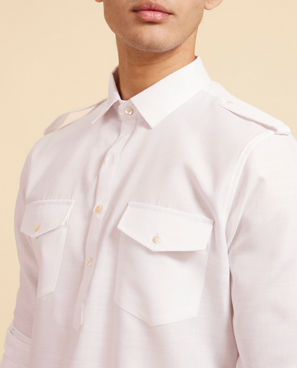
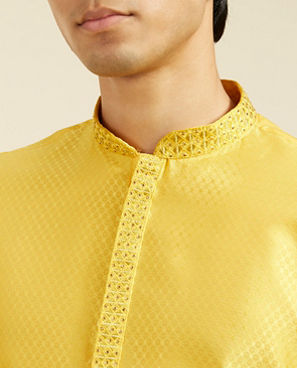
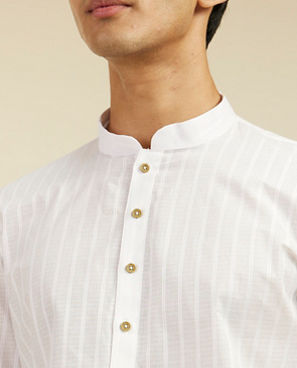
Dobby weave cotton — where a subtle geometric pattern is woven into the fabric structure — adds a degree of surface interest to a plain color without introducing embroidery or print. The pattern is visible as a texture difference rather than a color difference. A quiet upgrade on flat cotton that is particularly effective in white, cream, and grey.
Linen — a textured, relaxed option that gives kurtas in earthy and neutral tones a naturally artisanal quality. Linen kurtas are some of the most effortlessly stylish casual pieces available.
Chanderi — where a kurta moves into festive territory. The fabric's sheen and drape give a plain color a luminosity that suits semi-formal and celebration occasions. A simple ivory chanderi kurta is a complete festive look that requires nothing else.
Silk-blend — the most elevated kurta option. In a deep color, a well-cut silk-blend kurta with no embellishment is one of the most genuinely impressive pieces in the range. The fabric does everything that embroidery is usually recruited to do.
Styling: The Details That Complete the Look
Because the kurta itself carries no embellishment or print, the surrounding elements have more visual weight than they do in printed or embroidered outfit combinations.
Churidars and pajamas should be clean and well-fitted. In a kurta outfit, rumpled or ill-fitted bottom wear reads immediately and negatively. Ivory and white are the most universally effective pairings. Tonal bottom wear — matching or closely related to the kurta color — creates a more contemporary, unified look.
Footwear earns more attention in a kurta outfit because there's nothing above it competing for focus. A quality pair of juttis, clean mojaris, or well-maintained leather sandals adds a finishing detail that lifts the entire look. Conversely, worn-out or careless footwear is more visible with a kurta than with an embellished one.
A single accessory — a quality watch, a clean bracelet, or a simple chain — is more effective than multiple pieces.
A Nehru jacket over a kurta is one of the most effective upgrades for semi-formal and festive occasions — the layering adds formality without requiring the kurta itself to carry embellishment. An ivory kurta under a deep teal Nehru jacket, for instance, is a complete and impressive festive look assembled from two entirely plain pieces.
Frequently Asked Questions (FAQs)
1. Can a simple kurta look festive without embroidery or print?
Absolutely — the fabric and color determine festive-appropriateness more than embellishment does. A kurta in silk-blend or chanderi in a deep jewel tone looks genuinely festive for Eid, Diwali, and wedding functions. The absence of embellishment is not a deficiency when the fabric quality and color choice are doing their job correctly.
2. What is the most versatile simple kurta to own?
A white or cream kurta in fine cotton or mulmul covers the widest range of occasions — Eid, religious events, daytime wedding functions, casual everyday wear, and South Indian festivals. It is the single most useful piece in a kurta wardrobe and the one worth investing in first.
3. How do I make a simple kurta look more formal for an evening occasion?
The most effective upgrades are fabric and layering. Switch from cotton to chanderi or silk-blend for more formal evening occasions — the fabric's sheen and drape elevate the look significantly. Add a Nehru jacket in a complementary or contrasting color. Choose quality footwear and a single considered accessory. These three changes move a kurta from casual to occasion-appropriate without adding embellishment.
4. Are simple kurtas appropriate for wedding functions?
Yes — in the right fabric and color. A kurta in silk-blend or jacquard in a deep jewel tone is appropriate for daytime wedding functions and as a guest at certain evening functions. For the most formal evening wedding occasions — reception, baraat — a degree of embellishment is generally expected. A kurta with a heavily embellished Nehru jacket creates a good middle ground for these occasions.
5. What separates a well-made simple kurta from a cheap one?
Four things: the consistency and quality of the fabric weave, the precision of the stitching at collar, cuffs, and hem, the accuracy of the sizing and proportion, and the way the garment drapes and holds its shape after washing and pressing. In a kurta, all of these are immediately visible — there is no embellishment to draw attention away from the construction quality. A well-made kurta rewards examination; a poorly made one cannot withstand it.

_18-04-2025-19-50:297-368)
_18-04-2025-19-51:297-368)
_18-04-2025-19-50:Swatch)
_18-04-2025-20-44:297-368)
_18-04-2025-20-44:297-368)
_18-04-2025-20-44:Swatch)
_18-04-2025-22-06:297-368)
_28-04-2025-06-54:297-368)
_18-04-2025-22-06:Swatch)
_18-04-2025-21-29:297-368)
_18-04-2025-21-30:297-368)
_18-04-2025-21-29:Swatch)
_18-04-2025-21-41:297-368)
_18-04-2025-21-42:297-368)
_18-04-2025-21-41:Swatch)