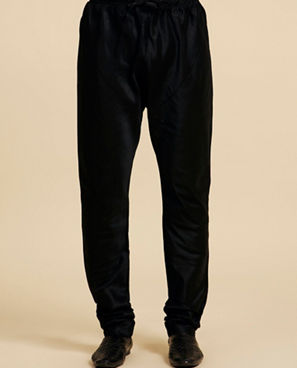
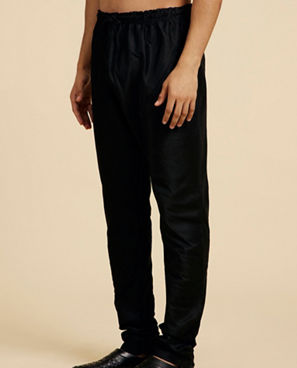
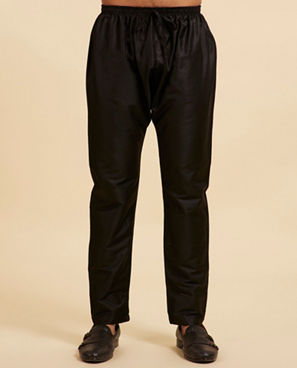
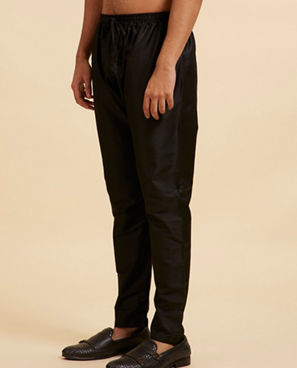
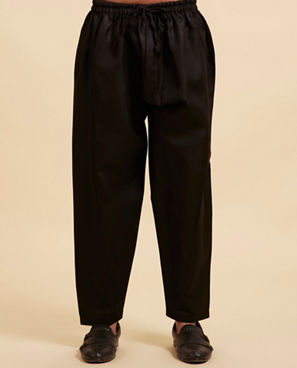
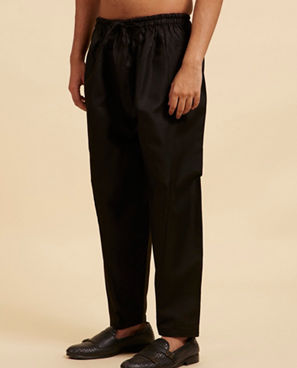
Black pyjama for men at Diwas
This page brings together men's black pyjamas designed to pair with a wide range of kurtas across occasions. Unlike most ethnic bottoms that default to white or cream, black immediately adds a slightly sharper, more contemporary edge to your festive look—without needing extra layers or accessories to pull it off.
At Diwas, these pyjamas are imagined as a modern celebration essential: bottoms that respect tradition in silhouette but feel current in colour, making them an easy addition to any Indian celebration wardrobe.
Why black works as an ethnic bottom
White and cream pyjamas have long been the default for most men's kurta looks. Black changes that story. While white softens a kurta and cream warms it up, black sharpens—giving even a simple, minimal kurta a more dressed‑up, intentional feel.
A black pyjama makes sense when:
-
You want your overall look to feel slightly more formal or evening‑ready without switching to churidar.
-
You're pairing it with a darker or very rich‑toned kurta (navy, bottle green, maroon, deep red) where white might create too stark a contrast.
-
You prefer minimalist, composed outfits where the colour palette stays controlled and deliberate.
-
You have a lot of festive plans in one week and need one bottom that works across multiple different kurtas.
For men who like their festive looks to feel clean and modern rather than very traditional, it is often the first non‑white ethnic bottom they reach for.
Fabric and fit: what to expect
For a pyjama to feel good across long festive days, fabric and silhouette have to work together. Diwas black pyjamas and similar styles typically use:
-
Cotton and cotton‑rich blends, ideal for breathable, everyday‑festive wear—home pujas, office cultural days, and smaller celebrations.
-
Viscose and blended fabrics, used in slightly more polished pyjamas that drape neatly over different body types and pair better with richer, more dressed‑up kurtas.
-
Silk‑feel and art‑silk bases in some more occasion‑specific pyjama sets, where the surface has a subtle sheen that complements embroidered or self‑design uppers.
Silhouette‑wise, pyjamas usually follow a straight or slightly tapered cut that sits neatly without bulk—close enough to churidar‑territory to look sharp, but relaxed enough to stay comfortable through rituals and late evenings.
The kurtas that love a black pyjama
Not every kurta calls for a black bottom, but many benefit from it more than people expect. A few natural pairings:
-
White or cream kurtas create a classic, strong contrast that reads sharper and more modern than the usual all‑white outfit.
-
Navy, bottle green, or deep blue kurtas pair surprisingly well with black, keeping the palette dark and controlled for evening events and receptions.
-
Maroon or deep red embroidered kurtas benefit from these pyjamas when you want to look rich and formal without introducing a third colour through light bottoms.
-
Printed and geometric kurtas in contemporary styles often pair with black bottoms to ground the print and keep the overall look from feeling too busy.
-
Subtle self‑design or chikankari kurtas in darker tones look particularly sharp with pyjamas for sangeet and cocktail‑leaning events.
The common thread: a black pyjama gives darker or more detailed kurtas a strong, unified foundation instead of the lighter contrast that cream or white creates.
Occasions where they feel exactly right
Black as an ethnic bottom has a built‑in sense of occasion that automatically makes the outfit feel more deliberate. It works especially well for:
-
Evening wedding functions—sangeet, reception, and cocktail‑style events where you want your look to feel sharp and night‑appropriate.
-
Diwali parties and card nights, where the festive energy and warm lighting make a well‑put‑together pyjama look feel polished rather than plain.
-
Office festive celebrations, especially when you want to look ethnic but still composed enough for a professional setting.
-
Restaurant dinners and city celebrations during festival season, where semi‑formal wear is expected but full sherwani sets feel over the top.
-
Smaller pujas and home functions, where a pyjama with a neutral or printed kurta feels quietly smart without being overdressed.
Because the colour is so grounding, this pyjama often helps the whole outfit read more intentional—even when the kurta itself is simple.
Styling to shift moods
One of the real strengths of a black pyjama is how the same bottom can read very differently depending on what you put with it.
-
Classic contrast: White or ivory embroidered kurta and polished mojaris for receptions and formal evenings.
-
Tonal dark: Navy or bottle green kurta and brown or black formal shoes for a deep, composed night look.
-
Contemporary festive: Printed or geometric kurta in bold tones and clean sneakers or loafers for younger, city‑centric celebrations.
-
Minimal smart‑casual: A simple solid or self‑texture kurta in grey, beige, or muted tones and loafers for office events or casual family dinners.
Accessories can stay simple with all of these—a watch and a subtle kada or bracelet are enough; the colour contrast between kurta and the pyjama does the rest.
The wardrobe anchor
In a small, curated ethnic wardrobe, this pyjama plays a specific and very useful role: it's the bottom that bridges your lighter and darker kurtas without needing a separate pair for each occasion.
With just one good pyjama in rotation, you can:
-
Create multiple strong evening looks across weddings and Diwali without changing the bottom.
-
Style the same pyjama with completely different kurtas across the same wedding week without the look feeling repetitive.
-
Pair it with both plain and embroidered kurtas, letting it support the upper without competing with it.
Alongside a white or cream pyjama for softer, daytime looks, a single pyjama covers your evening, night, and slightly formal ethnic dressing almost entirely.
In modern Indian dressing
There's a broader shift happening in Indian men's wear—towards darker, more contemporary bottom choices that feel as intentional as the kurta on top. A pyjama is at the centre of that shift.
Where older dressing conventions defaulted to white pyjamas for everything, younger men are now building two‑tone or darker‑tonal ethnic looks that feel more like a curated outfit than a traditional "set". A pyjama is often the first step in that direction—familiar in silhouette, but modern in colour choice.
For anyone building a celebration wardrobe that feels current and personal, this small change—swapping white for black at the bottom—is one of the easiest ways to refresh how your kurtas look without buying anything new on top.
FAQs
1. Can a black pyjama replace a churidar for formal ethnic occasions?
Yes, in many settings—especially evening events and receptions—a well‑cut pyjama can feel just as sharp as a churidar, especially when paired with a more detailed or embroidered kurta on top.
2. Which kurta colours look best with a black pyjama?
White, cream, navy, bottle green, maroon, and deep red all pair well with black; printed and contemporary kurtas also look strong with black as a grounding bottom.
3. Is a black pyjama appropriate for religious occasions like pujas?
For most home poojas and smaller family rituals, a pyjama is fine, especially with a softer or printed kurta on top; for very traditional or temple‑specific occasions, lighter bottoms may feel more appropriate.
4. What footwear works with a black pyjama?
Black and brown mojaris, tan or dark loafers, and even clean sneakers all work depending on how formal the event is—these pyjamas are flexible enough to handle ethnic and semi‑Western footwear.
5. Can I wear a black pyjama to daytime events as well?
Yes, though they feel most at home in the evening; for daytime, pair them with lighter or softer kurtas and keep accessories minimal so the look doesn't feel too heavy for morning or afternoon plans.