STORIES BY DIWAS

Lifestyle
What to Wear for Chhath Puja: Easy, Respectful Kurta Looks for Men
Date 6 October 2026 Reading time: 7-10 mins
Chhath Puja is not the day to overthink your outfit.
The day begins early. There may be fruits to wash, baskets to carry, relatives to help, and a journey to the ghat before sunrise or around sunset. You may be accompanying a parent or grandparent, helping prepare offerings at home, or simply standing with your family through a moment that means a great deal to them.
So the right Chhath outfit is not the flashiest kurta in your wardrobe. It is the one that lets you be useful, comfortable, and present.
For a young man, that usually begins with a clean, well-fitting kurta. Something traditional enough to feel right for the observance, simple enough not to pull attention away from prayer, and comfortable enough for all the moving, standing, waiting, and helping that comes with the day.
Chhath is observed with devotion to Surya Dev and Chhathi Maiya, with families gathering near water at sunset and before sunrise to offer arghya. The observance has deep roots in Bihar, Jharkhand, Uttar Pradesh, and neighboring regions, but every household carries its own customs into the festival.
That is why this is not a list of hard rules. It is a guide to choosing a Diwas kurta with the right intention: clean, easy, respectful, and ready for family.
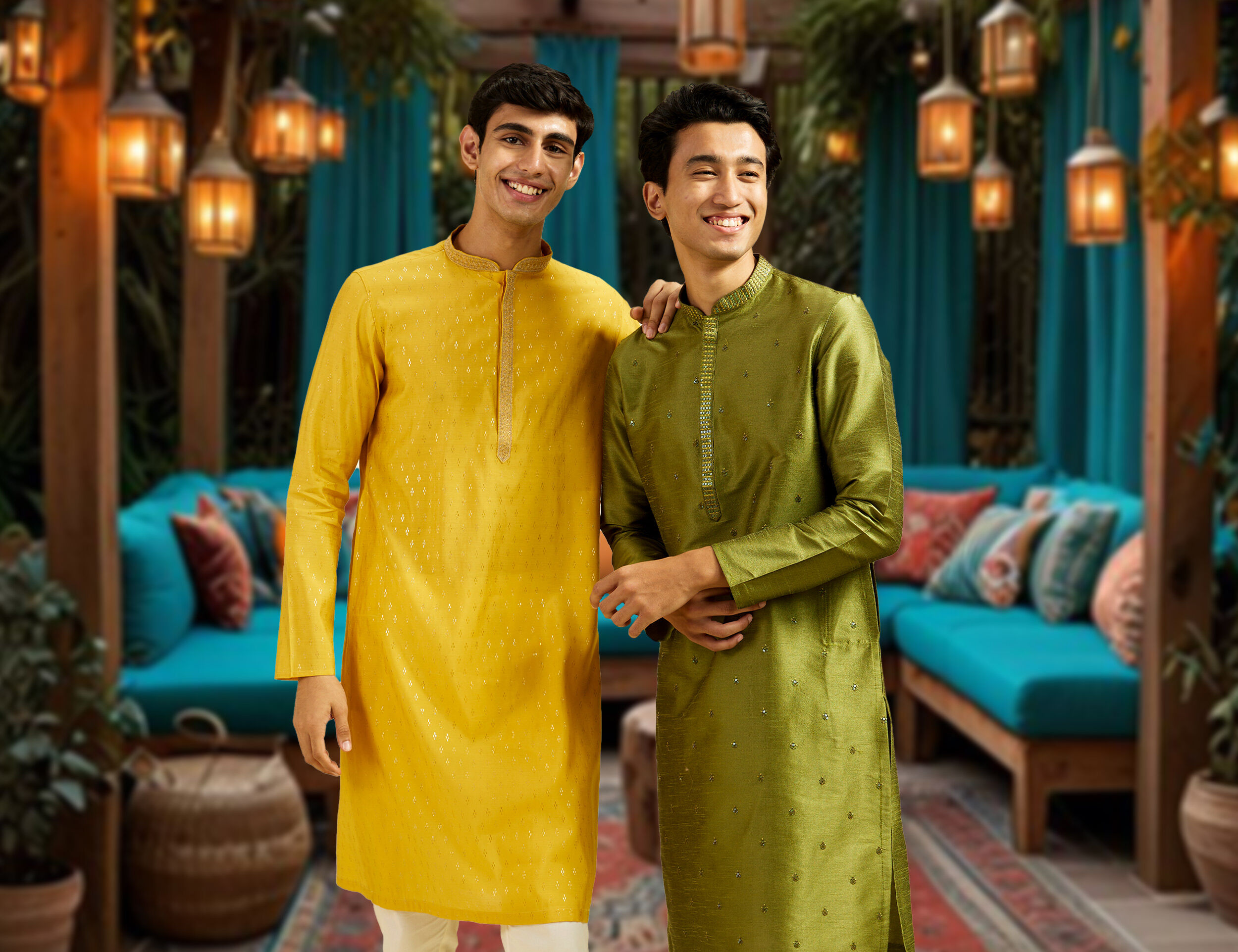
Start with a plain kurta
If one Chhath outfit almost always works, it is a plain kurta.
A plain kurta has the kind of quiet presence the festival calls for. It looks traditional without looking overdone. It feels right at home during preparation and still feels appropriate when the family gathers for prayer. Most importantly, it does not demand your attention once you put it on.
White, cream, ivory, pale yellow, light saffron, soft blue, and muted green are all easy directions to consider. Many families have their own preferred colors, so follow that first. If your home traditionally leans towards white or light shades, choose a clean, plain kurta in that palette. If warmer colors are customary in your family, a restrained yellow or saffron kurta can feel equally fitting.
The key is a good fit. The shoulder should sit properly, the sleeves should not get in the way when you are carrying something, and the kurta should give you enough room to sit, walk, bend, and move comfortably. You may be helping with the daura, walking to the ghat, or standing for longer than expected. The outfit needs to work with you.
A Diwas plain kurta is a simple answer because it lets the occasion stay at the center. You are not dressing for a big entrance. You are dressing to show up properly.
Choose a kurta set when you want it sorted
If you want the ease of a complete traditional look without spending too much time thinking about it, a kurta set is a good choice.
There is something reassuring about having the outfit already coordinated. You do not have to stand in front of the mirror wondering which bottom works best or whether the colors go together. You can get ready, help at home, and focus on the day.
For Chhath, keep the set clean and understated. Look for a simple kurta-and-bottom pairing in cream, white, pale yellow, soft green, light blue, or another shade that suits your family’s custom. A subtle texture can add interest, but the overall look should remain quiet.
This is especially helpful if you are traveling between homes or attending the observance with family members who have already been preparing since early morning. You do not need an outfit that makes you ask, “Is this too much?” A well-chosen kurta set will never make the ritual feel like a performance.
A good rule: if the kurta set looks like something you would be comfortable wearing while carrying offerings or standing beside an elder, you are on the right track.
Keep the detail quiet
Chhath does not require you to avoid all detail. It simply asks for restraint.
If you prefer something more than a completely plain kurta, a chikankari kurta can work beautifully. The craft adds texture and thoughtfulness, but it does not shout. It is a good choice for a family lunch, a gathering at home, or time spent with relatives around the observance.
Choose chikankari in lighter or softer tones—white, ivory, cream, pale yellow, powder blue, or another muted shade. Let the texture do the work. You do not need a jacket, bold accessories, or heavily styled footwear with it.
Approach embroidered kurtas more carefully for Chhath. A lightly detailed or tonal embroidered kurta can work for a family meal after the rituals or a quiet gathering with relatives. But for the ghat itself, especially when you are helping with preparation or accompanying a devotee, simpler is usually better.
The same goes for a kurta-jacket set. It may suit a separate family celebration later, but it is not the natural choice for a dawn or dusk observance near water. Chhath is not a festival where every moment needs to look elevated. Sometimes, the most appropriate thing you can wear is the outfit that lets you move comfortably and blend into the shared spirit of the day.
Dress for movement, not the mirror
The practical side of Chhath dressing matters.
You may need to walk over uneven ground. You may be standing in a crowded area. You may take your footwear off and put it back on more than once. You may carry a basket, hold a diya safely, help a younger sibling, or stay close to an elder.
So before you leave, do a quick comfort check.
Can you walk easily in the footwear you have chosen? Can you bend and move your arms without your kurta pulling? Is the fabric light enough to feel comfortable if the day gets warm? Is the length manageable? Do you have a clean, simple layer for the early morning or evening air if you need one?
Avoid clothes that are too tight, too long, too heavy, or too precious to be useful. This is not about lowering your style standards. It is about choosing clothes that respect the setting.
Lightweight kurta fabrics and loose, comfortable cuts are widely recommended for outdoor Chhath observances because the festival can involve sunlight, proximity to water, and long periods of standing or walking. A clean Diwas kurta in a comfortable fit gives you the right balance: traditional in look, easy in real life.
Footwear matters more than you think
Footwear is often the last thing people think about when getting ready for a festival. During Chhath, it should be one of the first.
Choose a pair you have already worn comfortably. Simple sandals, kolhapuris, or clean traditional footwear with a stable sole can work well, depending on your family’s practice and where you are going. Avoid brand-new shoes, slippery soles, and anything that's hard to remove or wear around water.
If your family removes footwear before entering a particular space or near the prayer area, make sure you can do that easily. If the ghat approach is uneven or crowded, choose stability over style points.
Your kurta can look perfect, but if your footwear makes the journey uncomfortable, you will spend the day thinking about your feet instead of being present with your family.
Let your family’s tradition lead
There is no universal Chhath outfit.
Some families prefer men in white or cream. Others choose yellow, saffron, red, green, or a color tied to their family's practice. Some may wear a classic kurta-pajama. In other homes, a dhoti-kurta or an angavastram is part of the traditional dress for prayer.
The same applies to the level of detail. In some families, a clean plain kurta is the norm. In others, a subtly textured kurta is completely appropriate. The best choice is always the one that respects what the people around you have practiced for years.
Traditional male attire for Chhath commonly includes kurta-based silhouettes, and in some communities dhoti-kurta combinations are particularly meaningful. But you do not need to adopt a silhouette just because you saw it online. Wear what your family recognizes as respectful, what you can manage comfortably, and what lets you take part without distraction.
The real reason to dress well
Dressing well for Chhath is not about being the best-dressed person at the ghat.
It is about arriving with care.
It is about choosing a kurta that lets you help carry what needs carrying. It is about standing beside the people you love when the sky changes color, the diyas are lit, and the prayers begin.
A plain kurta can do all of that. A simple kurta set can too. Even a chikankari kurta, chosen with restraint, can add a touch of personal style without taking away from its meaning.
For a deeper look at Chhath’s history, cultural roots, and place in Indian tradition, read Diwas’s existing guide, Tracing the Chhath Puja Story Through Indian History.
This Chhath Puja, keep it simple. Wear something clean. Choose comfort. Help your family. And let your Diwas kurta do what festive clothing should do best: make you feel ready to be part of the moment.

Made In India

Assured Quality

Secure Payments