STORIES BY DIWAS

Lifestyle
Janmashtami Dressing for Men: Kurta Looks for Temple, Home and Dahi Handi
Date 20 August 2026 Reading time: 7-10 mins
Janmashtami is one of those festivals where the day can stretch across multiple settings. You may start with a temple visit in the morning, move to a home puja and bhajan session, and later join a Dahi Handi event or community celebration. Each of these moments calls for a slightly different kind of dressing. The outfit that works for a long temple queue may not be ideal for hosting guests at home, and the look you choose for Dahi Handi needs to prioritize comfort and movement.
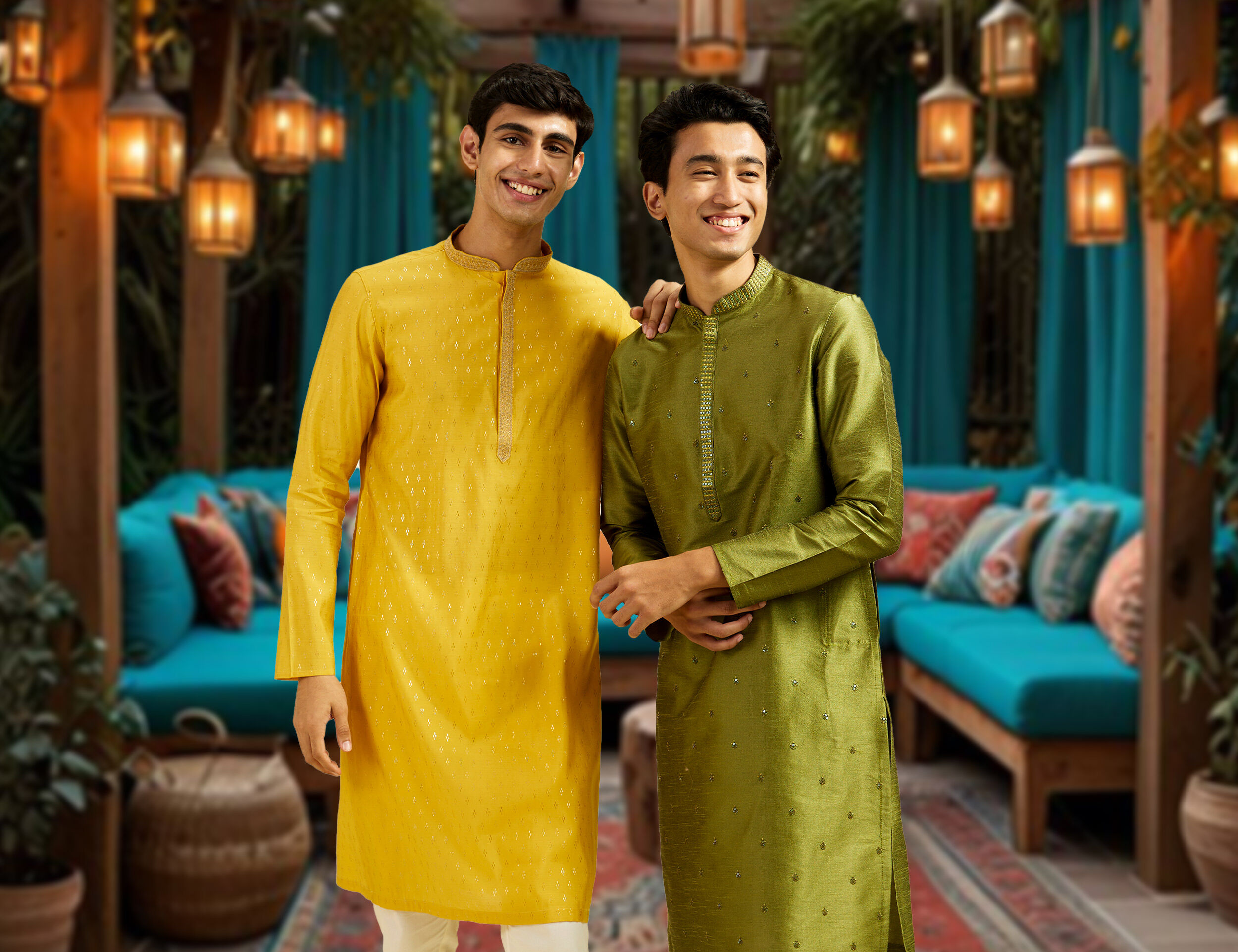
For men, the kurta is the most versatile piece for Janmashtami. It can be styled to feel devotional, festive, or contemporary depending on the occasion. Diwas brings together kurtas and kurta sets in breathable fabrics, festive colors, and details that feel celebratory without becoming overwhelming, making it easier to build a Janmashtami wardrobe that works across all these settings.
Temple visits: modest, respectful, and comfortable
For many families, Janmashtami begins with a temple visit. The atmosphere is devotional, the crowds can be large, and the time spent standing or sitting on the floor may be long. The outfit should feel respectful, modest, and comfortable enough for several hours.
Kurta styles that work for temple
- Plain or minimally embroidered kurtas in white, ivory, cream, or soft pastels. These colors feel devotional and are easy to style with simple pajamas or churidars. Diwas’ white kurtas are a good option for a clean, traditional look.
- Kurta sets in breathable cotton or cotton blends. A complete set removes the guesswork from pairing bottoms and ensures a polished silhouette.
- Short kurtas in light colors for a more casual temple visit, especially if you are going with family and plan to move between multiple temples.
Color guidance for temple dressing
- White and ivory: Traditional, devotional, and easy to pair with any bottom.
- Soft pastels: Powder blue, mint, blush pink for a festive but understated look.
- Krishna-inspired tones: Yellow, peacock blue, and green can be used subtly if you want to reflect the Janmashtami theme without going too bright.
Fabric and comfort
- Choose cotton, linen, or cotton blends for breathability in August weather.
- Avoid very heavy embroidery or stiff fabrics that may feel restrictive during long hours.
- Keep accessories minimal: a simple watch, bracelet, or traditional stole if that aligns with your family’s customs.
Footwear
- Opt for mojaris, sandals, or simple ethnic footwear that is easy to remove.
- Avoid overly formal shoes or heavy boots for temple visits.
Home celebrations: festive, comfortable and practical
Home-based Janmashtami celebrations tend to be less formal but still festive. The day may involve fasting, cooking, decorating the jhula (swing), setting up the mandir, hosting guests, and participating in bhajans and aarti. Janmashtami Outfits need to support movement while still feeling occasion-ready.
Kurta styles for home celebrations
- Festive kurtas with subtle embroidery, threadwork, or textured fabric. These add a celebratory touch without being too heavy for a long day at home. Diwas’ festive wear collection includes kurtas and kurta sets designed to work across the festive calendar, including Janmashtami.
- Kurta sets in rich but wearable colors such as deep green, navy, maroon, or champagne gold. These shades feel festive and photograph well for family pictures.
- Short kurtas in cotton or printed styles for a more casual home celebration with friends and family.
Color and fabric choices
- Krishna-inspired palette: Yellow, peacock blue, and green can be used as primary colors or accents.
- Neutral festive shades: Ivory, beige, cream, and soft pastels for a classic look.
- Breathable fabrics: Cotton, linen, and blends for comfort through long hours of hosting and moving between the kitchen, mandir, and living area.
Styling tips for home dressing
- Keep the silhouette comfortable: avoid overly tight kurtas if you are fasting or moving a lot.
- Add a festive touch with a Nehru jacket, stole, or embroidered kurta for evening gatherings.
- Footwear can be simple: mojaris, sandals, or barefoot at home.
Dahi Handi: comfortable, stretchable, and practical
Dahi Handi, celebrated the day after Janmashtami in many regions, marks Lord Krishna’s playful side and the tradition of stealing butter. The event often involves crowds, physical activity, and sometimes water or buttermilk. The outfit should prioritize comfort, movement, and practicality.
Kurta styles for Dahi Handi
- Short cotton kurtas with churidar or pajama. These allow movement and are easy to manage in a crowd.
- Plain or lightly worked kurtas in yellow, blue, or white. Avoid heavy embroidery on the shoulders, as it can catch and pull during physical activity.
- Breathable kurta sets in cotton or cotton blends that you do not mind getting slightly dirty if you are near the Dahi Handi pot.
Fabric and fit
- Choose lightweight cotton, linen, or blends that breathe well and dry quickly.
- Avoid long, trailing kurtas or heavily embellished pieces that may restrict movement.
- Keep the fit relaxed but not overly loose, so the outfit does not get in the way.
Footwear and accessories
- Opt for secure, comfortable footwear: flats, sandals with grip, or simple ethnic shoes.
- Avoid stilettos or open footwear that may slip.
- Keep accessories minimal and secure. A simple watch or bracelet is enough.

Color guidance: Krishna-inspired palettes
Janmashtami dressing often draws from colors associated with Lord Krishna. These palettes can guide your kurta choice across temple, home, and Dahi Handi settings.
- Yellow (Pitambar): Linked to Krishna’s traditional attire. Ideal for kurtas and kurta sets.
- Peacock blue: Reflects Krishna’s complexion and the peacock feather. Works well for kurtas in both light and deep tones.
- Green: Evokes Vrindavan’s landscape and the peacock theme. Can be used as a primary color or as an accent.
- White and ivory: Traditional, devotional, and easy to style for temple visits and home pujas.
- Festive brights: Orange, pink, and coral can add energy to home celebrations and Dahi Handi events.
For families, these colors can also be used to create a coordinated look across generations without making everyone dress identically.
Fabric choices
Janmashtami falls on 4 September 2026, when the weather can still be warm and humid in many parts of India. Fabric choice can make a big difference in comfort.
- Cotton and cotton blends: Breathable and practical for long temple visits and home celebrations.
- Linen and linen blends: Comfortable for kurtas and kurta sets.
- Lightweight festive fabrics: Cotton-silk blends or textured cottons that feel festive but do not trap heat.
- Heavier silks or brocades: Best reserved for evening temple events or formal home celebrations rather than daytime or Dahi Handi.
Choose fabrics that allow you to participate fully in the day without constantly adjusting your outfit.
Simple accessorizing for Janmashtami
Accessories should support the outfit, not overwhelm it. For temple visits, keep jewelry minimal and secure. For home celebrations, you can add a bit more festive detail. For Dahi Handi, keep it practical.
For men
- A simple watch.
- Minimal jewelry such as a bracelet or chain if that aligns with your style.
- Traditional angavastram or stole for temple or formal home events.
- Mojaris or sandals that are easy to remove.
Diwas for a complete Janmashtami wardrobe
Diwas makes it easy to build a Janmashtami wardrobe across different settings. The brand’s men’s festival wear includes kurtas and kurta sets in breathable fabrics, festive colors, and party-ready details that work across the full festive calendar.
Together, Diwas can support:
- Modest, festive temple looks in white, ivory, and soft pastels
- Comfortable home celebration outfits in rich, wearable colors.
- Practical Dahi Handi dressing in lightweight cotton and breathable blends.
- Coordinated family colors and palettes for photographs.
- Thoughtful festive gifting for brothers, fathers, and friends.
The aim is not for everyone to look identical. It is to help every person feel like part of the same celebration while still dressing as themselves.
Closing thought
Janmashtami is a festival of devotion, joy, and togetherness. The right kurta can make the day feel more special without taking away from the simplicity of the celebration. Whether you are visiting a temple, hosting guests at home, or participating in Dahi Handi, the key is to choose clothing that supports the occasion and reflects your personal style.
With Diwas, you can build a Janmashtami wardrobe that works across temple, home, and community events. The colors, fabrics, and silhouettes can vary, but the feeling remains the same: dressing with devotion, comfort, and festive spirit.

Made In India

Assured Quality

Secure Payments