STORIES BY DIWAS
Lifestyle
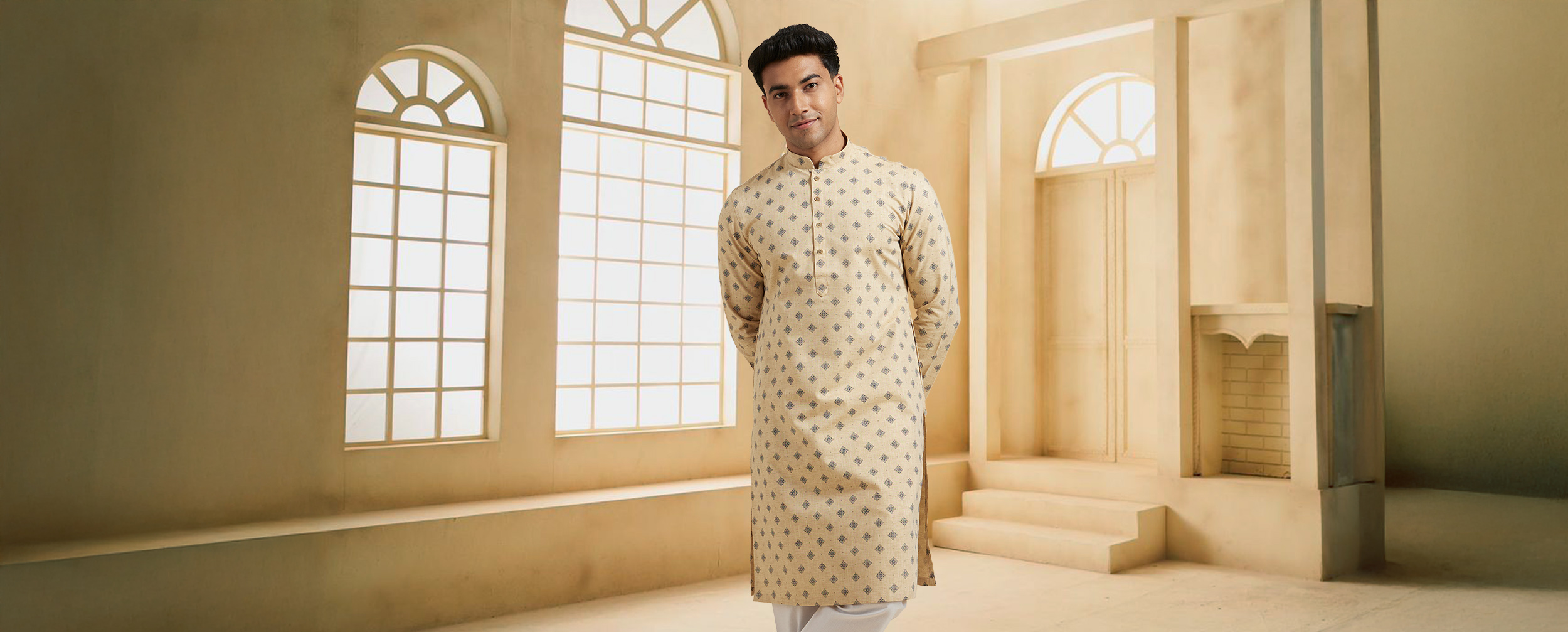
Eid Morning to Midnight: How to Style One Diwas Kurta for the Whole Day
Date 18 March 2026 Reading time: 7-10 mins
Eid ul-Fitr is one of those rare days when your entire schedule is full from Fajr to night - Eid namaz in the morning, guests and daawat at home, visits to relatives and friends, and sometimes a quiet late-night chai to close the day. If you’re the kind of guy who doesn’t want to keep changing outfits, the smartest move is to find one Diwas kurta that can adapt to every part of Eid with a few simple styling tweaks.
This guide shows you how to do exactly that - using a single well-chosen Diwas kurta, and changing only your bottoms, layers, and accessories as the day flows.
Pick your ‘all-day Eid’ Diwas kurta
Because you’ll be in this kurta from Fajr to late night, it has to work hard without demanding effort from you. Think of it as your Eid uniform - one piece that stays comfortable and looks good through namaz, daawat and rounds of visits.
What to prioritise:
- All-day comfort fabric: Go for Diwas kurtas in cotton or cotton-rich blends that feel soft on the skin and don’t trap heat. You’ll be praying, sitting on sofas, getting in and out of cars and maybe helping in the kitchen - your kurta shouldn’t feel heavy or sticky halfway through the day.
- Design that suits both prayer and party: Choose a kurta with a clean neckline and full sleeves, and subtle details (a bit of texture, buti or tonal embroidery). It should feel simple enough for namaz, but not so plain that you feel underdressed in family photos later.
- Colour that survives different lighting: Eid moves from bright morning light to indoor tube lights and evening bulbs. Mid-tones and deeper pastels - sage, teal, steel blue, dusty maroon, olive - tend to look good in all three. Very pale pastels can work too, but plan to lean on jackets or stoles later in the day.
- Neutral, flexible bottoms: Pair your kurta with white, cream or beige pajama/churidar so you can change only your top layer, footwear or jacket as the day progresses, without worrying about matching.
Once you’ve identified that one “I can wear this anywhere” Diwas kurta, the rest of the blog is simply about how to restyle it for each part of Eid.

Look 1: Morning Eid namaz
The first look is about being neat, respectful, and comfortable, especially if you’re heading to the mosque or an Eidgah for prayers.
How to style your Diwas kurta for namaz
- Keep it simple: Wear the kurta as is, with minimal or no extra layering. Choose classic white or cream pajama/churidar to keep the look clean and traditional.
- Stick to soft tones or mid-tones: If your kurta is mid-tone (sage, steel blue, dusty maroon), that’s acceptable as long as the design is simple. Avoid very shiny or heavily embroidered jackets in this first part of the day.
- Footwear & grooming: Choose clean sandals, mojaris, or slip-ons that are easy to remove and put back on. Make sure your kurta is well-ironed and fits comfortably when you sit, bend and fold your arms.
Pay attention to small details like a neatly pressed collar, clean cuffs, and well fitted shoulders. They subtly elevate your overall appearance without drawing too much attention.
Also, choose breathable innerwear so you stay comfortable during longer prayer gatherings, especially in warm weather. If you wear a watch, keep it simple and classic. The idea is to look composed and respectiful while feeling completely at east throughout the prayer.
For this phase, think: “quietly stylish”. Let the Diwas kurta’s fit and fabric do the talking rather than accessories.
Look 2: Post-prayer family photos & greetings
Once namaz is done, there’s usually a wave of Eid Mubarak hugs, quick photos and short greetings right outside the mosque or as you return home. You can stay in the same look, but a small tweak elevates the moment.
Fast upgrades
- Add a stole (optional): A light stole over one shoulder or around the neck (in a matching or slightly contrasting shade) makes the same kurta look more photo-ready. Keep it simple and light so it doesn’t feel overdone.
- Adjust your sleeves: If it’s warm, neatly fold your sleeves once or twice to mid-forearm. This small change makes you look a bit more relaxed in photos without losing neatness.
- Quick grooming check: Fix your collar, run a hand through your hair, and ensure the kurta hem is sitting straight. These details matter in group photos that will be shared everywhere.
Diwas Kurtas are cut to look good both fully buttoned and slightly relaxed at the neck, so you can choose what feels more “you” in this moment.
Look 3: Eid daawat at home
Now comes the long, delicious centre of the day: daawat. Whether you’re hosting or visiting close family, you’ll be eating, serving, talking, and moving around a lot.
This is where the same Diwas kurta can start to feel more expressive while staying practical.
Bottom change for comfort
If you wear churidar/pajama for namaz, consider Switching to straight pants or relaxed pajama in a matching or neutral colour. If your kurta is mid-tone, cream or beige bottoms give a refined, daawat-appropriate look. Straight pants give you more ease when sitting in chairs, on the sofa or sometimes on the floor.
Add a light layer (optional)
If you want to look a bit more dressed up for daawat photos:
- Add a lightweight sleeveless jacket/bandi over the kurta. Keep it in a close colour family (e.g., teal kurta + darker teal bandi, sage kurta + beige bandi). Or use it as an accent (e.g., neutral kurta + patterned jacket).
- Keep just the kurta but, Swap to slightly richer footwear. Add a simple bracelet or ring.
Practical details
- Make sure your sleeves don’t drag into plates while eating—if your kurta sleeves are long and loose, fold them to a comfortable height.
- Cotton or cotton-silk Diwas kurtas will help you stay cool even with guests and kitchen heat.
Look 4: Visiting relatives and friends
Often, post-lunch or late afternoon is dedicated to visiting relatives, neighbours or close friends. The atmosphere is semi-formal—more polished than at home, but still warm and relaxed.
Sharpen the same kurta
To make the same Diwas kurta feel slightly “sharper” for outside visits:
- Keep the layer from daawat (jacket/bandi) if you added one.
- If not, this is a good time to introduce it—especially for houses where you expect more formal interactions or lots of photos.
Small but effective tweaks
- Change your bottom again (if you want)
- If you wore very relaxed pajama at home, you can change back into a tapered churidar or slim pants for a more structured look.
- Switch footwear
- Move from basic sandals to mojaris or loafers that feel more dressed.
You’re still in the same kurta, but these two or three changes make it feel like a fresh outfit for each stop.

Look 5: Evening wind-down—dessert runs, drives, or chai
By evening, the mood often shifts to something softer: late chai with close friends, a quiet drive, dessert rounds, or simply sitting and talking on the terrace.
At this point, you might want your outfit to feel more relaxed than formal.
Loosen the look deliberately
- Remove the jacket or stole (if any) and go back to just the kurta.
- If you’ve been in churidar or formal pajama all day, you can now pair the same kurta with:
- well-fitted jeans (if your family/friend circle is okay with Indo-western mixes), or
- soft jogger-style pants or relaxed cotton trousers for at-home comfort.
A mid-tone Diwas kurta with jeans is a very natural Indo-urban look for late-night outings.
Keep it presentable
Even when you “dress down”, keep it intentional:
- Sleeves rolled neatly, not pushed up randomly.
- Kurta hem straightened.
- Footwear still clean—maybe simple sliders or sandals if you’re just with close friends.
Because Diwas kurtas are designed to work across casual and festive settings, this last phase is where they really prove their value.
Colour suggestions that work all day
Some shades handle morning namaz, afternoon daawat and evening outings better than others.
Good all-day colours:
- Sage/olive green – soft enough for prayers, stylish for daawat, cool for evenings.
- Steel/powder blue – calming, photogenic, easy to pair with white, beige or navy.
- Dusty maroon/berry – looks rich but not too loud; works especially well indoors.
- Teal/sea green – modern, slightly dressy, flattering on most skin tones.
If you prefer light tones:
- Pastel peach, light grey, soft beige and very light moss green are also great—but plan a slightly stronger jacket or stole for your afternoon/evening phases so the look doesn’t feel too flat in photos.
Fabric and fit: non-negotiables for a full-Day Eid
Because you’ll be in the same kurta for 8–12 hours, the fabric and fit are extremely important.
Fabric
- Prioritise breathable materials: cotton, cotton-silk blends, light linens.
- Avoid very heavy synthetics—they get hot, sticky, and uncomfortable under the sun or in crowds.
Fit
- Shoulders aligned with your natural shoulder.
- Enough room at the chest and arms to fold, lift, and hug without pulling.
- Length that looks good both when standing and when sitting (usually mid-thigh to just above the knee for all-day wear).
A well-fitted Diwas kurta will always look better than an overly fancy but badly fitted one.
One kurta, many occasions
The real power of styling one Diwas kurta from morning to midnight isn’t just convenience. It’s versatility. When you see how many ways a single piece can adapt—prayer, daawat, visits, late-night plans—you realise you’re not just buying for one Eid, but for many:
- Small family functions
- Other festivals
- Office ethnic days
- Friend’s mehendi or haldi (with the right layering)
So this year, instead of stressing about three different outfits, put your energy into choosing one really good Diwas Eid kurta and planning a few smart tweaks around it. The result: you look appropriate and stylish at every gathering, while actually being free to enjoy the day—prayers, food, laughter, and all.

Made In India

Assured Quality

Secure Payments