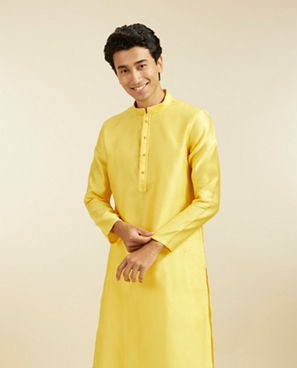
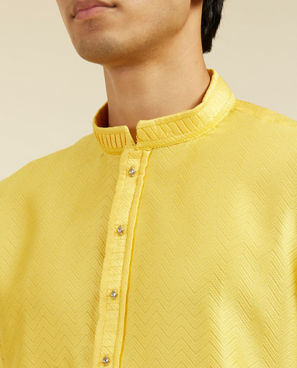
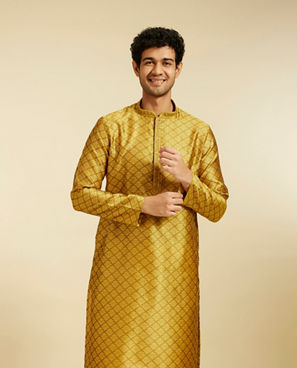
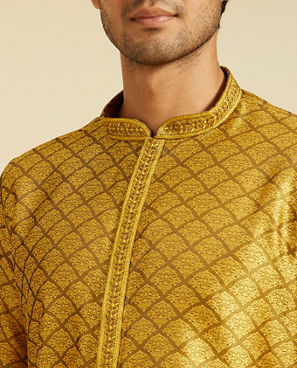
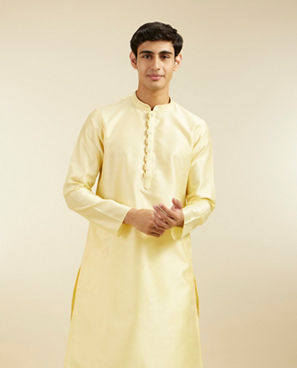
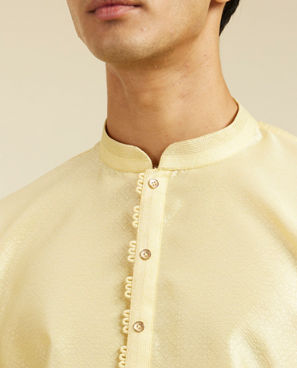
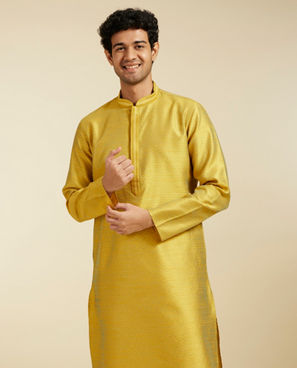
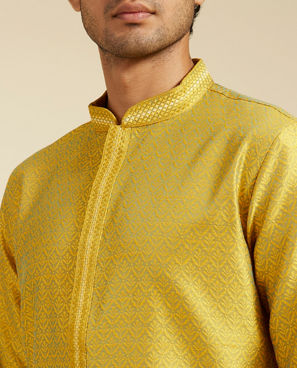
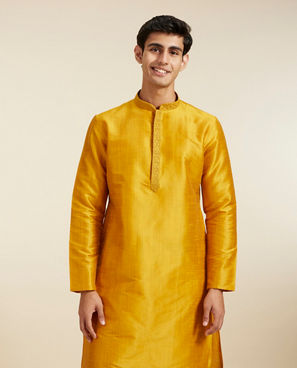
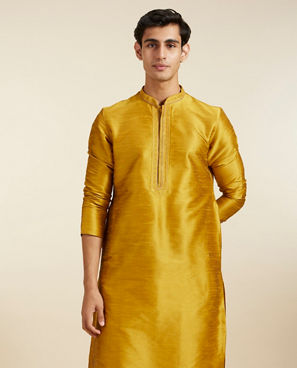
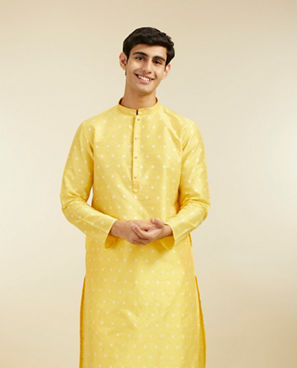
Yellow silk kurta for men: when the occasion deserves more than cotton
Yellow kurtas exist across many fabrics—cotton, viscose, linen, printed blends. But a silk kurta occupies a completely different space from all of them. The fabric transforms the colour: where yellow cotton feels relaxed and breathable, yellow silk feels deliberate and luxurious. Where cotton communicates ease and casualness, silk communicates ceremony and considered dressing.
At Diwas, these kurtas are built for the moments in your festive calendar that feel slightly more significant than usual—haldi ceremonies where the groom's side wants to look polished, Diwali nights where you want warmth and richness in equal measure, and wedding-week functions where the occasion deserves fabric that matches its weight.
What silk does to yellow
The relationship between yellow and silk is particularly rewarding. A few reasons this combination works so well:
-
Silk amplifies yellow's warmth: The natural luminosity of silk fibres gives yellow a deeper, more saturated quality—less like a flat colour and more like light itself.
-
The sheen catches celebration lighting beautifully: Under diyas, chandeliers, fairy lights, and warm banquet settings, yellow silk glows in a way that cotton or printed alternatives simply don't replicate.
-
The drape adds structure and intention: Silk falls in controlled, elegant folds that give the kurta a more considered silhouette—it looks like it was chosen for the occasion rather than pulled from a regular rotation.
-
Yellow's auspiciousness is amplified: In Indian celebrations, yellow already carries cultural weight as a colour of turmeric, marigolds, and new beginnings; silk elevates that into something that feels genuinely ceremonial.
Together, yellow and silk create a combination that feels completely appropriate for some of the most important and emotionally significant moments in a celebration calendar.
Types of silk and silk-feel fabrics in yellow
Like other silk categories, yellow kurtas span a range of fabric types that balance richness, wearability, and price. On this page you'll typically find:
-
Art silk and art-silk blends—the most common and accessible; captures silk's sheen and drape at a practical price point while still looking and feeling genuinely elevated; works for most festive and wedding occasions.
-
Viscose-silk blends—a softer, slightly lighter take where viscose adds fluidity and lightens the weight; the silk component contributes the sheen and elevated quality that separates it from plain viscose.
-
Silk-cotton blends—breathable enough for longer outdoor functions and warmer climates while still carrying enough sheen to read clearly as a silk-family fabric; practical for haldi ceremonies and daytime weddings.
-
Jacquard silk in yellow—where the silk weave itself creates self-design patterns (florals, geometric motifs, or heritage designs) in the same or complementary tones; adds quiet complexity and texture without surface embroidery.
-
Pure silk and mulberry silk—the most luxurious end; deeper sheen, heavier hand, and a drape that feels genuinely premium; reserved for the most significant occasions and investment-level purchases.
The fabric type you choose shapes how formal the kurta feels, how it behaves across a long function, and how much care it requires—important considerations for a colour as emotionally charged as yellow in celebration settings.
Design directions
Because silk already does significant work as a fabric, design in silk kurtas tends to be thoughtful and restrained. On this page you'll find:
-
Plain silk kurtas—where the fabric sheen, colour richness, and clean silhouette are the entire statement; the most versatile and widely applicable version that pairs with almost any bottom and fits most festive occasions.
-
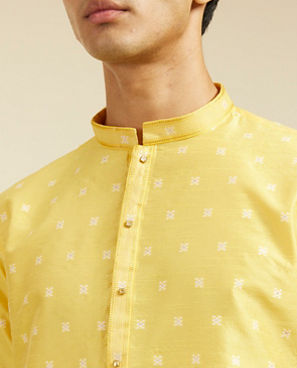
Self-design and jacquard silk kurtas—tonal patterns woven into the silk itself; visible up close as texture and motif, reads as clean and unified from a distance; adds quiet depth without embroidery.
-
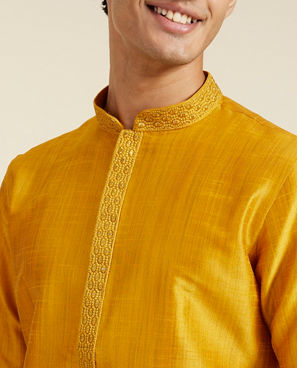
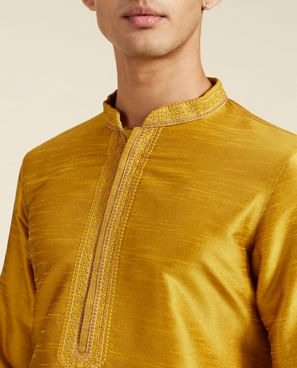
Lightly embroidered silk kurtas—focused threadwork, zari touches, or sequin highlights along the neckline, placket, or cuffs; the embroidery catches light against the silk base and creates a very refined, deliberately festive look.
-
Chikankari on yellow silk—fine Lucknawi-style stitching over a silk or silk-feel base; the combination of delicate embroidery and silk's sheen feels genuinely special for daytime weddings, mehendi, and high-profile haldi events.
Each design direction represents a different level of formality—plain for versatility, self-design for quiet richness, embroidered for visible occasion-readiness.
Where it belongs in your calendar
A yellow silk kurta is not for every festive occasion—it's for the ones where the fabric quality will be noticed and appreciated. It fits most naturally at:
-
Haldi ceremonies where you want to look polished—particularly for close family, groom's side, or groomsmen who want yellow but with more presence than a casual cotton kurta provides; silk lifts the haldi look from participatory to genuinely curated.
-
Main Diwali evenings and key festive nights—under warm lights and diyas, yellow silk glows with a luminosity that makes it one of the most visually rewarding choices for peak celebration moments.
-
Daytime weddings and reception-adjacent functions—particularly outdoor or garden venues where yellow silk catches natural light and looks deliberately chosen rather than casually thrown on.
-
Ganesh Chaturthi and religious festivals—where yellow's auspiciousness combined with silk's richness feels appropriately ceremonial for significant religious occasions.
-
Family milestones and formal gatherings—anniversaries, housewarmings hosted in hotel settings, or milestone celebrations where the dress code is festive but elevated.
Because yellow silk carries both colour energy and fabric richness, it works best when the occasion has enough weight to match—not for everyday casual festive plans but for the moments that feel a step above the routine.
How to style
Because yellow is already expressive and silk already adds formality, styling a silk kurta is largely about choosing what frames the combination without competing with it.
Bottom choices:
-
White or cream churidar—the most classic pairing; clean contrast that lets yellow take full credit while the silk's sheen creates visual richness without accessories.
-
Beige or ivory slim pyjamas—a softer, warmer alternative that keeps the overall palette harmonious and gentle; works well for daytime occasions and outdoor venues.
-
Gold-tone or champagne churidar—a tonal, elevated pairing that creates a very considered, almost regal look for reception-adjacent and high-formality functions.
-
White pyjamas—for a slightly more relaxed pairing that still feels festive; works for home Diwali celebrations and smaller festive gatherings where you want yellow silk's richness without the full formality of churidar.
Footwear:
-
Embroidered or embellished mojaris in gold, tan, or cream feel the most traditional and complete for yellow silk.
-
Polished formal shoes in tan or brown work for a slightly more contemporary styling direction.
-
Avoid very casual footwear—sandals and sneakers undercut the inherent formality of silk.
Accessories:
-
Gold-tone accessories sit most naturally with yellow—a watch with a warm-toned case, a simple gold or antique-finish kada, or a classic ring.
-
Keep jewellery restrained—yellow silk's natural warmth and the fabric's sheen mean the outfit already has significant visual presence.
-
A stole or dupatta in complementary tones (cream, ivory, or soft gold) adds ceremony for the most formal moments.
Yellow silk kurta versus yellow cotton and yellow printed kurta
Understanding where each yellow kurta type fits helps you make the right call for each occasion.
-
Yellow cotton kurta: Breathable, relaxed, and wash-friendly; best for haldi energy, Holi, outdoor festivals, and everyday festive wear where comfort is the priority.
-
Yellow printed kurta: More expressive than plain cotton; adds surface personality through print; sits in casual-to-mid-festive register; works for campus events, casual daytime weddings, and everyday celebrations.
-
Yellow chikankari kurta: Craft-forward and delicate; fine embroidery adds occasion-readiness; suited to mehendi, Diwali evenings, and functions where visible handcraft matters.
-
Yellow silk kurta: Fabric-forward and luxurious; the richness comes from the material itself; suited to the most significant occasions in your calendar where the fabric quality is as important as the colour.
Each serves a different role—and in a well-built wardrobe, you might own two or three of these versions to cover the full spectrum of occasions where yellow belongs.
In a curated celebration wardrobe
In a thoughtfully built ethnic wardrobe, a yellow silk kurta fills the ceremonial yellow slot—the version of the colour you reserve for occasions that deserve fabric quality alongside colour warmth.
Alongside:
-
a yellow cotton kurta for casual, high-movement celebrations like haldi and Holi, and
-
a yellow embroidered or chikankari kurta for craft-forward festive events,
it becomes:
-
your choice for the most polished, composed version of yellow dressing;
-
the piece that photographs most richly under formal function lighting;
-
an investment that rewards careful selection—one well-chosen kurta can represent the colour in your wardrobe for multiple years and seasons.
In photos, reels, and milestone memories
Yellow silk is genuinely one of the most photogenic combinations in men's wear. The colour creates warmth in every frame, and the silk's sheen adds a dimensional quality that flat fabrics can't replicate—under professional lighting, chandeliers, and warm banquet setups, yellow silk kurtas appear to glow from within rather than simply reflecting light.
In still photography, the fabric holds its structure and drape cleanly—no soft bunching or casual movement that can read as careless in formal portraits. In video, the silk's slight movement creates a gentle light play that makes the kurta look alive and luxurious. In group shots at weddings and functions, yellow silk stands out from cotton yellows and lighter fabrics in a way that's immediately visible—the difference between looking appropriately dressed and looking genuinely invested in the occasion.
For haldi portrait sessions, Diwali reels, and the formal family photographs that become long-term keepsakes, this kurta ensures your outfit matches the significance of the memory being created.
Frequently Asked Question (FAQs)
1. Is a yellow silk kurta only for haldi ceremonies?
No—while it's a particularly strong choice for polished haldi looks, this kurta also works beautifully for Diwali evenings, Ganesh Chaturthi, daytime weddings, and formal family milestones where fabric richness is valued alongside colour warmth.
2. How is a yellow silk kurta different from a yellow cotton kurta?
Silk carries natural sheen, drapes more formally, and feels more luxurious than cotton; yellow cotton is for casual, high-movement, and breathable festive occasions, while yellow silk is for moments where fabric quality and presence are part of what you're communicating.
3. What bottoms pair best with a yellow silk kurta?
White or cream churidar for a classic, clean contrast; beige or ivory pyjamas for a softer pairing; gold-tone churidar for reception-level formality; white pyjamas for home celebrations and smaller gatherings.
4. Can a plain yellow silk kurta work without embroidery or embellishment?
Absolutely—plain kurtas rely on the fabric's sheen, warmth, and drape for their richness; this restraint often reads as more confident and considered than heavy embellishment, letting the colour and fabric speak entirely for themselves.
5. How do I care for a yellow silk kurta to maintain its richness?
Dry clean where possible, especially for embroidered or embellished versions; hand-wash plain silk-feel pieces in cold water with gentle detergent; dry flat in shade; store in breathable fabric bags away from direct sunlight to prevent colour fading or yellowing of the fabric over time.

_18-04-2025-23-03:297-368)
_18-04-2025-23-04:297-368)
_18-04-2025-23-03:Swatch)


_18-04-2025-18-01:297-368)
_18-04-2025-18-02:297-368)
_18-04-2025-18-01:Swatch)
_18-04-2025-18-50:297-368)
_18-04-2025-18-50:297-368)
_18-04-2025-18-50:Swatch)
_18-04-2025-22-02:297-368)
_18-04-2025-22-02:297-368)
_18-04-2025-22-02:Swatch)


_26-05-2025-19-16:297-368)
_26-05-2025-19-16:297-368)
_26-05-2025-19-16:Swatch)