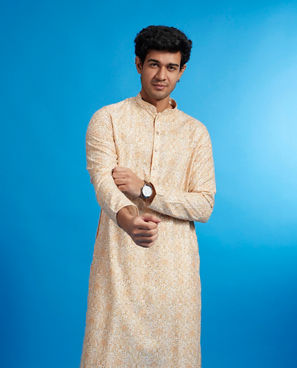
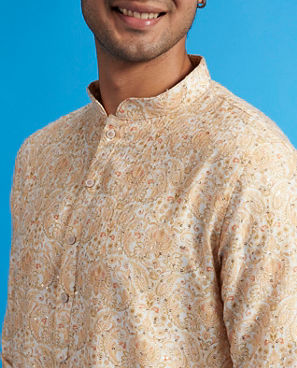
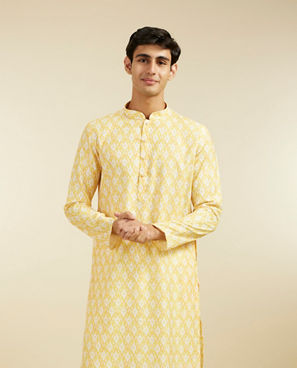
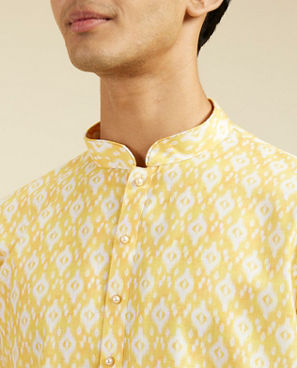
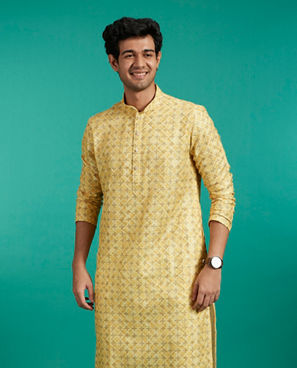
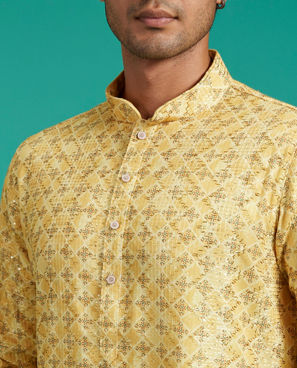
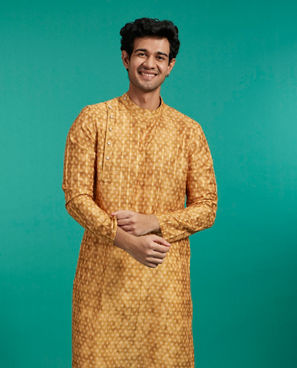
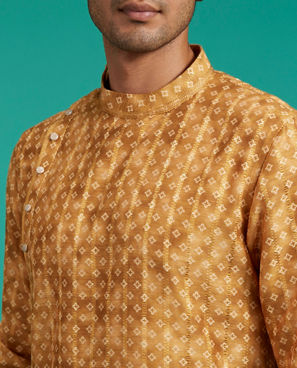
Yellow printed kurta for men: where colour meets craft
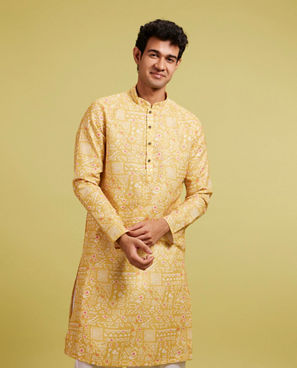
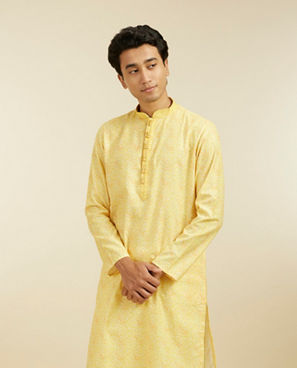
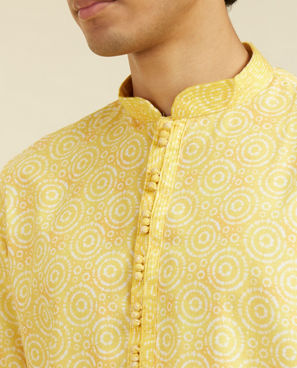
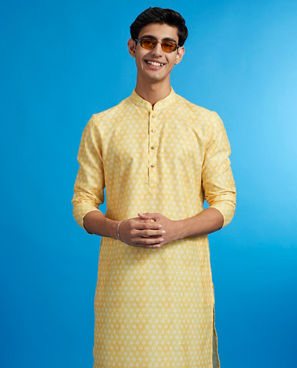
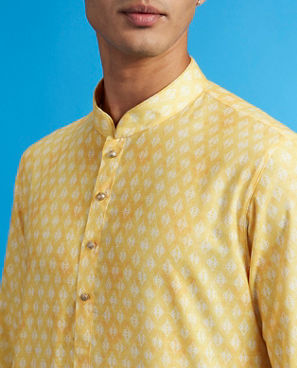
Diwas brings together the warmth and auspiciousness of yellow with surface patterns that give each piece its own distinct identity. You'll find florals, geometric motifs, abstract prints, block-print inspired patterns, and heritage-influenced designs—all sitting on yellow bases that range from soft lemon to deeper mustard—each one designed to feel festive, expressive, and genuinely repeatable across your celebration calendar.
At Diwas, these kurtas occupy a very specific and useful space: they're more expressive than plain yellow solids, more relaxed than heavily embroidered pieces, and versatile enough to move between casual festive plans and slightly more dressed-up occasions with small styling changes.
Why print makes yellow work harder
A plain yellow kurta is already festive and flattering. Adding a print changes the conversation in important ways.
A yellow printed kurta:
-
Gives the colour a narrative—florals feel romantic, geometrics feel contemporary, heritage motifs feel rooted and considered.
-
Adds visual texture that reads clearly in photos and reels, making the outfit look more thought-through than a flat solid.
-
Creates enough surface interest that even simple pyjamas or plain bottoms complete the look without needing embroidery or accessories to fill the gap.
-
Allows you to express a design preference—maximalist or minimal, traditional or modern—without moving away from yellow's inherently festive base.
-
Makes the kurta feel slightly more occasion-specific, so it reads as "chosen for today" rather than a default reach.
For men who want their festive dressing to feel personal and expressive without becoming heavy or formal, this kurta consistently delivers.
Print styles you'll find
The print is where a yellow kurta develops its individual personality. On this page, the major design directions include:
-
Floral prints on yellow—from soft, tone-on-tone florals that feel delicate and romantic to bolder, multi-colour blooms that match the energy of haldi, Holi, and daytime weddings; one of the most natural pairings for yellow's warmth.
-
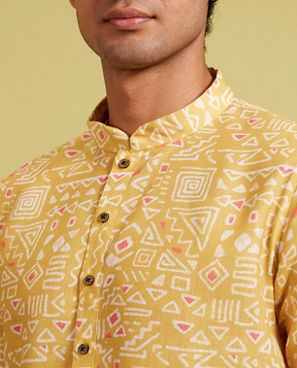
Geometric and abstract prints—structured, graphic patterns that give yellow a more contemporary, design-forward feel; works particularly well for office cultural days, campus events, and younger, city-centric celebrations.
-
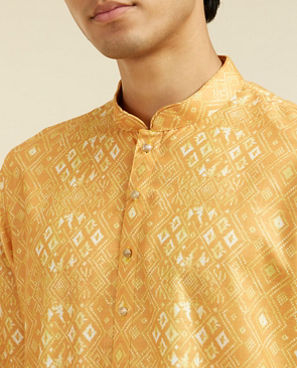
Block-print and heritage-inspired motifs—traditional Indian patterns including butis, jaals, and Mughal-influenced designs in complementary tones over yellow; feels artisanal and culturally rooted without being formally ethnic.
-
Digital placement prints—modern print techniques where motifs are placed deliberately rather than repeated as all-over patterns; creates a curated, fashion-aware aesthetic that appeals to trend-conscious shoppers.
-
Botanical and nature-inspired prints—leaves, vines, and organic shapes that feel relaxed and grounded on yellow, ideal for outdoor celebrations, garden weddings, and casual festive occasions.
Each print direction takes yellow in a different mood—traditional, contemporary, romantic, graphic—letting you choose which version of the kurta best fits your personality and the occasion.
How yellow base and print interact
One of the unique qualities of a yellow printed kurta is how dramatically the relationship between base colour and print can shift the mood of the piece.
-
Light yellow with tone-on-tone prints: Soft, gentle, almost meditative in mood; works for morning pujas, intimate ceremonies, and daytime functions where you want to look considered without drawing strong attention.
-
Bright yellow with bold colour prints: High-energy, celebratory, and clearly festive; natural for haldi, Holi, sangeet-adjacent plans, and any occasion where standing out in a group is part of the point.
-
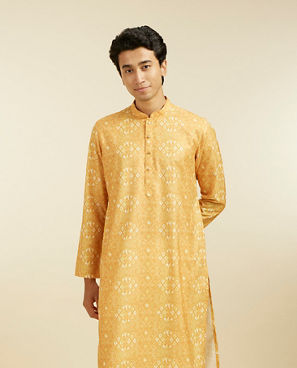
Mustard yellow with heritage or block prints: Rich, grounded, and artisanal in feel; suited to autumn festivals, Diwali gatherings, and semi-formal occasions where you want warmth with depth.
-
Lemon yellow with geometric or abstract prints: Fresh, contemporary, and slightly unexpected; works well for campus events, younger social circles, and casual celebrations where a design-aware aesthetic is appreciated.
Understanding this interaction helps you choose not just a yellow printed kurta, but the specific version that matches the precise mood you want to project.
Fabrics that carry yellow prints best
For a print to look sharp and intentional on yellow, the base fabric has to hold colour and detail cleanly.
-
Cotton and cotton-rich blends—the most natural base for printed kurtas; holds both digital and block prints cleanly, stays breathable for long festive days, and works beautifully for outdoor celebrations, haldi, and Holi.
-
Viscose and blended viscose—gives prints a smoother, slightly more polished surface with a gentle drape; used in printed kurtas where the occasion calls for a slightly dressier look than cotton provides.
-
Rayon and soft blended weaves—lightweight and fluid, letting prints sit flat and fall naturally; often used in more relaxed casual yellow printed styles that pair well with denims and trousers.
-
Linen and linen-cotton blends—a textured, artisanal base that complements block-print and heritage-inspired patterns beautifully; feels premium and considered for office events and smaller gatherings.
The fabric you choose shapes both how the print reads and how comfortable the kurta feels across a full celebration day—cotton for ease and breathability, viscose for polish and drape, linen for character and texture.
Where it naturally belongs
These kurtas are built for celebrations where energy, colour, and personality are part of the mood. They're especially at home when you're:
-
Attending a haldi ceremony—the single most natural occasion for any yellow kurta, and a printed version gives you visual interest beyond the flat colour without making the look feel overdressed for what is essentially a joyful, chaotic, beautiful mess.
-
Celebrating Holi and spring festivals—where a bold yellow kurta sits perfectly in the spirit of the day; prints add character to a colour that already belongs at the heart of the celebration.
-
Dressing for Diwali and Ganesh Chaturthi—where yellow is auspicious and a printed surface adds the festive detail that makes the outfit feel chosen rather than defaulted to.
-
Attending daytime weddings and outdoor functions—particularly garden, resort, or poolside venues where printed kurtas in warm colours feel fresh, considered, and photogenic in natural light.
Campus events and college fests—where geometric and abstract printed kurtas feel youthful, trend-aware, and appropriately expressive for younger, fashion-conscious settings.
Office cultural days and festive Fridays—where a subtler print on yellow—heritage motif or tone-on-tone—looks ethnic and considered without being too loud for a professional environment.
The common thread: these kurtas work wherever your outfit is expected to match the energy of the occasion, not just its dress code.
Three complete looks
1. Haldi and outdoor ceremony
-
A bright floral or botanical print yellow cotton kurta with white pyjamas and simple sandals.
-
Keep accessories minimal—a simple watch or bracelet; the colour and print combination, plus the natural chaos of the haldi setting, handle the rest.
2. Diwali gathering and festive evening
-
A mustard or deeper yellow heritage or block-print kurta with cream or beige churidar and rich mojaris.
-
Add a subtle watch and simple kada; the warmth of the mustard print feels exactly right under Diwali lighting and décor.
3. Contemporary casual and campus-friendly
-
A lemon or bright yellow geometric or abstract print kurta with slim dark denims and white sneakers.
-
Sleeves slightly rolled; works for college fests, casual Holi plans, and friend-group outings where Indo-fusion feels more natural than fully traditional.
Across all three, the kurta stays the focal point—only the occasion depth, bottom choice, and styling approach shift.
Yellow printed versus yellow embroidered or chikankari
Understanding the difference between these three yellow kurta categories helps you choose the right version for each occasion.
-
Yellow printed kurta: Surface pattern applied through printing techniques; relaxed, breathable, and casual-to-festive in register; most versatile for everyday celebrations, haldi, Holi, and outdoor events.
-
Yellow chikankari kurta: Fine Lucknawi-style hand embroidery over yellow; feels more handcrafted and slightly more formal; works for mehendi, Diwali evenings, and occasions where visible craft is important.
-
Yellow embroidered kurta: Threadwork, zari, or sequin embroidery over yellow; the most formal of the three; best for evening functions, reception-adjacent events, and occasions where the outfit needs to feel deliberately special.
A printed kurta is the one you wear most often—it's the versatile, repeat-friendly option that covers the widest range of your festive calendar without needing special handling or careful occasion-matching.
Building a small wardrobe
In a compact but versatile ethnic wardrobe, a yellow printed kurta fills the vibrant, expressive, everyday-festive slot that neither solids nor embroidered pieces can cover in the same way.
Alongside:
-
a neutral or plain kurta (white, beige, or light green) for simple rituals and smaller functions, and
-
one richer, more formal piece (embroidered or chikankari) for important evenings,
This kurta becomes:
-
your first choice for haldi, Holi, and outdoor daytime celebrations;
-
the piece you pack for destination weddings when there'll be casual daytime functions;
-
a repeat-wear staple that different social circles rarely identify as "the same outfit" because the print shifts how it reads across different contexts and settings.
In photos and reels
Prints photograph more interestingly than flat solids—they create texture and visual movement in photos that make outfits look considered and deliberate. On yellow, that effect is amplified: the colour creates warmth and energy in the frame, and the print adds the close-up detail that makes portraits and outfit reels feel layered and complete.
For haldi reels and Holi videos specifically, this kurta is almost ideal—the colour belongs in the visual story of both celebrations, and the print adds enough surface interest to make the kurta look intentional even in the middle of turmeric, water, and colour chaos.
In more composed photos—family portraits, group wedding shots, outdoor venue captures—these kurtas create a consistent, warm presence that looks fresh and chosen rather than default, without ever demanding so much attention that they disrupt the frame around them.
FAQs
1. Is a yellow printed kurta only suitable for haldi and Holi?
No—while it's a natural choice for both, it also works for Diwali, Ganesh Chaturthi, daytime weddings, campus events, office cultural days, and casual festive gatherings; print style and fabric determine how formal it feels.
2. What bottoms pair best with a yellow printed kurta?
White and cream pyjamas are the most classic and harmonious; beige or stone churidar for a slightly more formal look; dark denims for casual Indo-fusion styling; neutral chinos for smart-casual and office-appropriate combinations.
3. How is a yellow printed kurta different from a yellow embroidered or chikankari kurta?
Printed kurtas use surface printing techniques and feel more casual and breathable; embroidered and chikankari kurtas use thread-based craft that adds formality and occasion-readiness—printed kurtas are for everyday-festive plans, embroidered pieces for more significant events.
4. Which print style works best on yellow for a traditional occasion?
Heritage motifs, block-print inspired patterns, and botanical prints feel the most traditionally rooted on yellow; geometric and abstract prints lean more contemporary; florals sit comfortably in both traditional and modern settings.
5. Can I wear a yellow printed kurta to evening events as well as daytime?
Yes—mustard and deeper yellow bases with richer prints (heritage, block, or placement patterns) on viscose or slightly dressier fabrics can work for early evening gatherings; pair with churidar and polished footwear rather than pyjamas and sandals to shift the look into evening territory.

_18-04-2025-22-40:297-368)
_18-04-2025-22-41:297-368)
_18-04-2025-22-40:Swatch)
_18-04-2025-18-18:Swatch)
_18-04-2025-17-37:297-368)
_18-04-2025-17-37:297-368)
_18-04-2025-17-37:Swatch)
_18-04-2025-18-50:297-368)
_18-04-2025-18-50:297-368)
_18-04-2025-18-50:Swatch)
_18-04-2025-20-23:297-368)
_18-04-2025-20-24:297-368)
_18-04-2025-20-23:Swatch)