White silk kurta for men: where restraint meets richness
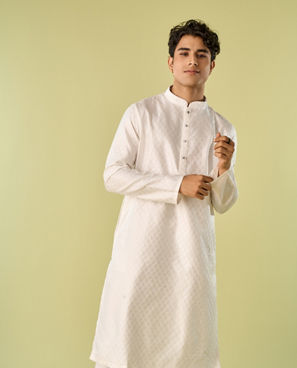
There is a particular kind of occasion where a white silk kurta is the most powerful choice you can make—more considered than a cotton kurta, more understated than heavy embroidery, and more memorable than almost any other single colour. It's the piece that reads "completely dressed" without needing colour, pattern, or surface decoration to make its case.
At Diwas, silk kurtas are built around that idea: fabric as the statement, simplicity as the luxury. Where embroidered pieces speak through craft and coloured kurtas speak through palette, these kurtas speak through feel, drape, and the quiet sheen that only silk and silk-feel fabrics produce.
What silk does to white
White exists across every fabric in men's wear—cotton, viscose, linen, art silk. But silk changes the experience of white fundamentally.
On silk, white:
-
Carries a natural luminosity—silk fibres reflect light differently from cotton or synthetic weaves, giving white a warm, almost glowing quality under indoor lighting, candles, and diyas.
-
Drapes with intention—silk falls in clean, controlled folds rather than the relaxed, casual drape of cotton; the kurta looks structured and deliberate even without embroidery or heavy work.
-
Feels occasion-ready immediately—the weight, sheen, and handle of silk signal formality and considered dressing in a way that lighter fabrics simply don't.
-
Ages beautifully with wear—high-quality silk and silk-feel fabrics develop a richer patina over time rather than looking worn out; a well-cared-for white silk kurta gets better with age.
For men who want their white kurta to do more than just look clean—to actually feel special—silk is the fabric that makes that possible.
Types of silk and silk-feel fabrics on this page
Silk kurtas covers a range of fabric types, from traditional handloomed silks to more accessible silk-feel alternatives.
-
Art silk and art-silk blends—the most common fabric for festive silk kurtas; captures silk's sheen and drape at more accessible price points; works beautifully for most wedding and festival occasions.
-
Mulberry silk and pure silk—the most luxurious end of the spectrum; richer sheen, heavier hand, and a drape that feels genuinely premium; reserved for very formal occasions and significant purchases.
-
Viscose-silk blends—a practical midpoint; the viscose adds softness and lightens the weight while the silk component contributes sheen and elevated drape.
-
Silk-cotton blends—breathable enough for longer functions while still carrying enough sheen to read clearly as "silk"; works particularly well for white kurtas in warmer climates and outdoor venues.
-
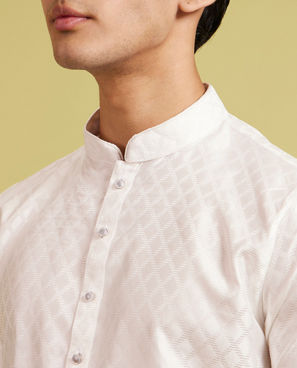
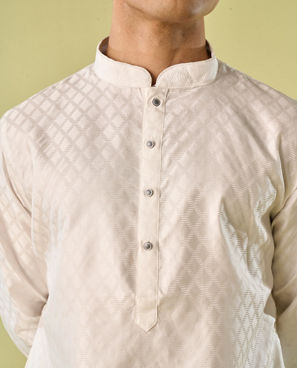
Jacquard silk—where the silk weave itself creates a pattern (self-design, tone-on-tone florals, or geometric motifs) without additional embroidery; gives a silk kurta quiet complexity and texture.
The type of silk you choose shapes how formal the kurta feels and how it behaves across the duration of a long function.
Design directions
Because the fabric is already doing significant work, silk kurtas typically keep design and embellishment deliberate and restrained. On this page you'll find:
-
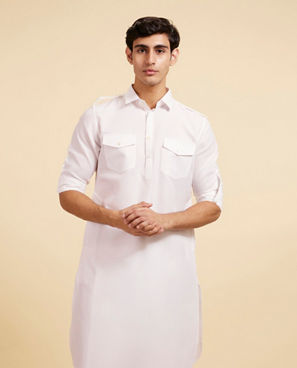
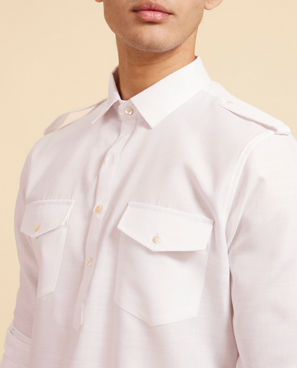
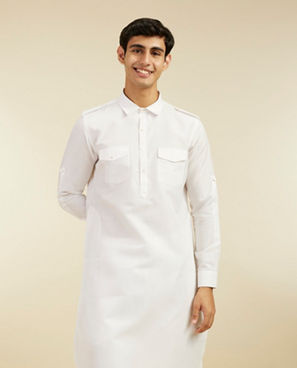
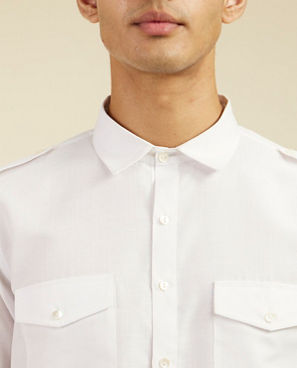
Plain silk kurtas—the most minimal and versatile; pure white on silk where the fabric sheen and clean silhouette are the entire look; pairs with almost everything and reads differently depending on how you style it.
-
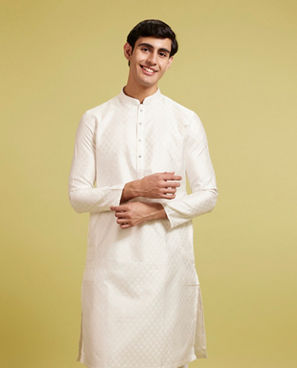
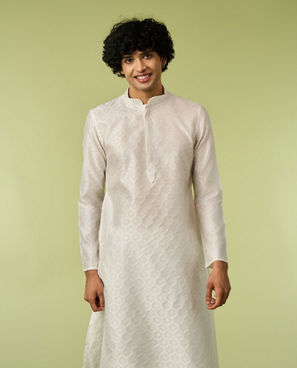
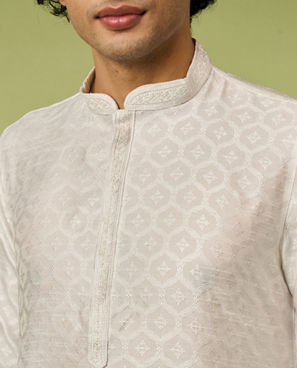
Self-design and jacquard silk kurtas—where tonal patterns (florals, paisleys, geometric motifs) are woven into the silk; adds quiet complexity visible up close without disrupting the overall white aesthetic.
-
Lightly embroidered silk kurtas—focused threadwork, zari, or chikankari along the neckline, placket, or cuffs; the embroidery catches light against the silk base and creates a very refined, occasion-ready look.
-
Sequin and shimmer-highlighted silk kurtas—small shimmer accents placed within self-design or embroidered areas; works particularly well for evening functions where the silk base and sequin highlights create a very controlled kind of glamour.
Each direction gives you a different version of the same core idea: white silk as a foundation that can carry as much or as little detail as the occasion demands.
How to style
Because the fabric does so much work independently, styling a silk kurta is largely about choosing what supports rather than competes.
Bottom choices:
-
White or cream churidar—the most classic and powerful pairing; an all-white or near-white look in silk feels genuinely ceremonial and complete.
-
Beige or ivory slim pyjamas—a softer, slightly warmer alternative that keeps the overall look harmonious and light.
-
Black churidar—for a contemporary take that creates strong contrast; the silk's sheen over black creates a very clean, modern ethnic silhouette.
-
Gold-tone or champagne churidar—adds warmth and richness for reception-level formality where all-white feels too minimal.
Footwear:
-
Embroidered or embellished mojaris in white, silver, or gold feel the most traditional and complete.
-
White or cream formal shoes work for a cleaner, more contemporary read.
-
Dark formal shoes create contrast and suit the more modern, evening-centric styling of white silk.
Accessories:
-
Silver or white-gold accessories—watch, ring, subtle bracelet—sit better with white silk than yellow gold, which can look heavy against a clean white base.
-
A silk stole or dupatta in white, ivory, or soft gold adds ceremony for the most formal moments.
-
Keep jewellery minimal; white silk's natural presence means less is always more.
White silk versus white cotton: understanding the difference
The distinction between white silk and white cotton kurtas is fundamental to understanding when to wear each.
White cotton kurta:
-
Breathable, relaxed, and wash-friendly.
-
Best for daytime rituals, temple visits, casual festivals, and everyday ethnic dressing.
-
Communicates simplicity, respect, and ease.
-
Can be worn frequently and replaced as needed.
White silk kurta:
-
Richer, more structured, and more formal.
-
Best for significant evenings, reception-level functions, and occasions where fabric quality will be noticed.
-
Communicates luxury, ceremony, and deliberate dressing.
-
An investment piece worn selectively and cared for carefully.
Both have essential places in a complete ethnic wardrobe—but they serve completely different purposes and should never be treated as interchangeable.
Caring
Unlike cotton or linen, silk requires more careful handling to maintain its appearance over time. A few practical guidelines:
-
Dry clean where possible—particularly for embellished or embroidered silk kurtas where threadwork can be damaged by machine washing.
-
Hand-wash in cold water with a gentle silk-specific detergent for plainer silk-feel pieces; never wring or twist the fabric.
-
Dry flat or hang in shade—never tumble dry or expose to direct sunlight, which can yellow white silk over time.
-
Store carefully—fold along the grain of the fabric or hang loosely; avoid plastic bags which trap moisture; use breathable cotton storage bags instead.
-
Steam rather than iron directly—use a steamer or a pressing cloth between the iron and the fabric to remove creases without damaging the silk surface.
Proper care is what ensures a silk kurta stays looking genuinely luxurious across multiple seasons and significant occasions.
White silk in a curated celebration wardrobe
In a well-built ethnic wardrobe, a white kurta fills the ceremonial luxury slot—the piece you reach for when cotton feels too casual and embroidery feels too decorative, and you need the occasion-readiness to come from the fabric itself.
Alongside:
-
everyday cotton and printed pieces for casual festive dressing, and
-
embroidered or coloured kurtas for mid-level and high-energy functions,
a white silk kurta becomes:
-
your choice for the most significant moments in a wedding week;
-
the piece that photographs best under formal function lighting;
-
a long-term wardrobe investment that rewards careful selection and careful care.
One well-chosen kurta can cover the most important evenings across multiple years and celebrations.
In photos, reels, and milestone memories
Silk photographs differently from all other fabrics. Under professional lighting, chandeliers, and warm banquet settings, white silk kurtas create a luminous, almost glowing quality in both still images and video—the fabric's natural sheen catches and reflects light in a way that makes the wearer look genuinely radiant rather than simply well-dressed.
In formal portraits, the structure and drape of silk creates a clean, precise silhouette that holds its shape in every frame. In candid shots, the fabric's natural movement creates subtle light play that makes the kurta look alive and considered rather than static. In group wedding photos, white silk stands out from cotton whites and lighter fabrics in a way that's immediately visible to anyone who knows fabric—it's the difference between looking dressed and looking genuinely invested in the occasion.
For the moments that become milestone memories—wedding-week portraits, reception entries, formal family photographs—a white silk kurta ensures your outfit matches the weight of the memory being made.
FAQs
1. Is a white silk kurta only for weddings?
No—while it's ideal for reception-level wedding functions and formal ceremonies, this kurta also works beautifully for main Diwali evenings, formal family milestones, and significant festive occasions where fabric quality and presence matter.
2. How is a white silk kurta different from a white cotton kurta?
Silk carries natural sheen, drapes more formally, and feels more luxurious than cotton; white cotton is for everyday and daytime festive wear, while white silk is reserved for evenings and occasions where the fabric's richness adds to the ceremony of the event.
3. What bottoms pair best with a white silk kurta?
White or cream churidar for a ceremonial, all-white look; beige or ivory pyjamas for a softer pairing; black churidar for a contemporary contrast; gold-tone churidar for reception-level formality.
4. Can a white silk kurta be worn without embroidery and still look formal?
Absolutely—plain or self-design kurtas rely entirely on the fabric's sheen and drape for their formality; this is often more powerful than heavy embroidery because the restraint reads as confident and considered.
5. How do I care for a white silk kurta to keep it looking its best?
Dry clean where possible; hand-wash in cold water with gentle detergent for simpler pieces; dry flat in shade; steam rather than iron directly; store in breathable fabric bags away from direct sunlight to prevent yellowing.








_13-04-2021-08-04:297-368)
_13-04-2021-08-04:297-368)
_13-04-2021-08-04:Swatch)