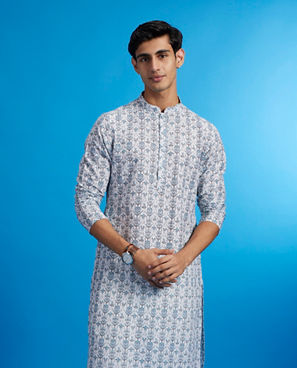
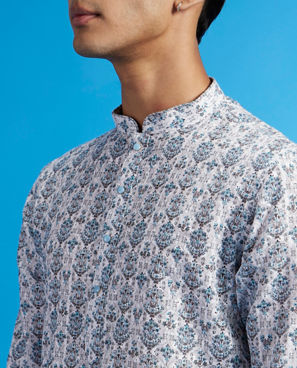
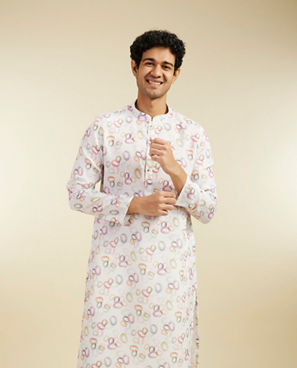
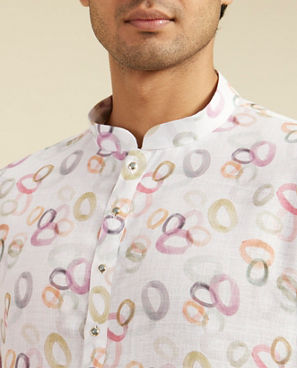
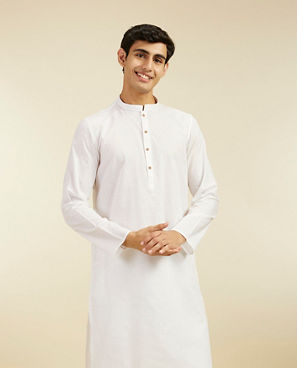
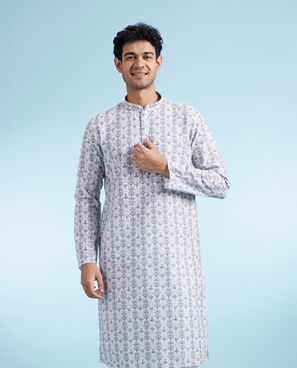
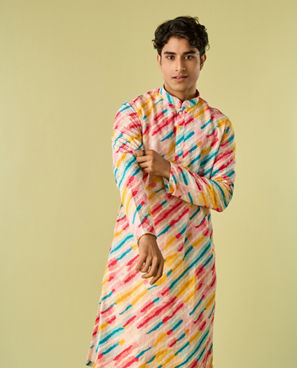
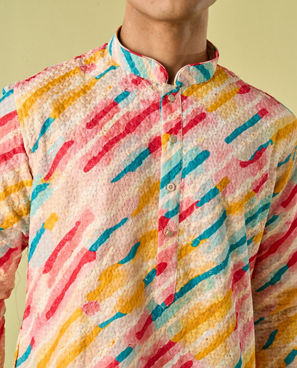
White printed kurta for men: the neutral that has something to say
This page brings together the most versatile base colour in men's wear with prints that give each piece a distinct identity. You'll find florals, geometric motifs, abstract patterns, block-print inspired designs, and heritage-influenced surface work—all sitting on white or near-white bases—each one designed to feel fresh, considered, and easy to repeat across a wide range of occasions and social circles.
At Diwas, these kurtas occupy a genuinely useful middle ground: more expressive than plain white solids, less formal than embroidered pieces, and versatile enough to move between casual everyday dressing and celebration-ready looks with minimal styling effort.
What a print does to a white kurta
Plain white kurtas are already dependable and widely worn. A print changes the dynamic in ways that matter for how you're perceived and how the outfit photographs. A white printed kurta:
-
Adds personality to the most neutral base without introducing colour intensity.
-
Creates surface texture that reads clearly in photos and reels, giving the outfit more visual interest than a flat solid.
-
Signals that the kurta was chosen rather than defaulted to—even subtle prints communicate deliberate dressing.
-
Sits naturally between casual and festive, making the piece easier to wear across a broader range of occasion types.
-
Gives white a slightly less formal, more relaxed quality—perfect for occasions where plain white might feel too stark or ceremonial.
For men who find plain white a little too minimal but want to stay in neutral, easy-to-match territory, it is almost always the most practical answer.
Print styles across white kurtas
Print choice is where white kurtas develop individual character. Because white is such a clean base, even subtle prints read clearly and create a strong visual impression. On this page you'll find:
-
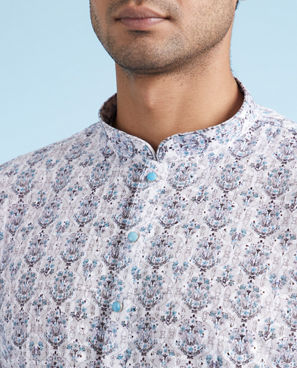
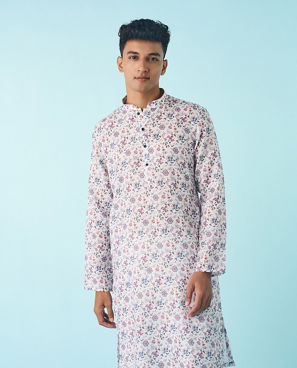
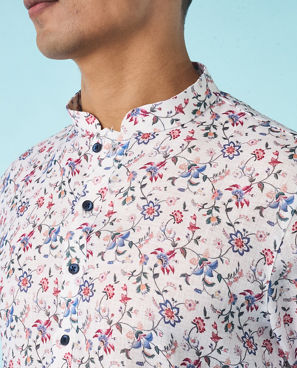
Floral prints on white—from delicate, tone-on-tone or pastel florals that feel soft and romantic to bolder, multi-colour blooms that feel expressive and celebration-ready; works particularly well for spring and summer festivals, outdoor weddings, and mehendi functions.
-
Geometric and abstract prints—structured, graphic patterns that give white kurtas a contemporary, design-aware quality; ideal for campus events, office cultural days, and younger social circles where a modern aesthetic is valued.
-
Block-print and kalamkari-inspired motifs—traditional Indian printing techniques that feel artisanal and culturally rooted on white; creates a very distinctive, handcrafted aesthetic popular for bohemian-leaning celebrations and informal festive gatherings.
-
Heritage and ethnic motifs—butis, jaals, and classic Indian pattern elements in black, navy, or contrasting tones over white; feels classically Indian without being formally embroidered.
-
Striped and textured weave prints—subtle directional patterns that add dimension without clearly reading as "printed"; suits men who want texture over obvious motifs.
Each direction gives the same white base a different personality—traditional, contemporary, romantic, or graphic—while keeping the overall neutrality and pairing flexibility that makes white so universally useful.
Fabrics that carry white prints cleanly
For a print to look sharp and intentional on white, the base fabric has to hold colour and detail well without looking translucent or losing structure after washing. White printed kurtas at Diwas typically use:
-
Cotton and cotton-rich blends—the most reliable base for printed kurtas; holds prints cleanly, stays opaque, and remains breathable for outdoor festivals, daytime events, and long celebration days.
-
Viscose and blended viscose—a smoother, slightly more polished surface where prints appear crisper and the kurta drapes more elegantly; suits indoor functions and slightly more formal daytime occasions.
-
Linen and linen-cotton blends—a naturally textured base that complements block-print and kalamkari-style patterns particularly well; creates a deliberate, artisanal aesthetic for casual and semi-formal settings.
-
Rayon and soft blended weaves—lightweight and fluid, ideal for more relaxed casual kurta styles that pair naturally with denims and casual trousers.
One additional consideration specific to white: fabric opacity matters. A good kurta should be opaque enough to wear comfortably without layering underneath, which typically means cotton or slightly heavier blended fabrics are more practical than very fine or lightweight weaves.
The occasions where they feel exactly right
These kurtas carry the universal appropriateness of white with the expressive quality of a print, which opens up a wide range of occasions where they feel natural and considered. They fit especially well when you're:
-
Attending casual daytime weddings and outdoor functions—where the combination of white and print feels fresh and photogenic without the starkness of plain white or the heaviness of embroidery.
-
Celebrating Eid and other festivals—where white is traditional and the print adds enough character to make the kurta feel special rather than plain.
-
Heading to college fests and campus events—where geometric, abstract, or bold floral prints on white feel youthful and design-aware in a way that plain whites don't.
-
Office cultural days and festive Fridays—where a subtle print on white reads ethnic and considered without being too loud for a professional setting.
-
Informal family gatherings and housewarmings—where this kurta looks like a deliberate choice without demanding attention.
-
Travel days during wedding or festival season—where these kurtas are easy to style with multiple bottoms and always look neat and intentional.
The common quality across all of these:it looks like you made a choice about your outfit without making your outfit the main event.
How white printed kurtas pair with different bottoms
One of the most practical qualities of a white kurta is how it retains the pairing flexibility of plain white while adding enough character to work with a broader range of bottoms.
-
White pyjamas: Creates an all-white look where the print on the upper adds just enough surface interest to prevent it from feeling like a uniform; works for casual festivals, home pujas, and relaxed daytime plans.
-
Cream and beige churidar or pyjamas: The softest, most harmonious contrast; ideal for daytime weddings and engagements where you want the overall look to feel warm and coordinated.
-
Dark denims: The sharpest contrast; works particularly well with geometric, abstract, or bold print white kurtas for campus events, casual outings, and Indo-fusion dressing.
-
Olive, navy, or stone chinos: A smart-casual pairing that works for office events, restaurant celebrations, and semi-formal functions where you want ethnic influence without full traditional dress.
-
Black pyjama or churidar: Adds sharpness and evening-readiness to a white kurta; creates a striking two-tone look where the print details on white stand out clearly against the deep bottom.
This pairing breadth is part of what makes white kurtas so efficient in a small wardrobe—you're rarely stuck for a matching bottom.
Three looks
-
Relaxed and traditional: A block-print or heritage-motif white cotton kurta with white or off-white pyjamas and traditional sandals or mojaris. Simple watch or bracelet; works for home pujas, Eid visits, casual festivals, and smaller family gatherings where the look should feel respectful and considered.
-
Fresh and contemporary festive: A floral or geometric print white kurta with beige or cream churidar and tan loafers. A subtle pocket square or watch adds the finishing touch; works for daytime weddings, engagements, and Diwali gatherings where you want to look deliberately styled.
-
Modern Indo-fusion: An abstract or bold print white kurta with slim dark denims and clean sneakers or loafers. Sleeves rolled if shorter; works for campus fests, casual Holi plans, restaurant outings, and friend-group celebrations where contemporary dressing is more appropriate than full ethnic.
Across all three, the white base ensures the overall look stays clean, light, and easy—the print is what gives each version its character.
White printed kurta versus plain white kurta versus white embroidered kurta
Understanding where each version sits helps you choose the right piece for the right moment.
-
Plain white kurta: The most minimal and universally appropriate; communicates simplicity, calm, and respect; best for rituals, temple visits, and occasions where understatement is the point.
-
White printed kurta: Adds personality and character to the white base; more expressive and casual-festive in register; best for everyday celebrations, campus events, daytime weddings, and occasions where looking considered matters more than looking formal.
-
White embroidered kurta: The most formal of the three; threadwork or surface craft adds occasion-readiness and luxury; best for significant evenings, reception-adjacent functions, and occasions where the outfit needs to feel genuinely special.
A printed kurta sits comfortably between the other two—more interesting than plain, more relaxed than embroidered—which is exactly why it tends to be the most frequently worn version across a typical festive year.
In a compact wardrobe
In a small but well-considered ethnic wardrobe, this kurta fills a very specific and valuable slot: the expressive neutral that bridges your plain everyday pieces and your more formal festive ones.
Alongside:
-
a plain white or cotton kurta for rituals and simple occasions, and
-
one coloured or embroidered piece for important functions,
a white printed kurta becomes:
-
your go-to for casual daytime weddings, college events, and festive Fridays;
-
the piece that makes your neutral range feel varied without adding colour;
-
a repeat-wear staple that different groups rarely identify as "the same outfit" because the print shifts how the white reads across different contexts.
In photos and everyday content
White is one of the most reliable colours to photograph—it doesn't shift under different lighting and creates a clean, open frame in both indoor and outdoor settings. A print on white adds the surface texture and character that makes portraits and outfit content look more deliberate and finished than a plain solid would.
For everyday social content—outfit-of-the-day posts, casual festival captures, and Indo-fusion reels—white printed kurtas give you a clean, consistent base that works across different backgrounds, lighting conditions, and cameras. The print adds enough visual interest to make the photo feel styled, while the white base keeps everything looking fresh and light.
Block-print and heritage-motif prints in particular photograph beautifully—the contrast of dark or coloured patterns against white creates strong definition in both close-up detail shots and full-length frames, making them especially popular for deliberate outfit content and celebration photography.
Frequently Asled Questions (FAQs)
1. How is a white printed kurta different from a plain white kurta?
A print adds personality, surface texture, and visual interest to the white base; it makes the kurta feel more like a considered choice and less like a default, while retaining all the pairing flexibility and universal appropriateness of white.
2. What print styles work best on white?
Florals, geometric motifs, block-print and kalamkari patterns, and heritage-inspired designs all work beautifully on white; the best choice depends on whether you want a traditional, contemporary, or romantic mood.
3. Is a white printed kurta appropriate for formal occasions?
For daytime and semi-formal occasions yes; for very formal evenings, a white embroidered or silk kurta is more appropriate—it sits in the casual-to-mid-festive register rather than the formal one.
4. What bottoms work best with a white printed kurta?
White and cream pyjamas for traditional looks; beige or cream churidar for semi-formal daytime events; dark denims for contemporary Indo-fusion; olive or stone chinos for smart-casual styling.
5. How do I keep a white printed kurta looking bright after multiple washes?
Wash in cold water with a gentle detergent, avoid mixing with darker garments, dry in shade rather than direct sunlight, and use a mild fabric brightener occasionally to maintain the brightness of the white base without affecting the print.

_18-04-2025-21-15:297-368)
_28-04-2025-06-54:297-368)
_18-04-2025-21-15:Swatch)