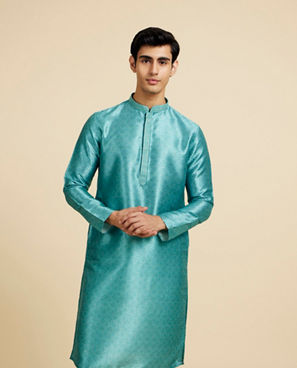
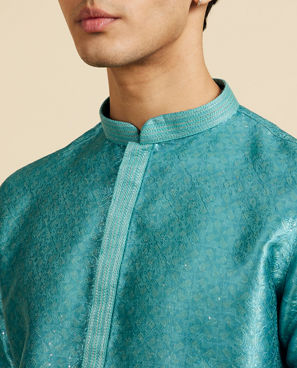
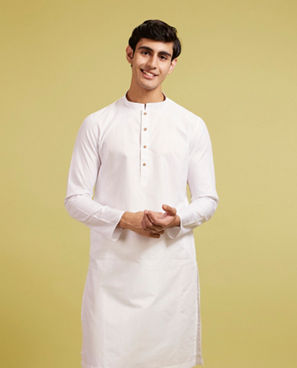
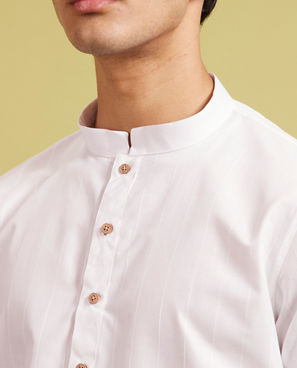
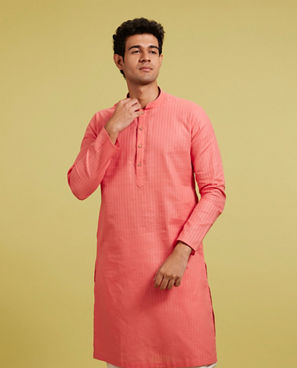
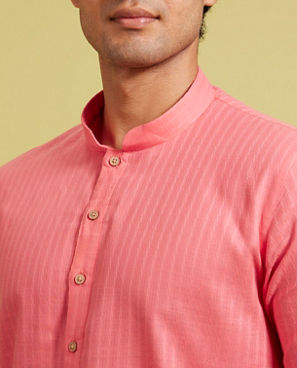
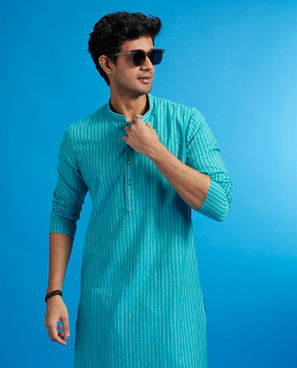
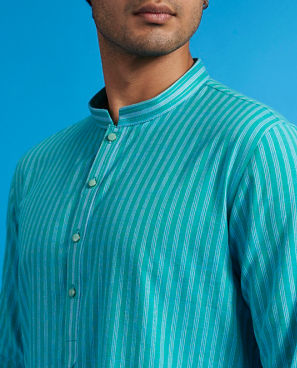
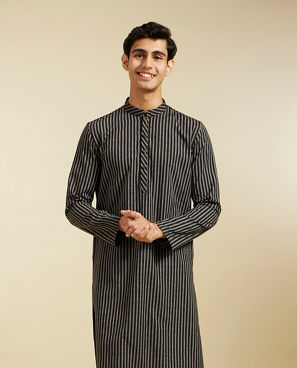
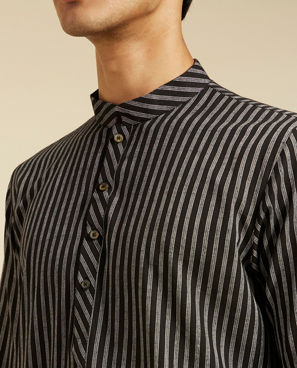
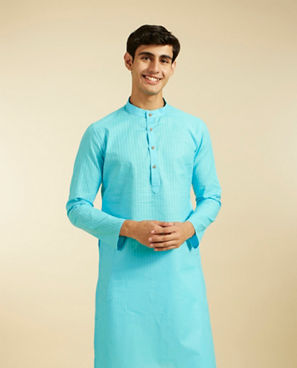
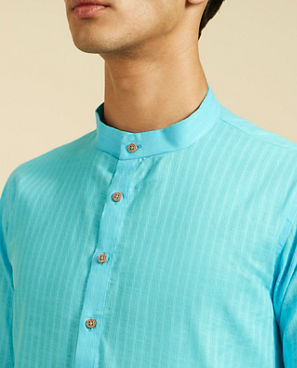
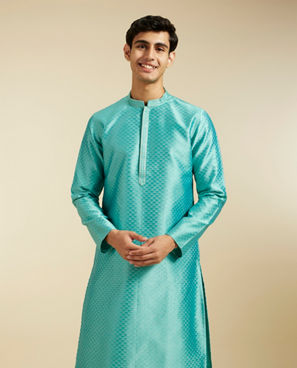
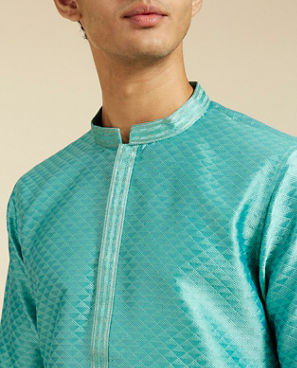
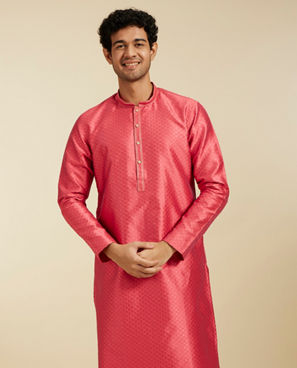
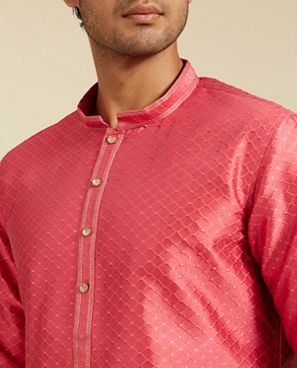
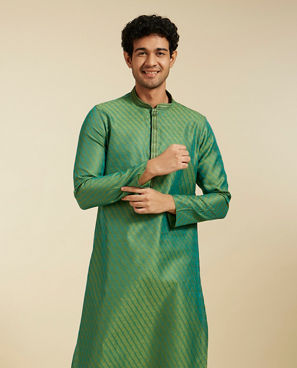
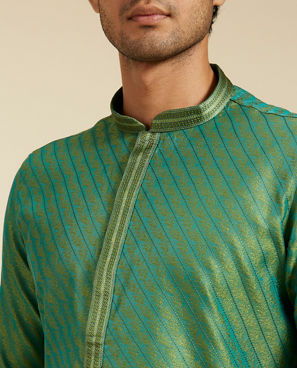
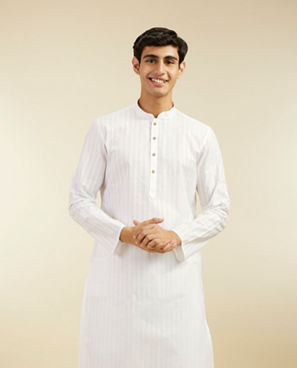
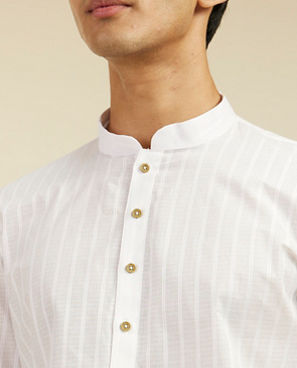
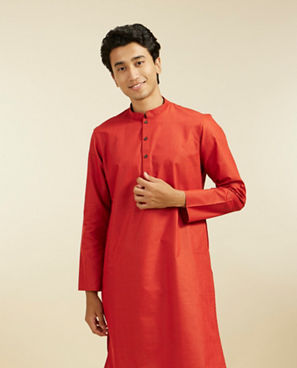
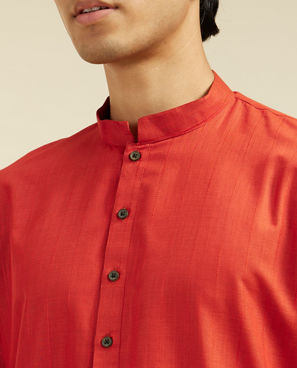
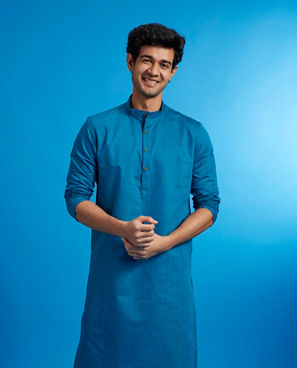
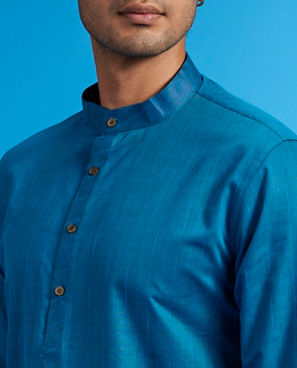
Striped kurta for men: pattern with purpose
Stripes are one of the oldest and most universally understood design patterns—they appear across every textile tradition, every culture, and every era of fashion. In men's ethnic wear, stripes bring something specific and valuable: visual structure that makes the kurta feel designed rather than simply coloured, while remaining easy to wear, easy to style, and easy to repeat across different kinds of plans.
At Diwas, striped kurtas are built around that idea—patterns that feel intentional and considered without demanding the same occasion-specific matching that embroidery or bold prints sometimes require. They're the pieces you reach for when you want your outfit to have a clear point of view without making that point of view into the whole conversation.
What stripes bring to a kurta
Pattern choice in ethnic wear is always a balance between expression and versatility. Stripes sit in a particularly useful position within that balance.
A striped kurta:
-
Creates visual structure without print complexity: Stripes organise the fabric surface in a way that reads as deliberately designed but stays easy to understand; there's no motif to interpret or colour story to manage.
-
Makes the fit look more precise: Vertical stripes in particular create clean lines that make the kurta's silhouette look more tailored and considered—the pattern draws the eye along the cut rather than across it.
-
Works with the widest range of bottoms: Because stripes are pattern rather than bold colour, they pair naturally with white, cream, beige, and black bottoms without the careful colour-matching that printed or embroidered kurtas sometimes require.
-
Feels simultaneously traditional and contemporary: Stripes appear across traditional Indian textiles—from handloom weaves to ikat and khadi—which gives them cultural rootedness; they also feel very contemporary in cut and presentation, which makes these kurtas genuinely cross-generational in their appeal.
-
Reads as considered in different settings: A striped kurta looks equally appropriate at a family pooja, an office cultural day, a college fest, and a casual wedding function—the pattern is expressive but not occasion-specific in the way florals or heritage motifs can be.
Types of stripes in ethnic kurtas
Stripes in kurtas are not all the same—the width, direction, colour combination, and weave technique behind the pattern each create meaningfully different looks. On this page you'll typically find:
-
Vertical stripes—the most common direction in kurtas; run parallel to the length of the garment; create an elongating visual effect that makes the silhouette look taller and leaner; can range from very fine pin-stripes to bolder, more visible bands depending on the specific piece.
-
Horizontal stripes—less common but increasingly present in contemporary ethnic wear; create a more grounded, structured visual effect; work particularly well on shorter kurtas and more relaxed fits.
-
Diagonal and chevron stripes—a more design-forward direction; create visual movement and energy across the fabric surface; used in more fashion-aware or Indo-fusion kurta styles.
-
Tonal and self-stripes—where the stripe pattern is created through weave variation rather than colour contrast; visible as texture rather than obvious pattern; very subtle and sophisticated, suits men who want structure without apparent print.
-
Multi-colour stripes—where three or more colours create a more vibrant, expressive stripe pattern; feels more festive and energetic; works for younger, colour-comfortable shoppers and high-energy celebration settings.
-
Two-colour contrast stripes—the most widely worn direction; a clear but controlled pattern using two colours that creates balance between expression and versatility; the most practical kurta type for building a wardrobe around.
Fabric stories
Stripes in men’s wear can be created through printing, weaving, or a combination of both—and the technique behind the stripe affects how the kurta feels, looks, and behaves across different occasions.
-
Woven stripes—where the pattern is created on the loom using different coloured threads; woven stripes feel more artisanal and premium, are more durable than printed versions, and give the fabric a subtle texture variation at the stripe lines; deeply rooted in Indian handloom traditions.
-
Printed stripes—where the pattern is applied to a plain-woven base fabric; allows more colour precision and a wider range of stripe widths and combinations; tends to look crisper and more graphic than woven alternatives.
-
Yarn-dyed stripes—where threads are dyed before weaving, creating stripes that run through the full depth of the fabric; colours appear richer and more saturated than surface-printed versions and the pattern holds its intensity across multiple washes.
In terms of base fabric,
-
Cotton and cotton-rich blends for breathable, everyday-festive kurtas that work across casual occasions, office days, and warm-weather celebrations.
-
Linen and linen-blends for textured, artisanal kurtas where the fabric's natural character complements woven stripe patterns beautifully.
-
Viscose and blended weaves for slightly more polished kurtas with better drape and a smoother stripe presentation suited to semi-formal and evening-adjacent occasions.
-
Khadi and handloom weaves for the most traditionally rooted kurtas where the pattern and fabric together communicate a conscious connection to Indian textile heritage.
The occasions where they feel most natural
These kurtas are built for the broad middle of the celebration calendar—the occasions that are clearly festive but don't demand the formality of embroidery or the statement of bold colour.
They fit especially well when you're:
-
Attending office cultural days and festive Fridays—where a tonal or two-colour kurta with chinos or trousers looks ethnic, considered, and still professionally appropriate.
-
Heading to college fests and campus events—where vertical or chevron kurtas feel fashion-forward and design-aware in a way that plain solids don't, without the loudness of bold prints.
-
Celebrating casual Diwali visits and home gatherings—where this kurta with simple pyjamas looks festive enough for the occasion without being overdressed for a relaxed family setting.
-
Attending mehendi and daytime wedding functions as a guest—where a subtle or two-colour kurta reads as a deliberate, stylish choice without competing with the colour story of more traditionally dressed family members.
-
Travelling during wedding or festival season—where these kurtas in cotton or linen are easy to pack, don't show minor creasing, and look deliberate when you arrive.
-
Casual Eid gatherings and community celebrations—where this kurta in a woven or yarn-dyed fabric feels culturally rooted and appropriately festive for a community-centric setting.
How to style
Because stripes create their own visual structure, styling a kurta is about working with that structure rather than layering additional patterns on top.
Pairing principles:
-
Keep bottoms plain and solid: They pair best with clean, single-colour lowers—white, cream, beige, or black pyjamas, churidars, or trousers; mixing a striped upper with a patterned bottom creates visual conflict that the look rarely benefits from.
-
Let accessories be simple: A striped kurta is already making a design statement; accessories should be minimal and deliberate—a watch, simple kada, and clean footwear are usually enough.
-
Use layers to adjust formality: A Nehru jacket or overshirt over the kurta can shift the look from casual to semi-formal without changing the main piece; the layer covers some of the stripe while still allowing the pattern to appear at neckline and below the jacket hem.
Specific combinations:
-
Vertical stripe kurta in white and navy with cream pyjamas and tan mojaris for a semi-traditional festive look.
-
Tonal self-stripe kurta in grey or beige with slim dark denims and loafers for a smart-casual Indo-fusion look.
-
Multi-colour kurta with white churidar and clean sneakers for campus and youth-centric celebration settings.
-
Fine pin-stripe kurta in white or light blue with olive or stone chinos and loafers for office cultural days.
Indian textile heritage
One of the most interesting qualities of these kurtas is how deeply the pattern is rooted in Indian textile history. Long before stripes became a global design language, Indian weavers were creating complex stripe patterns across regional traditions.
-
Ikat weaving from Odisha, Telangana, and Gujarat creates warp and weft stripes through a resist-dyeing process that gives stripes soft, slightly blurred edges with distinctive character.
-
Khadi and handloom stripes from Bengal, Maharashtra, and other weaving centres use natural fibres and traditional loom techniques to create stripes with a handcrafted quality that no machine-made fabric replicates.
-
Chanderi and Maheshwari stripe weaves from Madhya Pradesh create silk-cotton or silk-cotton-zari striped fabrics with a very particular refinement—appropriate for semi-formal and formal ethnic occasions.
Diwas' kurtas tap into this heritage—making stripes feel not like a Western import into ethnic wear but like a return to a pattern language that has always belonged in Indian textiles.
In a compact wardrobe
In a small but well-considered ethnic wardrobe, this kurta fills the pattern piece slot—the kurta that brings visual structure and design interest without committing to the festive-specific vocabulary of florals, heritage motifs, or bold prints.
Alongside:
-
one or two plain or self-texture solids for rituals and simple functions, and
-
one embroidered or richer piece for important evenings,
a striped kurta becomes:
-
the piece you reach for on semi-formal days and casual festive plans when solids feel too minimal;
-
the kurta that makes your wardrobe feel designed rather than simply dressed;
-
a versatile repeat-wear option that moves easily between campus, office, and family celebration settings without feeling occasion-locked.
In photos and everyday content
Stripes photograph cleanly and with particular visual interest. In portraits and outfit reels, the linear pattern creates definition and structure that makes the overall silhouette look more precise and considered than a plain solid. Vertical stripes are especially effective in full-length shots, where they draw the eye from collar to hem in a clean, elongating line.
For social content and everyday celebration captures, these kurtas have a graphic quality that looks deliberate and design-aware in photos without requiring post-processing or specific lighting to read well. The pattern shows clearly across different cameras and backgrounds—from natural outdoor settings to indoor festival environments—making these kurtas consistently reliable content pieces for men who document their celebration looks regularly.
FAQs
1. Are striped kurtas appropriate for traditional and religious occasions?
Yes—tonal self-stripes and subtle two-colour stripes in neutral or traditional colour combinations feel completely appropriate for home poojas, temple visits, and religious festivals; more vibrant multi-colour stripes are better suited to casual and social celebration settings.
2. What bottoms pair best with a striped kurta?
Plain, solid-colour bottoms are always the best choice—white and cream pyjamas or churidars for traditional looks, beige and camel for warmer pairings, dark denims for Indo-fusion, and neutral chinos for smart-casual settings; avoid patterned bottoms that compete with the stripe.
3. Can striped kurtas work for evening and formal occasions?
Subtle tonal self-stripes and fine pin-stripes in richer fabrics like viscose or art silk can work for semi-formal evenings; for reception-level formality and high-dress-code functions, embroidered or plain silk kurtas are generally more appropriate.
4. How do woven stripes differ from printed stripes in ethnic kurtas?
Woven stripes are created on the loom using different coloured threads, creating patterns with more depth, durability, and artisanal character; printed stripes are applied to the fabric surface and tend to look crisper and more graphic—both are valid but create different aesthetic and tactile experiences.
5. Can I wear a striped kurta with a Nehru jacket or layer?
Yes—a structured layer over a striped kurta works very well; the jacket covers some of the stripe while still allowing the pattern to appear above and below, creating a considered layered look that shifts the overall register from casual to semi-formal.