Satin kurta for men: the fabric that announces itself
There is a very specific kind of festive occasion where the fabric of your kurta becomes part of the statement—where the sheen, the weight, and the way the material moves under warm lighting all contribute to how you are perceived and remembered. Satin kurtas belong to those occasions entirely.
Satin is defined by its weave rather than its fibre—a structure that floats most threads on the surface, creating a smooth, lustrous face that reflects light with significantly more intensity than most other fabrics. On a kurta, that reflectivity translates into something that reads as genuinely luxurious from across a room, long before anyone gets close enough to appreciate the details of embroidery, fit, or construction.
At Diwas, satin kurtas are imagined as the pieces you reach for when the occasion is significant, the lighting is warm, and you want your outfit to do more than simply read as appropriate—you want it to feel genuinely special.
What satin brings to men's ethnic wear
Satin occupies a distinct and important position within the broader fabric landscape of men's ethnic kurtas. Understanding what makes it different helps you see exactly when and why it earns its place.
-
Reflectivity that no other fabric matches: Satin's weave structure concentrates most thread on the surface, creating a sheen that is brighter and more consistent than silk, art silk, or viscose; under warm indoor lighting, chandeliers, and diyas, these kurtas catch and reflect light in a way that looks genuinely luminous rather than simply shiny.
-
Smoothness that feels luxurious in person: The flat, smooth face of satin has a tactile quality that communicates quality and intention; wearing satin feels different from other fabrics—it drapes against the body cleanly and moves with a fluidity that adds to the sense of occasion.
-
Colour saturation that is deeper on satin: The smooth surface of satin allows colours to appear more saturated and richly pigmented than on textured fabrics; deep blues, blacks, maroons, and rich colours all look especially deep and considered on satin.
-
A visual presence that works across distances: Where embroidery and fine craft require proximity to appreciate, satin's sheen reads from across the room—it creates immediate visual presence in a way that rewards both close attention and distant observation.
-
Strong photographic and video performance: Satin's reflectivity creates very specific and beautiful effects in photography and video—the fabric appears to glow under professional lighting and catches movement beautifully in video, creating frames that look genuinely cinematic.
Types of satin used in kurtas
Satin refers to a weave structure rather than a single fibre, which means kurtas can be made from different underlying materials that each bring different qualities to the same reflective surface.
-
Polyester satin—the most widely used; highly reflective, easy to maintain, and available across a broad range of colours; holds its sheen well across multiple wears and is more resistant to damage than natural fibre satins.
-
Silk satin—the most luxurious direction; combines silk's natural warmth and quality with satin's maximum reflectivity; the richest and most genuinely premium satin option, reserved for the most significant purchases.
-
Crepe-back satin—a fabric with satin on one face and a more matte crepe texture on the reverse; used in kurtas where the designer wants the option of a dual-surface effect, or where controlled sheen is preferred over maximum luminosity.
-
Charmeuse satin—a lightweight, soft-draping satin that falls close to the body with more fluidity than heavier satins; used in more relaxed or contemporary satin styles where flow matters as much as sheen.
-
Art satin and satin-feel blends—fabrics engineered to approximate the look and feel of traditional satin at accessible price points; widely used in festive occasion wear where the aesthetic of satin is desired without the cost of natural fibre constructions.
Colours that shine on satin
Satin is particularly rewarding as a base for rich, deep, and jewel-toned colours—its smooth, reflective surface makes these shades appear more saturated and dimensional than they do on any other fabric.
-
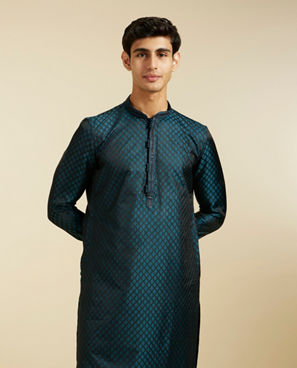
Deep jewel tones—royal blue, bottle green, deep maroon, and emerald; these colours appear particularly rich and almost gemstone-like on satin's smooth surface; ideal for reception and sangeet-level dressing.
-
Black satin—one of the most striking combinations in men's ethnic wear; black satin has a depth and visual weight that is genuinely commanding; embroidery or self-design on black satin creates one of the sharpest formal looks available.
-
Ivory and cream satin—a warm, luminous direction that feels ceremonial without the starkness of white; cream satin under warm lighting has an almost golden quality that suits both reception-level and significant daytime occasions.
-
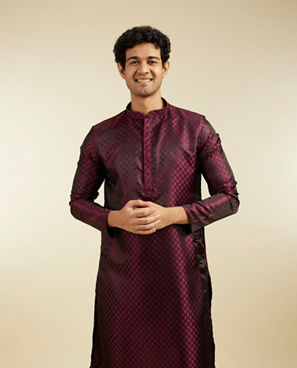
Rich reds and burgundy—deeply festive and particularly vibrant on satin's smooth surface; red satin have an energy and presence that feels perfectly calibrated for major Diwali evenings and important wedding functions.
-
Navy and midnight blue satin—a composed, formal direction; navy on satin looks deeply rich and occasion-appropriate across a wide range of formal function types.
-
Gold and champagne satin—the most maximally festive direction; gold satin under warm lighting look genuinely grand and are particularly strong for reception-adjacent and milestone event dressing.
Design directions
Because satin's surface is already doing significant visual work, design in satin kurtas tends to be precise and proportioned carefully to the fabric's inherent luminosity. On this page:
-
Plain —where the fabric's sheen and a clean, well-constructed silhouette are the entire statement; the most confidently minimal direction—nothing but colour, light, and drape.
-
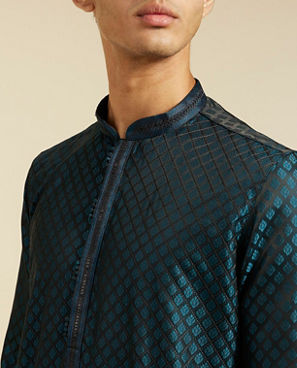
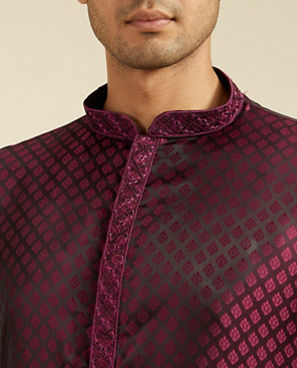
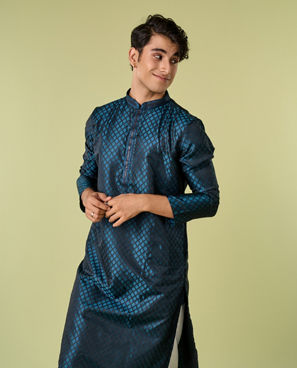
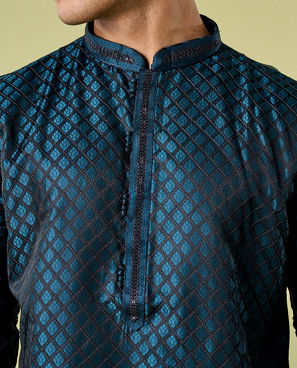
Self-design—where the weave itself creates subtle patterns—florals, geometrics, or abstract motifs—in the same colour; the pattern is visible as tonal variation in the sheen, creating a surface that is quietly complex without being obviously decorated.
-
Embroidered —threadwork, zari, or sequin embellishment over a satin base; embroidery on satin sits with particular clarity because the smooth background creates strong definition for whatever surface work sits on it.
-
Printed —digital or screen prints over a satin base; the fabric's smoothness makes prints appear very crisp and saturated; used in more contemporary kurta styles that lean fashion-forward.
-
Brocade and jacquard satin constructions—where complex woven patterns in contrasting or metallic threads create a very grand, almost sherwani-adjacent effect; the combination of brocade pattern and satin sheen is one of the most formally luxurious in men's ethnic wear.
Occasions where satin is the right choice
Satin kurtas are not for every celebration—they're specifically built for occasions where the fabric's presence and luminosity are assets rather than excessive.
They fit most powerfully at:
-
Receptions and high-formality evening functions—where satin's reflectivity under chandeliers and warm banquet lighting creates the kind of visual presence that photographs exceptionally and reads as genuinely invested in the occasion from every angle.
-
Sangeet and musical evenings—where the combination of stage lighting, movement, and this kurta creates frames and videos that look rich and cinematic; particularly strong in jewel tones and deep colours that perform brilliantly under event lighting.
-
Main Diwali evenings and peak festive nights—under diyas, fairy lights, and the warm palette of Diwali décor, satin glow with a luminosity that matches the visual richness of the season at its most festive.
-
Baraat and wedding processions—where satin's immediate visual impact creates strong presence in motion—particularly in video and photography where the fabric's movement and reflectivity create genuinely dynamic frames.
-
Formal family milestones—significant anniversaries, important housewarmings in hotel or banquet settings, milestone celebrations where fabric quality communicates the importance of the moment.
-
Cocktail-adjacent and city-centric evening functions—where satin's contemporary sheen sits naturally alongside the aesthetic of modern celebration spaces.
How to style
Because satin already creates significant visual impact through its surface quality, styling is about choosing what frames and supports that impact without competing with it.
Bottom choices:
-
Churidar in cream or ivory—the most natural pairing for formal kurtas; the fitted, structured silhouette of a churidar complements satin's clean drape and creates a full-length silhouette that feels completely occasion-appropriate.
-
Black churidar—for a sharp, contemporary look that creates strong contrast with lighter satin colours and a very cohesive dark look with deeper tones.
-
Slim pyjamas in complementary neutrals—beige, cream, or off-white work across most satin colours for a slightly less structured but still polished pairing.
-
Gold-tone or champagne churidar—for the most maximally festive approach to satin; gold under a richly coloured kurta creates a very deliberate, opulent look for reception and milestone events.
Footwear:
-
Embellished or embroidered mojaris feel the most traditionally complete for ceremonial satin dressing.
-
Polished formal shoes in black or dark brown work for a more contemporary styling direction.
-
The formality of satin means casual footwear consistently undercuts the overall impression—clean, polished footwear is non-negotiable.
Accessories:
-
Keep jewellery deliberate and minimal; satin's surface sheen already creates significant visual presence and heavy jewellery risks creating visual overload.
-
A dress watch and simple kada or ring are typically sufficient; let the fabric carry the primary visual weight.
-
Metallic accessories in gold or silver work depending on the colour of the satin—warm metals for jewel tones and deep colours, cool metals for navy, grey, and cooler shades.
-
A stole in a complementary or contrasting tone adds ceremony for the grandest occasions without disrupting the overall look.
Satin versus other premium fabrics in men's ethnic wear
Understanding satin's position relative to other luxurious fabric options helps you deploy it at exactly the right moments.
-
Satin versus silk: Silk has a warmer, more complex sheen that comes from natural fibre properties; satin has a brighter, more consistent reflectivity that comes from weave structure; silk feels more traditionally luxurious while satin feels more visually impactful—both are premium but serve slightly different aesthetic purposes.
-
Satin versus brocade: Brocade derives richness from woven patterns; satin derives it from surface reflectivity; brocade looks complex and patterned while satin looks smooth and luminous—satin is more maximally shiny while brocade is more maximally textured.
-
Satin versus art silk: Art silk approximates silk's warmth with synthetic fibres; satin prioritises surface reflectivity above warmth; satin is brighter and more visually impactful while art silk is warmer and more understated.
-
Satin versus viscose: Viscose drapes beautifully and has a subtle sheen; satin has significantly more surface luminosity and visual impact; viscose for mid-level festive occasions, satin for the most formal and visually significant events.
Satin in photos, reels, and milestone memories
Satin photographs unlike any other fabric in men's ethnic wear. The surface's reflectivity creates light variation across the fabric that appears almost three-dimensional in photographs—the kurta looks like it has depth and texture even though its surface is smooth. Under professional lighting and chandeliers, satin appears to glow from within rather than simply reflecting external light, creating a portrait quality that is genuinely striking.
In video—entrance reels, sangeet performances, baraat processions—satin's movement catches and releases light dynamically, creating frames that look cinematically rich and deliberately composed. The fabric's behaviour in motion is one of its most powerful photographic qualities; few other materials create the same sense of occasion in moving image.
For the moments that become permanent keepsakes—reception entries, formal family portraits, baraat photographs—a satin kurta ensures that every frame looks as invested and significant as the occasion itself deserves.
FAQs
1. Is a satin kurta appropriate for Indian festive occasions?
Yes—they are particularly appropriate for high-formality evening functions including receptions, sangeet, main Diwali evenings, and formal family milestones; the fabric's luminosity and visual presence are genuine assets in these settings.
2. How is satin different from silk in a kurta context?
Satin refers to a weave structure that maximises surface reflectivity; silk refers to a natural fibre with its own warmth and quality; satin kurtas are brighter and more immediately visually impactful while silk kurtas feel warmer and more traditionally luxurious—both are premium but serve different aesthetic purposes.
3. What bottoms pair best with a satin kurta?
Churidar in cream, ivory, or black are the most natural pairings; gold-tone churidar for maximum festive formality; slim pyjamas in complementary neutrals for a slightly less structured but still polished approach.
4. Can a satin kurta be worn without heavy embroidery or embellishment?
Absolutely—plain kurtas rely entirely on the fabric's reflectivity and drape for their presence; this restraint creates a very confident, modern look that often reads as more sophisticated than heavily embellished alternatives.
5. How do I care for a satin kurta to maintain its sheen?
Dry clean where possible, especially for embellished versions; hand-wash simpler satin-feel pieces in cold water with gentle detergent; avoid wringing or twisting; dry flat in shade; store carefully folded or on a padded hanger in breathable storage away from direct heat and light to preserve the fabric's surface quality over time.




_01-09-2024-22-38:297-368)
_01-09-2024-22-38:297-368)
_01-09-2024-22-38:Swatch)