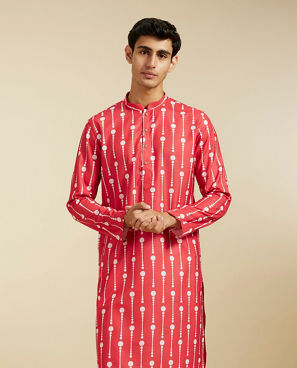
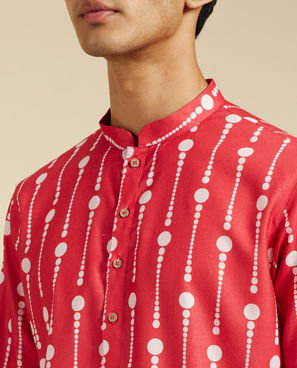
Red printed kurta for men: festive colour, lighter feel
This page brings together one of the most culturally significant colours in Indian celebration wear with surface patterns that add character and visual interest without the formality of embroidered or heavily worked pieces. You'll find florals, geometric motifs, abstract prints, heritage-inspired designs, and placement patterns—all sitting on red bases that range from bright festive reds to deeper, maroon-adjacent tones—each designed to feel celebration-ready, expressive, and genuinely wearable across multiple occasions and settings.
At Diwas, these kurtas sit in a very specific and useful register: more relaxed than embroidered red kurtas, more expressive than plain red solids, and versatile enough to carry different styling approaches across different kinds of plans—from casual Diwali gatherings to daytime wedding functions and everything in between.
Why red with a print hits differently than red with embroidery
Both red embroidered and red printed kurtas are festive, but they communicate very different things about the occasion and the wearer. A red printed kurta:
-
Feels lighter and more breathable—cotton or viscose printed bases are more comfortable for extended wear, outdoor events, and high-movement celebrations than heavier embroidered fabrics.
-
Reads as more relaxed and approachable—print softens red's natural intensity slightly, making the overall look feel expressive rather than formal.
-
Works across a wider range of occasion types—from casual Diwali visits and college fests to daytime weddings and office cultural days—without feeling overdressed for any of them.
-
Photographs differently—prints create surface texture and movement in photos that embroidery doesn't replicate; under natural light especially, a printed red kurta often looks more dynamic and contemporary.
-
Is easier to repeat across different social circles—because it doesn't carry the same obvious "occasion wear" signal as embroidery, the same piece can appear across multiple events without feeling like the same formal outfit.
For men who want red in their festive wardrobe without committing to the formality of embroidered pieces, a printed version is almost always the right call.
Print styles
Print choice is where red kurtas develop their individual personalities. Because red is already a strong and expressive base, prints can range from subtle and tonal to bold and contrasting without the colour becoming overwhelming. On this page you'll find:
-
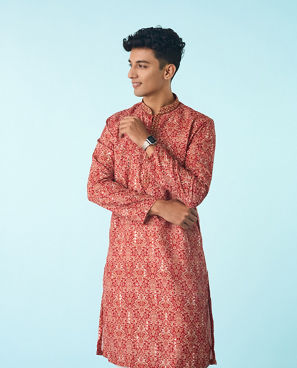
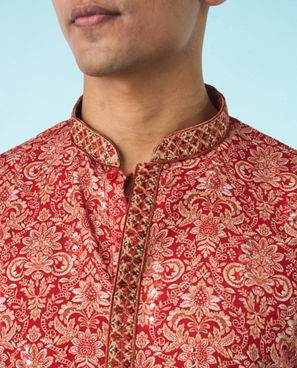
Floral prints on red—from delicate, tone-on-tone blooms that add texture without competing with the base colour to bolder, multi-colour florals that feel vibrant and full of energy; works particularly well for Diwali gatherings, Navratri, and daytime wedding functions.
-
Geometric and abstract prints—structured, graphic patterns that give red a more contemporary, design-aware quality; shifts the kurta's mood from traditionally festive to more modern and fashion-forward; great for campus events and younger celebrations.
-
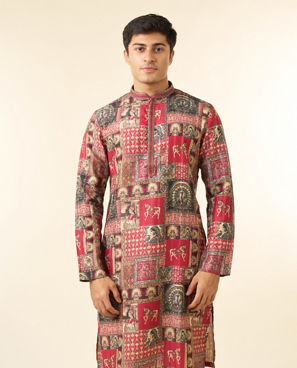
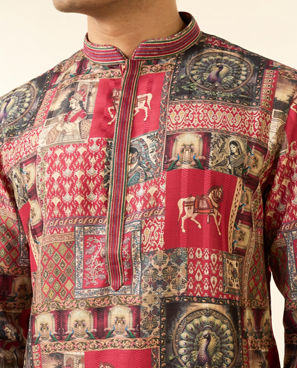
Heritage and block-print inspired motifs—traditional Indian patterns in complementary or contrasting tones over red; creates a very rooted, artisanal feel that sits naturally at poojas, Holi, and religious festivals.
-
Digital placement prints—modern prints where specific motifs are placed deliberately rather than repeated as all-over patterns; creates a curated, fashion-conscious aesthetic for men who want their festive dressing to feel current.
-
Paisley and classic Indian motifs—timeless patterns that feel deeply rooted in Indian textile culture; on red, paisley prints feel immediately and naturally festive without trying.
Each print type takes red in a different direction—traditional, contemporary, romantic, or graphic—while keeping the colour's inherent festive energy intact.
How red base and print interact
Red is a strong base that reacts differently to different print approaches, and understanding this helps you choose the right version for each occasion.
-
Bright red with tone-on-tone or tonal prints: Creates a rich, layered look where the print adds texture without introducing new colours; feels very cohesive and deliberate, ideal for Diwali and main festive events.
-
Bright red with bold contrast prints: High energy and clearly statement-making; works for Navratri, Holi, and celebrations where you want maximum visual presence.
-
Deeper red with heritage or block prints: Feels artisanal and culturally rooted; the depth of the red gives traditional motifs a dignified backdrop; suits religious festivals and more intimate family celebrations.
-
Coral or chilli-red with floral prints: Younger, more playful, and contemporary in feel; works for campus events, casual daytime weddings, and social gatherings where you want red's energy without its intensity.
This range means a red printed kurta can be calibrated precisely to the occasion—from quietly expressive to unmistakably bold—just by choosing the right combination of shade and print style.
Fabrics that carry red prints best
For prints to look sharp and intentional on red, and for the colour to stay rich rather than fading or bleeding, fabric quality and construction matter. Red printed kurtas at Diwas typically sit on:
-
Cotton and cotton-rich blends—the most practical base for printed kurtas; holds prints cleanly, stays breathable for outdoor and high-movement celebrations, and maintains colour well across multiple washes.
-
Viscose and blended viscose—a smoother surface where prints appear more polished and colours look slightly more saturated; suits indoor functions and slightly dressier daytime occasions where a more refined finish is needed.
-
Linen and linen-cotton blends—a textured, artisanal base that complements block-print and heritage-inspired patterns on red particularly well; creates a deliberate, handcrafted aesthetic for casual and semi-formal gatherings.
-
Rayon and soft blended weaves—lightweight and fluid, with prints sitting flat and falling naturally; used in more relaxed casual red printed styles that pair easily with denims and casual trousers.
Fabric opacity is worth noting specifically for red: unlike white, transparency isn't typically an issue, but the depth of the red and how it holds its vibrancy across wear and washing is directly related to fabric quality—a consideration worth keeping in mind when investing in a kurta.
Where they fit naturally in your celebration calendar
They are built for celebrations where colour, energy, and movement are all part of the experience. They fit especially well when you're:
-
Celebrating Diwali—where red is deeply embedded in the colour story of the season and a printed version feels fresh and deliberate for house visits, card parties, and family gatherings.
-
Attending Navratri and garba nights—where the energy of the event calls for bold, expressive dressing and this kurta sits perfectly in the celebratory mood without being overdressed for a high-movement evening.
-
Participating in Holi—where red printed cotton kurtas are practical enough to handle colour and water while still looking festive and intentional before things get colourful.
-
Heading to daytime weddings as a guest—where red carries the appropriate festive signal for a wedding function but the print keeps the look light and appropriate for daytime rather than reception-heavy.
-
Campus events and college fests—where geometric and abstract printed kurtas feel youthful, trend-aware, and expressively festive without the formality of embroidered pieces.
-
Office cultural days and festive Fridays—where a subtler or heritage-motif print on red looks ethnic and considered without being too bold for a professional environment.
The common thread: these kurtas work wherever the mood calls for colour, celebration, and genuine expression—but without the formality that embroidered pieces demand.
Three complete looks
Across all three, red stays the constant—bold, festive, and unmistakably celebratory—while the print, fabric, and pairing shift to match each occasion's specific mood.
Red printed kurta versus red embroidered and red chikankari
Understanding where each red kurta type fits is essential for building a wardrobe that serves different occasions efficiently.
-
Red printed kurta: Surface pattern through printing; relaxed and breathable; casual-to-mid-festive in register; most versatile for everyday celebrations, outdoor events, and occasions where comfort matters alongside colour.
-
Red chikankari kurta: Fine embroidery stitched over red; more handcrafted and occasion-specific in feel; suited to Diwali evenings, wedding functions, and events where visible craft adds to the look.
-
Red embroidered kurta: Threadwork, zari, or sequin embroidery; the most formal of the three; best for sangeet, receptions, and significant evening events where the outfit needs to feel deliberately special.
A red printed kurta covers the widest range of your celebration calendar—it's the version you wear most often and reach for most instinctively, leaving the embroidered and chikankari pieces for the moments that specifically call for their higher level of occasion-readiness.
In a small, curated wardrobe
In a compact but well-considered ethnic wardrobe, this kurta fills the bold, expressive, everyday-festive slot that neither solids nor heavily embroidered pieces cover in quite the same way.
Alongside:
-
a neutral or plain kurta (white, beige, or navy) for simpler, quieter occasions, and
-
one richer, more formal red piece (embroidered or chikankari) for important evenings,
It becomes:
-
your first choice for Diwali visits, Navratri, and casual wedding functions;
-
the piece that gives your wardrobe its most expressively festive presence without the maintenance and occasion-specificity of embroidered pieces;
-
a repeat-wear staple that works across different social circles because the print makes each wearing feel slightly different from the last.
In photos, reels, and celebrations
Red is one of the most visually powerful colours in photography—it draws the eye, creates warmth in the frame, and photographs consistently well across different lighting conditions. A print on red adds surface texture and movement that flat solids don't offer, making the kurta look more dimensional and considered in both candid and posed shots.
For Diwali reels, Navratri videos, and Holi captures specifically, a red kurta performs exceptionally well—the colour sits naturally in the visual language of each celebration, and the print adds enough character to make the outfit feel intentional rather than generic. Under warm festive lighting, these kurtas glow with the same energy as the celebration itself, which is exactly what you want from a kurta that was chosen specifically for the occasion.
Frequently Asked Questions (FAQs)
1. Is a red printed kurta suitable for weddings?
Yes—for daytime wedding functions, casual wedding-week events, and functions where the dress code is festive but relaxed; for formal receptions and sangeet evenings, a red embroidered or chikankari kurta would be more appropriate.
2. What bottoms pair best with a red printed kurta?
Cream and beige pyjamas for traditional looks; white churidar for a slightly sharper festive pairing; dark denims for casual Indo-fusion; neutral chinos for smart-casual and office-appropriate combinations.
3. How is a red printed kurta different from a plain red kurta?
The print adds visual interest, surface texture, and personality without embroidery; it makes the kurta feel more deliberate and occasion-specific while retaining the comfort and versatility of a lighter fabric.
4. Can a red printed kurta work for Navratri and garba nights?
Absolutely—the colour is energetic and traditionally appropriate, and a printed version is comfortable enough for dancing while still looking festive and intentional throughout the evening.
5. Which print style on red works best for traditional occasions like Diwali and poojas?
Heritage motifs, block-print inspired patterns, and paisley designs feel the most traditionally rooted on red; geometric and abstract prints lean more contemporary; florals sit comfortably across both traditional and modern celebration settings.

_18-04-2025-20-48:297-368)
_18-04-2025-20-48:297-368)
_18-04-2025-20-48:Swatch)


_20-06-2026-19-15:297-368)
_20-06-2026-19-15:297-368)
_20-06-2026-19-15:Swatch)
_20-06-2026-19-04:Swatch)