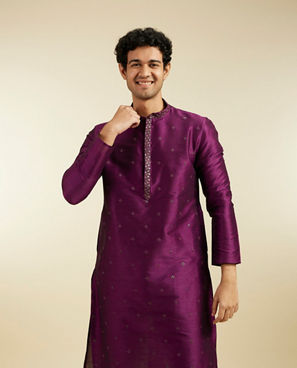
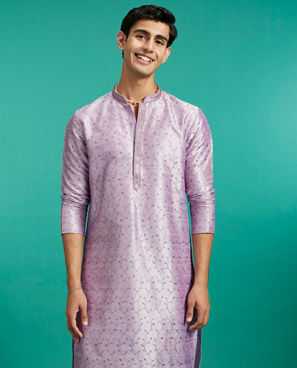
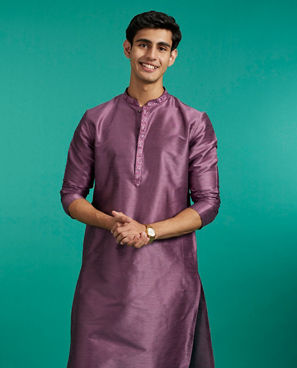
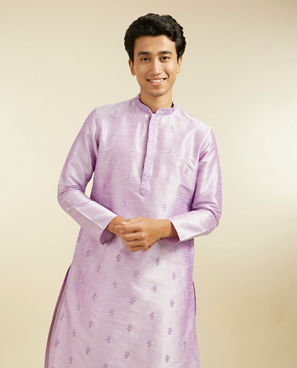
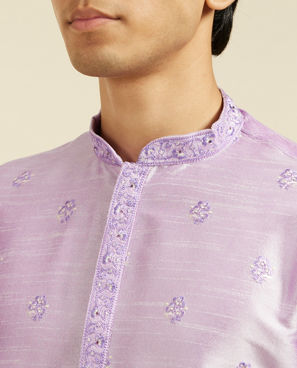
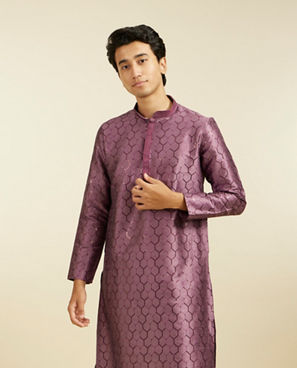
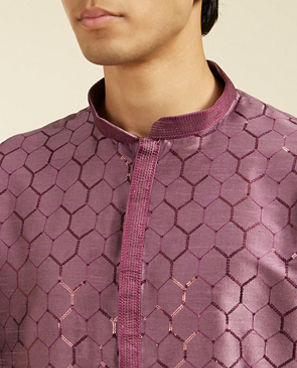
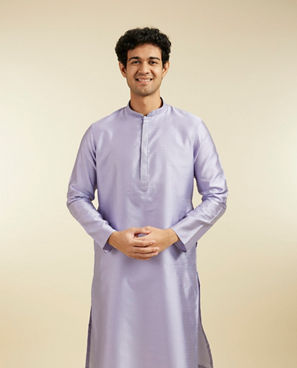
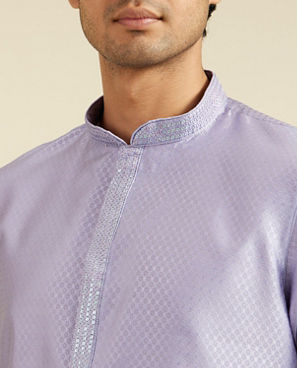
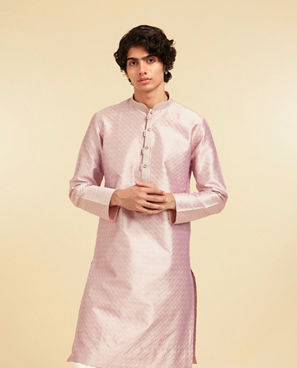
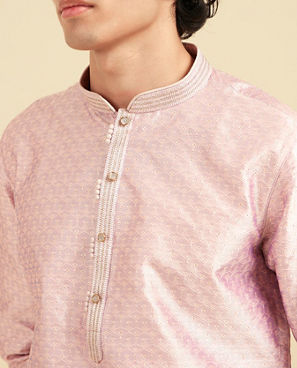
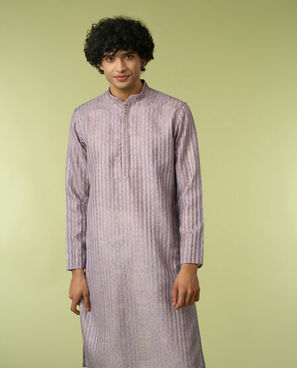
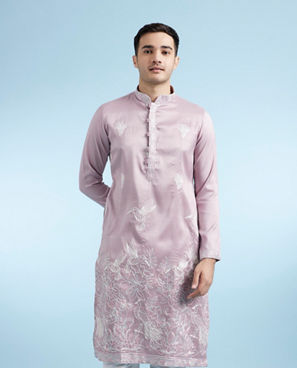
Purple silk kurta for men: when regal meets luxurious
There are colours that feel festive, and there are colours that feel ceremonial. Purple sits firmly in the second category—it carries associations of royalty, spirituality, and considered dressing that go beyond simple occasion-appropriateness into something closer to genuine occasion-significance. When you put that colour on silk, those associations are amplified: the fabric's sheen deepens the colour, the drape adds structure and intention, and the overall effect is of a man who dressed not just for the event but for the weight of the moment.
At Diwas, purple silk kurtas bring together one of the most richly festive colours in Indian celebration wear with silk's inherent luminosity and ceremonial quality—creating pieces that feel completely at home at the most significant evenings in a festive and wedding calendar.
What silk does to purple
The relationship between purple and silk is perhaps more rewarding than any other colour-fabric combination in men's ethnic wear. A few reasons this pairing is so powerful:
-
Silk deepens purple's inherent richness: Purple on cotton reads as festive; purple on silk reads as genuinely regal—the fabric's sheen gives the colour a dimensional, jewel-like quality that makes even mid-toned purples look luxurious.
-
The luminosity amplifies purple's natural drama: Silk fibres catch and reflect light in a way that gives purple an almost iridescent quality under warm indoor lighting—the kind of effect that makes photographs look exceptional and in-person presence feel commanding.
-
Silk gives purple the structure its drama requires: Purple can feel theatrical or costume-adjacent in softer fabrics; silk's drape and handle give it the control and intention that turns dramatic into deliberately ceremonial.
-
The combination is deeply rooted in Indian textile tradition: Purple silk has appeared in formal Indian dress—from royal courts to significant religious ceremonies—for centuries; wearing it in the context of modern Indian celebration wear is an act of conscious continuity with that tradition.
-
Purple silk creates a presence that photographs unlike anything else: The combination of rich colour and silk's characteristic sheen creates images that look genuinely luxurious—not just well-dressed but invested in the quality of the occasion.
The purple silk spectrum
Silk interacts with purple in ways that make shade selection especially important—the same purple that looks flat on cotton can appear almost jewel-like on silk. On this page you'll encounter:
-
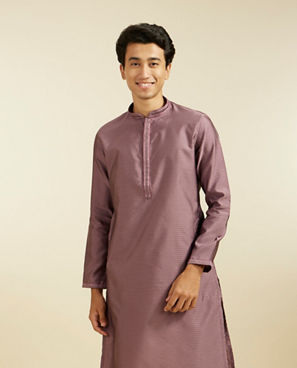
Lavender and lilac on silk—silk gives these lightest purples a warmth and luminosity that stops them from looking pastel or casual; the fabric makes lavender appear refined and deliberately chosen for elegant daytime functions and spring celebrations.
-
Mid-purple and violet on silk—the most versatile direction; silk deepens mid-purple into something that works comfortably across daytime and evening occasions; the most widely flattering shade for most skin tones and the broadest range of function types.
-
Royal and deep purple on silk—the most dramatic and commanding direction; silk on deep purple creates a presence that sits close to sherwani-level formality while remaining in kurta territory; ideal for receptions, high-profile sangeet evenings, and the most significant wedding-week functions.
-
Magenta-leaning purple on silk—a warmer, more energetic direction; silk on these warmer purples creates a very vibrant, festive quality that photographs brilliantly under warm lighting; strong for Diwali evenings and high-energy celebrations.
-
Indigo and blue-purple on silk—a cooler, more composed direction; silk on blue-leaning purples creates a sophisticated, almost architectural quality; works for men who want purple's richness without its warmth.
-
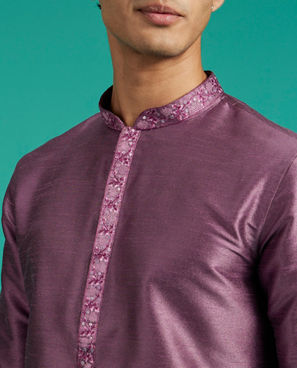
Wine and plum on silk—the deepest, most evening-specific direction; plum on silk feels genuinely opulent and is particularly strong for reception-level functions where maximum presence is appropriate.
Design directions
Because purple silk already communicates luxury and ceremony through colour and fabric together, design choices in this category are deliberate and precisely proportioned. On this page:
-
Plain—the most commanding minimalist statement available in men's ethnic wear; nothing but the fabric's sheen, the colour's depth, and a clean, well-constructed silhouette; the restraint of no embellishment on such a rich combination reads as genuine confidence.
-
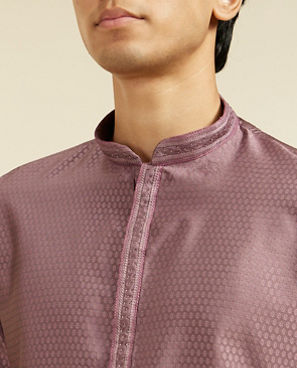
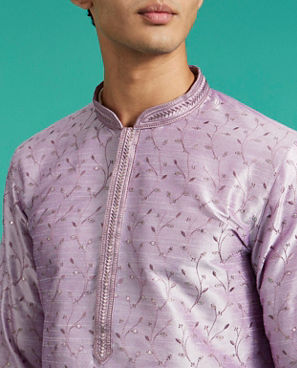
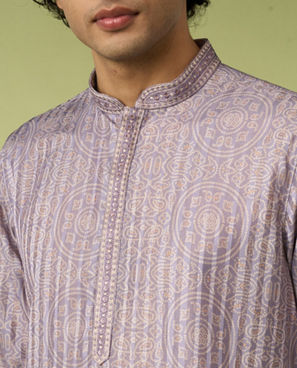
Self-design and jacquard —tonal patterns woven into the silk itself; paisley, floral, or geometric motifs in the same purple tone add surface complexity that reveals itself up close while the kurta reads as unified and clean from a distance.
-
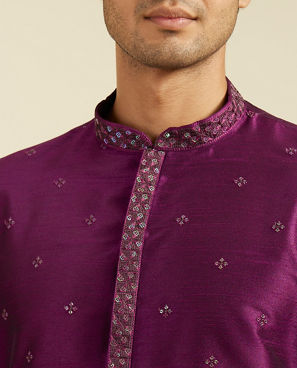
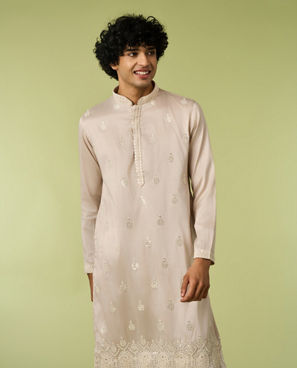
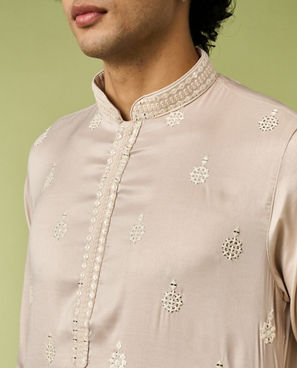
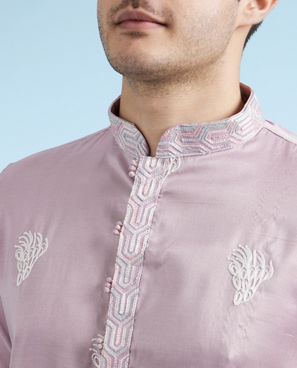
Lightly embroidered —focused threadwork, zari touches, or silver embroidery along the neckline, placket, or cuffs; silver or tonal embroidery on purple silk creates a monochromatic depth that is very particular in its elegance.
-
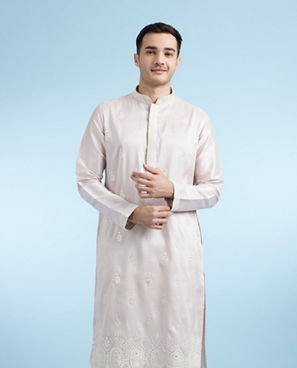
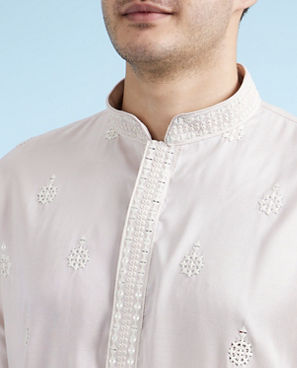
Chikankari —fine Lucknawi-style stitching over silk or silk-feel base; chikankari's delicacy sits with beautiful contrast against purple's richness; the combination of fine craft and luxurious fabric creates something that feels genuinely handcrafted and special.
-
Sequin and shimmer-highlighted —controlled shimmer within self-design or embroidered areas; on purple silk, sequins catch light in a cool, jewel-like way that creates evening glamour perfectly calibrated to the colour's ceremonial mood.
-
Brocade-weave —the most formal direction; complex woven patterns in silver, gold, or contrasting threads against purple silk; grand in effect and reserved for the most significant occasion settings.
Fabric constructions
Purple silk kurtas on this page span a range of fabric types that balance luxury, wearability, and occasion-appropriateness across different function types.
-
Art silk and art-silk blends—the most widely accessible; captures silk's characteristic sheen and drape in purple at practical price points while feeling genuinely elevated for most festive and formal occasions.
-
Pure silk and mulberry silk—the most luxurious end; deeper sheen, richer hand, and unmistakably premium drape; purple on pure silk has a depth and dimensional quality that no blended fabric replicates.
-
Viscose-silk blends—lighter and more fluid than pure silk; viscose adds softness and reduces weight while the silk component contributes the luminosity and quality that elevates the piece; practical for longer functions and warmer venues.
-
Silk-cotton blends—breathable enough for extended wear while carrying enough sheen to read clearly as silk-family; works for kurtas designed for longer functions and mixed indoor-outdoor settings.
-
Jacquard silk in purple—where the weave creates self-design patterns in tonal or slightly contrasting colours; adds quiet complexity and texture that rewards close attention without loudly announcing its presence.
When it is the right choice
A purple silk kurta earns its place by serving occasions that feel not just important but genuinely significant—moments where the quality of what you wear is part of how you honour the event. It fits most powerfully at:
-
Reception and high-formality evening functions—deep and royal purple silk under warm chandeliers and banquet lighting creates a presence that is unmistakably dressed for the occasion; few choices in men's ethnic wear create more commanding full-length portraits than purple silk with churidar and polished footwear.
-
Sangeet and musical evenings—particularly in vibrant mid-purple and magenta-leaning shades; purple silk under stage and event lighting photographs brilliantly—the colour's richness and silk's sheen create frames that are genuinely memorable.
-
Main Diwali evenings and peak festive nights—purple silk under diyas, fairy lights, and the warm golden palette of Diwali décor creates an interesting, richly festive contrast that stands apart from the season's typical warm colour story in the most considered way.
-
Navratri peak days—where purple's deep auspiciousness within the nine-colour framework of the festival combines with silk's formality to create a look that feels genuinely occasion-specific.
-
Formal family milestones and significant ceremonies—important anniversaries, significant housewarmings in hotel settings, and milestone celebrations where the combination of purple's ceremonial associations and silk's luxury together communicate the weight being placed on the occasion.
-
Key wedding-week functions for close family or groomsmen—a royal or deep purple with churidar creates a look that sits just below sherwani formality while feeling entirely personal and modern.
How to style
Because purple already carries significant visual presence and silk adds inherent formality, styling is about precision—choosing what frames and amplifies without competing.
Bottom choices:
-
White or cream churidar—the most universally flattering pairing; clean contrast lets the purple and silk's sheen read fully and completely; works across most shades.
-
Silver-grey churidar—a very sophisticated contemporary pairing; grey grounds purple's richness and creates a composed, architectural look that feels very deliberately modern.
-
Black churidar—for a dramatic, high-contrast evening look; deep and royal purple silk over black creates maximum visual presence for the grandest occasions.
-
Gold-tone or champagne churidar—a warm, regal pairing for the most formal occasions; purple over gold creates a genuinely opulent combination for reception-level dressing.
-
Ivory or off-white churidar—a slightly warmer alternative to white that sits particularly well with warmer, magenta-leaning purple shades.
Footwear:
-
Silver-tone, deep purple, or cream embellished mojaris feel the most traditionally complete for ceremonial occasions.
-
Polished dark shoes or formal loafers work for a more contemporary reading of purple silk.
-
Avoid casual footwear that undercuts the inherent formality of both the colour and the fabric.
Accessories:
-
Silver and white-gold metals sit most naturally with purple's inherently cool undertone across most shades.
-
For warmer, magenta-leaning purples, rose gold creates a flattering bridge between warm and cool tones.
-
A dress watch, subtle silver or white-gold kada, and simple ring are usually sufficient—purple silk's presence means accessories should frame rather than compete.
-
A silver-grey, ivory, or soft purple stole adds ceremony for the most formal moments without disrupting the colour story.
Purple silk versus purple cotton, chikankari, and embroidered
Understanding where each purple kurta type sits in the occasion spectrum ensures you build a wardrobe that serves different moments without overlap or gaps.
-
Purple cotton kurta: Relaxed and breathable; best for casual festive occasions and everyday ethnic dressing where comfort matters more than formality.
-
Purple printed kurta: More expressive; casual-to-mid-festive register; works for campus events and contemporary celebrations where design awareness matters.
-
Purple chikankari kurta: Craft-forward and delicate; suited to daytime weddings, sangeet, and occasions where visible handcraft adds richness without maximum formality.
-
Purple embroidered kurta: More occasion-specific; denser surface work for high-formality evening functions and important wedding events.
-
Purple silk kurta: Fabric-forward ceremonial luxury; the richness comes entirely from the material and its interaction with the colour; suited to the most significant occasions where both presence and quality are part of what the outfit needs to communicate.
In photos, reels, and milestone memories
Purple silk photographs with a quality that is genuinely singular. Under professional lighting, chandeliers, and warm banquet setups, purple silk appears to have dimensional depth—the colour looks rich and complex rather than simply saturated, and the fabric's sheen creates subtle light variation across the surface that gives the kurta a living, luminous quality in both still images and video.
In formal wedding portraits, purple silk creates one of the strongest full-length silhouettes in men's ethnic wear—structured, intentional, and unmistakably dressed for the occasion from collar to hem. In sangeet entrance videos and slow-pan reels, the colour catches stage lighting in a way that looks almost cinematically rich. In group wedding photographs, purple silk creates immediate visual presence—you look invested in the occasion in a way that is quietly but clearly apparent to anyone who understands the quality and intention behind the choice.
For reception entries, sangeet portraits, formal family photographs, and the milestone captures that become permanent keepsakes, a purple silk kurta ensures that the weight of the fabric and the richness of the colour together match the significance of the memory being made.
Frequently Asked Questions (FAQs)
1. Is a purple silk kurta formal enough for reception-level wedding events?
Yes—royal and deep purple with self-design, embroidery, or brocade detailing in richer fabric constructions are fully appropriate for reception and sangeet-level formality; the combination of colour depth and fabric quality communicates genuine occasion-readiness.
2. Which shade of purple silk is most versatile?
Mid-purple and violet on silk tend to be the most versatile—they work across daytime and evening occasions, suit the widest range of skin tones, and pair with the broadest range of bottoms and accessories without requiring very specific styling choices.
3. What bottoms pair best with a purple silk kurta?
White or cream churidar for classic contrast; silver-grey for a sophisticated contemporary look; black churidar for dramatic evening presence; gold-tone for opulent reception-level formality; ivory or off-white for a softer contrast with warmer purple shades.
4. Can a plain purple silk kurta work without embroidery or surface decoration?
Absolutely—plain or self-design purple silk relies entirely on the fabric's depth, sheen, and drape; this restraint reads as confident and considered, letting the colour and fabric make the complete statement without embellishment competing for attention.
5. How do I care for a purple silk kurta to maintain its colour and sheen?
Dry clean where possible, especially for embellished versions; hand-wash simpler silk-feel pieces in cold water with mild detergent; dry flat in shade away from direct sunlight to prevent colour fading; store in breathable fabric bags away from direct light and heat to preserve both the colour's richness and the fabric's natural sheen over time.