Purple Embroidery Kurtas for Men – Royal Depth, Artisan Detail
There are colours that carry their meaning without explanation — and purple is one of the most powerful of them. Across cultures, across centuries, across every civilisation that ever encountered it, purple has stood for something significant. Royalty. Spirituality. Artistic refinement. The kind of depth that takes time to fully appreciate. In Indian ethnic wear, purple occupies a particularly special position — a colour rich enough for celebration, nuanced enough for those with a genuinely developed aesthetic sensibility. Add embroidery to that foundation, and you arrive at something that transcends occasion dressing entirely.
Purple's Place in Indian Textile Heritage
Long before purple became a global symbol of royalty and prestige, it held deep significance in Indian culture and textile tradition. The association of purple with spiritual depth is embedded in Indian religious iconography — Vishnu's blue-purple complexion, the violet hues of twilight that carry sacred significance in Hindu philosophy, the deep mauve tones of certain festival flowers. In Indian weaving and dyeing traditions, achieving true purple — particularly in natural dye processes — required considerable skill and rare materials, lending the colour an inherent prestige. Contemporary purple kurtas carry forward this heritage in a modern vocabulary: the colour's cultural depth is preserved even as the silhouettes and techniques evolve.
Why Embroidery and Purple Are Made for Each Other
Of all the colours in the ethnic kurta spectrum, purple may be the single most receptive base for embroidery — and the reasons are rooted in the colour's unique interaction with different thread types and techniques.
Gold thread work on purple creates one of the most classically prestigious combinations in Indian festive fashion — the warmth of the metallic gold against the cool depth of the purple base generates a visual dynamic that is immediately associated with ceremony, significance, and genuine luxury.
Silver embroidery on purple carries a different but equally compelling energy — the cool metallic against the cool-toned base creates a harmonious, tonal richness that feels simultaneously modern and deeply traditional.
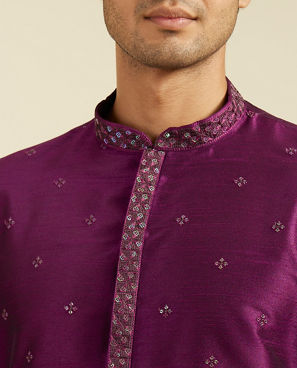
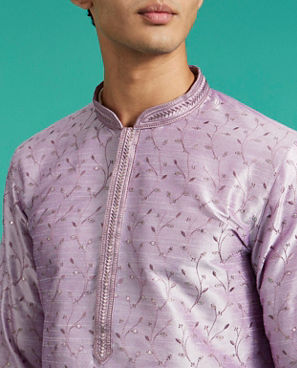
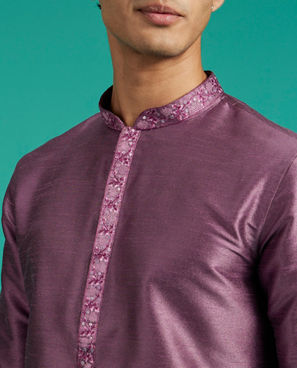
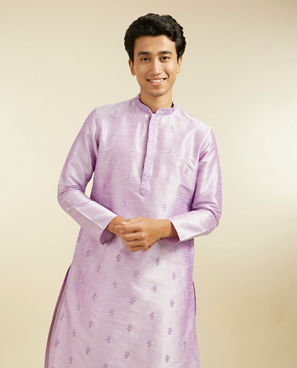
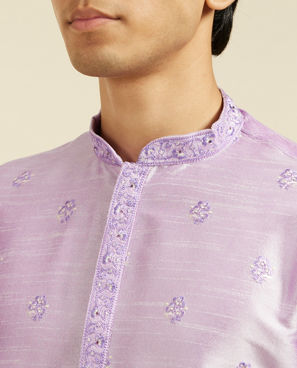
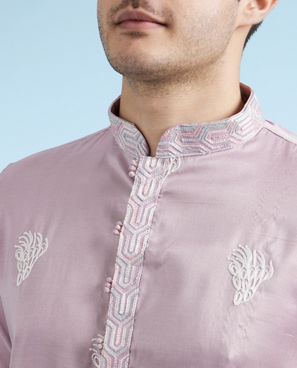
White thread work on purple — particularly fine Chikankari or shadow work — creates a contrast of extraordinary delicacy, the embroidery visible and refined without being loud. Tone-on-tone embroidery in a purple thread close to the base colour adds whispered depth that rewards careful attention. Each of these approaches transforms a purple kurta from a colour statement into a craft statement — and the combination of the two is what makes these kurtas genuinely extraordinary.
The Embroidery Techniques That Define This Collection
The range of embroidery techniques used across the collection reflects the full breadth of India's craft traditions.
Zari embroidery — the use of metallic gold or silver threads to create intricate patterns — is perhaps the most festive and occasion-appropriate technique, lending purple kurtas a richness and formality that is well-suited to wedding functions and significant celebrations.
Thread work in coloured or tonal threads creates surface patterns of great variety — from the fine, running stitches of Chikankari-inspired work to the bolder, more textured raised embroidery that adds genuine dimension to the fabric surface.
Resham embroidery — using smooth, lustrous silk threads — creates patterns of softness and vibrancy that sit beautifully on a purple base.
Sequin and mirror work elements, used judiciously, add a festive sparkle to purple kurtas that catches light dynamically and creates spectacular visual moments at evening celebrations.
When to Wear it
A purple embroidery kurta is one of those rare pieces that commands attention at any occasion it attends — and understanding where it performs best helps you deploy it with maximum impact. Wedding functions are its most natural domain: for reception evenings, sangeet nights, and cocktail functions, a deep royal purple or plum embroidery kurta in a rich fabric creates a look of festive authority that stands entirely apart from the conventional maroon and navy choices. Navratri evenings — where each night traditionally corresponds to a colour, with purple featuring prominently — are obvious occasions for this kurta, and the embroidery detail elevates the look beyond a simple colour choice into a genuinely considered outfit. For engagement ceremonies and milestone family celebrations, this kurta communicates the weight and significance of the moment through the quality and depth of the material choice itself.
Balance and Intention
The visual richness of a purple embroidery kurta requires a styling approach that is both deliberate and restrained — the colour and craft together create a powerful visual statement, and the surrounding elements should frame rather than compete.
-
Ivory and off-white churidars are the most classic and complementary pairing — the warmth of the ivory against the cool depth of the purple creates a contrast that is elegant and timeless.
-
Cream straight-cut trousers offer a slightly softer version of the same logic. For a more fashion-forward approach, light grey trousers create a cool-toned, sophisticated pairing that suits mid-tone and deeper purples particularly well.
-
If layering with a Nehru jacket, choose ivory, champagne, or deep gold — colours that harmonise with rather than compete against the purple base.
-
For footwear, embroidered juttis in gold, silver, or ivory, or classic dark mojaris, all work beautifully with purple.
-
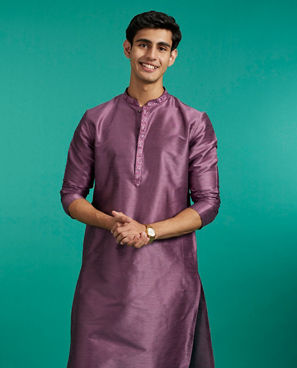
Accessories in silver complement purple's cool undertone most naturally — a silver bracelet, a classic watch, or simple silver cufflinks complete the look with the restraint that the garment's richness demands.
Purple is Commanding and Generous
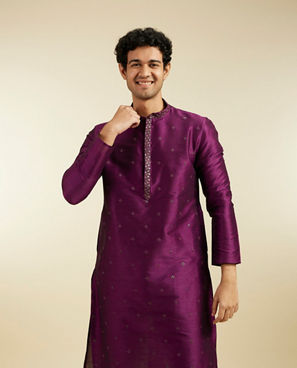
On deeper complexions, deep royal purple and plum embroidery kurtas create a look of extraordinary power — the colour's richness is amplified against warm, deep skin tones, and the embroidery's detail registers with exceptional clarity.
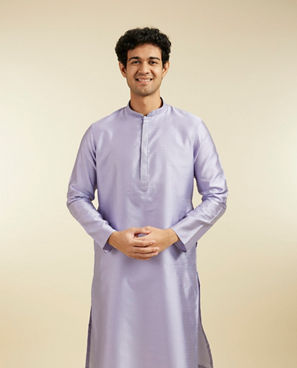
On medium and olive skin tones, mid-tone violets and periwinkle purples sit harmoniously — the colour's balance of warm and cool undertones creates a cohesion with olive complexions that very few other colours can match.
On fairer skin tones, any shade of purple creates a strong, sophisticated contrast — the colour's depth and the embroidery's detail together create a look of genuine formality and presence. The embroidery itself acts as a universal quality enhancer — adding light, texture, and dimension that makes the wearer look more considered and more dressed across every skin tone and complexion.
A Wardrobe Investment That Delivers on Every Level
A well-chosen purple embroidery kurta is one of the most rewarding investments in a wardrobe — and the reasons are straightforward. Purple is distinctive enough to ensure the kurta is genuinely memorable, but traditional enough in Indian textile heritage to remain appropriate at any celebration.
The embroidery elevates the garment beyond a colour choice into a craft object — something that carries inherent value and visible quality. Because purple sits apart from the dominant maroon, navy, and black choices in most men's wardrobes, a purplekurta immediately adds genuine differentiation to the collection — a piece that fills an aesthetic gap that most wardrobes have without realising it. Worn once, it consistently generates the kind of appreciation and comment that signals a truly well-chosen outfit. Worn repeatedly, it becomes one of those wardrobe cornerstones that is reached for with confidence across multiple seasons and occasions.
FAQs
1. Is purple a culturally appropriate colour for men's festive wear in India?
Absolutely. Purple has deep cultural roots in Indian tradition — associated with spirituality, royalty, and artistic refinement across centuries of Indian cultural history. In contemporary Indian ethnic fashion, purple is widely worn and enthusiastically received at weddings, festivals, and celebrations. It is not a bold departure from tradition — it is a culturally grounded choice with a heritage as deep as the colour itself.
2. What embroidery thread colour works best on a purple kurta?
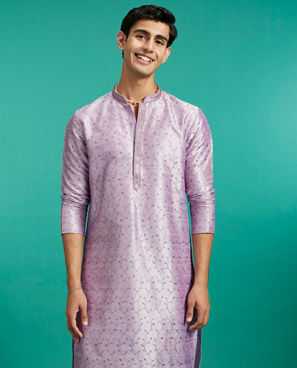
Gold thread work creates the most classic and impactful combination on deep purple shades — the warmth of the metallic gold against the cool depth of the purple is one of Indian festive fashion's most celebrated pairings. Silver embroidery suits lighter and mid-tone purples most naturally, creating a cool, harmonious contrast. White thread work creates a delicate, refined effect on lighter purples like lavender and lilac.
3. Which shade of purple is most versatile for different occasions?
Mid-tone violet and periwinkle purple are the most versatile shades — vibrant enough for festive occasions but not so deep as to feel exclusively formal. They work across a broad range of events from casual gatherings to semi-formal celebrations. For the most formal occasions, deep royal purple and plum are the most powerful and appropriate choices.
4. Can a purple embroidery kurta be worn without additional layering for a wedding function?
Yes. A well-cut kurta in a rich fabric — silk-blend, chanderi, or jacquard — with quality gold or silver embroidery is entirely sufficient for most wedding functions without additional layering. The combination of colour and craft provides the formality and visual impact that the occasion requires. A Nehru jacket is an option for added formality at the most prestigious functions, not a necessity.
5. How should a purple embroidery kurta be stored and maintained?
Purple embroidery kurtas should ideally be dry cleaned to preserve both the colour's depth and the embroidery's integrity. If hand washing, use cold water with a very mild detergent, handle gently without wringing, and dry in shade away from direct sunlight. When ironing, work on the reverse side or place a pressing cloth over the embroidery to protect the thread work. Store on a padded hanger or folded carefully, keeping the embroidered areas away from friction or sharp objects that could snag or distort the stitching.

_18-04-2025-20-22:297-368)
_18-04-2025-20-21:297-368)
_18-04-2025-20-22:Swatch)
_18-04-2025-20-07:297-368)
_18-04-2025-20-07:297-368)
_18-04-2025-20-07:Swatch)













_08-06-2026-12-18:297-368)
_08-06-2026-11-55:297-368)
_08-06-2026-12-18:Swatch)
_08-06-2026-11-56:Swatch)