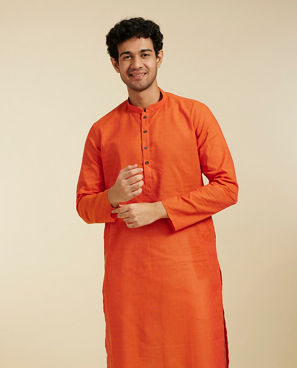
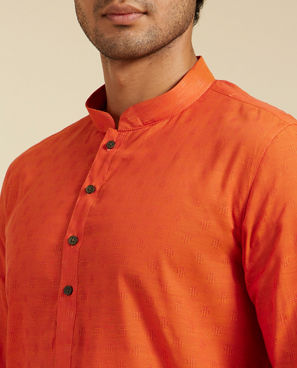
Orange Kurta for Men
Orange naturally signals joy and energy, which is why it appears so often in festive and wedding wardrobes. It picks up light beautifully, looks great in photos, and works for younger and older wearers alike.
This is a smart choice when you want:
-
A piece that fits in at Haldi, Holi, and daytime events, but can also move into early‑evening plans.
For Gen Z and young professionals, orange also reads as playful and confident, making it a natural pick for college fests, office celebrations, and travel weddings.
 Style variations
Within the kurta options, several design routes alter how dressy the final look feels. Across Diwas‑linked and partner listings, you see:
All of these keep the fits wearable and movement‑friendly, so the colour can do most of the styling for you.
Fabric and comfort details
Since many orange moments happen in the daytime—and often outdoors—fabric choice is key. Diwas tends to lean into cotton and cotton‑rich options for this space, with occasional blended fabrics for more structured sets.
Typical fabric directions for orange pieces include:
These fabrics help the kurta stay comfortable from morning ceremonies right through to late‑afternoon or early‑evening plans.
Where it fits best
An orange kurta shines on days when warmth and energy are central to the celebration. It often becomes the go‑to shade for daytime functions and happy, relaxed gatherings.
You might reach for orange when you’re dressing for:
-
Haldi functions, where turmeric, marigold decor, and sunshine all sit in the same colour family as your outfit.
Because it is such a distinctly celebratory shade, orange often becomes the piece you choose on days that are meant to feel bright and memorable.
An orange kurta carries an instant festive charge; the colour itself feels like celebration before you add any styling. It is especially striking for daytime functions and golden‑hour events, where the warm tone picks up natural light beautifully in photos and videos.
For many men, this kurta becomes the “festival face” of their wardrobe—what they wear for the biggest Diwali day, Gudi Padwa, or that one extra‑special puja.
You can also think of orange as a smart way to stand out in groups where a lot of people default to blue, black, or white. Worn with simple neutrals on the bottom, an orange looks bold but not overwhelming, especially when the design is kept clean or lightly patterned.
On campus, at office events, or during community celebrations, it signals confidence and energy without needing heavy embellishment. Over time, you can build small rituals around it—pulling out the same kurta for the first day of Diwali week, for example—turning it into a piece that holds memories as well as colour.
Styling
Styling decides whether your kurta looks playful, polished, or somewhere in between. The colour does a lot on its own, so small adjustments in bottoms, footwear, and accessories go a long way.
Some easy ideas:
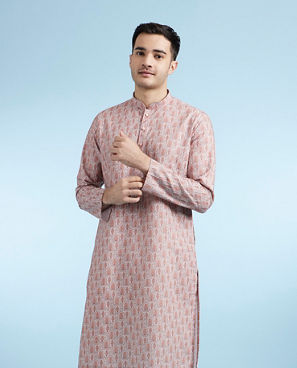
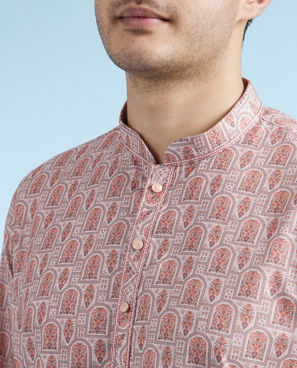
If the kurta already has print or tie‑dye, it’s usually best to keep accessories and footwear on the simpler side.
FAQ
1. Is an orange kurta only for Haldi?
No, while it’s perfect for Haldi, a simpler cotton kurta works just as well for Holi, daytime festivals, and casual family functions.
2. What should I pair with an orange kurta for a balanced look?
White, beige, or cream pyjamas and churidar are the easiest; for a more modern twist, neutral trousers or denims also work, especially for friend‑group events.
3. Does orange suit all skin tones?
Most mid‑orange shades are quite forgiving and look especially good in natural light; if you’re unsure, start with a cotton orange kurta and keep the rest of your look simple.
4. Is an orange kurta appropriate for office functions?
Yes, choose a regular‑fit kurta (solid or subtle print) and pair it with structured trousers and loafers to keep the look smart yet celebratory.
5. How do I pick the right size in an orange kurta set?
Use the kurta pajama size guide to match your chest, shoulder, and length measurements; if you’re between two sizes, choose the one that gives you a closer or more relaxed fit.
6. How should I care for an orange kurta so the colour stays bright?
Wash with similar colours using mild detergent in cool water and dry in shade; for printed or more detailed pieces, follow the specific care label or opt for gentle professional cleaning.



_08-06-2026-11-27:297-368)
_08-06-2026-11-27:297-368)
_08-06-2026-11-27:Swatch)