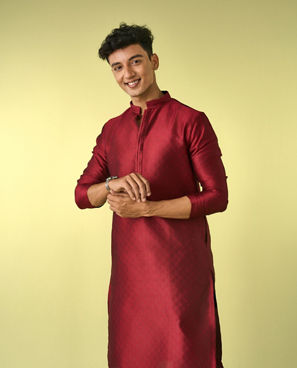
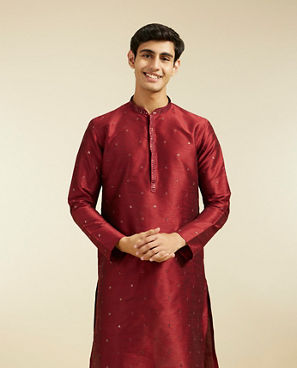
Maroon Silk Kurtas for Men – The Language of Luxury, Spoken Effortlessly
There are garments that simply feel different the moment you put them on. A maroon silk kurta is one of them. The weight of the fabric, the quiet sheen that shifts with every movement, the depth of color that no other material quite replicates — silk has a way of transforming a kurta from a piece of clothing into an experience. Maroon, with its rich, commanding presence, is perhaps the most natural partner silk has ever found in Indian wear.
Silk and Indian Craft: A Relationship Built Over Centuries
Silk has been central to Indian textile heritage for thousands of years. From the legendary looms of Varanasi to the mulberry silk traditions of Mysore, from the Tussar weaves of Jharkhand to the Kanjivaram silks of Tamil Nadu — India's relationship with silk is one of the richest and most enduring in the world.
In men's wear, silk kurtas have historically been reserved for moments of significance — weddings, religious ceremonies, royal gatherings. That heritage lends every silk kurta an inherent sense of occasion, a quiet formality that elevates the wearer simply by association.
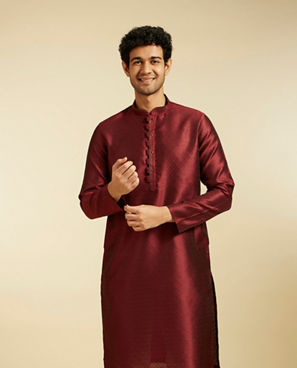
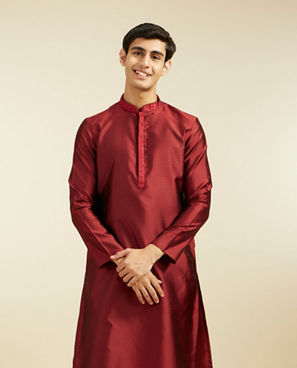
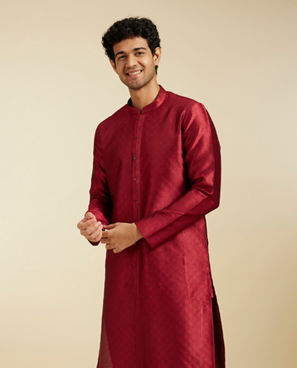
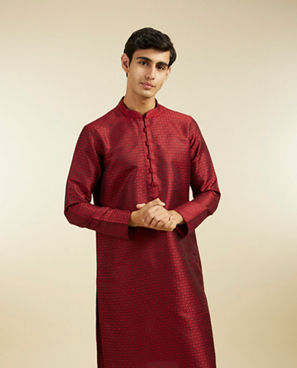
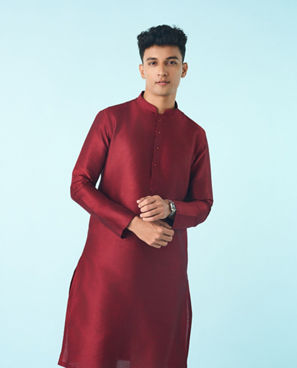
A maroon silk kurta from Diwas carries this legacy forward — not as a museum piece, but as a living, wearable expression of craft and culture that belongs in the contemporary wardrobe as much as it ever did in the historical one.
What Silk Does for Maroon
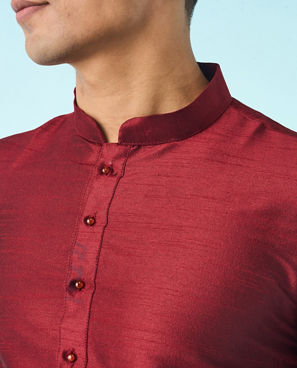
Maroon is already a color of considerable depth and presence — but silk takes those qualities and amplifies them in ways that no other fabric can. The natural lustre of silk gives maroon a dimensional quality: in bright light, the fabric catches a warm, almost golden sheen; in softer light, it deepens into something closer to burgundy or wine. This interplay of light and depth means that a maroon silk kurta looks different — and equally beautiful — across different settings and times of day. The smoothness of the silk surface also allows the color to appear with exceptional clarity and richness, free from the texture-induced tonal variation that matte fabrics create. The result is a color that feels alive on the fabric — shifting, glowing, and commanding in equal measure.
Occasions That Deserve this Combo
Wedding functions are its most natural home — whether you are the groom's close friend, a family member, or a guest who understands the assignment, this kurta signals that you have dressed for the moment with both care and cultural fluency. For the baraat, sangeet, or reception, it delivers exactly the right register of festive formality. Diwali celebrations call for silk's warmth and sheen — and maroon's richness makes it one of the most appropriate colors for the festival of lights. Eid is another occasion where this kurta earns its place naturally — the combination of color and fabric creates a look that is celebratory, elegant, and deeply appropriate. For engagement ceremonies and milestone family celebrations, this dresses the occasion without overshadowing it.
Understanding Silk Varieties in Maroon Kurtas
Not all silk kurtas are made equal, and understanding the varieties available helps you make a more informed choice.
-
Pure silk kurtas offer the richest hand and the most luminous finish — they are the most luxurious option and the most traditionally prestigious.
-
Silk-blend kurtas combine silk with cotton or synthetic fibres to create a fabric that retains much of silk's sheen and drape while being more breathable, easier to maintain, and more accessible in terms of investment.
-
Art silk — a synthetic approximation of silk — delivers a similar visual effect at a significantly lower price point, though it lacks the natural hand and breathability of genuine silk.
-
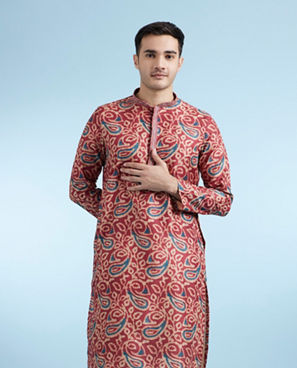
Tussar silk, with its natural gold undertone and slightly textured surface, gives maroon a warmer, more earthy character compared to the cooler sheen of mulberry silk.
The Diwas maroon silk kurta range works across these fabric varieties to offer options suited to different occasions, budgets, and personal preferences.
Design Details
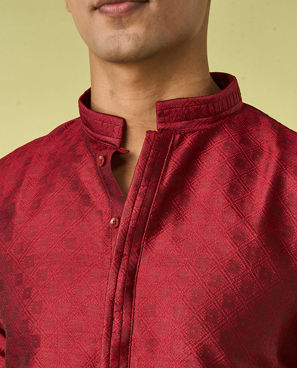
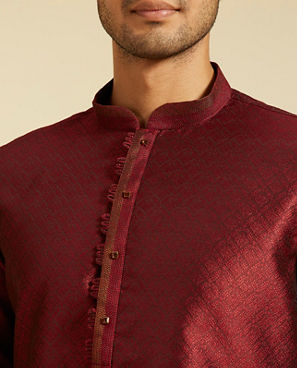
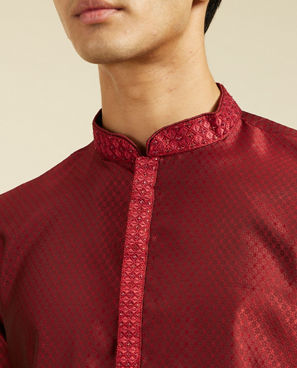
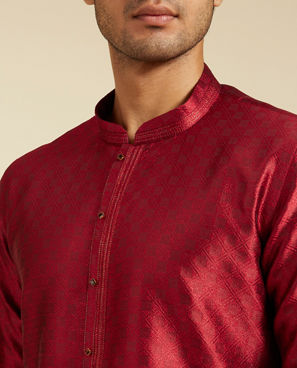
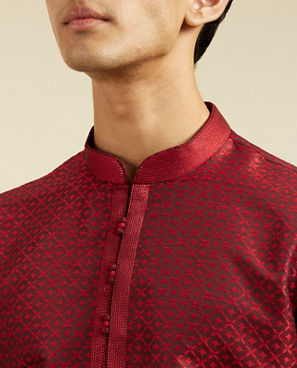
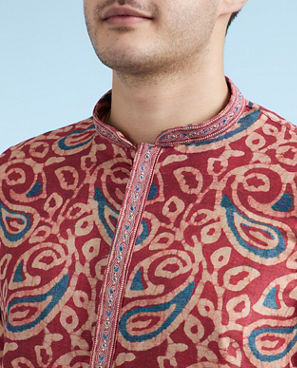
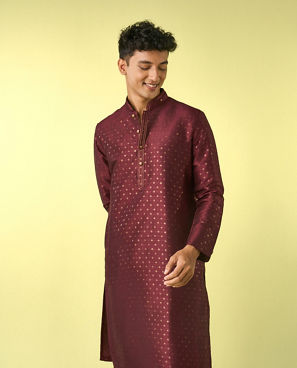
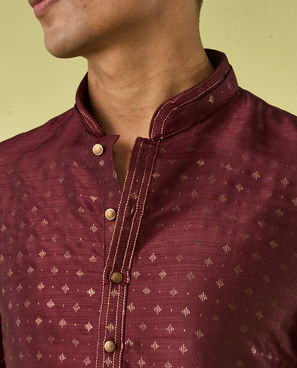
The design language is where contemporary craft meets timeless tradition. Subtle self-woven jacquard patterns — florals, paisleys, geometric lattices — add depth and texture to the fabric without introducing a contrasting color, maintaining the richness of the maroon while making the surface more visually interesting.
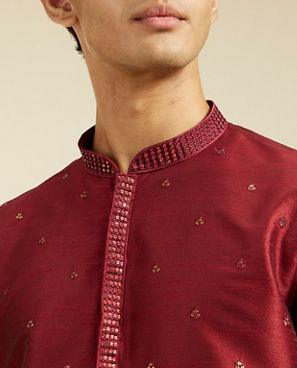
Gold or silver thread work embroidery along the neckline, placket, and cuffs brings a festive formality to the kurta that makes it immediately wedding and celebration-appropriate.
Mandarin collar constructions lend the kurta a clean, structured silhouette that photographs impeccably. Contrast piping or tonal embroidery along the hemline and sleeve edges adds a finishing detail that distinguishes a thoughtfully designed kurta from a basic one.
Each of these design choices, on a maroon silk base, contributes to a garment of genuine craft and elegance.
The Art of Restraint
The richness of a maroon silk kurta means that styling requires a light hand — the fabric and color do the heavy lifting, and everything else should support rather than compete.
-
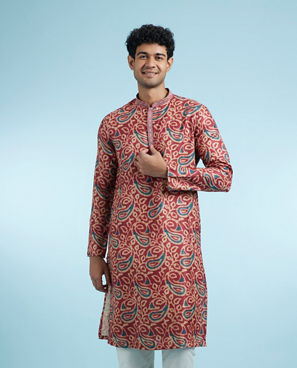
Ivory or cream silk churidars are the most natural and elegant pairing — the tonal harmony between the two pieces creates a cohesive, luxurious look that feels complete.
-
Off-white straight-cut trousers work equally well for a slightly more relaxed silhouette.
-
For footwear, embroidered gold or ivory juttis and classic Kolhapuri sandals in tan or brown complement the festive character of the kurta without drawing attention away from it.
-
If you choose to layer with a Nehru jacket or bandhgala, opt for ivory, gold, or a deep champagne tone that harmonises with rather than competes against the maroon base.
-
Accessories should be kept to a minimum — a single gold or silver bracelet, a classic timepiece, or a subtle ring is all that is needed when the fabric is this expressive.
Seasons and Skin Tones
One of the enduring strengths of maroon silk as a combination is how well it performs across both seasons and skin tones. In cooler months — through the wedding season that runs from October to February — it has a natural warmth that suits the season perfectly, both in terms of aesthetic and in terms of the fabric's ability to retain warmth. In warmer months, silk-blend or lighter silk fabric kurtas in maroon ensure you stay comfortable without sacrificing the look's richness.
Across skin tones, maroon is one of the most universally flattering colors available in men's wear — on deeper complexions it creates a striking, high-contrast look; on medium and olive tones it brings out warmth and depth; on fairer complexions it adds a commanding richness that reads as confident and well-dressed.
A Partnership of Depth with the Camera
Few garments photograph as beautifully as a maroon silk kurta — and the reasons are rooted in the physics of the fabric. Silk's natural lustre creates highlights and shadows that give the garment a three-dimensional quality in photographs, adding visual depth that flat fabrics simply cannot replicate. The richness of the maroon color reads with exceptional clarity in both natural and artificial light, making it as photogenic under warm indoor wedding lighting as it is in outdoor daylight. For wedding photography especially, this kurta creates images of genuine richness and cultural authenticity — the kind of photographs that look as good on a wall as they do on a screen. Style in good light, choose a backdrop that allows the color to breathe, and let the fabric do the rest.
Frequently Asked Question (FAQs)
1. What is the difference between a maroon silk kurta and a maroon regular kurta?
The primary difference lies in the fabric's character and presence. A silk kurta carries a natural lustre, a smoother hand, and a richness of drape that regular cotton or synthetic fabrics cannot replicate. On maroon specifically, silk amplifies the color's depth and gives it a dimensional, light-responsive quality that makes the garment feel more luxurious and occasion-appropriate. A regular maroon kurta is suited to casual and semi-formal settings; it belongs at celebrations.
2. How do I care for a maroon silk kurta?
Silk kurtas should ideally be dry cleaned to preserve the fabric's integrity and color depth. If hand washing, use cold water with a very mild detergent, handle gently without wringing, and dry in shade away from direct sunlight which can fade the color. Iron on the reverse side using a low heat setting, or use a steamer for best results. Store on a padded hanger or folded carefully with tissue paper to prevent crease marks.
3. Can a maroon silk kurta be worn without heavy embellishment for a wedding?
Absolutely. A well-cut kurta in a rich fabric with minimal or no embellishment is a sophisticated and confident choice for wedding functions. The fabric itself provides sufficient visual impact — you do not need heavy embroidery or embellishment for the kurta to feel festive and occasion-appropriate. A clean, well-tailored silk kurta paired with ivory churidars and a structured Nehru jacket is a complete, elegant wedding look.
4. Is maroon silk suitable for daytime wedding functions?
Yes, though fabric weight matters. For daytime functions like the baraat or pheras held outdoors, a lighter silk-blend kurta in maroon offers the richness of the color and a degree of silk's sheen while remaining more breathable and comfortable than heavier pure silk. Reserve the densest, most luxurious silk for evening functions like the reception or sangeet where the fabric's lustre is best appreciated in warm artificial lighting.
5. What Nehru jacket color pairs best with a maroon silk kurta?
Ivory and cream Nehru jackets create the most classic and elegant pairing — the contrast is timeless and the overall look feels cohesive and complete. Gold or champagne Nehru jackets add a richer, more ornate festive dimension that works particularly well for evening wedding functions. A deep wine or burgundy jacket in a tonal pairing creates a more monochromatic, fashion-forward look for those who prefer a bolder approach to layering.

_18-04-2025-22-06:297-368)
_28-04-2025-06-54:297-368)
_18-04-2025-22-06:Swatch)
















_26-05-2025-19-16:Swatch)