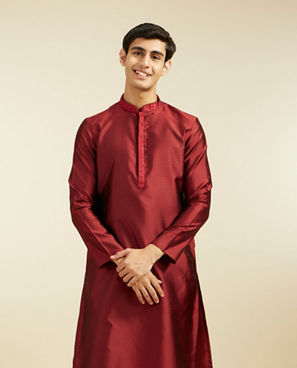
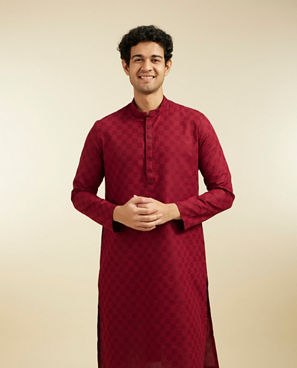
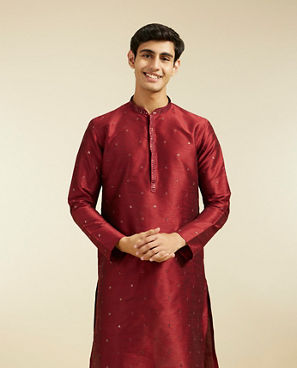
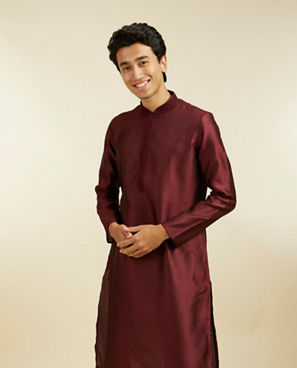
How maroon embroidery shifts the mood
Maroon sits between classic red and brown, giving it a more mature, composed character than bright, festive reds. When you layer embroidery onto maroon, the kurta feels instantly richer: the colour brings depth, and the threadwork or jaal patterns add dimension without needing heavy layers.
On Diwas and allied platforms, maroon embroidered kurtas are designed to feel like “occasion wear” that still moves easily with you—sharp enough for key evenings, but relaxed enough for long events, travel, and late‑night plans.
Why maroon embroidery works for real celebrations
Maroon is one of those shades that looks good across age groups, regions, and celebration styles. It carries a sense of warmth and richness that fits Indian weddings and festivals naturally, without the high‑energy intensity of a very bright red.
A maroon embroidery kurta makes sense when you:
-
Want your look to feel elevated but not flashy.
-
Need an outfit that can move between close‑family roles and “important guest” zones.
-
Prefer pieces that will still feel relevant a few seasons from now, even as trends shift.
Because maroon sits so comfortably in the Indian festive palette, an embroidered maroon kurta rarely feels out of place, whether you’re at a temple, banquet hall, rooftop, or family home.
Fabric stories behind maroon embroidered kurtas
The way maroon behaves on fabric is a big part of its appeal. Diwas‑linked maroon and red‑leaning kurtas often use materials that hold the colour deeply and carry embroidery cleanly.
Typical directions include:
-
Art silk and silk‑feel bases, where maroon appears saturated and slightly glossy, ideal for evening events and indoor lighting.
-
Blended viscose fabrics, which drape well over churidar or trousers and stay comfortable even when the embroidery is more detailed.
-
Jacquard and self‑design weaves, where the pattern is built into the fabric itself, creating a subtle embroidered effect before extra threadwork is even added.
These fabrics help the kurta fall neatly, keep the embroidery from feeling stiff, and make sure maroon looks rich in both daylight and artificial light.
Embroidery styles on maroon
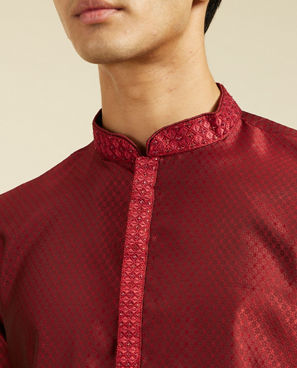
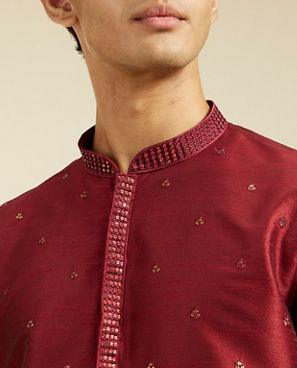
Embroidery shows differently on maroon than on lighter colours. On a deep base, even small details can pop, which is why the work tends to be carefully placed rather than scattered at random.
Across maroon embroidered kurtas you’ll typically see:
-
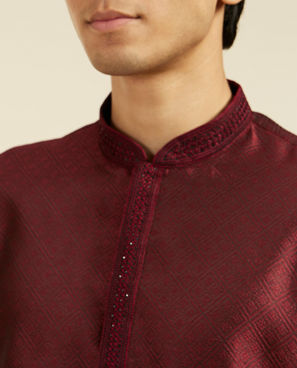
Neckline and placket embroidery, where the detailing frames the face and chest, leaving the lower half cleaner for balance.
-
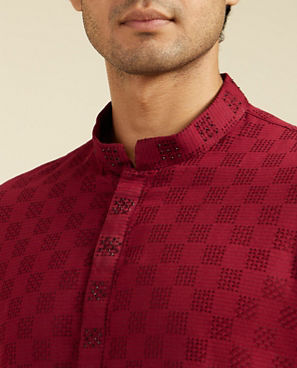
All‑over ogee or jaal patterns, as in Manyavar’s classic red and maroon sets, where a repeating motif gives the kurta a continuous, regal surface.
-
Mixed techniques, where thread embroidery is supported by light sequin or zari touches, adding just enough shimmer for receptions and sangeet nights.
-
Textured motifs on self‑design bases, so the kurta looks layered and intricate up close, but still reads as a clean maroon silhouette from a distance.
This range lets you decide whether you want your maroon embroidery kurta to feel subtle and textured or clearly dressy and centre‑stage.
When maroon embroidery feels exactly right
A maroon embroidery kurta naturally gravitates towards the bigger, more emotional pages of your celebration calendar. It’s the piece you pick on evenings that feel a little heavier with meaning.
It works especially well for:
-
Receptions and cocktail‑leaning functions, where you want to look sharp and slightly formal without a full sherwani.
-
Sangeet nights, especially if your role is close to the couple—cousin, best friend, or sibling—standing in the front rows of every photo and performance.
-
Peak Diwali gatherings, from main‑day card parties to big family get‑togethers where everyone is a little more dressed up than usual.
-
Anniversaries, milestone birthdays, and housewarmings, where the dress code is festive, slightly upscale, and family‑centric.
Because maroon doesn’t shout, you can also wear the same embroidered kurta across different family and friend groups without it feeling too “loud” to repeat.
Three styling moods
To keep the page fresh and practical, think of your maroon embroidery kurta in terms of moods rather than single outfits.
1. Understated ceremonial
-
Choose a maroon kurta with focused embroidery along the neckline and placket.
-
Pair it with cream or beige churidar and classic mojaris; ideal for pujas, family rituals, or early‑evening receptions.
2. Evening‑ready and social
3. Modern, city‑leaning
-
Pick a cleaner maroon embroidered kurta—perhaps with subtle motifs—and wear it with slim neutral trousers and loafers.
-
This works nicely for restaurant celebrations, cocktail‑style parties, and office‑hosted festive evenings.
With each mood, the kurta stays the anchor, while bottoms and footwear quietly shift the overall read.
Balancing colour, embroidery, and accessories
Because maroon and embroidery both carry visual weight, the rest of your styling can stay intentionally simple. That’s part of what makes this category easy to wear.
A few guidelines:
-
Let the bottoms calm or lift the look—cream and beige soften maroon, while gold‑tone or deeper colours turn the volume up.
-
Keep accessories minimal: a watch, kada, or ring usually does enough; heavy layered chains or stacked jewellery can compete with the embroidery.
-
Use layers sparingly—a Nehru jacket or stole works, but choose tones that frame rather than fight the base maroon.
This way, your kurta stays the hero while everything else just supports the mood you’re aiming for.
Maroon embroidery in photos and videos
Deep, embroidered kurtas like these are built for camera moments. Under warm lights, maroon takes on a velvety richness, and the embroidery adds texture that shows clearly in both close‑ups and group shots.
In practice, that means:
-
Your kurta won’t wash out or disappear in low‑light banquet and terrace photos.
-
Jaals, neck motifs, and textured surfaces give enough interest for slow‑pan outfit reels without needing extra bling.
-
In group frames with lighter tones, maroon helps you stand out just enough—a strong presence without overpowering everyone else.
For people who like saving looks in their camera roll as much as in their wardrobe, maroon embroidery usually ends up among the most‑revisited outfits.
How a maroon embroidery kurta fits into a tight wardrobe
If you’re building a curated celebration wardrobe rather than a huge one, a maroon embroidered kurta fills the “quietly rich evening” slot.
Alongside:
-
One light neutral kurta (cream, beige, or white), and
-
One brighter or more playful piece (prints, mirror work, or bold colour),
A maroon embroidery kurta becomes:
-
The outfit you reserve for receptions, core Diwali nights, and family milestones.
-
The fallback when an invite suddenly feels more formal than you expected.
-
A repeatable favourite that still looks appropriate across different circles and seasons.
You don’t need many such pieces; one well‑chosen kurta can quietly carry several important dates on your calendar.
FAQs
1. How is a maroon embroidery kurta different from a plain maroon kurta?
Embroidery adds depth, pattern, and sometimes a hint of shimmer, turning a simple maroon upper into a more considered, occasion‑ready piece without needing extra layers.
2. Is maroon embroidery suitable for wedding functions?
Yes—maroon embroidered kurtas are ideal for sangeet, reception, and dressy Diwali evenings, especially when paired with churidar or slim pyjamas and polished footwear.
3. Will a maroon embroidered kurta look too heavy for smaller gatherings?
Not if you choose tone‑on‑tone or lighter embroidery; paired with softer bottoms and minimal accessories, it can feel refined rather than overwhelming for intimate events.
4. What bottoms pair best with a maroon embroidery kurta?
Cream, beige, off‑white, and gold‑tone churidar or pyjamas are the easiest; for more modern looks, some styles also work with neutral trousers.
5. Can I restyle the same maroon embroidery kurta across seasons?
Definitely—switching between lighter and darker bottoms, changing footwear, and adding or skipping a stole or jacket lets the same kurta feel fresh across different years and functions.