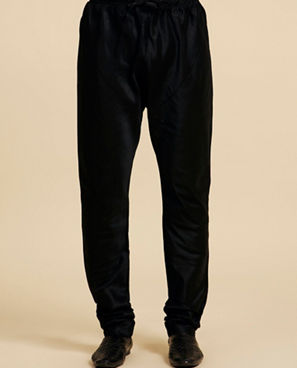
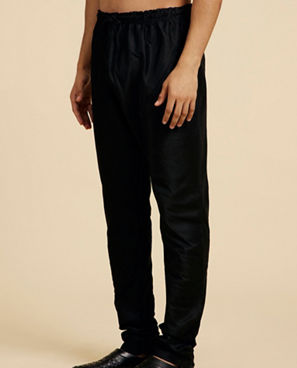
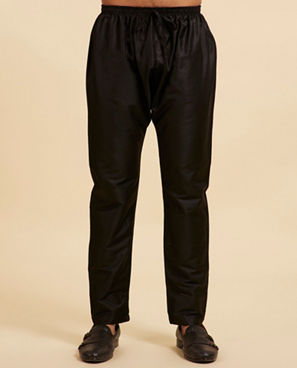
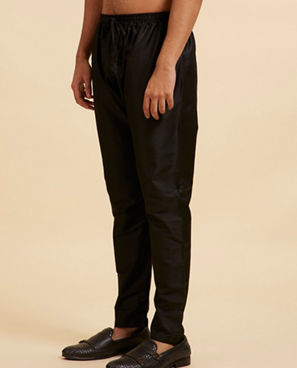
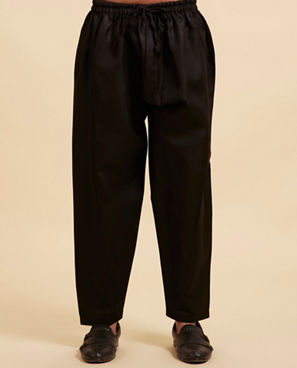
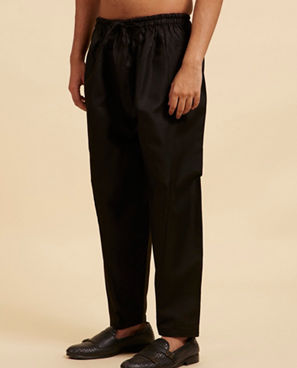
Black churidar pants for men: the sharper ethnic bottom
On this page, Diwas brings together one of the most structured silhouettes in Indian men's wear with the grounding, evening-ready quality of black. Where pyjamas drape and Patialas flow, churidars fit—following the leg closely and gathering in neat horizontal folds at the ankle, creating a clean, elongated line that makes the kurta above it look more intentional and dressed-up.
At Diwas, these pants are imagined as the bottom that elevates: the piece you choose when you want your overall look to feel sharper, more formal, and closer to occasion-wear without committing to a full sherwani set.
What makes a churidar different from other ethnic bottoms
Understanding the churidar's silhouette helps you see exactly why it works so well for certain occasions and styling goals.
-
Fit through the leg: Unlike pyjamas which have a relaxed, straight fall, churidars are fitted from the waist through the thigh and narrow progressively down the leg.
-
Gathered ankle: The extra length in the fabric creates neat horizontal folds at and below the ankle—this is the churidar's defining feature and what gives it its name.
-
Elongating effect: The fitted line from waist to ankle creates a longer, leaner silhouette, making it particularly flattering under longer kurtas and sherwanis.
-
Formal register: Compared to pyjamas and Patialas, churidars carry an inherently more formal, dressed-up quality—they signal that the outfit was chosen rather than defaulted to.
A black churidar takes all of these qualities and adds the additional dimension of colour: darker, sharper, and more evening-appropriate than white or cream versions.
Why black is a particularly strong churidar colour
White and cream churidars are traditional defaults—reliable, classic, and widely worn. Black churidars occupy a different space:
-
They add a contemporary, slightly urban edge to traditional ethnic silhouettes.
-
They work naturally for evening functions and night events where darker tones feel more appropriate than lighter ones.
-
They create strong visual contrast with lighter-toned kurtas, giving the overall look more definition and sharpness.
-
They photograph well under indoor lighting, stage lights, and evening settings without looking flat or washed out.
-
They pair with deep-toned kurtas in a tonal way that feels cohesive and deliberate rather than mismatched.
For men who want their ethnic looks to feel more modern and composed, a black churidar is often the single most effective change they can make to their existing wardrobe.
Fabric and fit: what to look for
For a churidar to gather correctly at the ankle and follow the leg cleanly without pulling or bunching, fabric and construction have to work together. Diwas and linked styles typically use:
-
Viscose and viscose-rich blends—the most common churidar fabric; drapes smoothly, has enough weight to gather neatly, and feels comfortable for extended wear across long functions.
-
Cotton-lycra or stretch blends—used in more relaxed or contemporary churidar cuts; the stretch element makes them easier to move in and more comfortable for high-movement events like sangeet.
-
Silk-feel and art-silk bases in some more occasion-specific churidars, where a subtle sheen adds formality and dressiness to match embroidered or heavily worked kurtas.
-
Pure cotton churidars for more casual and daytime-appropriate versions that trade some formality for breathability and ease.
Fit is equally important: the churidar should feel snug but not tight through the leg, with enough extra length to create clean gathers at the ankle without excessive bunching above it.
The kurtas that work best with
Not every kurta calls for a black churidar, but many look significantly better with one than with lighter alternatives. The strongest pairings:
-
White and cream embroidered kurtas—the contrast between a light, detailed upper and a black churidar creates one of the sharpest, most striking looks in men's wear; ideal for receptions and formal evenings.
-
Off-white and ivory chikankari kurtas—where black at the bottom gives the delicate embroidery above a strong, grounded foundation.
-
Deep-toned embroidered kurtas (bottle green, maroon, navy)—worn with black churidar for a tonal, dark-palette look that feels very deliberate and contemporary.
-
Printed and geometric contemporary kurtas—where black grounds the print and prevents the look from feeling too busy or casual.
-
Structured bandhgala jackets and Nehru-collar sets—where black churidar is essentially the default pairing, carrying the formality of the upper through to the bottom of the outfit.
The consistent logic: black churidar either creates contrast with lighter uppers or cohesion with darker ones—both approaches work, just for different moods and occasions.
Occasions where black churidar pants feel exactly right
These pants are built for evenings, occasions, and moments where you want to look fully dressed. They're especially strong for:
-
Receptions and cocktail-style functions—where the combination of a detailed kurta and black churidar creates a look that sits just below sherwani-level formality while feeling completely deliberate.
-
Sangeet and musical nights—where the fitted silhouette of a churidar is comfortable enough for dancing but still looks sharp in photos and videos.
-
Diwali main-evening gatherings—card parties, house get-togethers, and family visits where you want to look festive and well-dressed without overdoing it.
-
Engagement ceremonies and roka functions—especially for the groom's side, where a white or cream embroidered kurta with black churidar hits exactly the right note.
-
Wedding-week evening events—where you're attending multiple functions and want one strong bottom that carries different kurtas across different nights without repeating the same combination.
Because they are inherently more formal than pyjamas, they automatically raise the formality register of whatever kurta you wear with them.
Styling: three directions
-
Classic contrast—white over black
-
A white or ivory embroidered or self-texture kurta with black churidar pants.
-
Rich mojaris in deep brown or black leather, a simple watch, and a small kada.
-
Sharp, striking, and appropriate for receptions, formal family functions, and important evenings.
-
Tonal dark—deep colour over black
-
A bottle green, navy, or maroon embroidered kurta with black churidar for a dark, cohesive palette.
-
Polished dark footwear and minimal accessories—the depth of the overall look does the styling work.
-
Ideal for evening wedding events and Diwali nights where you want to look rich and deliberate.
-
Contemporary ethnic—structured upper over black
-
A bandhgala jacket or Nehru-collar structured kurta in any colour over black churidar.
-
Clean, formal footwear and a watch; the structured upper and fitted churidar create a very polished, modern ethnic silhouette.
-
Works for cocktail events, city celebrations, and milestone functions where you want to look occasion-ready without traditional heaviness.
Across all three, the black churidar stays constant—only the upper and footwear change to match the occasion.
Black churidar as part of a complete ethnic bottom wardrobe
In a practical ethnic wardrobe, different bottoms serve different roles. Here's how black churidar pants fit into the broader picture:
-
White pyjamas: The default for rituals, pujas, and daytime casual functions—soft, universally appropriate.
-
Beige or cream churidar: The classic formal pairing for most wedding functions and festive evenings.
-
Black pyjama: A contemporary, slightly relaxed alternative for evening-casual events.
-
Black churidar pants: The most formal and structured of the dark bottoms—reserved for your most dressed-up evenings and important occasions.
With just these four bottoms, you can cover virtually the entire ethnic occasion spectrum—from morning temple visits to late-night receptions—while rotating your kurtas across them.
How these pants elevate the overall silhouette
One of the more underappreciated qualities of a well-fitted black churidar is how much it changes the visual length and proportion of the overall outfit. The fitted leg creates a clean, elongated line from waist to ankle, which:
-
Makes longer kurtas look more intentional and structured.
-
Creates a stronger visual anchor for embroidered or detailed uppers that might otherwise float over looser, baggier bottoms.
-
Gives the overall look a more tailored quality—closer to a suit in its precision—than any other ethnic bottom manages.
For men who are particular about proportion and silhouette, a good black churidar is often the most transformative piece they can add to their ethnic wardrobe.
In photos and reels
Black churidars photograph exceptionally well in evening and indoor settings. The fitted leg and neat ankle gathers are visible and defined in full-length shots, while the black tone creates clean separation from the floor and backdrop—something that looser, lighter bottoms sometimes fail to do.
In outfit reels and entrance videos, the churidar's fitted silhouette looks purposeful in motion—there's no excess fabric moving against you, and the overall look stays sharp from every angle. Under stage lighting and wedding spotlights, the combination of a richly detailed kurta and black churidar creates the kind of full-length frame that looks considered from head to toe.
If you're investing in how your complete look appears in photos and videos—not just the kurta—a black churidar is one of the highest-impact additions you can make.
Frequently Asked Question (FAQs)
1. How are black churidar pants different from black pyjamas?
Churidars are fitted through the leg and gather at the ankle, creating a sharper, more formal silhouette; pyjamas have a relaxed, straight fall and feel more casual—both are ethnic bottoms but they carry very different levels of formality.
2. What kurta colours work best with black churidar pants?
White, cream, and ivory create the strongest contrast; deep tones like bottle green, maroon, and navy create a rich tonal look; prints and geometric kurtas are grounded cleanly by black churidar for a contemporary feel.
3. Are black churidar pants appropriate for daytime events?
They're best suited to evenings and formal functions; for daytime events, lighter churidars in cream or beige feel more appropriate—black is most at home when the occasion and lighting call for a sharper, more formal look.
4. What footwear works best with black churidar pants?
Deep-toned mojaris, black or dark brown formal shoes, and polished loafers all work well; avoid very casual sandals or sneakers, which undercut the inherent formality of the churidar silhouette.
5. Can I wear black churidar pants with a bandhgala or Nehru jacket?
Absolutely—black churidar is one of the most natural pairings for structured bandhgala jackets and Nehru-collar sets, creating a complete, polished ethnic look that sits just below sherwani-level formality.