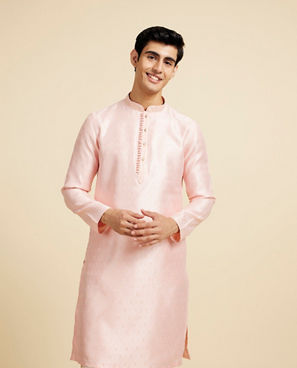
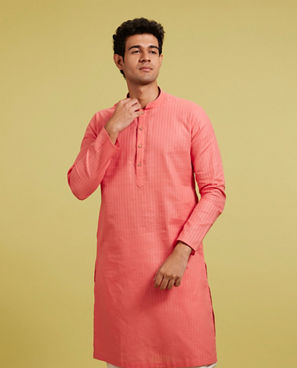
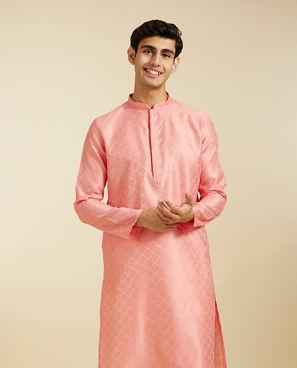
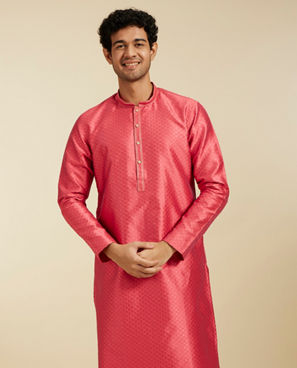
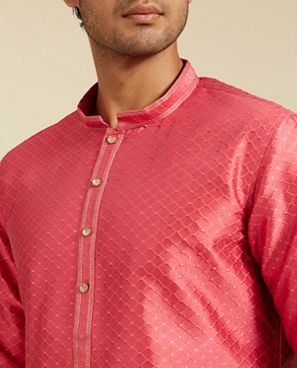
Light pink kurta for men: soft in colour, strong in presence
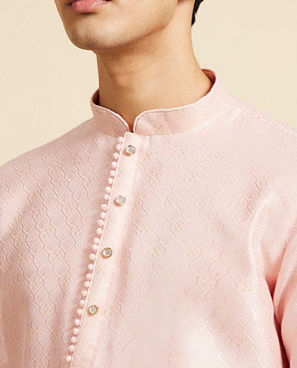
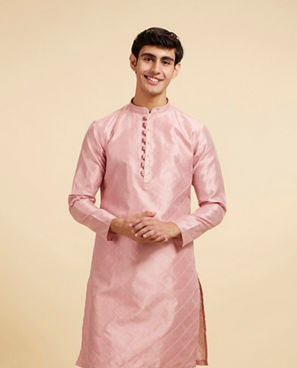
Diwas brings together some of the most approachable and flattering shades in men's wear—blush, baby pink, rose-tinted neutrals, and soft pastels—with Diwas' relaxed, celebration-ready silhouettes. You'll find plain, self-texture, printed, chikankari-inspired, and lightly embroidered versions, each designed to feel like a considered colour choice rather than an experimental one.
Light pink in men's wear has moved well past the "bold statement" phase. Today it sits comfortably alongside navy, white, and beige as a colour that men across age groups reach for without hesitation—especially when the occasion calls for warmth, approachability, and a look that feels fresh in every photo.
Why light pink works so consistently in Indian celebration wear
Pink in general is deeply woven into Indian celebration culture—think gulal at Holi, pink marigold arrangements, and the prevalence of rose tones in wedding décor. Light pink taps into that cultural familiarity while sitting in a shade that feels easy and modern rather than traditionally heavy.
A few reasons it works so well:
-
Universal flattery: Light pink sits in a warm-to-neutral zone that complements a wide range of Indian skin tones in both natural and warm artificial light—arguably one of the most consistently flattering shades available.
-
Occasion flexibility: Soft enough for morning rituals and daytime events, but with the right fabric and detail, it can carry evening functions and reception-adjacent occasions without feeling underdressed.
-
Pairing ease: Light pink works with whites, creams, beiges, greys, and even deeper neutrals—giving you multiple bottom options from a single upper.
-
Social versatility: It reads differently across groups—romantic for engagement functions, fresh for daytime weddings, youthful for campus celebrations, and calm for family pujas—making it one of the most repeat-friendly colours in any wardrobe.
-
Camera friendliness: Light pink photographs cleanly across lighting conditions, doesn't wash out, and creates a warm, flattering tone in both candid and posed shots.
The light pink spectrum: shades and what they say
Light pink is a broad family rather than a single shade, and each variation carries a slightly different personality. On this page you'll find:
-
Baby pink and powder pink—the softest, most pastel end; feels youthful, gentle, and very daytime-appropriate for haldi, casual weddings, and campus events.
-
Blush and nude pink—a slightly warmer, skin-toned direction; feels sophisticated and modern, works across daytime and early evening occasions, and flatters almost every complexion.
-
Rose and dusty pink—a slightly deeper, muted direction; more grown-up and composed in feel, suits engagements, cocktail-adjacent functions, and Diwali evenings.
-
Icy and cool pink—a cooler, almost lavender-adjacent take; feels contemporary and trend-aware, works well for younger men and fashion-forward celebration dressing.
Choosing within this spectrum is mostly about occasion depth and personal comfort—softer shades for lighter, daytime moments; slightly deeper shades for occasions that deserve more.
Fabric directions
For light pink to look rich rather than faded, the fabric has to carry the colour cleanly and give it the right finish for the occasion. Diwas and linked styles use:
-
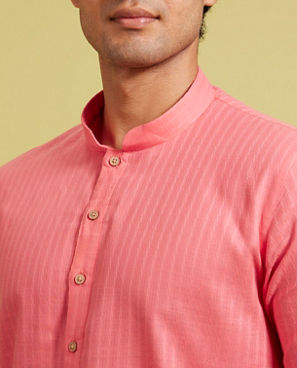
Cotton and cotton-rich blends for breathable, daytime-friendly kurtas—natural, comfortable, and ideal for haldi, casual festivals, outdoor weddings, and everyday festive wear.
-
Viscose and blended viscose in slightly more polished light pink pieces where a smoother surface and gentle drape suit indoor functions and evening settings.
-
Art silk and silk-feel weaves in embroidered or more detailed kurtas, where a subtle sheen lifts the colour and makes surface work—embroidery, chikankari, sequins—look deliberate and occasion-ready.
-
Linen and linen-blends for a relaxed, textured take on light pink that works for office events, smaller celebrations, and casual Indo-fusion dressing.
The fabric choice determines whether your kurta feels like a casual everyday piece or a genuinely festive, occasion-ready garment.
Design directions you'll find
Light pink is versatile enough to carry a range of design approaches, from the most minimal to the more embellished. On this page:
-
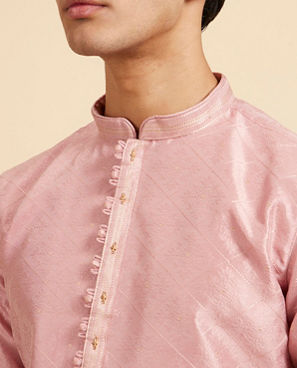
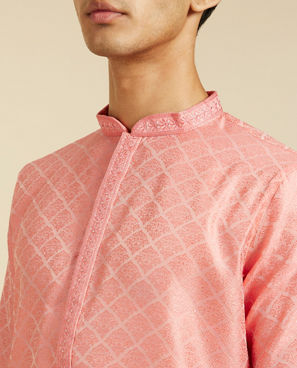
Plain and self-texture kurtas—where the colour and fit do all the talking; a woven jacquard or self-design texture adds quiet depth without prints or embroidery.
-
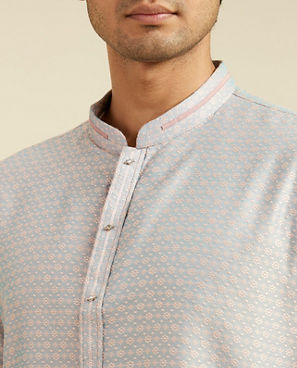
Printed kurtas—florals, geometric motifs, or abstract patterns in complementary tones over a pink base; keeps the mood soft and expressive while staying easy to wear.
-
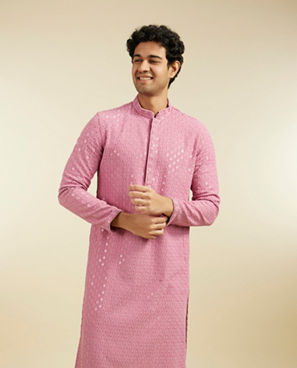
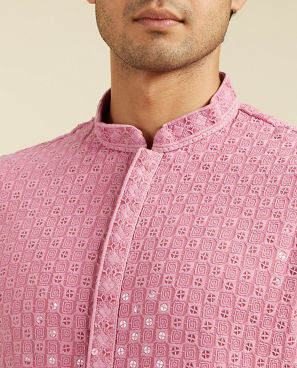
Chikankari-inspired kurtas—fine Lucknawi-style stitching over a blush or baby pink base; feels delicate and handcrafted, particularly suited to daytime weddings and mehendi functions.
-
Embroidered kurtas—more defined threadwork, zari, or sequin highlights along the neckline, placket, or yoke for evening and reception-adjacent occasions.
Because the base shade is already communicating softness and warmth, even small surface details read clearly and give the kurta a more finished, festive quality.
Where it fits across your calendar
Light pink is one of those colours that rarely feels wrong for an invitation. It fits especially naturally at:
-
Engagement and roka ceremonies—where the mood is celebratory and emotionally warm, and light pink matches both without feeling calculated.
-
Haldi and daytime wedding functions—where soft pink sits beautifully in the colour palette of the day and looks fresh and considered in natural light.
-
Mehendi events—particularly as a guest or friends-side look where you want colour but not competition with the greens and yellows typically worn by the main parties.
-
Diwali and spring festival gatherings—where light pink offers a soft, warm alternative to the more expected reds and maroons of the season.
-
Office cultural days and campus celebrations—where a plain or self-texture kurta looks considered and ethnic without being over-dressed for the setting.
-
Family brunches and informal celebrations—where you want to look like you made an effort without wearing something that demands attention.
Because it reads as warm and approachable rather than intense or formal, a kurta works across age groups and circles without ever feeling out of place.
Three real looks
1. Soft and ceremonial
-
Baby pink or blush chikankari kurta with white or cream churidar and classic mojaris.
-
A simple watch and minimal kada; the embroidery and colour combination feel complete without needing more.
-
Right for mehendi, engagement ceremonies, daytime weddings, and morning family functions.
2. Fresh and festive
-
A self-texture or lightly embroidered kurta with beige pyjamas and tan loafers.
-
Add a small pocket square or subtle stole in ivory or soft gold for slightly more dressed-up events.
-
Works for Diwali gatherings, Holi, engagement parties, and family celebrations.
3. Contemporary and easy
-
A plain or printed kurta with slim dark denims and white sneakers or clean loafers.
-
Sleeves slightly rolled; works for college events, café outings, casual festivals, and friend-group plans where Indo-fusion feels more appropriate than full ethnic.
-
Across all three, light pink stays the consistent anchor—only the fabric weight, bottom choice, and occasion depth shift.
How light pink interacts with the rest of your wardrobe
One of light pink's most underrated practical qualities is how well it works with other pieces you already own.
-
With white pyjamas: The most classic and harmonious pairing; keeps the overall look soft and ceremony-appropriate.
-
With cream or beige churidar: Adds warmth and polish without disrupting the colour story; ideal for daytime wedding functions.
-
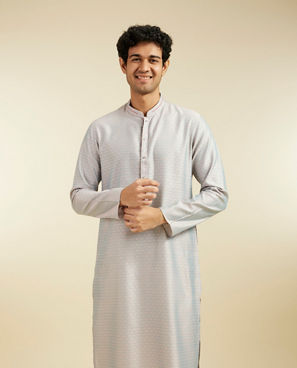
With grey: A surprisingly modern combination; grey grounds light pink's softness and gives the overall look a more contemporary feel.
-
With dark denims: The everyday Indo-fusion pairing that makes a light pink kurta feel casual and current rather than traditionally festive.
-
With black churidar or pyjama: Sharpens the overall look significantly; light pink over black creates a striking contrast that works for evening events and reception-adjacent functions.
This pairing flexibility means the kurta rarely sits idle in your wardrobe—there's almost always a bottom it can work with for whatever the plan is.
Light pink in a small, curated wardrobe
For men building a compact but versatile ethnic wardrobe, a light pink fills the soft pastel, warm celebration slot that neither white nor beige quite covers.
Alongside:
-
a neutral white or cream piece for rituals and simple functions, and
-
a deeper jewel tone (navy, bottle green, or maroon) for formal evenings,
a light pink kurta becomes:
-
your natural choice for engagement parties, daytime weddings, and spring celebrations;
-
the colour that gives your wardrobe genuine warmth without the intensity of red or orange;
a repeat-wear staple that feels fresh across different circles because the shade is soft enough to go unnoticed as "the same outfit again" while still looking deliberate.
Light pink in photos, reels, and celebration memories
Light pink is genuinely one of the most camera-friendly colours. It holds its warmth across lighting conditions—outdoor morning light, warm indoor settings, and evening fairy-light backdrops—without washing out or over-saturating.
In group shots, it stands out gently against whites and creams while harmonising naturally with other pastels and soft tones. In close-up portraits, it creates a flattering, warm frame around the face. In outdoor settings—garden venues, poolside functions, terrace reels—it catches natural light in a way that looks genuinely beautiful rather than just acceptable.
For content-driven celebrations where the look needs to work in photos, reels, and video across a full day, light pink is one of the most consistently reliable choices—soft enough to feel authentic, warm enough to feel festive, and flattering enough to look good in every frame.
FAQs
1. Is a light pink kurta appropriate for all occasions in Indian celebrations?
Yes, for most festive and semi-formal occasions—engagement parties, daytime weddings, mehendi, Diwali gatherings, and family functions; for very formal receptions, choosing a slightly deeper shade with richer embroidery or fabric makes the same colour feel more occasion-ready.
2. What bottoms pair best with a light pink kurta?
White and cream are the most classic; beige and camel add warmth; grey creates a contemporary feel; dark denims work for casual plans; black churidar or pyjama sharpens the look for evening events.
3. Does light pink work for men with darker skin tones?
Yes—blush and warm pink tones are particularly flattering on medium to deeper Indian skin tones; slightly warmer or coral-leaning light pinks tend to work even better than very cool or icy shades.
4. How do I make a light pink kurta feel more formal for an evening function?
Choose a slightly deeper shade (dusty rose or rose pink), opt for embroidered or chikankari work on a richer fabric base, pair with churidar and polished footwear, and add one considered accessory—a bold kada or dress watch.
5. Can I wear a light pink kurta across multiple events in the same wedding week?
Yes—by changing bottoms, footwear, layers, and accessories, the same kurta can appear fresh across multiple events; the shade is soft enough that different groups rarely identify it as the same piece worn again.

_18-04-2025-19-59:297-368)
_18-04-2025-20-00:297-368)
_18-04-2025-19-59:Swatch)
_18-04-2025-22-15:297-368)
_18-04-2025-22-16:297-368)
_18-04-2025-22-15:Swatch)
_28-04-2025-06-46:297-368)
_18-04-2025-21-09:297-368)
_28-04-2025-06-46:Swatch)


_28-04-2025-07-19:297-368)
_18-04-2025-17-57:297-368)
_28-04-2025-07-19:Swatch)