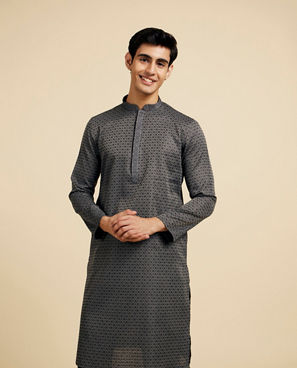
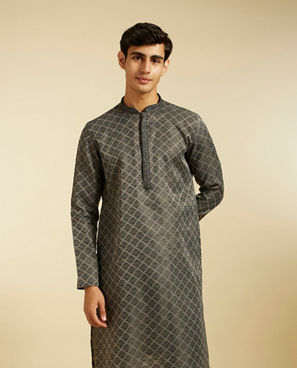
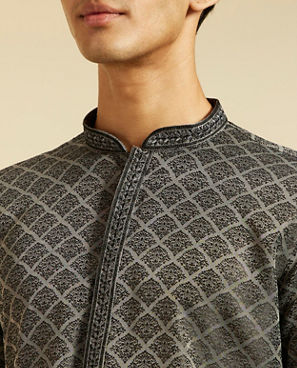
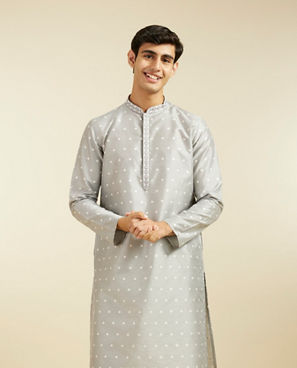
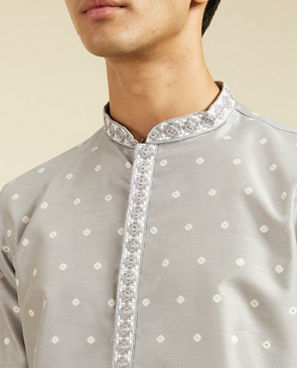
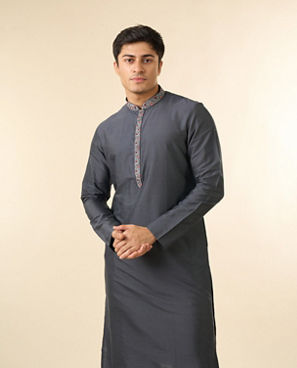
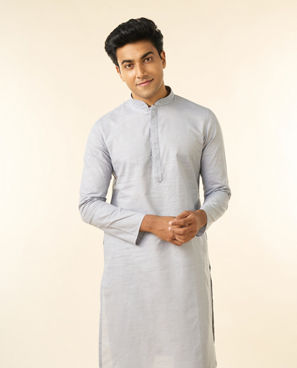
Grey kurta for men: the colour that changes the conversation
Grey is not a colour that typically comes to mind first when planning Indian celebration wear. And that is precisely its strength. In a sea of maroons, navys, and whites, a well-chosen grey kurta stands out through restraint—it communicates sophistication and self-assurance without relying on traditional festive colour codes to do the work.
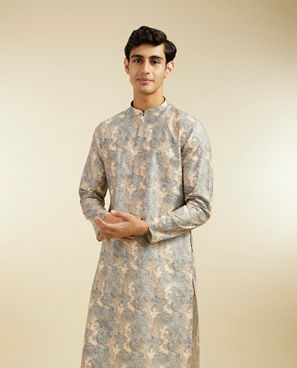
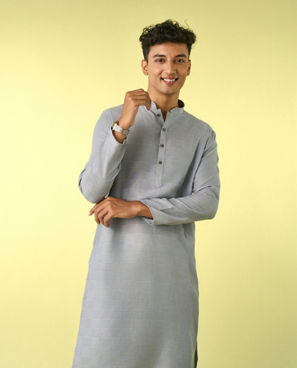
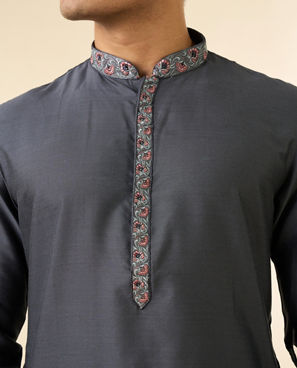
At Diwas, these kurtas are approached as genuinely modern celebration pieces: cuts that feel current, shades that range from soft silver-grey to deeper charcoal, and designs that span plain self-texture, printed, embroidered, and chikankari styles. Each one is built for a man who knows exactly what he wants his outfit to say—and prefers it to say it quietly.
Why grey deserves a place in your festive wardrobe
Grey is already a wardrobe staple in Western dressing—suits, shirts, trousers. Bringing it into ethnic wear is the logical next step for men whose wardrobes integrate both worlds. A few reasons grey works so consistently in Indian celebration wear:
-
It photographs exceptionally well: Grey is one of the most camera-friendly neutrals—it doesn't wash out under flash, doesn't over-saturate under warm lighting, and creates a clean, defined frame in both indoor and outdoor settings.
-
It flatters a very wide range of skin tones: Unlike colours that require specific skin-tone matching, grey—particularly mid and charcoal shades—sits naturally against most Indian complexions in both daylight and artificial light.
-
It pairs with a broader range of bottoms and accessories than most festive colours: White, cream, beige, black, navy, and even deeper jewel-toned bottoms all work with grey, giving you more outfit combinations from a single kurta than most colour-specific pieces allow.
-
It signals modernity without abandoning tradition: Wearing grey to a festive occasion communicates fashion awareness and confidence without stepping outside the bounds of ethnic dressing—it says you know the rules well enough to work outside them.
-
It creates space in a colourful wardrobe: Grey kurtas provide a visual break between more expressive pieces, making them essential for men who attend many events and want variety without always reaching for bold colour.
The grey spectrum: shades and their moods
Grey is a significantly broader family than most people realise when thinking about ethnic wear. On this page you'll find:
-
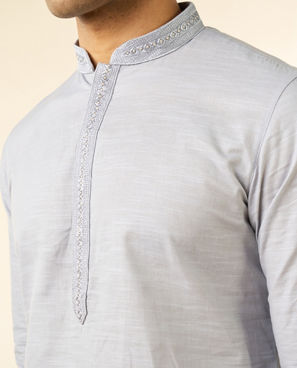
Silver and light grey—the coolest, most contemporary end; feels almost metallic in its neutrality; works particularly well for Diwali evenings where a light grey kurta with sequin or self-design detail picks up festive lighting beautifully.
-
Mid-grey and slate—the most versatile and widely flattering shade; sits comfortably between formal and casual, works across daytime and evening occasions, and pairs with the widest range of bottom colours.
-
Charcoal and deep grey—the darkest, most formal direction; charcoal grey kurtas carry a weight and presence that sits close to black's formality without its starkness; ideal for reception-level functions and important evening events.
-
Warm grey and greige—a grey with a slight beige or taupe undertone; feels more approachable and less severe than cool greys; works particularly well for daytime celebrations and smaller, warmer-toned gatherings.
-
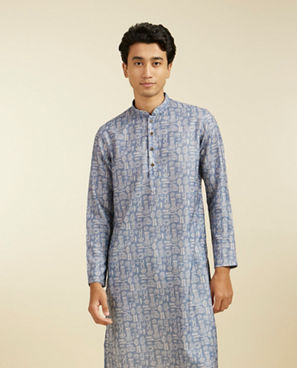
Steel and blue-grey—a grey with a slight cool-blue cast; feels very contemporary and design-aware; works for men who want grey but with slightly more colour personality.
Each shade carries a different mood—lighter for fresher, more contemporary moments; deeper for more formal and evening-centric occasions.
Design directions
Grey's neutrality makes it one of the most receptive colour bases for different design approaches—detail reads clearly against it without the colour base competing. On this page:
-
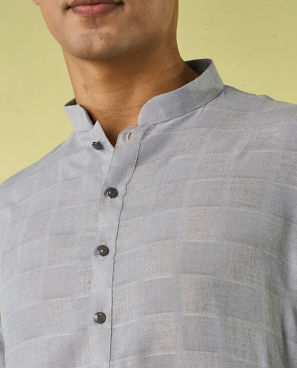
Plain and self-texture kurtas—where a jacquard weave, subtle self-design, or textured surface adds dimension without prints or embroidery; the most minimal and modern direction; ideal for men who want the kurta to feel considered through construction rather than decoration.
-
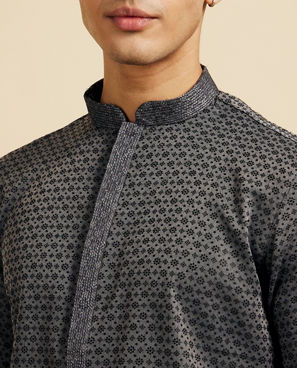
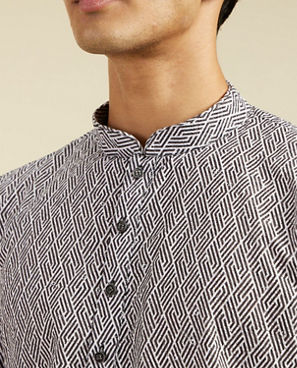
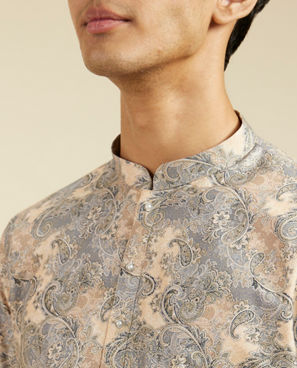
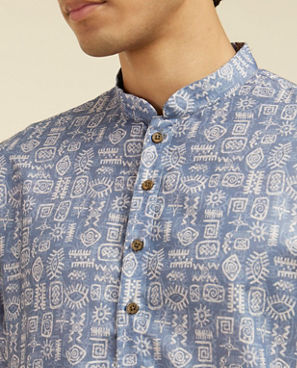
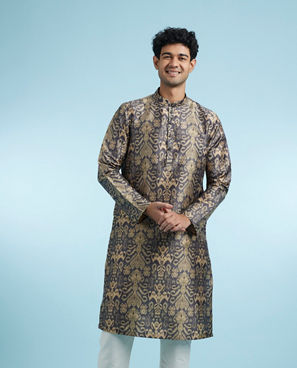
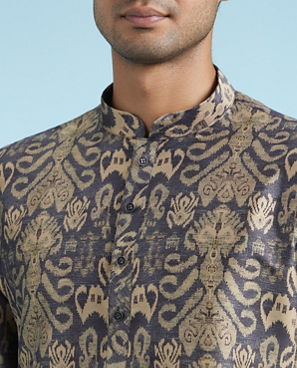
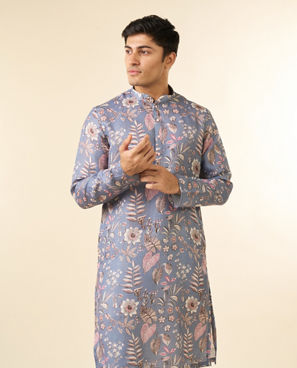
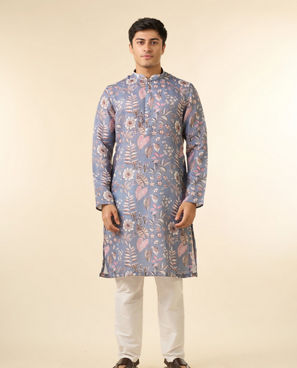
Printed kurtas—geometric, abstract, or heritage-inspired motifs over grey create a very design-aware aesthetic; grey is particularly strong as a base for black, white, or silver prints that create strong graphic contrast.
-
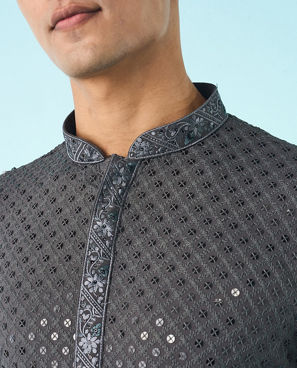
Embroidered kurtas—threadwork, zari, or sequin embroidery on grey reads very clearly and elegantly; the contrast between the neutral base and metallic or tonal embroidery is one of the most sophisticated looks in men's ethnic wear.
-
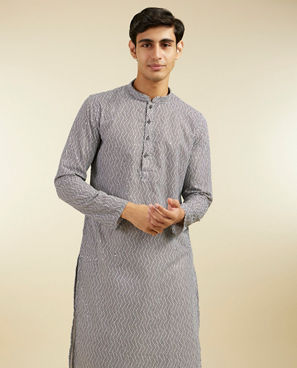
Chikankari on grey—fine Lucknawi-style stitching over grey creates an unexpected and very refined combination; the delicate embroidery sits with particular elegance against a neutral background that doesn't compete with the craft.
-
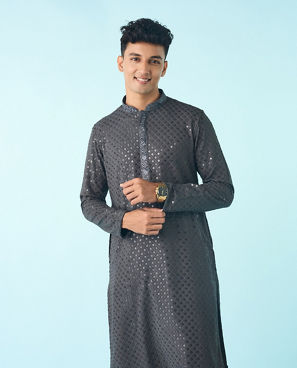
Mirror work and sequin-highlighted kurtas—shimmer and mirror pieces on grey catch light in a very controlled way; the neutrality of the base keeps the sparkle from feeling excessive while still delivering strong evening presence.
Occasions where it makes a strong statement
Because grey sits outside the traditional festive colour palette, choosing it for a celebration is itself a statement—one that reads as confidence and considered dressing. It works especially well when:
-
Attending evening wedding functions as a guest—kurtas, particularly charcoal and mid-grey with embroidery or self-design, feel polished and occasion-ready for sangeet, receptions, and cocktail-adjacent events without following the predictable colour choices.
-
Dressing for Diwali—silver and light grey with sequin or mirror-work details catch Diwali's warm lighting beautifully; grey's coolness creates an interesting contrast against the season's typical warm palette of gold, red, and yellow.
-
Office cultural days and professional festive settings—grey is inherently work-appropriate; a plain or subtly textured kurta with chinos or trousers reads ethnic and considered while remaining completely professional.
-
Campus events and younger social circles—charcoal and mid-grey with contemporary prints or minimal self-design feel fashion-forward and trend-aware in a way that traditional festive colours sometimes don't.
-
Formal family gatherings and milestone events—where a charcoal grey embroidered kurta communicates genuine occasion-readiness through fabric and design rather than colour alone.
How grey pairs across your existing wardrobe
One of grey's most underappreciated practical qualities is the sheer range of combinations it enables. Unlike colour-specific kurtas that require careful matching of bottoms and accessories, grey is democratic in its pairing flexibility.
Bottoms that work:
-
White and cream—the cleanest, most classic contrast; keeps the overall look fresh and defined.
-
Beige and camel—adds warmth to grey's natural coolness; creates a very sophisticated tonal combination.
-
Black—creates a dark, dramatic, very modern look; particularly strong for charcoal grey kurtas at evening events.
-
Navy—an unexpected but very considered combination; navy and grey together feel contemporary and intentional.
-
Silver-grey or matching grey—a tonal, all-grey look that reads extremely sophisticated and design-aware.
Accessories with grey:
-
Silver, white-gold, and cool-toned metals sit most naturally with grey's cooler shades.
-
Antique gold and warm-toned accessories work well with warm grey and greige shades.
-
Bold-coloured accessories—a deep maroon stole, a teal kada—create intentional contrast that makes grey feel more festive without changing the kurta itself.
Three looks
-
Minimal and modern festive: A mid-grey self-texture or plain kurta with white or cream churidar and silver or antique-finish accessories. Clean loafers or simple mojaris; works for office cultural events, semi-formal gatherings, and occasions where understated sophistication is exactly the right call.
-
Evening-ready and considered: A charcoal grey embroidered or sequin-highlighted kurta with black or deep navy churidar and formal dark shoes. A bold watch and simple kada complete the look; the combination of charcoal, embroidery, and dark bottom creates a very polished, contemporary evening look.
-
Contemporary and expressive: A printed kurta—geometric or abstract pattern—with slim dark denims and clean sneakers or loafers. Sleeves slightly rolled for a more relaxed feel; works for campus events, casual Diwali plans, and friend-group celebrations where fashion-aware ethnic dressing is appreciated.
Across all three, grey's neutrality stays consistent while the design, shade, and pairing shift the overall mood from minimal to formal to contemporary.
Across seasons and settings
Unlike many festive colours that feel seasonally specific, grey works year-round—adjusting naturally to different temperatures, occasions, and settings simply by choosing the right fabric weight and shade.
-
Summer and warm months: Light and mid-grey cotton or linen-blend kurtas feel contemporary and breathable; the cool neutrality of grey is particularly welcome in warm weather when bold colours can feel heavy.
-
Monsoon: Grey cotton or viscose blends remain practical and look clean despite the humidity; grey also happens to look particularly atmospheric against the muted, overcast tones of monsoon light.
-
Autumn and pre-Diwali: Mid-grey and warm-grey feel seasonally appropriate as the palette around you shifts towards deeper, richer tones.
-
Winter: Charcoal and deep grey in heavier fabrics—art silk, jacquard, viscose blends—feel warm, rich, and very seasonally right for the Diwali and wedding season's peak months.
This year-round flexibility makes grey one of the smartest colour investments in a compact celebration wardrobe.
In a curated, compact wardrobe
In a small but thoughtfully built ethnic wardrobe, this kurta fills a very specific and valuable slot: the modern neutral that neither plain white nor the usual festive colours can cover in quite the same way.
Alongside:
-
a white or cream kurta for rituals and traditional occasions,
-
one or two festive colours (navy, bottle green, maroon) for celebrations where colour is expected,
a grey kurta becomes:
-
your go-to when you want to look distinctly ethnic but not predictably festive;
-
the piece that makes your wardrobe feel more fashion-aware and contemporary without adding another bold colour;
-
a reliable choice for professional settings, mixed dress-code occasions, and events where standing out through restraint is more interesting than standing out through colour.
Grey in photos, reels, and celebration memories
Grey is one of the most reliable and rewarding colours to photograph. It holds consistent tone across different lighting conditions—neither washing out under flash nor shifting colour under warm indoor lights the way more saturated shades sometimes do. In portraits, grey creates a clean, sophisticated frame that keeps focus on the face and overall silhouette. In full-length shots, it creates strong definition against most backgrounds.
For social content specifically—outfit reels, festive day captures, and event photography—grey kurtas have a quiet editorial quality that makes them look considered and intentional in every frame. A charcoal embroidered kurta under warm event lighting looks as strong in a phone photo as it does in a professionally lit portrait. A mid-grey printed kurta in natural daylight looks fresh and defined without any post-processing needed to make it look good. It's the colour that rarely disappoints in the gallery—understated in person, consistently strong in photos.
Frequently Asked Question (FAQs)
1. Is a grey kurta appropriate for Indian festive occasions?
Absolutely—these kurtas, particularly in mid and charcoal shades with self-design, embroidery, or prints, read as sophisticated and deliberate at weddings, Diwali gatherings, office cultural days, and most festive occasions; they communicate confidence and modernity rather than a lack of festive spirit.
2. What bottoms pair best with a grey kurta?
White and cream for classic contrast; black for a dark, dramatic evening look; beige and camel for warmth and sophistication; navy for a contemporary tonal combination; matching grey for a very deliberate, design-aware all-grey look.
3. Which shade of grey is most versatile for festive wear?
Mid-grey and slate are generally the most versatile—they work across daytime and evening occasions, suit the widest range of skin tones, and pair with the broadest range of bottoms and accessories.
4. Can a grey kurta work for formal wedding functions?
Yes—charcoal and deep grey embroidered or self-design kurtas in richer fabrics like art silk or jacquard work very well for sangeet, reception, and evening wedding functions; the key is choosing the right shade and design weight for the formality of the occasion.
5. How do I make a grey kurta look more festive without adding bright colour?
Choose embroidery, sequin highlights, or mirror work in silver or gold tones; add a contrasting stole in a deeper or more expressive colour; use bold accessories in warm metals or statement stones; the grey base is neutral enough to carry festive details without the colour itself needing to do that work.