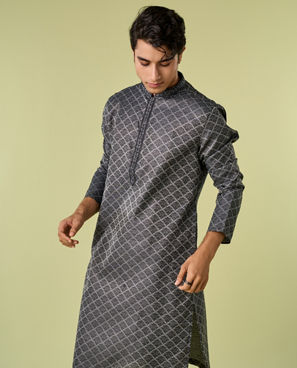
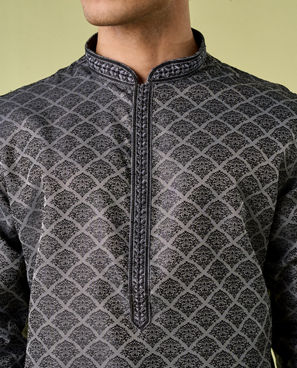
Grey Embroidery Kurtas for Men – Stand Out by Standing Different
Most guys at a celebration reach for maroon, navy, or black. Grey is the move they haven't made yet — and that's exactly why it works so well. A grey embroidery kurta gives you something different: a colour that's refined and easy to wear, paired with embroidery that does the heavy lifting in terms of festive impact. It's not loud. It's not basic either. It's the kind of outfit that gets noticed because it's clearly been thought about.
Why Grey Works So Well With Embroidery
Here's the thing about grey — it lets embroidery breathe. On brighter colours, embroidery has to compete with the base for attention. On grey, there's no competition. The thread work sits cleanly against the neutral background and reads with total clarity. Gold embroidery on grey looks warm and rich. Silver thread work feels cool and contemporary. White embroidery creates a refined, almost architectural contrast. Whatever thread colour you go with, grey makes it look better. That's the practical case for grey as an embroidery base — and it's a strong one.
Finding Your Shade of Grey
Grey covers a lot of ground, and the shade you pick shapes the whole look.
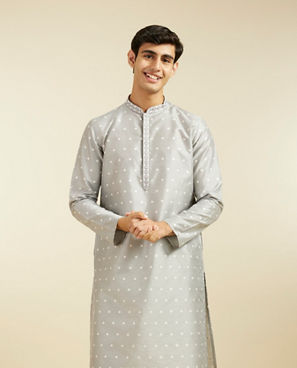
Light grey and silver-grey feel fresh and work well for daytime events. The embroidery on lighter bases reads with a gentleness that suits refined, delicate thread work.
Mid-tone grey is the most versatile — deep enough for the embroidery to register clearly, light enough to work across occasions and lighting conditions. If you're buying one grey embroidery kurta, this is the shade to go for.
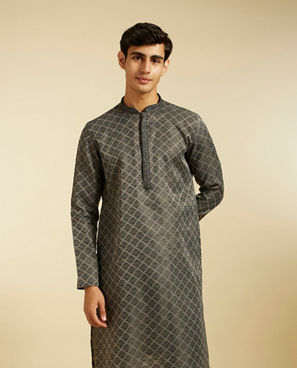
Charcoal grey is the most formal and impactful option. With gold or silver embroidery on charcoal, you get a festive look that holds its own at the most dressed-up occasions. It's bold without being loud — which is a hard balance to strike, and grey does it naturally.
Embroidery Styles
The Diwas grey embroidery kurta collection covers a range of techniques — each one giving the kurta a different feel and occasion fit.
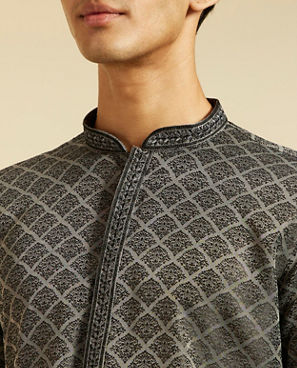
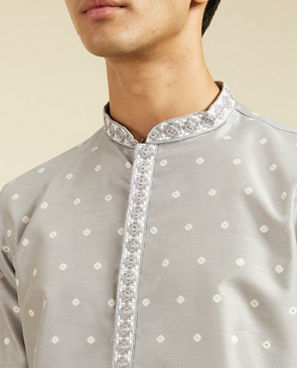
Zari embroidery — metallic gold or silver thread work along the neckline, placket, and cuffs — is the most festive option. Clean, traditional, and immediately occasion-appropriate.
Thread work in white or ivory creates a crisp contrast on mid to light grey bases. It's a more restrained look that works well for semi-formal occasions and daytime events.
Resham embroidery uses smooth silk threads to create floral and paisley motifs. Softer and more colourful than zari, it's a good option if you want embroidery that's celebratory without being too formal.
Self-embroidery — where the thread is matched closely to the grey base — adds texture and depth that only reveals itself up close. It's the most subtle option, and also the most sophisticated.
When to Wear a Grey Embroidery Kurta
Grey embroidery kurtas are genuinely versatile — here's where they work best.
Wedding functions — reception, sangeet, cocktail evening — are where a charcoal grey kurta with gold zari really earns its place. While everyone else is in maroon and navy, you're in something that looks equally festive but far more considered.
Diwali parties and festive gatherings — a mid-grey kurta works well here. It's festive enough for the occasion without being over the top.
Semi-formal events — office Diwali celebrations, cultural programmes, engagement parties as a guest — a lighter grey kurta is a smart, well-dressed choice that fits the setting perfectly.
How to Style It
Grey is one of the easiest colours to build an outfit around. Here's what works:
Ivory or off-white churidars are the most classic pairing — the warm contrast against cool grey is elegant and always right.
White straight-cut trousers give you a cleaner, crisper look — good for daytime functions and semi-formal occasions.
Light grey trousers for a tonal, monochromatic look — modern and intentional, works especially well for evening occasions.
Nehru jacket in ivory, champagne, or charcoal — if you want to layer up for a more formal look, these are your best options.
For footwear, silver or white juttis suit lighter grey kurtas. Tan or dark brown mojaris work better with charcoal. Keep accessories in silver — a bracelet and a watch are all you need.
Grey Embroidery Across Skin Tones
Grey works across skin tones more generously than most people expect.
On deeper complexions, grey creates a clean, clear backdrop — the embroidery, especially in gold or silver, registers with real brilliance against it.
On medium and olive skin tones, grey sits naturally — the colour's balance of warm and cool undertones creates an effortless cohesion.
On fairer complexions, mid to deep grey creates a sophisticated contrast that looks polished and put-together.
The embroidery adds light and texture regardless of skin tone — which is part of why this combination works for everyone.
Why It Belongs in Your Wardrobe
A grey embroidery kurta fills a gap that most wardrobes have without realising it. It's different from everything else you likely own in ethnic wear, but it still pairs with the same neutral churidars, the same juttis, and the same accessories that the rest of your collection uses. That means it integrates without friction and immediately gives you more outfit options. It's also the kind of piece that generates genuine compliments — not because it's the loudest thing in the room, but because it's the most considered. That's a good thing to be known for.
Looks Great on Camera Too
Grey embroidery kurtas photograph well — and there are real reasons for that. Grey holds its detail in both bright and low light, so the embroidery reads clearly regardless of the shooting conditions. Gold and silver thread work catches light dynamically, creating highlights that make the garment look three-dimensional in photographs. In group shots at weddings and celebrations,it creates a calm but visually strong presence — present and beautiful without competing with everything around it. In portrait shots and reels, the combination of a textured embroidery surface and a clean neutral base gives you a frame that looks genuinely styled without much effort.
FAQ
1. Is a grey embroidery kurta festive enough for a wedding?
Yes — and it's one of the more memorable choices you can make at one. A charcoal kurta with gold or silver zari work, paired with ivory churidars and a Nehru jacket, holds its own at any wedding function. The combination of colour and craft is more than festive enough — and the fact that it's different from the standard palette is a bonus, not a risk.
2. What embroidery thread colour works best on grey?
Gold thread work has the most impact on deep charcoal grey. Silver suits both light and mid-grey bases naturally. White thread work creates a refined, delicate effect on lighter shades. If you want the most understated look, self-embroidery in a matching grey thread adds quiet texture that rewards close attention.
3. How is a grey embroidery kurta different from a grey printed kurta?
Embroidery is stitched onto the fabric surface — it creates texture, dimension, and a sense of craft that printing can't replicate. This kurta feels more occasion-appropriate and more premium than a printed one. Printed kurtas are generally more casual; embroidery kurtas move comfortably into festive and formal territory.
4. What fabric works best for a grey embroidery kurta for a winter wedding?
Chanderi silk-blend or jacquard in grey gives you the warmth and richness appropriate for a winter wedding while making the embroidery look its best. Pure silk in charcoal is the most luxurious option — particularly effective with gold or silver thread work in warm evening lighting.
5. Can a grey embroidery kurta work for everyday semi-formal occasions?
Yes — particularly in lighter grey shades with more restrained embellishment. A pearl or silver-grey kurta in cotton with subtle thread work along the placket and collar is well-dressed without being overdressed. It's a great option for office celebrations, cultural events, and semi-formal gatherings where you want to look considered without going full festive.