Cream silk kurta for men: understated luxury at its most powerful
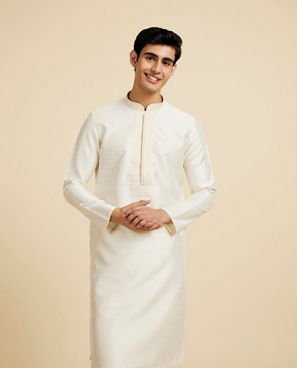
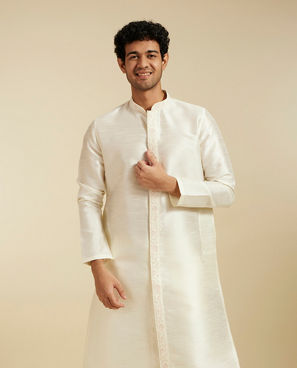
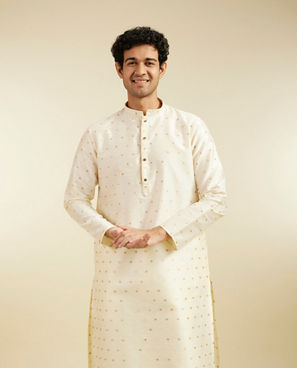
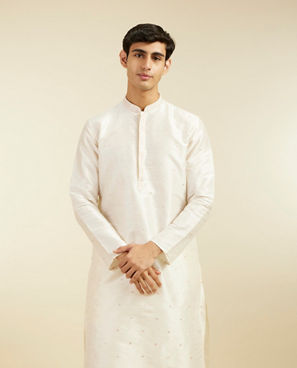
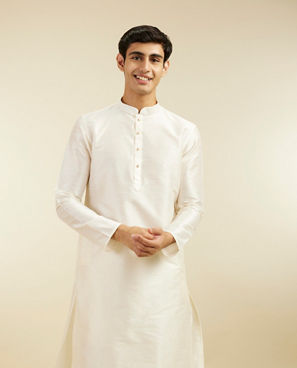
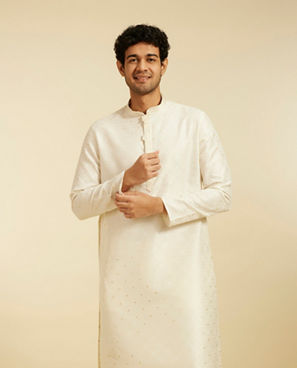
Cream is white with warmth—slightly deeper, slightly richer, and significantly more forgiving in the way it sits against skin and in photographs. When you put that warmth on silk, something shifts: the fabric's natural luminosity lifts cream from a simple neutral into something that feels genuinely luxurious. It catches light softly rather than sharply, drapes with intention rather than casualness, and creates a presence that reads as confident and deliberate without ever feeling loud.
At Diwas, these kurtas are built around this idea: that the most powerful festive looks are sometimes the ones that achieve the most with the least—no bold colour, no heavy embroidery, just the quiet richness of cream on silk and a silhouette that speaks for itself.
Why cream works better than white on silk
White silk kurtas are ceremonial and striking. These kurtas are warm, sophisticated, and—in many ways—more versatile. The distinction matters more than people expect.
-
Cream is more forgiving on skin: Pure white can create a stark contrast that, under certain lighting, looks harsh or clinical; cream's warmth sits more naturally against Indian skin tones across a wider range of complexions.
-
Cream photographs with more depth: In portraits and candid shots, cream silk carries a richness that pure white sometimes loses under flash or bright light—it holds its warmth consistently across different cameras and lighting setups.
-
Cream reads as more sophisticated in mixed-dress-code settings: Where white can feel either very ceremonial or very casual depending on context, cream consistently reads as considered and refined across formal, semi-formal, and elevated-casual occasions.
-
Cream pairs with a wider range of bottom and accessory colours: Both gold and silver accessories sit naturally with cream, while white tends to favour one over the other; bottom colours in beige, champagne, ivory, and even deeper neutrals all work harmoniously with cream silk.
For men who want the clean, neutral elegance of white but with more warmth and versatility, cream silk is almost always the more sophisticated choice.
Fabric types
Silk kurtas span a range of fabric constructions that balance luxury, wearability, and occasion-appropriateness. You'll typically find:
-
Art silk and art-silk blends—the most widely used; captures silk's characteristic sheen and drape in cream at accessible price points; looks and feels genuinely elevated for most festive and wedding occasions.
-
Pure silk and mulberry silk—the most luxurious option; deeper sheen, heavier hand, and an unmistakably premium drape; cream on pure silk has a warmth and depth that no blended fabric quite replicates.
-
Viscose-silk blends—lighter and softer than pure silk; the viscose adds fluidity and reduces weight while the silk component contributes the luminosity and elevated quality; practical for longer functions and warmer venues.
-
Silk-cotton blends—breathable enough for extended wear while still carrying silk's sheen; works particularly well for kurtas designed for daytime weddings and outdoor functions where comfort across several hours matters.
-
Jacquard silk in cream—where the weave itself creates self-design patterns (florals, paisleys, or geometric motifs) in the same tone; adds quiet complexity and dimension without embroidery, creating a piece that looks rich without being obvious about it.
The fabric construction shapes how formal the kurta feels, how it behaves through a long function, and how much care it requires—all relevant considerations for a piece in a colour as particular as cream.
Design directions
Because cream on silk already communicates luxury and consideration, design work in this category tends to be precise and intentional rather than elaborate. On this page you'll find:
-
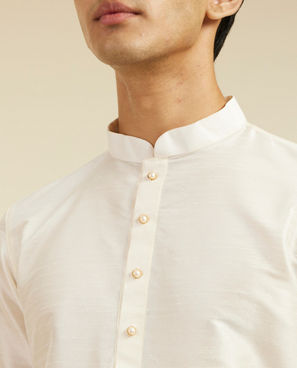
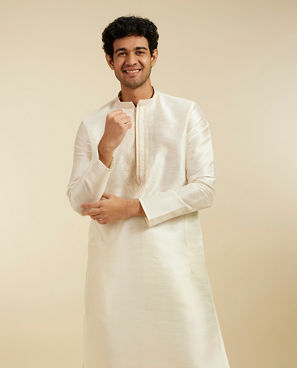
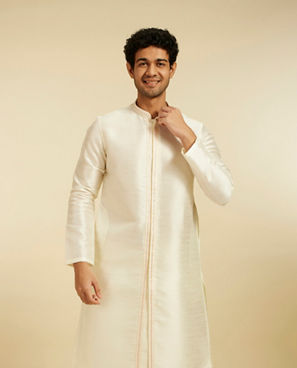
Plain silk kurtas—the purest expression of the category; the fabric's warmth, sheen, and drape are the entire statement; pairs with virtually everything and reads differently depending entirely on how you style it.
-
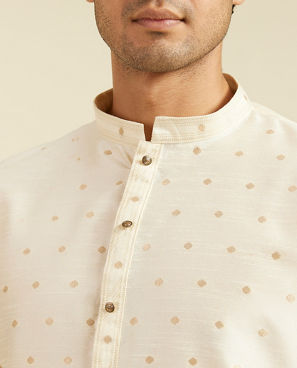
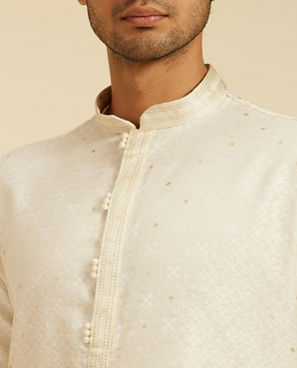
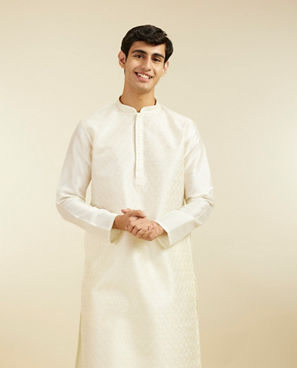
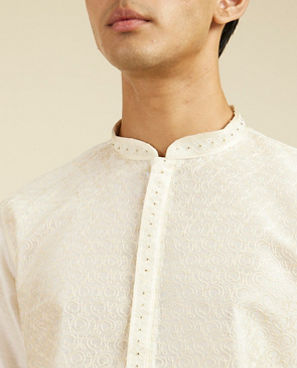
Self-design and jacquard cream silk—tonal patterns woven into the silk itself; creates a surface that looks unified and simple from a distance but reveals quiet depth and craft up close; one of the most sophisticated design directions in men's wear.
-
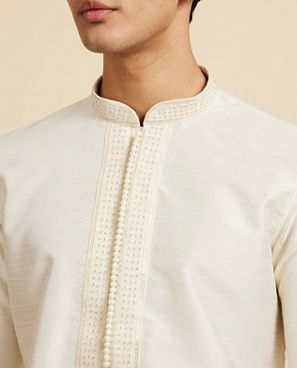
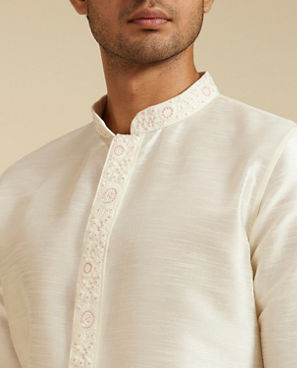
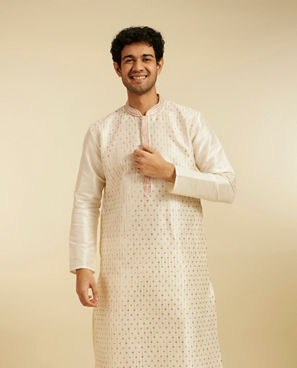
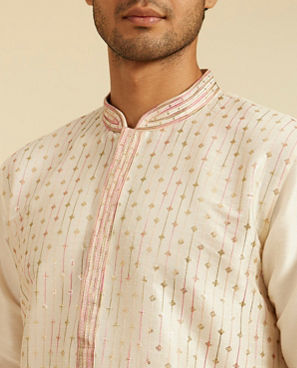
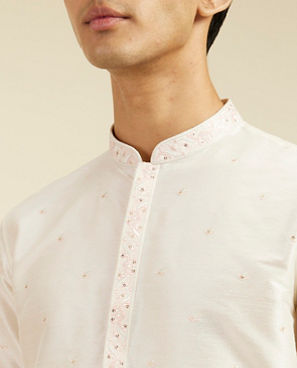
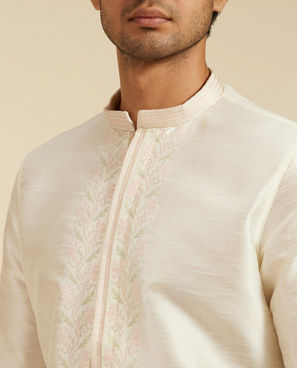
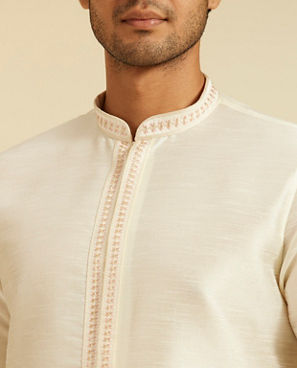
Lightly embroidered silk kurtas—focused threadwork, zari highlights, or chikankari along the neckline, placket, or cuffs; the embroidery catches light against the silk base, and the combination of cream, silk, and fine embroidery creates a very particular kind of understated grandeur.
-
Sequin and shimmer-highlighted cream silk—small shimmer accents placed within self-design or embroidered areas; works for evening functions where the silk base and sequin details together create controlled, elegant glamour.
Each direction represents a different conversation between restraint and richness—and in cream silk, restraint almost always wins.
The occasions where silk kurtas feel most powerful
A silk kurta earns its place in the wardrobe through the specific occasions it serves better than almost any other piece. It's most at home when:
-
You're the groom or closest family at a significant wedding function—cream silk carries a ceremonial quality rooted in Indian tradition; it reads as both auspicious and luxurious, which is exactly the combination these moments require.
-
Attending a reception or high-formality evening function—cream silk under warm chandeliers and banquet lighting glows in a way that neither cotton nor printed pieces achieve; it creates genuine visual presence without needing embroidery or colour to do the work.
-
Main Diwali evening and peak festive nights—under diyas, fairy lights, and the warm golden palette of Diwali décor, cream silk looks particularly luminous and seasonally appropriate.
-
Formal family milestones—significant anniversaries, major housewarmings in hotel settings, milestone birthdays—occasions where fabric quality signals the importance of the moment.
-
Baraat and wedding procession looks—cream silk creates a striking, clean presence in the movement and colour of a baraat that photographs and films beautifully from every angle.
Because cream silk carries inherent ceremony and warmth simultaneously, it works for both the most formal and the most emotionally significant moments in a celebration calendar—often the same event.
Styling
Because cream is warm, neutral, and already sophisticated, styling is about amplifying its qualities rather than compensating for any lack of colour or detail.
Bottom choices:
-
Cream or ivory churidar—a tonal, all-cream look in silk that feels genuinely ceremonial and complete; one of the most powerful looks in men's wear.
-
Beige or champagne slim pyjamas—a warmer alternative that stays harmonious and adds subtle depth to the overall palette.
-
Gold-tone churidar—elevates the formality significantly; cream over gold feels richly festive and reception-ready without introducing contrast.
-
White churidar—creates subtle contrast that keeps the look clean and slightly crisper; works when you want cream to feel more deliberate against a lighter bottom.
-
Black churidar—for a contemporary take that creates strong, striking contrast; cream silk over black is a modern ethnic look that works particularly well for evening functions and city-centric celebrations.
Footwear:
-
Embroidered mojaris in cream, gold, or ivory feel the most traditional and complete for ceremonial occasions.
-
Tan or brown formal shoes work for a more contemporary read without breaking the warmth of the cream palette.
-
Gold-accented or metallic footwear adds richness for reception-level formality.
Accessories:
-
Both gold and silver accessories work with cream—yellow gold adds warmth and richness, white gold or silver feels cooler and more contemporary.
-
Keep jewellery controlled—a dress watch, subtle kada, and ring are usually enough; cream silk's presence means accessories should frame rather than compete.
-
A cream, ivory, or champagne stole adds ceremony for the most formal moments without disrupting the colour story.
Cream silk versus white silk versus plain cream cotton
These three variations of a similar base colour are often confused, but they serve genuinely different purposes in a well-built ethnic wardrobe.
-
Cream cotton kurta: Relaxed, breathable, and easy to wear daily. Best for rituals, casual festivals, and everyday ethnic dressing. Communicates simplicity and approachability.
-
White silk kurta: Ceremonial, striking, and formally auspicious. Best for significant wedding functions and formal evenings where white's clarity is part of the statement. Communicates purity and ceremony.
-
Cream silk kurta: Warm, sophisticated, and luxuriously understated. Best for formal evenings, significant wedding events, and occasions where warmth and richness matter as much as ceremony. Communicates considered luxury and deliberate dressing.
Each serves a different occasion and communicates something different—owning at least one version of each gives your ethnic wardrobe complete coverage across the full range of celebrations.
Cream silk in a curated celebration wardrobe
In a well-thought-out ethnic wardrobe, a silk kurta fills the warm ceremonial luxury slot—the piece that combines neutral elegance with genuine fabric richness in a way that neither plain cotton nor boldly coloured silk can replicate.
Alongside:
-
everyday cotton and casual festive pieces for regular celebrations, and
-
one or two coloured or embroidered pieces for event-specific dressing,
a cream silk kurta becomes:
-
your choice for the most emotionally significant moments in a wedding or festive calendar;
-
the piece that photographs most warmly and richly under formal function lighting;
-
a long-term investment that rewards careful selection and careful maintenance—one well-chosen kurta can serve the most important occasions in your wardrobe across multiple years and seasons.
In photos, reels, and milestone memories
Cream silk photographs with a particular kind of warmth that no other combination quite achieves. Where white can look stark and cotton can look flat, cream silk glows—capturing the light from chandeliers, diyas, and warm indoor setups in a way that makes portraits look luminous rather than simply well-exposed.
In formal wedding photography, cream silk creates one of the cleanest, most timeless silhouettes in men's wear—structured, intentional, and beautiful from every angle. In candid shots, the fabric's slight natural movement creates gentle light variation that makes the kurta look alive and richly textured. In group photographs, cream silk stands out from lighter cottons and synthetic fabrics in a way that's immediately apparent—it's the difference between looking dressed and looking genuinely invested in the weight of the occasion.
Frequently Asked Question (FAQs)
1. Is cream silk better than white silk for most Indian celebrations?
For most occasions, cream is warmer and more flattering on Indian skin tones than pure white; it also photographs with more depth and pairs with a wider range of accessories and bottom colours—making it the more versatile choice for men who want luxury without starkness.
2. What bottoms pair best with a cream silk kurta?
Cream or ivory churidar for a tonal ceremonial look; beige or champagne pyjamas for a softer pairing; gold-tone churidar for reception-level formality; black churidar for a contemporary contrast look.
3. Can a plain cream silk kurta work without embroidery?
Absolutely—plain cream silk relies entirely on the fabric's warmth, sheen, and drape; this restraint often reads as more sophisticated than embellishment because it communicates confidence and considered luxury rather than visible effort.
4. How is cream silk different from cream cotton in practical terms?
Cream cotton is breathable, relaxed, and everyday-appropriate; cream silk is richer in sheen, more formal in drape, and reserved for significant occasions where fabric quality is part of the statement—the two serve completely different roles in a well-built ethnic wardrobe.
5. How do I prevent a cream silk kurta from yellowing over time?
Store in breathable fabric bags away from direct sunlight and heat; dry clean rather than machine wash; dry flat in shade rather than in direct sun; and handle with clean, dry hands to avoid oils transferring to the light fabric surface.

_28-04-2025-06-47:297-368)
_18-04-2025-20-34:297-368)
_28-04-2025-06-47:Swatch)








_26-05-2025-19-16:Swatch)





_12-09-2026-06-22:297-368)
_12-09-2026-06-22:297-368)
_12-09-2026-06-22:Swatch)
_12-09-2026-06-21:Swatch)