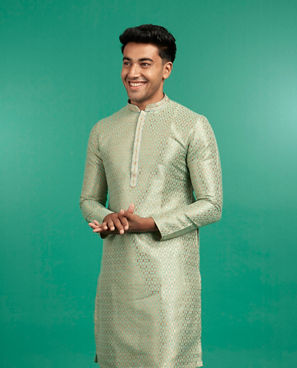
Brocade kurta for men: fabric as the statement
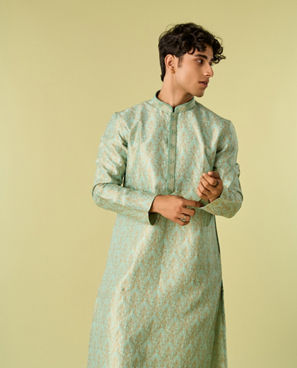
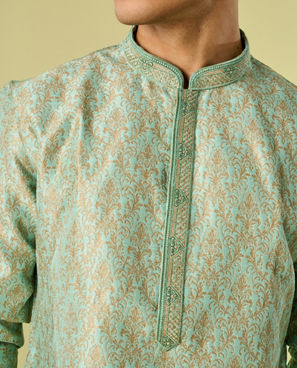
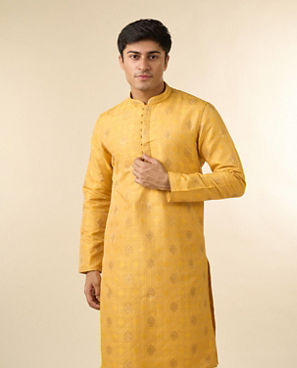
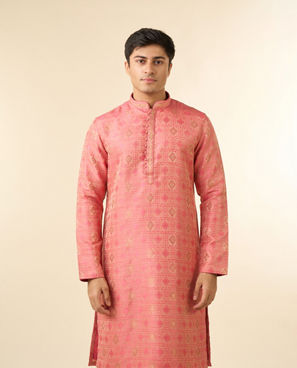
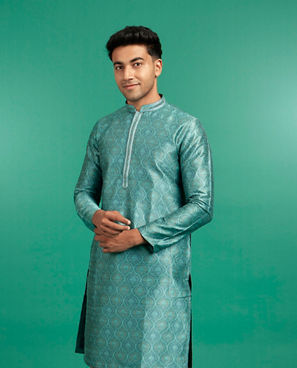
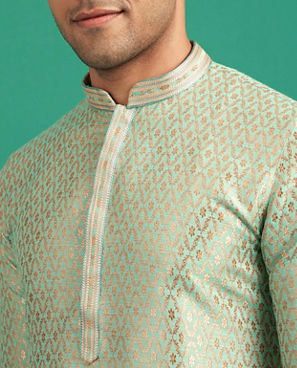
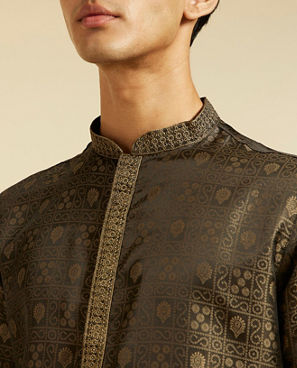
Brocade kurtas are built around a very specific idea: that the fabric itself can do the work of embellishment. Brocade is a woven textile where patterns—florals, geometrics, paisleys, or abstract motifs—are created within the weave using supplementary threads, often in metallic gold, silver, or contrasting colours. The result is a kurta that looks intricate and deliberate from across the room without a single stitch of embroidery added on top.
At Diwas, they occupy the space between richly embroidered occasion-wear and simpler festive pieces—heavier in feel and formality than a plain or printed kurta, but more wearable and less costume-y than a full sherwani set.
What brocade actually is—and why it matters
Brocade is one of the oldest weaving traditions in Indian textile history, with roots in Varanasi, Surat, and other major weaving centres. Understanding what makes brocade different helps you see why it justifies its place in a celebration wardrobe.
-
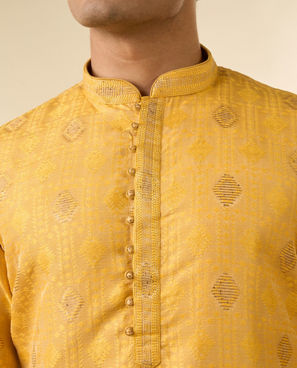
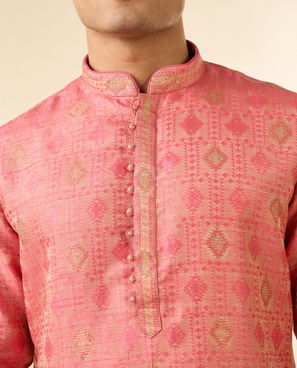
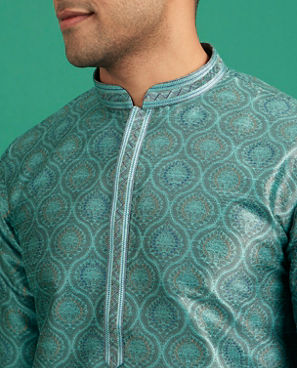
The pattern is woven, not printed or embroidered: Brocade motifs are created on the loom using supplementary weft threads that create a raised, textured surface—more durable and more luxurious than surface prints.
-
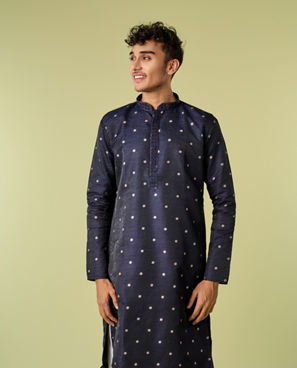
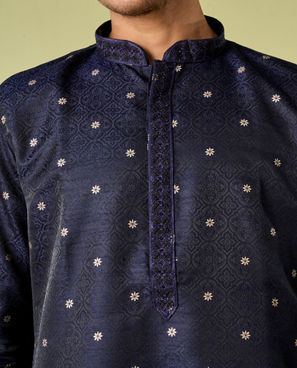
Metallic threads are common: Gold and silver zari threads woven into the brocade pattern catch light under chandeliers and indoor lighting in a way no print can replicate.
-
The fabric has weight and structure: Brocade kurtas hold their shape and silhouette even through long functions—they don't crumple or lose their line the way lighter fabrics do.
-
Every piece looks slightly unique: Because brocade patterns are complex weaves rather than repeated prints, no two pieces look quite identical up close, giving each kurta a handcrafted quality.
For men who want their kurta to feel like a genuine investment piece rather than a replaceable festive option, brocade delivers a level of craft and presence that few other fabrics match.
Types of brocade
Brocade is not one single fabric or pattern—it's a broad category of woven textiles with distinct personalities depending on the base, thread type, and motif style. On this page you'll typically encounter:
-
Silk brocade and silk-feel brocade—the most traditional and luxurious; deep, rich colours with metallic zari patterns that feel genuinely special for reception-level functions and key wedding events.
-
Jacquard brocade—a machine-woven version that captures the visual complexity of traditional brocade with more accessible price points and slightly lighter weight; works well for Diwali evenings and mid-level wedding functions.
-
Art silk brocade—a brocade on an art-silk base that has the sheen and pattern richness of traditional silk brocade without the cost; widely used in festive-ready kurtas.
-
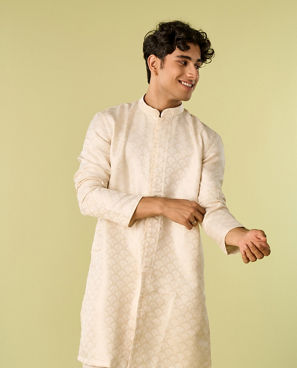
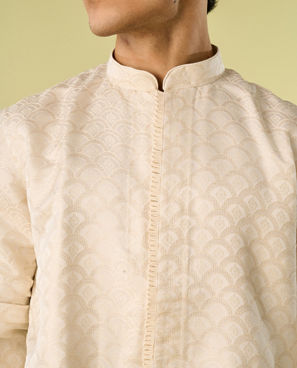
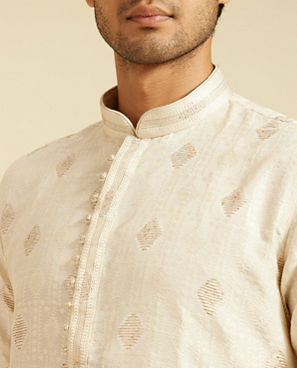
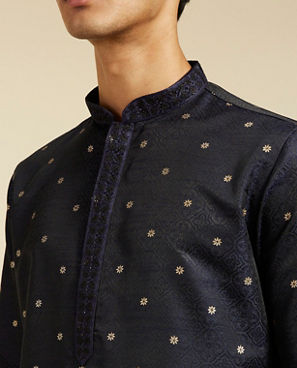
Self-design brocade—where the pattern is woven in the same colour as the base, creating a tonal, textured effect that reads subtler than metallic brocade; ideal for men who want brocade's richness without obvious shine.
Each type brings a different level of formality and visual presence, letting you choose how grand you want your kurta to feel.
Colours
Brocade is a fabric that carries colour with particular depth—the woven texture and occasional metallic sheen make colours look more saturated and rich than they would on a plain weave.
You'll typically find brocade kurtas in:
-
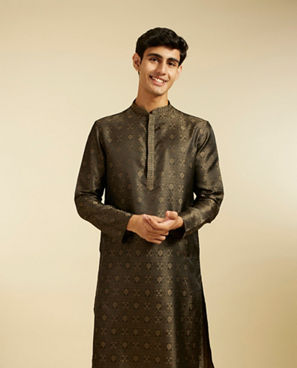
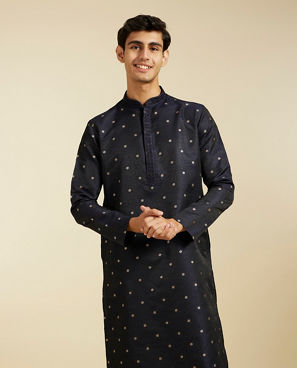
Deep jewel tones—navy, bottle green, maroon, and deep burgundy; these shades allow the brocade's metallic or tonal patterns to show clearly and feel regal under evening lighting.
-
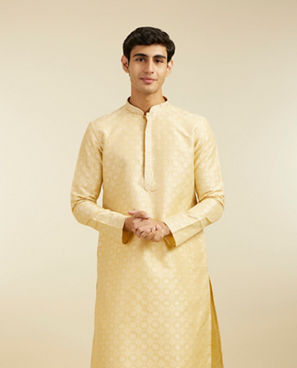
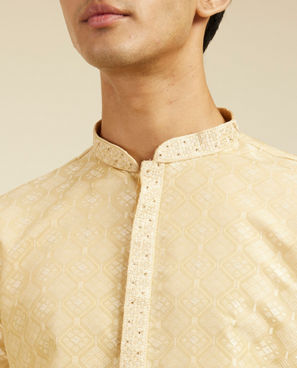
Golden and champagne tones—especially popular for reception and high-profile wedding events; brocade on gold or champagne creates an immediately grand, celebratory look.
-
Black and deep charcoal—a more modern, sharp direction for brocade; metallic gold or silver patterns over black feel contemporary and reception-ready.
-
Rich reds and festive oranges—for Diwali-centric kurtas where the combination of warm colour and woven metallic pattern feels completely in step with the season.
-
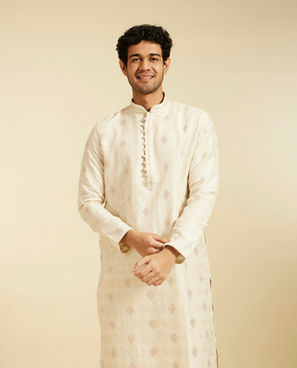
Ivory and cream brocade—a softer, more subtle take; self-design or tonal patterns on cream feel luxurious and understated for men who want brocade richness without colour intensity.
The colour you choose shapes how formal and how festive your kurta feels—deeper and richer for bigger evenings, softer and more tonal for occasions where understated luxury is the goal.
When it’s the right call
Brocade kurtas are not everyday pieces—they're made for the occasions that deserve more. You'll find yourself reaching for one when:
-
You're attending a reception or baraat-adjacent function where the dress code is high and the occasion calls for visible richness in your outfit.
-
It's a main Diwali night or peak festival gathering—a card party, family celebration, or friends' get-together where the lights are warm and you want your kurta to match the glow of the evening.
-
You're part of the close family or groomsmen group at a wedding where photos and videos will define how you remember the event—brocade reads exceptionally well in both.
-
There's a formal family milestone—an anniversary celebration, milestone birthday, or housewarming event hosted in a hotel or banquet setting.
-
You want to look sherwani-adjacent without the full commitment—brocade kurtas let you access that level of grandeur and formality in a silhouette that's still recognisably a kurta.
Because brocade carries inherent formality and structure, it automatically raises the occasion register of your look without needing heavy embroidery, layers, or accessories to do the work.
How to style
Styling is largely about restraint—the fabric is already doing significant visual work, so the rest of the outfit should support rather than compete.
Bottom choices:
-
Churidar is the most natural pairing for these kurtas; the fitted, structured silhouette of a churidar matches the structured nature of brocade and creates a clean, elongated line.
-
Slim pyjamas work for slightly less formal occasions; cream, beige, or white for contrast, or a tonal colour for a more unified palette.
-
Black churidar or pyjama under a richly coloured kurta creates a sharp, modern evening look.
Footwear:
Accessories:
-
Keep them minimal—a watch, a bold kada, or a classic ring; the kurtas have enough visual complexity that heavy layered jewellery becomes too much.
-
A stole or dupatta in a complementary or contrasting tone can add ceremony and structure when you want to look closer to the host's family in formal photos.
The guiding principle: brocade is already the statement—let everything else frame it.
Brocade versus embroidered kurta: knowing the difference
Men often choose between brocade and embroidered kurtas for formal occasions, and the distinction is worth understanding clearly.
-
Brocade kurtas derive their richness from the fabric itself—the pattern is in the weave. They look equally good from a distance and up close because the detail is structural, not surface-level.
-
Embroidered kurtas have surface-applied threadwork, zari, or beadwork added onto a base fabric. They can carry more personalised or intricate patterns, and the work can be controlled in terms of density and placement.
In terms of formality, both can reach the same level—but brocade feels more "fabric-forward" while embroidery feels more "craft-forward". Brocades also tend to feel slightly heavier and more structured, while embroidered kurtas can vary widely in weight depending on the base fabric.
Choosing between them often comes down to personal aesthetic: if you want richness through material, choose brocade; if you want richness through hand-applied craft, choose embroidery.
Where do they fit in a curated celebration wardrobe
In a well-thought-out ethnic wardrobe, this kurta fills the grand occasion slot—the piece you don't wear often but feel glad you own every time you do.
Alongside:
-
everyday and casual festive pieces (cotton kurtas, printed kurtas, plain solids), and
-
mid-level occasion pieces (embroidered kurtas, chikankari, and richer fabrics),
a brocade kurta becomes:
-
the outfit you save for the biggest nights in your festive and wedding calendar;
-
the piece that photographs and films in a way that feels genuinely special;
-
a wardrobe investment that holds its value across multiple seasons because brocade's richness doesn't date the way trend-driven prints sometimes do.
You don't need many kurtas—one or two in different colours and formality levels covers most of what your calendar will demand.
Brocade in photos, reels, and big-night memories
Brocade was made for camera moments. The woven metallic patterns catch light differently as you move—creating a depth and shimmer in video that flat fabrics simply can't replicate. Under chandeliers, stage lights, and warm banquet lighting, these kurtas look genuinely luxurious in both still photos and moving video.
In full-length shots, the structured fabric holds its silhouette cleanly—no soft draping or movement that can look messy in formal portraits. In close-ups, the woven pattern becomes clearly visible and looks genuinely handcrafted and special. In group photos, brocade creates natural presence without dominating—you look dressed for the occasion without overshadowing the couple or the event itself.
For men who want their biggest celebration looks to be genuinely memorable in photos and in person, this kurta is one of the most effective and elegant choices available.
FAQs
1. Is a brocade kurta only for weddings?
No—while they are ideal for reception-level wedding events, they also work beautifully for main Diwali nights, formal family milestones, and any high-dress-code gathering where you want visible fabric richness.
2. How is brocade different from embroidered fabric?
Brocade patterns are woven directly into the fabric on a loom, creating a structural, raised surface; embroidery is thread-work applied onto a base fabric after weaving—both create richness, but through different craft processes.
3. What bottoms pair best with a brocade kurta?
Churidars are the most natural pairing—their fitted, structured silhouette matches brocade's formal quality; cream, beige, or black churidars work depending on whether you want contrast or cohesion.
4. Are brocade kurtas comfortable for long functions?
Brocade is heavier than cotton or viscose, so it's best suited to seated or moderate-movement functions like receptions and formal gatherings; for high-energy sangeet or haldi events, lighter fabrics are more practical.
5. Can I wear a brocade kurta with minimal accessories?
Yes—in fact, they work best with restrained accessories; the fabric already carries significant visual weight, so a watch, simple kada, and good footwear are usually all you need to complete the look.






_08-06-2026-12-19:297-368)
_08-06-2026-12-18:297-368)
_08-06-2026-12-19:Swatch)

_09-06-2026-17-22:Swatch)